Institute of Molecular Biology, Academia Sinica, Taipei 115, Taiwan.
BMC Med. 2013 Feb 14;11:38. doi: 10.1186/1741-7015-11-38.
Proximal spinal muscular atrophy (SMA), a neurodegenerative disorder that causes infant mortality, has no effective treatment. Sodium vanadate has shown potential for the treatment of SMA; however, vanadate-induced toxicity in vivo remains an obstacle for its clinical application. We evaluated the therapeutic potential of sodium vanadate combined with a vanadium detoxification agent, L-ascorbic acid, in a SMA mouse model.
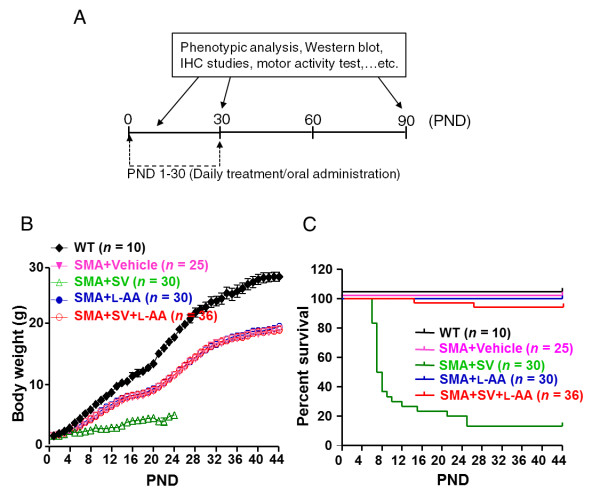
Sodium vanadate (200 μM), L-ascorbic acid (400 μM), or sodium vanadate combined with L-ascorbic acid (combined treatment) were applied to motor neuron-like NSC34 cells and fibroblasts derived from a healthy donor and a type II SMA patient to evaluate the cellular viability and the efficacy of each treatment in vitro. For the in vivo studies, sodium vanadate (20 mg/kg once daily) and L-ascorbic acid (40 mg/kg once daily) alone or in combination were orally administered daily on postnatal days 1 to 30. Motor performance, pathological studies, and the effects of each treatment (vehicle, L-ascorbic acid, sodium vanadate, and combined treatment) were assessed and compared on postnatal days (PNDs) 30 and 90. The Kaplan-Meier method was used to evaluate the survival rate, with P < 0.05 indicating significance. For other studies, one-way analysis of variance (ANOVA) and Student's t test for paired variables were used to measure significant differences (P < 0.05) between values.
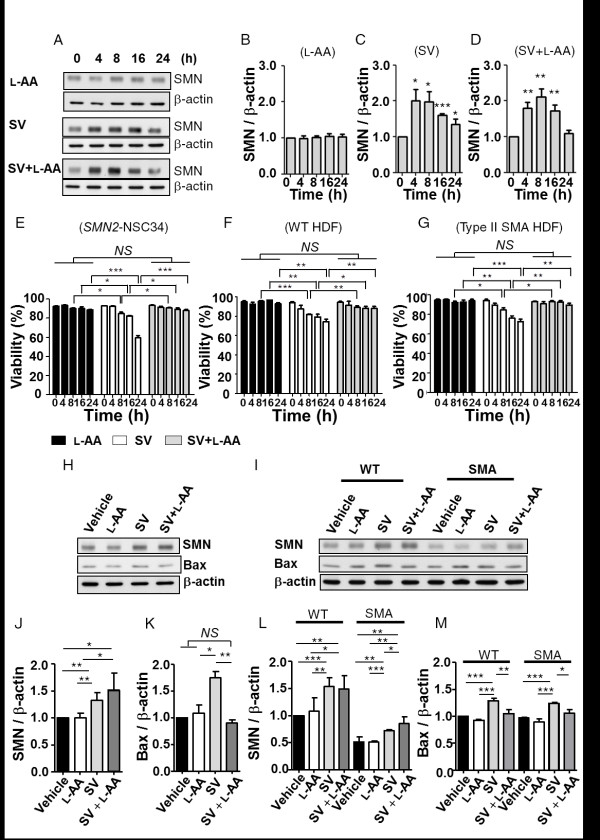
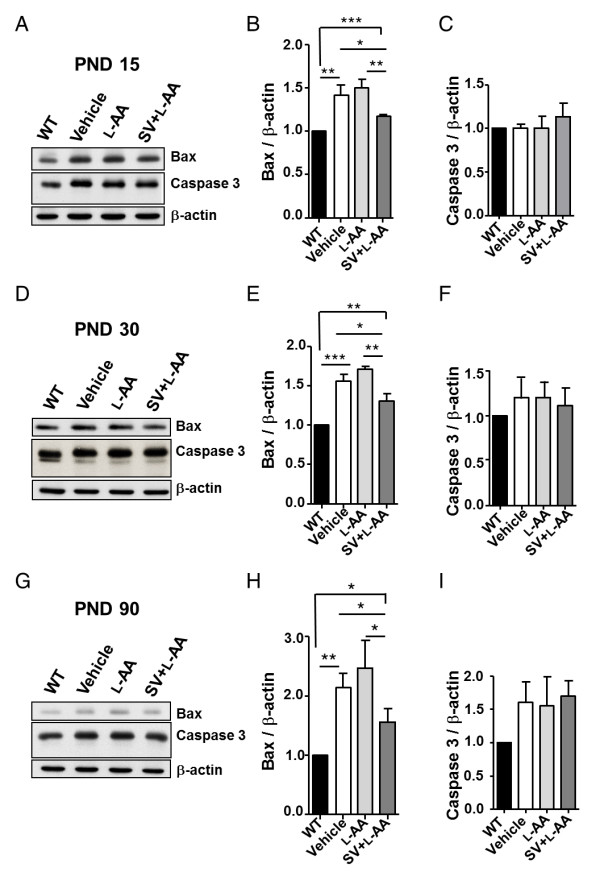
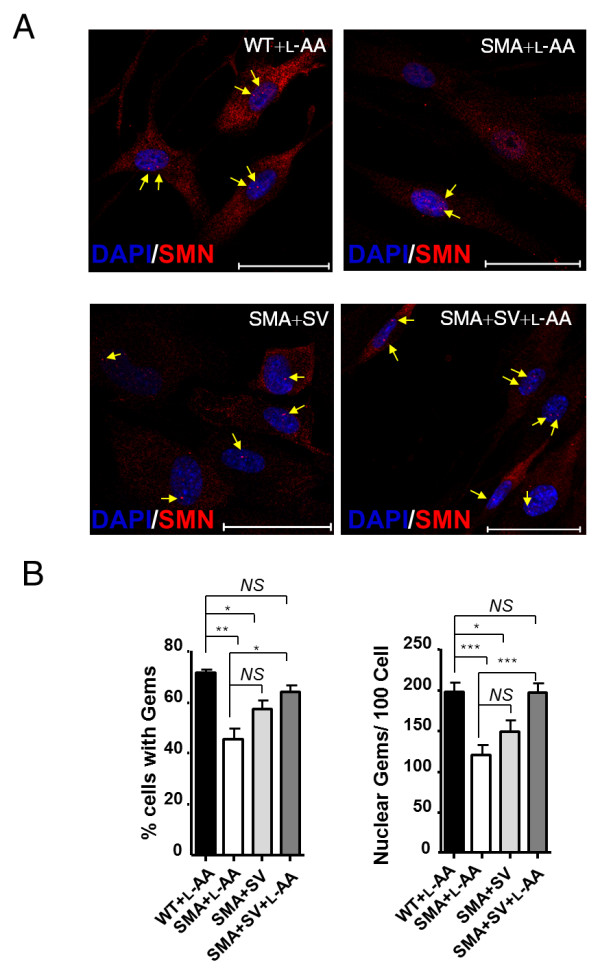
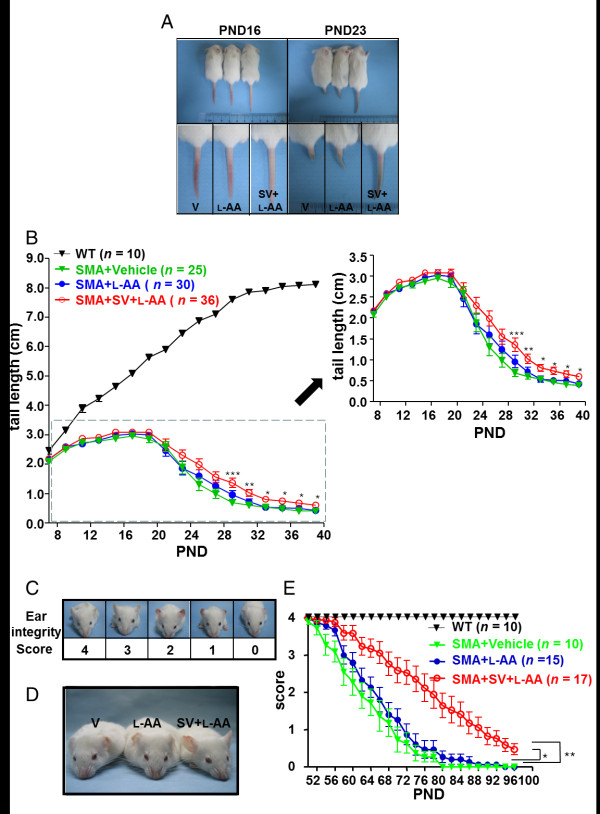
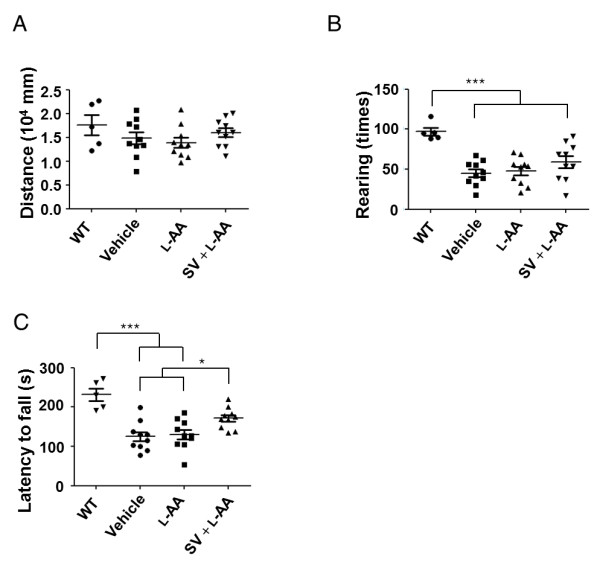
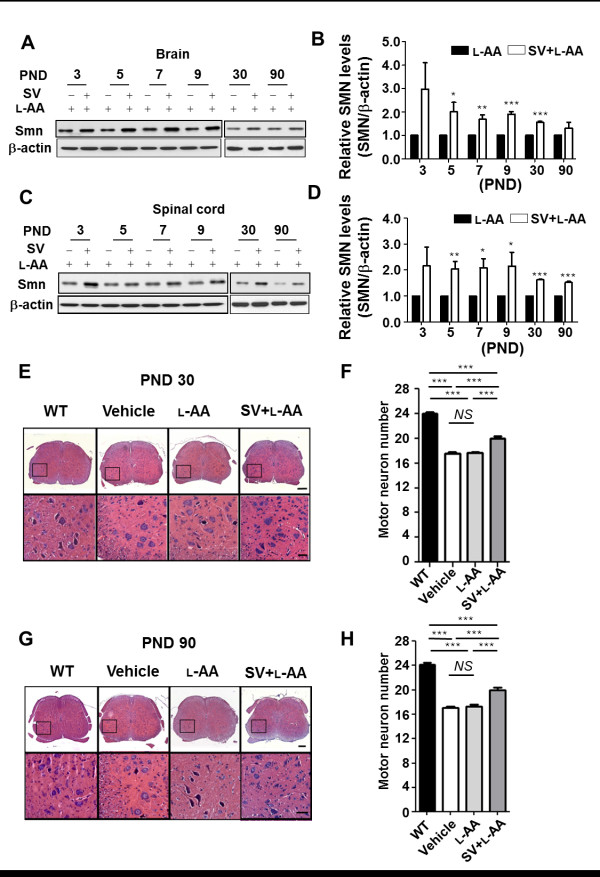
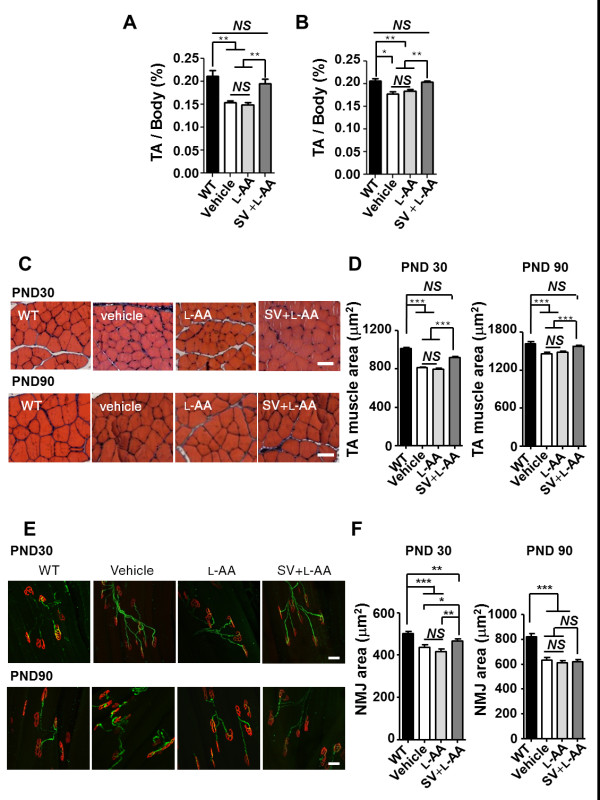
Combined treatment protected cells against vanadate-induced cell death with decreasing B cell lymphoma 2-associated X protein (Bax) levels. A month of combined treatment in mice with late-onset SMA beginning on postnatal day 1 delayed disease progression, improved motor performance in adulthood, enhanced survival motor neuron (SMN) levels and motor neuron numbers, reduced muscle atrophy, and decreased Bax levels in the spinal cord. Most importantly, combined treatment preserved hepatic and renal function and substantially decreased vanadium accumulation in these organs.
Combined treatment beginning at birth and continuing for 1 month conferred protection against neuromuscular damage in mice with milder types of SMA. Further, these mice exhibited enhanced motor performance in adulthood. Therefore, combined treatment could present a feasible treatment option for patients with late-onset SMA.
近端脊髓性肌萎缩症(SMA)是一种神经退行性疾病,可导致婴儿死亡,目前尚无有效的治疗方法。偏钒酸钠已显示出治疗 SMA 的潜力;然而,钒酸盐在体内的毒性仍然是其临床应用的障碍。我们评估了偏钒酸钠与钒解毒剂 L-抗坏血酸联合应用于 SMA 小鼠模型的治疗潜力。
将偏钒酸钠(200 μM)、L-抗坏血酸(400 μM)或偏钒酸钠与 L-抗坏血酸联合(联合治疗)应用于运动神经元样 NSC34 细胞和来自健康供体和 II 型 SMA 患者的成纤维细胞,以评估细胞活力和每种治疗方法的疗效在体外。对于体内研究,偏钒酸钠(20 mg/kg,每日一次)和 L-抗坏血酸(40 mg/kg,每日一次)单独或联合口服,每日在出生后第 1 至 30 天。在出生后第 30 天和第 90 天评估并比较运动性能、病理研究和每种治疗方法(载体、L-抗坏血酸、偏钒酸钠和联合治疗)的效果。Kaplan-Meier 法用于评估存活率,P<0.05 表示有统计学意义。对于其他研究,采用单因素方差分析(ANOVA)和配对变量的 Student's t 检验来测量值之间的显著差异(P<0.05)。
联合治疗可降低 B 细胞淋巴瘤 2 相关 X 蛋白(Bax)水平,从而保护细胞免受钒酸盐诱导的细胞死亡。从出生后第 1 天开始对患有晚发性 SMA 的小鼠进行为期 1 个月的联合治疗,可延迟疾病进展,改善成年期的运动表现,提高运动神经元存活(SMN)水平和运动神经元数量,减少肌肉萎缩,并降低脊髓中的 Bax 水平。最重要的是,联合治疗可保护肝肾功能,并显著减少这些器官中的钒积累。
从出生开始并持续 1 个月的联合治疗可防止轻度 SMA 小鼠的神经肌肉损伤。此外,这些小鼠在成年期表现出更好的运动表现。因此,联合治疗可能为晚发性 SMA 患者提供一种可行的治疗选择。