Khosroshahi Arezou, Carruthers Mollie N, Stone John H, Shinagare Shweta, Sainani Nisha, Hasserjian Robert P, Deshpande Vikram
From Rheumatology Unit (AK, MNC, JHS), Division of Rheumatology, Allergy, and Immunology, Department of Medicine; Department of Pathology (SS, RPH, VD); and Department of Radiology (NS), Massachusetts General Hospital and Harvard Medical School, Boston, Massachusetts.
Medicine (Baltimore). 2013 Mar;92(2):82-91. doi: 10.1097/MD.0b013e318289610f.
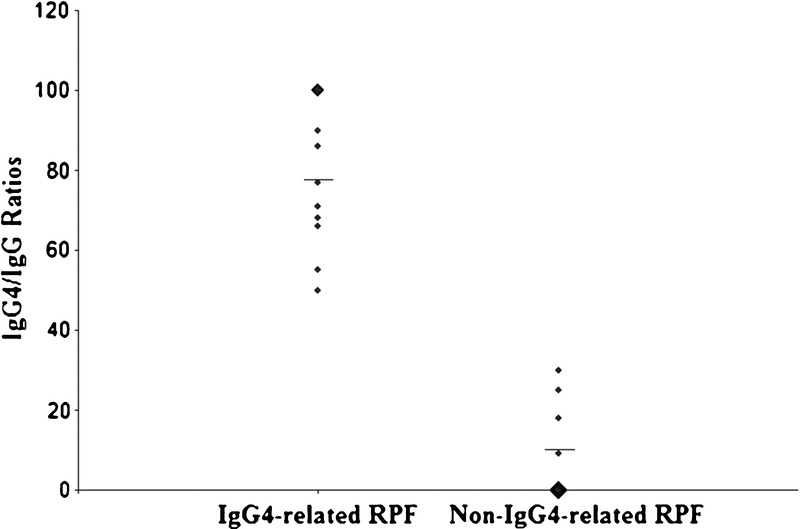
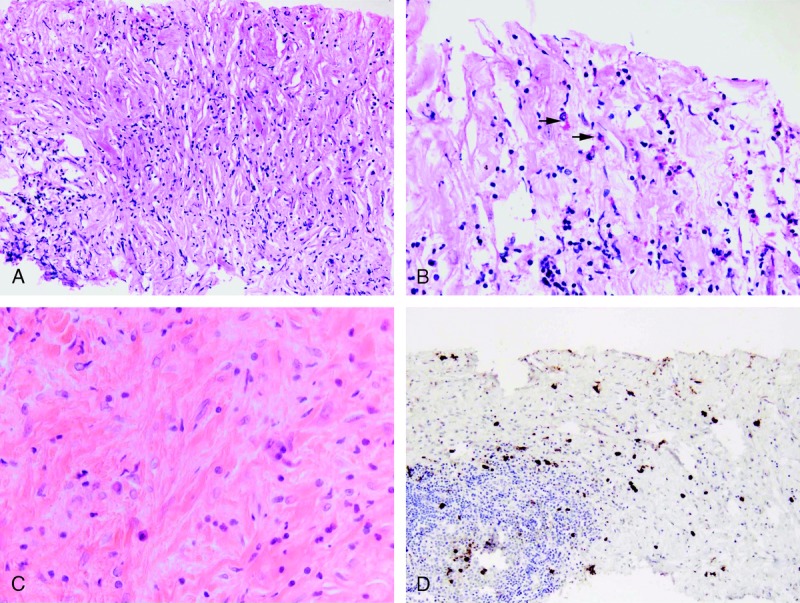
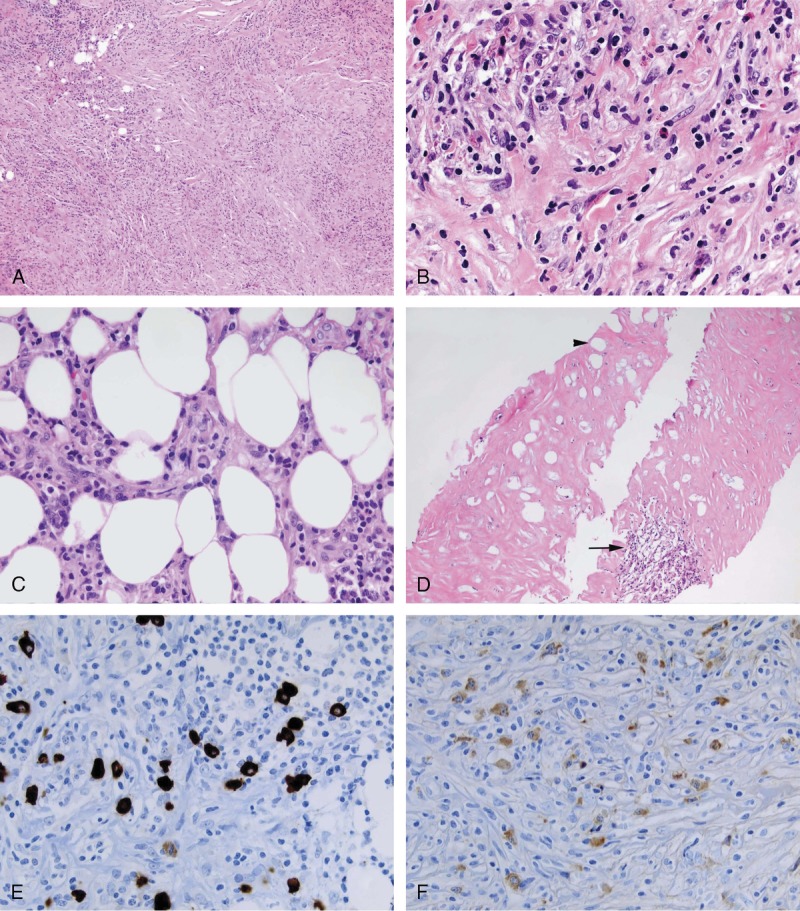
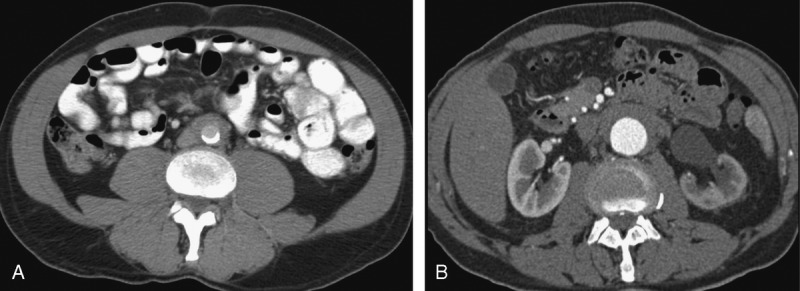
Idiopathic retroperitoneal fibrosis (RPF) is a periaortic sclerotic disease that encases adjacent retroperitoneal structures, particularly the ureters. A subset of idiopathic RPF cases can be associated with IgG4-related disease, but the frequency of this association is not clear. We selected 23 cases of idiopathic RPF and identified IgG4-related RPF cases based on the presence of IgG4+ plasma cells in the tissue, using an IgG4/IgG ratio cutoff of >40%. We then compared the IgG4-related RPF patients and the non-IgG4-related RPF patients in terms of both the presence of histopathologic features typical of IgG4-related disease and the simultaneous occurrence (or history) of other organ manifestations typical of IgG4-related disease. The IgG4-related RPF and non-IgG4-related RPF groups were also analyzed in terms of clinical, laboratory, and radiologic features and treatment review. We identified 13 cases of IgG4-related RPF (57% of the total cohort). The distinguishing features of IgG4-related RPF were histopathologic and extra-organ manifestations of IgG4-related disease. The IgG4-related RPF patients were statistically more likely than non-IgG4-related RPF patients to have retroperitoneal biopsies showing lymphoplasmacytic infiltrate (p = 0.006), storiform fibrosis (p = 0.006), or tissue eosinophilia (p = 0.0002). Demographics of the 2 groups, including a middle-aged, male predominance (mean age, 58 yr; 73% male), were similar. IgG4-related disease accounts for a substantial percentage of patients with "idiopathic" RPF. Histopathologic features such as storiform fibrosis, obliterative phlebitis, and tissue eosinophilia are critical to identifying this disease association. Extraretroperitoneal manifestations of IgG4-related disease are also often present among patients with IgG4-related RPF. Elevated IgG4/total IgG ratios in tissue biopsies are more useful than the number of IgG4+ plasma cells per high-power field in cases of RPF that are highly fibrotic.
特发性腹膜后纤维化(RPF)是一种主动脉周围硬化性疾病,可包裹相邻的腹膜后结构,尤其是输尿管。特发性RPF病例的一个亚组可与IgG4相关疾病相关,但这种关联的频率尚不清楚。我们选取了23例特发性RPF病例,并根据组织中IgG4 +浆细胞的存在情况,使用IgG4/IgG比率临界值>40%来识别IgG4相关RPF病例。然后,我们比较了IgG4相关RPF患者和非IgG4相关RPF患者在IgG4相关疾病典型组织病理学特征的存在情况以及IgG4相关疾病典型的其他器官表现的同时出现(或病史)方面的差异。还对IgG4相关RPF组和非IgG4相关RPF组的临床、实验室和放射学特征以及治疗情况进行了分析。我们识别出13例IgG4相关RPF病例(占总队列的57%)。IgG4相关RPF的显著特征是IgG4相关疾病的组织病理学和器官外表现。与非IgG4相关RPF患者相比,IgG4相关RPF患者腹膜后活检显示淋巴细胞浆细胞浸润(p = 0.006)、席纹状纤维化(p = 0.006)或组织嗜酸性粒细胞增多(p = 0.0002)的可能性在统计学上更高。两组的人口统计学特征相似,包括以中年男性为主(平均年龄58岁;73%为男性)。IgG4相关疾病在“特发性”RPF患者中占相当大的比例。诸如席纹状纤维化、闭塞性静脉炎和组织嗜酸性粒细胞增多等组织病理学特征对于识别这种疾病关联至关重要。IgG4相关疾病的腹膜外表现也经常出现在IgG4相关RPF患者中。在高度纤维化的RPF病例中,组织活检中IgG4/总IgG比率升高比每高倍视野IgG4 +浆细胞数量更有用。