Institute of Molecular Pathology and Immunology of University of Porto (IPATIMUP), Porto, Portugal.
Genome Biol Evol. 2013;5(3):559-71. doi: 10.1093/gbe/evt029.
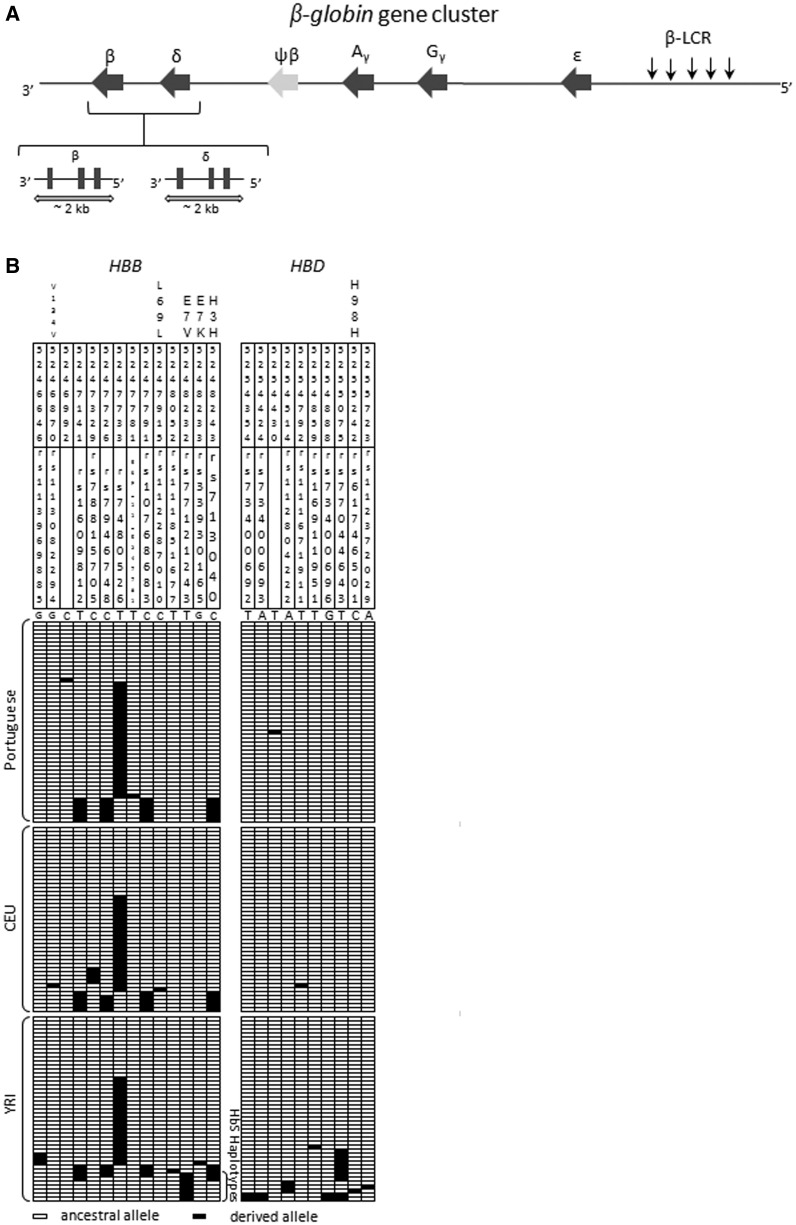
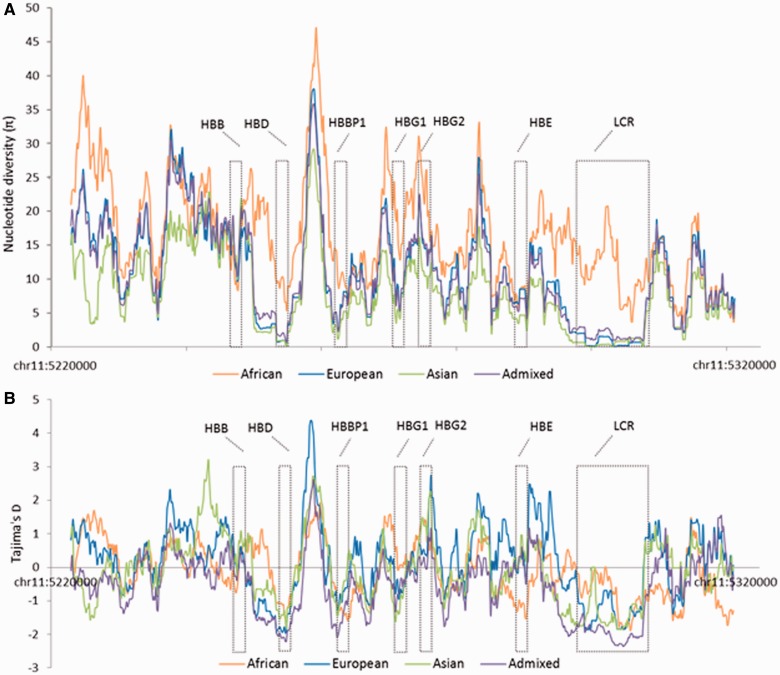
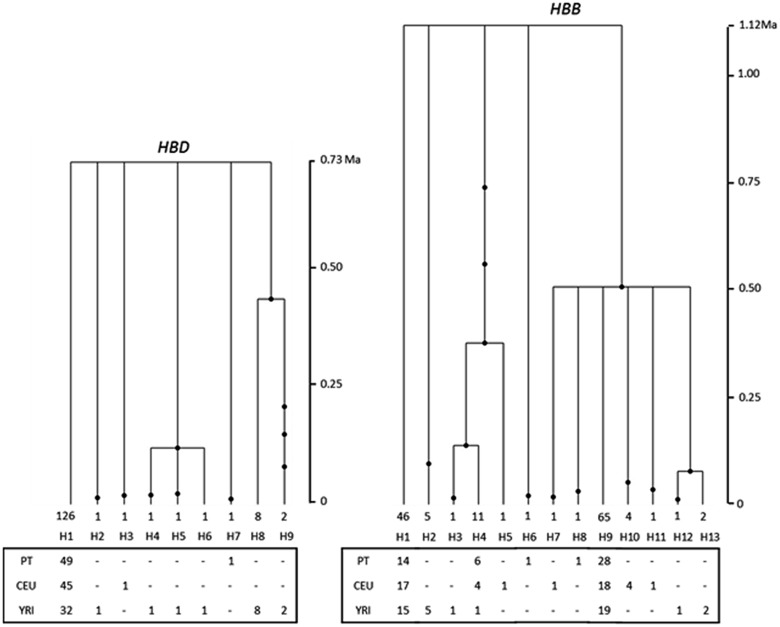
Human hemoglobins, the oxygen carriers in the blood, are composed by two α-like and two β-like globin monomers. The β-globin gene cluster located at 11p15.5 comprises one pseudogene and five genes whose expression undergoes two critical switches: the embryonic-to-fetal and fetal-to-adult transition. HBD encodes the δ-globin chain of the minor adult hemoglobin (HbA2), which is assumed to be physiologically irrelevant. Paradoxically, reduced diversity levels have been reported for this gene. In this study, we sought a detailed portrait of the genetic variation within the β-globin cluster in a large human population panel from different geographic backgrounds. We resequenced the coding and noncoding regions of the two adult β-globin genes (HBD and HBB) in European and African populations, and analyzed the data from the β-globin cluster (HBE, HBG2, HBG1, HBBP1, HBD, and HBB) in 1,092 individuals representing 14 populations sequenced as part of the 1000 Genomes Project. Additionally, we assessed the diversity levels in nonhuman primates using chimpanzee sequence data provided by the PanMap Project. Comprehensive analyses, based on classic neutrality tests, empirical and haplotype-based studies, revealed that HBD and its neighbor pseudogene HBBP1 have mainly evolved under purifying selection, suggesting that their roles are essential and nonredundant. Moreover, in the light of recent studies on the chromatin conformation of the β-globin cluster, we present evidence sustaining that the strong functional constraints underlying the decreased contemporary diversity at these two regions were not driven by protein function but instead are likely due to a regulatory role in ontogenic switches of gene expression.
人类血红蛋白是血液中的氧气载体,由两个α-样和两个β-样球蛋白单体组成。β-珠蛋白基因簇位于 11p15.5,包含一个假基因和五个基因,其表达经历两个关键开关:胚胎到胎儿和胎儿到成人的过渡。HBD 编码次要成人血红蛋白(HbA2)的δ-球蛋白链,该基因被认为在生理上无关紧要。矛盾的是,该基因的多样性水平报告有所降低。在这项研究中,我们在来自不同地理背景的大型人类群体面板中寻求对β-珠蛋白簇内遗传变异的详细描述。我们对欧洲和非洲人群中两个成人β-珠蛋白基因(HBD 和 HBB)的编码和非编码区域进行了重测序,并分析了 1000 基因组计划中 14 个测序人群的β-珠蛋白簇(HBE、HBG2、HBG1、HBBP1、HBD 和 HBB)的数据。此外,我们还使用 PanMap 项目提供的黑猩猩序列数据评估了非人类灵长类动物的多样性水平。基于经典中性测试、经验和基于单倍型的研究的综合分析表明,HBD 及其邻近假基因 HBBP1 主要在净化选择下进化,表明它们的作用是必不可少的和不可替代的。此外,鉴于最近对β-珠蛋白簇染色质构象的研究,我们提出了证据支持这一观点,即这两个区域当代多样性减少的强大功能约束不是由蛋白质功能驱动的,而是可能由于在基因表达的个体发生开关中的调节作用。