Department of Zoology, Tel Aviv University, Tel-Aviv, Israel.
PLoS One. 2013;8(2):e54987. doi: 10.1371/journal.pone.0054987. Epub 2013 Feb 18.
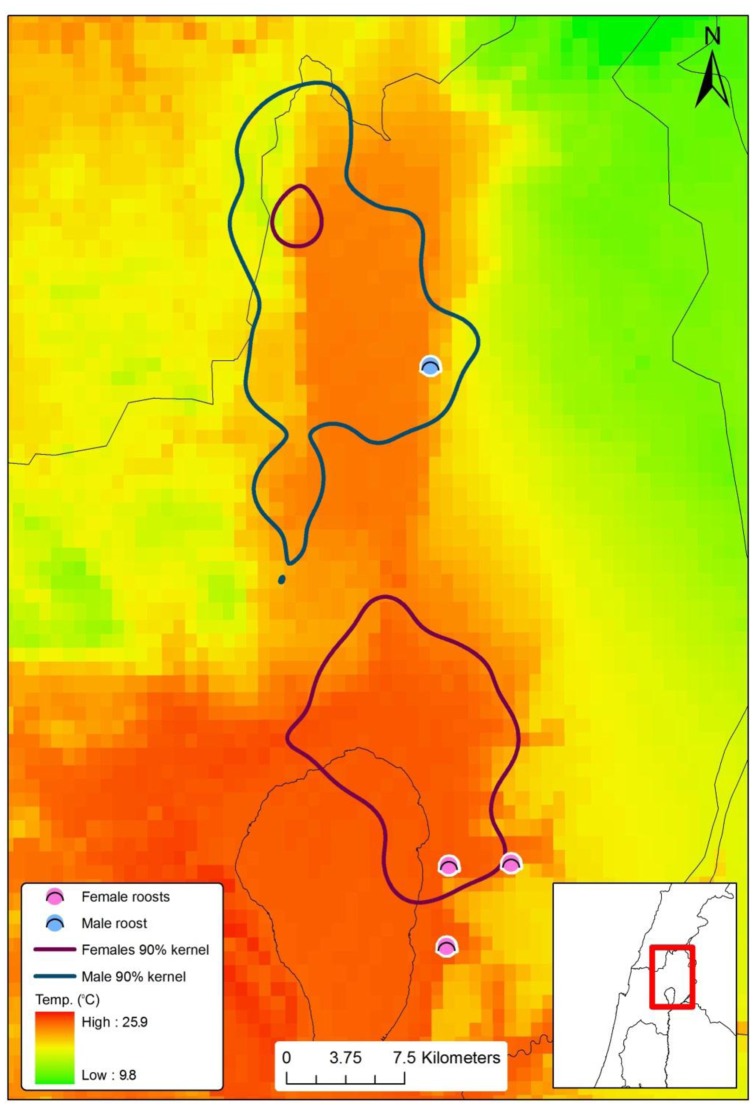
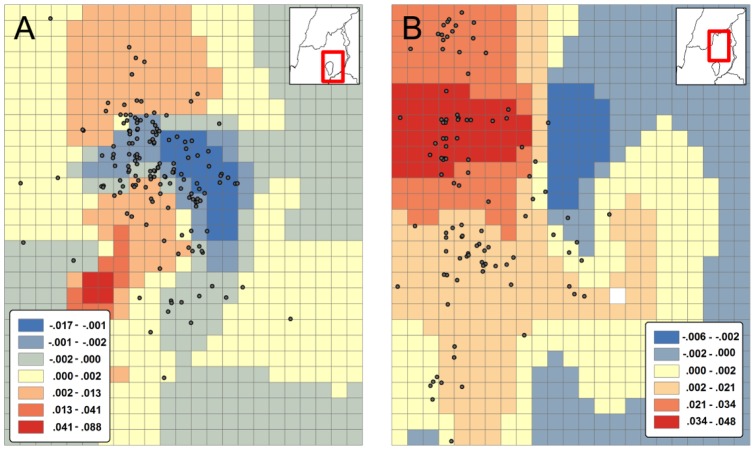
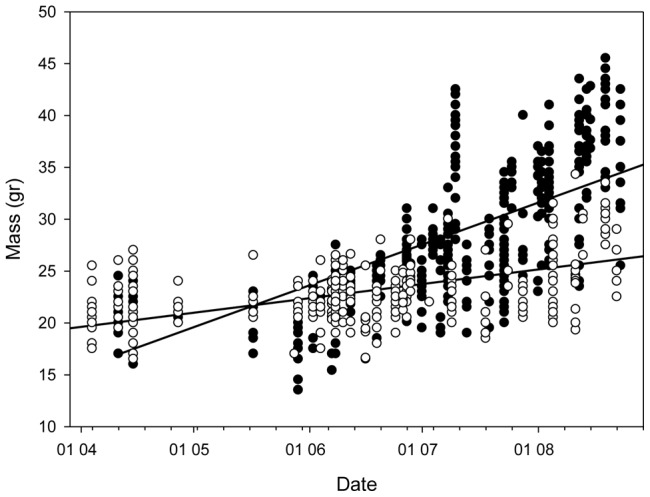
Competition has long been assumed to be a major driver in regulating ecological communities. Intra-specific competition is considered to be maximal as members of the same species use the same ecological niches in a similar way. Many species of animals exhibit great physiological, behavioral, and morphological differences between sexes (sexual dimorphism). Here we report an extreme geographical segregation between the sexes in the greater mouse-tailed bat (Rhinopoma microphyllum). To gain insight into the driving mechanisms of sexual segregation outside the mating season, we collected and integrated environmental, behavioral, physiological, and spatial information. We found that both sexes choose roosts with similar characteristics and the same food type, but use different habitats for different durations. Males forage around cliffs at higher and cooler elevations while females forage in lowlands around a river delta. We suggest that it is their different physiological and social needs, and not competition, that drives sexual segregation in this species.
竞争一直被认为是调节生态群落的主要驱动力。同种内竞争被认为是最大的,因为同一物种的成员以相似的方式使用相同的生态位。许多动物物种在性别之间表现出很大的生理、行为和形态差异(性二态性)。在这里,我们报告了大鼠尾蝙蝠(Rhinopoma microphyllum)在地理上的极端性别隔离。为了深入了解交配季节以外导致性别隔离的驱动机制,我们收集并整合了环境、行为、生理和空间信息。我们发现,雌雄蝙蝠都选择具有相似特征和相同食物类型的栖息地,但它们会在不同的栖息地停留不同的时间。雄性在高海拔和凉爽的悬崖峭壁上觅食,而雌性在河流三角洲周围的低地觅食。我们认为,是它们不同的生理和社会需求,而不是竞争,导致了该物种的性别隔离。