Hsu Pai-Feng, Chuang Shao-Yuan, Cheng Hao-Min, Sung Shih-Hsien, Ting Chih-Tai, Lakatta Edward G, Yin Frank C P, Chou Pesus, Chen Chen-Huan
Department of Medicine, Taipei Veterans General Hospital, Taipei, Taiwan; Institute of Public Health, National Yang-Ming University, Taipei, Taiwan; Cardiovascular Research Center, National Yang-Ming University, Taipei, Taiwan.
Int J Cardiol. 2013 Oct 3;168(3):2057-63. doi: 10.1016/j.ijcard.2013.01.164. Epub 2013 Feb 27.
Uric acid may be involved in the pathogenesis of hypertension. We investigated the roles of four major hemodynamic parameters of blood pressure, including arterial stiffness, wave reflections, cardiac output (CO), and total peripheral resistance (TPR), in the association between uric acid and central systolic blood pressure (SBP-c).
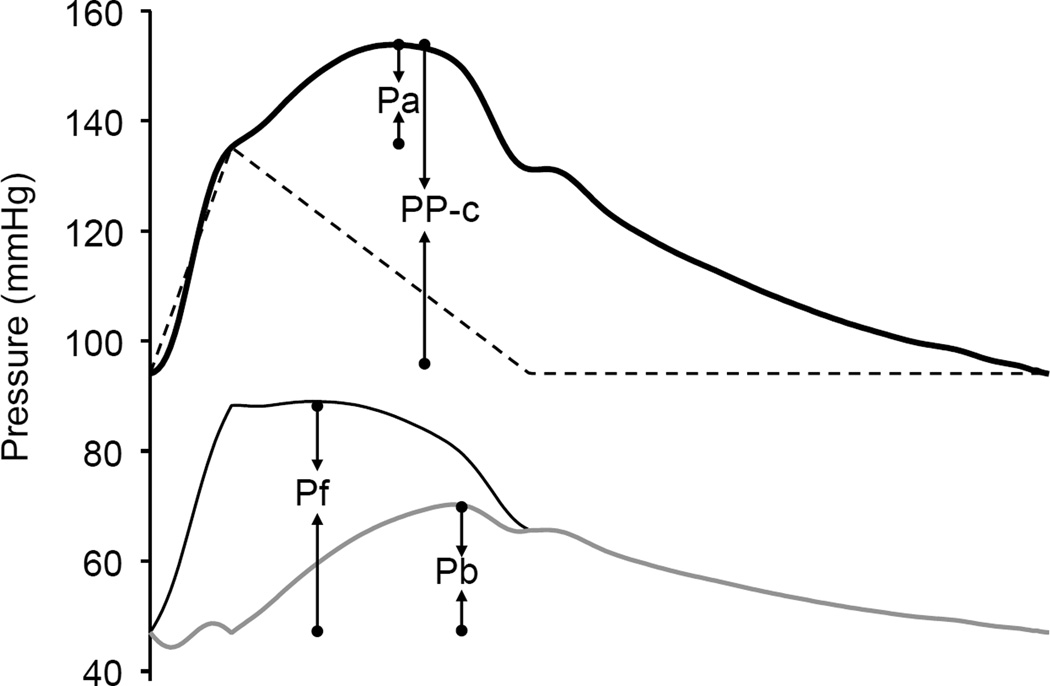
A sample of 1303 normotensive and untreated hypertensive Taiwanese participants (595 women, aged 30-79 years) was drawn from a community-based survey. Study subjects' baseline characteristics, biochemical parameters, carotid-femoral pulse wave velocity (cf-PWV), amplitude of the backward pressure wave decomposed from a calibrated tonometry-derived carotid pressure waveform (Pb), CO, TPR, and SBP-c were analyzed.
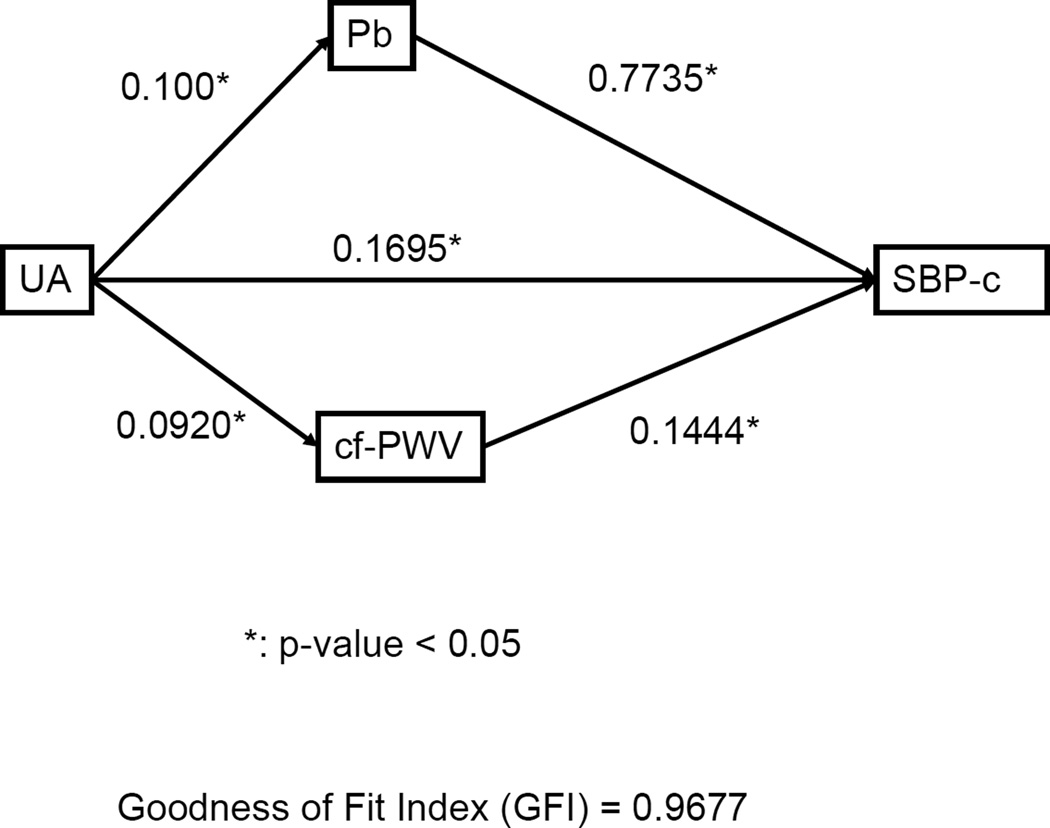
In multi-variate analyses adjusted for age, waist circumference, body mass index, creatinine, total cholesterol, smoking, and heart rate, uric acid significantly correlated with Pb and cf-PWV in men, and Pb and TPR in women. The correlation between uric acid and Pb remained significant in men and women when cf-PWV was further adjusted. In the final multi-variate prediction model (model r(2)=0.839) for SBP-c, the significant independent variables included uric acid (partial r(2)=0.005), Pb (partial r(2)=0.651), cf-PWV (partial r(2)=0.005), CO (partial r(2)=0.062), TPR (partial r(2)=0.021), with adjustment for age, sex, waist circumference, body mass index, creatinine, total cholesterol, smoking, and heart rate.
Uric acid was significantly independently associated with wave reflections, which is the dominant determinant of SBP-c. Uric acid was also significantly associated with SBP-c independently of the major hemodynamic parameters.
尿酸可能参与高血压的发病机制。我们研究了血压的四个主要血流动力学参数,包括动脉僵硬度、波反射、心输出量(CO)和总外周阻力(TPR),在尿酸与中心收缩压(SBP-c)之间关联中的作用。
从一项基于社区的调查中抽取了1303名血压正常且未接受治疗的台湾参与者样本(595名女性,年龄30 - 79岁)。分析了研究对象的基线特征、生化参数、颈股脉搏波速度(cf-PWV)、从校准的眼压计衍生的颈动脉压力波形分解出的反向压力波幅度(Pb)、CO、TPR和SBP-c。
在对年龄、腰围、体重指数、肌酐、总胆固醇、吸烟和心率进行调整的多变量分析中,尿酸与男性的Pb和cf-PWV以及女性的Pb和TPR显著相关。当进一步调整cf-PWV时,尿酸与Pb之间的相关性在男性和女性中仍然显著。在SBP-c的最终多变量预测模型(模型r(2)=0.839)中,显著的独立变量包括尿酸(偏r(2)=0.005)、Pb(偏r(2)=0.651)、cf-PWV(偏r(2)=0.005)、CO(偏r(2)=0.062)、TPR(偏r(2)=0.021),并对年龄、性别、腰围、体重指数、肌酐、总胆固醇、吸烟和心率进行了调整。
尿酸与波反射显著独立相关,波反射是SBP-c的主要决定因素。尿酸还与SBP-c显著相关,且独立于主要血流动力学参数。