Laboratory of Membrane Biochemistry and Biophysics, National Institute on Alcohol Abuse and Alcoholism, National Institutes of Health, Bethesda, MD 20892, USA.
Free Radic Biol Med. 2013 Jul;60:211-22. doi: 10.1016/j.freeradbiomed.2013.02.018. Epub 2013 Feb 27.
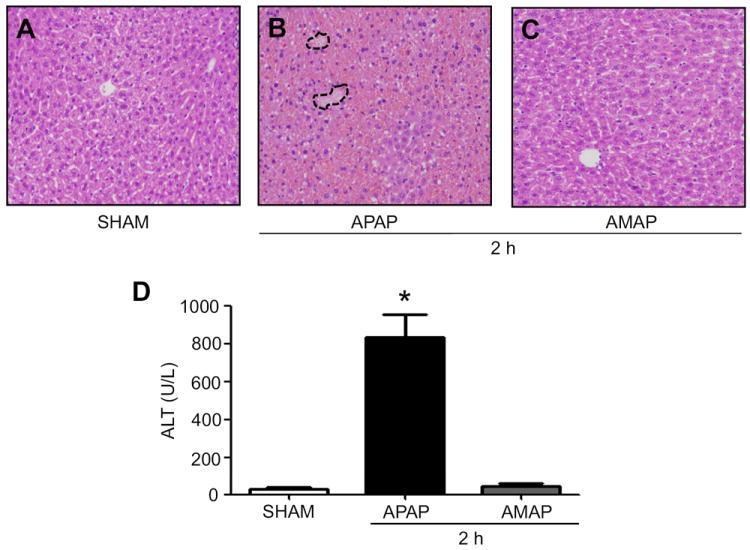
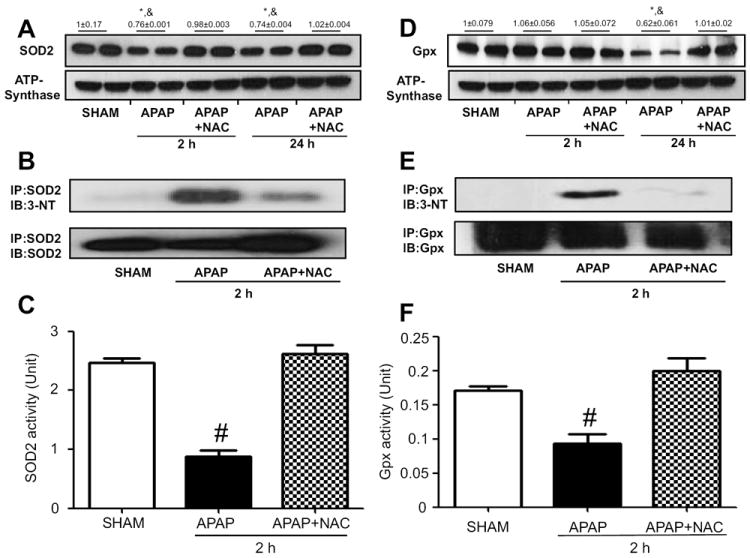
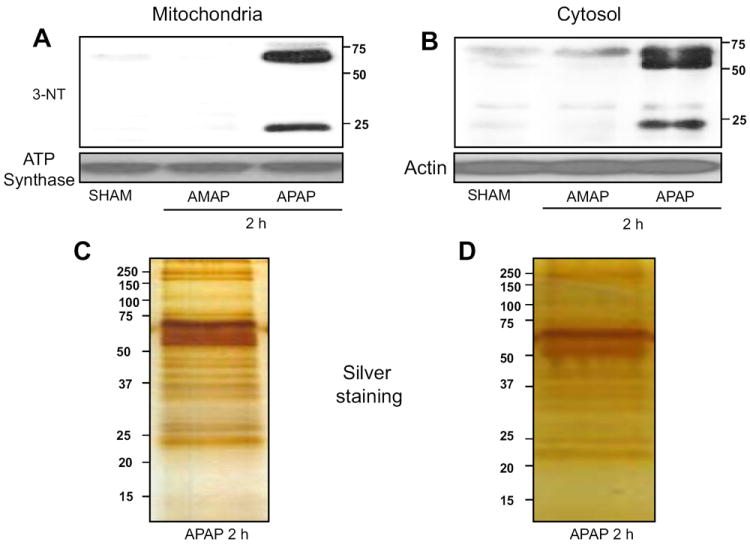
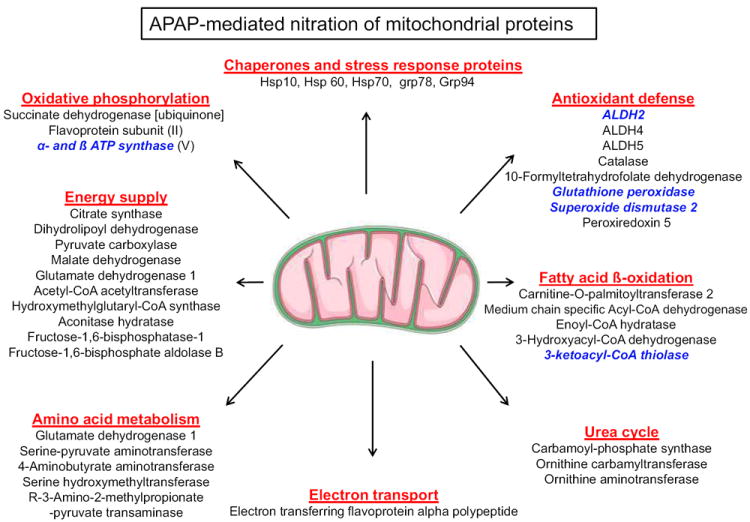
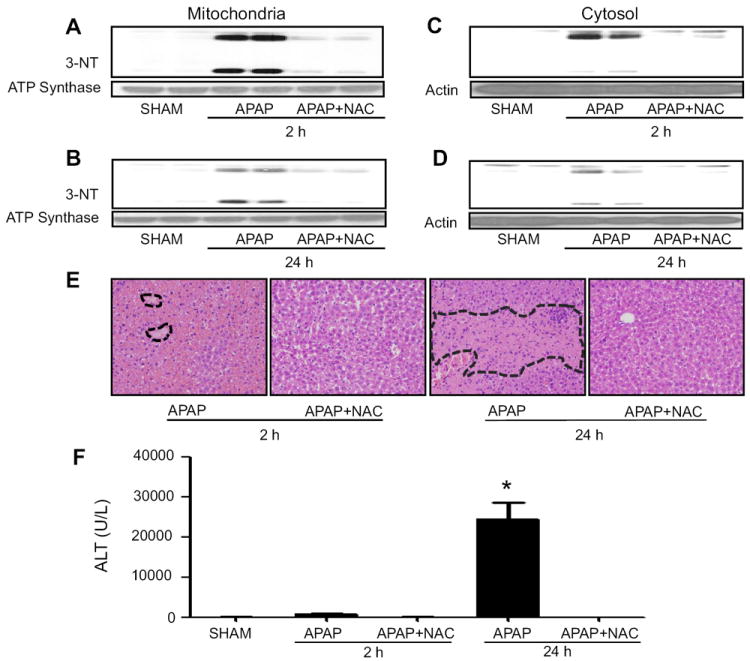
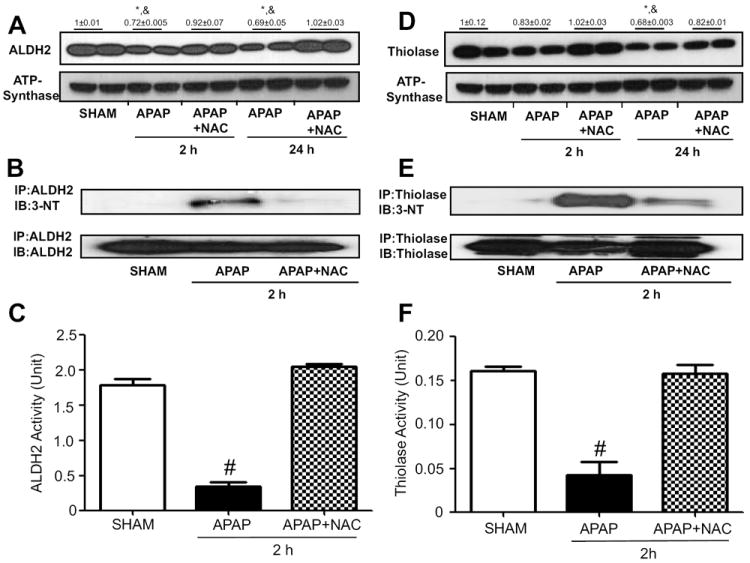
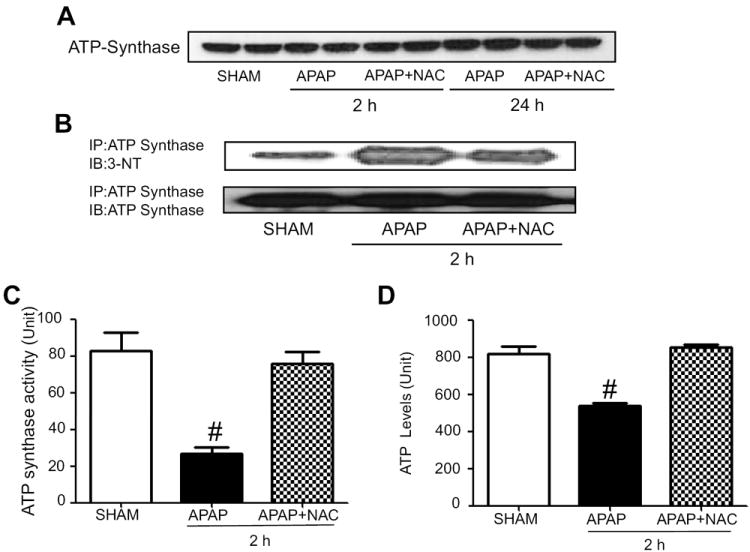
Acetaminophen (APAP), a widely used analgesic/antipyretic agent, can cause liver injury through increased nitrative stress, leading to protein nitration. However, the identities of nitrated proteins and their roles in hepatotoxicity are poorly understood. Thus, we aimed at studying the mechanism of APAP-induced hepatotoxicity by systematic identification and characterization of nitrated proteins in the absence or presence of an antioxidant, N-acetylcysteine (NAC). The levels of nitrated proteins markedly increased at 2h in mice exposed to a single APAP dose (350mg/kg ip), which caused severe liver necrosis at 24h. Protein nitration and liver necrosis were minimal in mice exposed to nontoxic 3-hydroxyacetanilide or animals co-treated with APAP and NAC. Mass-spectral analysis of the affinity-purified nitrated proteins identified numerous mitochondrial and cytosolic proteins, including mitochondrial aldehyde dehydrogenase, Mn-superoxide dismutase, glutathione peroxidase, ATP synthase, and 3-ketoacyl-CoA thiolase, involved in antioxidant defense, energy supply, or fatty acid metabolism. Immunoprecipitation followed by immunoblot with anti-3-nitrotyrosine antibody confirmed that the aforementioned proteins were nitrated in APAP-exposed mice but not in NAC-cotreated mice. Consistently, NAC cotreatment significantly restored the suppressed activity of these enzymes. Thus, we demonstrate a new mechanism by which many nitrated proteins with concomitantly suppressed activity promotes APAP-induced mitochondrial dysfunction and hepatotoxicity.
对乙酰氨基酚(APAP)是一种广泛使用的镇痛/解热剂,可通过增加硝化应激导致蛋白质硝化,从而引起肝损伤。然而,硝化蛋白的身份及其在肝毒性中的作用仍知之甚少。因此,我们旨在通过系统地鉴定和表征在抗氧化剂 N-乙酰半胱氨酸(NAC)存在或不存在的情况下,APAP 诱导的肝毒性中的硝化蛋白,来研究 APAP 诱导的肝毒性的机制。在单次 APAP 剂量(350mg/kg ip)暴露的小鼠中,在 2h 时硝化蛋白的水平明显增加,在 24h 时导致严重的肝坏死。在暴露于无毒 3-乙酰氨基酚或同时接受 APAP 和 NAC 治疗的动物的小鼠中,蛋白质硝化和肝坏死最小。用亲和纯化的硝化蛋白进行质谱分析鉴定了许多线粒体和细胞质蛋白,包括线粒体乙醛脱氢酶、Mn-超氧化物歧化酶、谷胱甘肽过氧化物酶、ATP 合酶和 3-酮酰基辅酶 A 硫解酶,这些蛋白参与抗氧化防御、能量供应或脂肪酸代谢。用抗 3-硝基酪氨酸抗体进行免疫沉淀后免疫印迹证实,上述蛋白在 APAP 暴露的小鼠中发生硝化,而在 NAC 共同处理的小鼠中未发生硝化。一致地,NAC 共同处理显著恢复了这些酶的抑制活性。因此,我们证明了一种新的机制,即许多同时抑制活性的硝化蛋白促进了 APAP 诱导的线粒体功能障碍和肝毒性。