Cancer Center, Xiamen University Medical College, Xiamen, People's Republic of China.
PLoS One. 2013;8(2):e56666. doi: 10.1371/journal.pone.0056666. Epub 2013 Feb 14.
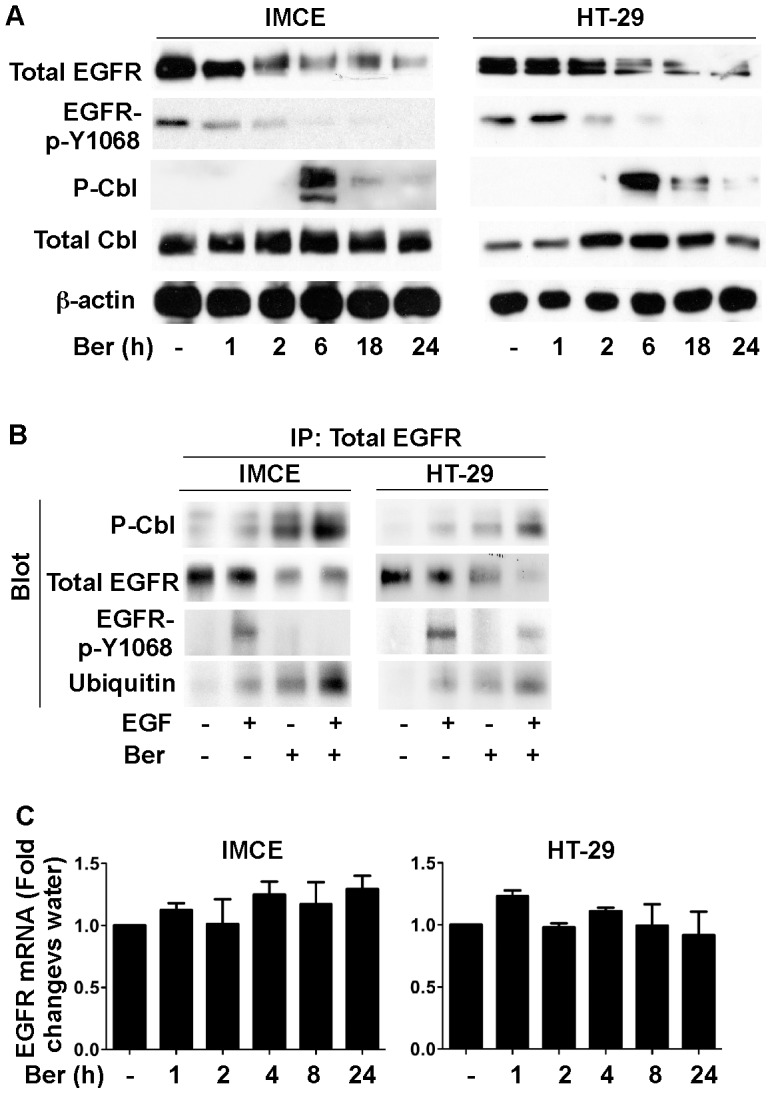
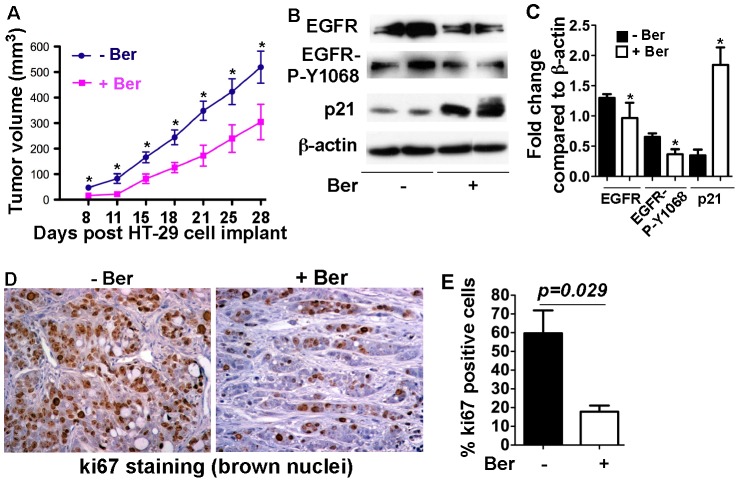
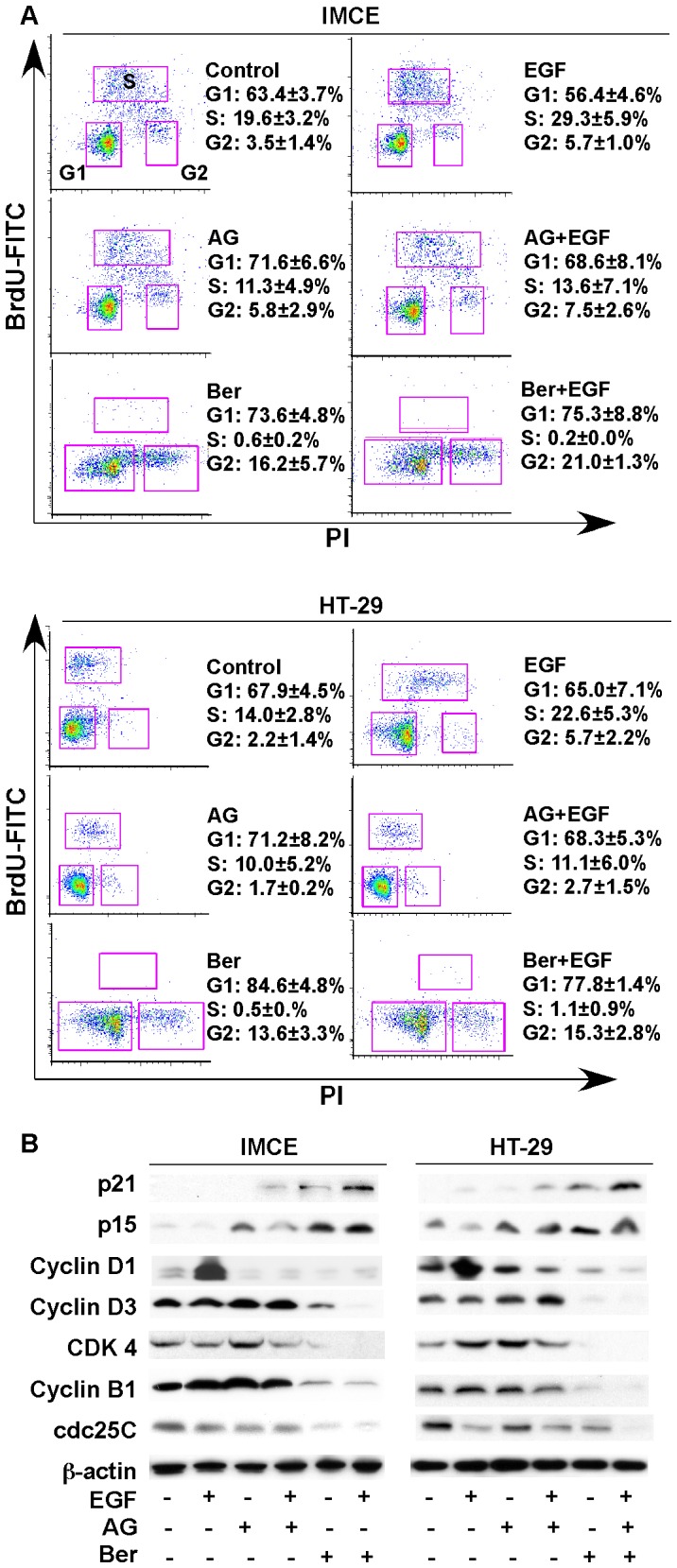
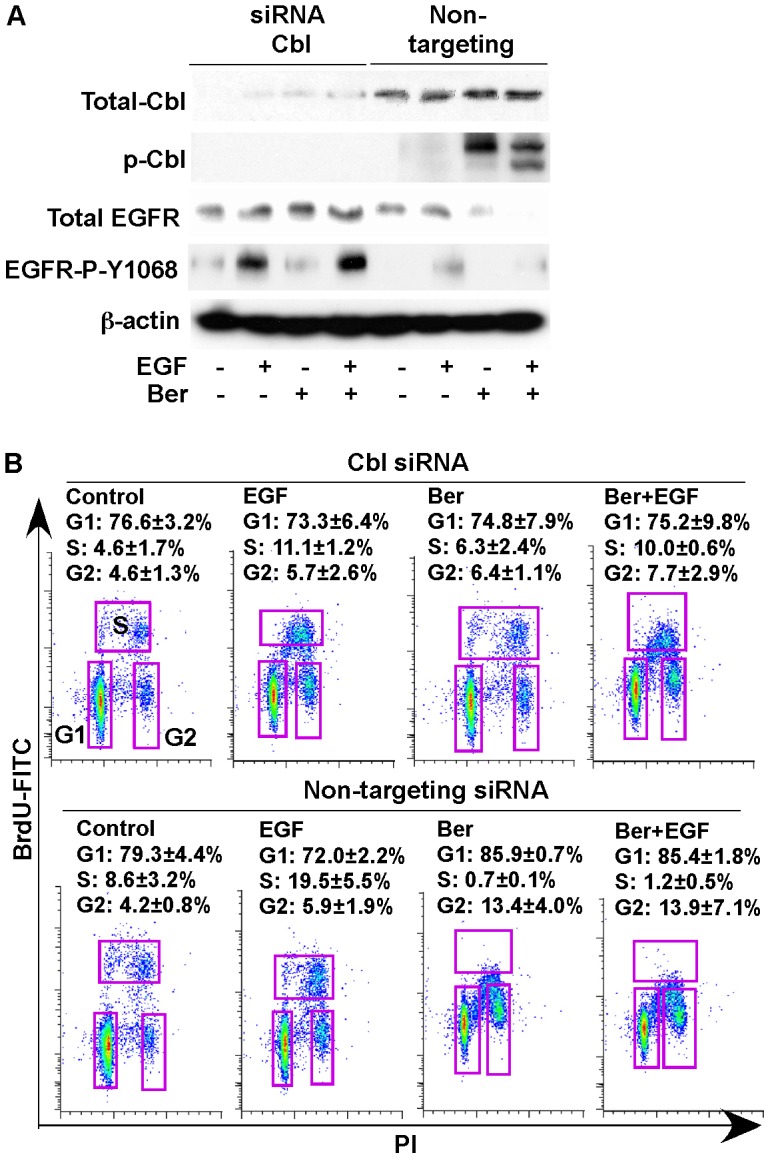
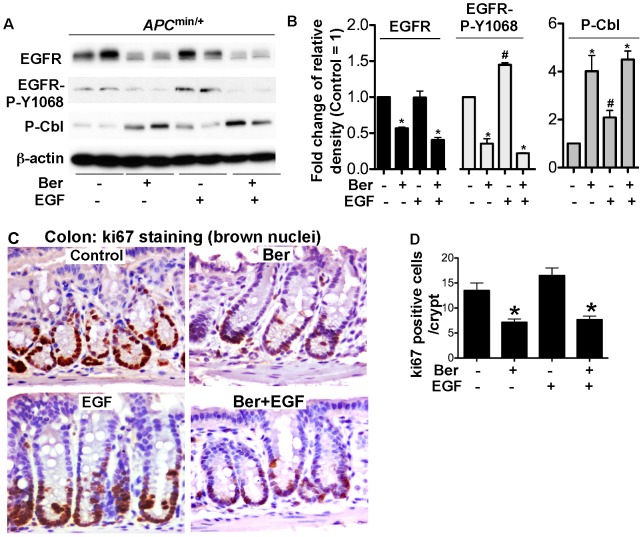
Berberine, an isoquinoline alkaloid, is an active component of Ranunculaceae and Papaveraceae plant families. Berberine has been found to suppress growth of several tumor cell lines in vitro through the cell-type-dependent mechanism. Expression and activation of epidermal growth factor receptor (EGFR) is increased in colonic precancerous lesions and tumours, thus EGFR is considered a tumour promoter. The aim of this study was to investigate the effects and mechanisms of berberine on regulation of EGFR activity and proliferation in colonic tumor cell lines and in vivo. We reported that berberine significantly inhibited basal level and EGF-stimulated EGFR activation and proliferation in the immorto Min mouse colonic epithelial (IMCE) cells carrying the APC(min) mutation and human colonic carcinoma cell line, HT-29 cells. Berberine acted to inhibit proliferation through inducing G1/S and G2/M cell cycle arrest, which correlated with regulation of the checkpoint protein expression. In this study, we also showed that berberine stimulated ubiquitin ligase Cbl activation and Cbl's interaction with EGFR, and EGFR ubiquitinylation and down-regulation in these two cell lines in the presence or absence of EGF treatment. Knock-down Cbl expression blocked the effects of berberine on down-regulation of EGFR and inhibition of proliferation. Furthermore, berberine suppressed tumor growth in the HT-29 cell xenograft model. Cell proliferation and EGFR expression level was decreased by berberine treatment in this xenograft model and in colon epithelial cells of APC(min/+) mice. Taken together, these data indicate that berberine enhances Cbl activity, resulting in down-regulation of EGFR expression and inhibition of proliferation in colon tumor cells.
小檗碱是一种异喹啉生物碱,是毛茛科和罂粟科植物的活性成分。小檗碱已被发现通过细胞类型依赖性机制在体外抑制几种肿瘤细胞系的生长。表皮生长因子受体 (EGFR) 的表达和激活在结肠癌前病变和肿瘤中增加,因此 EGFR 被认为是肿瘤促进剂。本研究旨在研究小檗碱对调节结肠肿瘤细胞系和体内 EGFR 活性和增殖的作用和机制。我们报道小檗碱显著抑制携带 APC(min) 突变的 immorto Min 小鼠结肠上皮 (IMCE) 细胞和人结肠癌细胞系 HT-29 细胞中基础水平和 EGF 刺激的 EGFR 激活和增殖。小檗碱通过诱导 G1/S 和 G2/M 细胞周期停滞来抑制增殖,这与检查点蛋白表达的调节相关。在这项研究中,我们还表明小檗碱刺激泛素连接酶 Cbl 的激活和 Cbl 与 EGFR 的相互作用,以及在存在或不存在 EGF 处理的情况下,这两种细胞系中 EGFR 的泛素化和下调。敲低 Cbl 表达可阻断小檗碱对 EGFR 下调和增殖抑制的作用。此外,小檗碱抑制 HT-29 细胞异种移植模型中的肿瘤生长。在该异种移植模型和 APC(min/+) 小鼠结肠上皮细胞中,小檗碱处理降低了细胞增殖和 EGFR 表达水平。总之,这些数据表明小檗碱增强了 Cbl 的活性,导致结肠肿瘤细胞中 EGFR 表达的下调和增殖的抑制。