Institute of Pharmacology, Polish Academy of Sciences, 31-343 Kraków, Poland.
Psychopharmacology (Berl). 2013 Jun;227(4):711-25. doi: 10.1007/s00213-013-3005-0. Epub 2013 Mar 10.
Several studies have suggested that modulation of the glutamatergic system via metabotropic glutamate receptors (mGlu) could be a new way to achieve antipsychotic-like activity. LSP1-2111, the group III mGlu receptor orthosteric agonist, with a high affinity towards mGlu4 receptors, was previously shown to exhibit antipsychotic-like action in animal models displaying positive symptoms of schizophrenia.
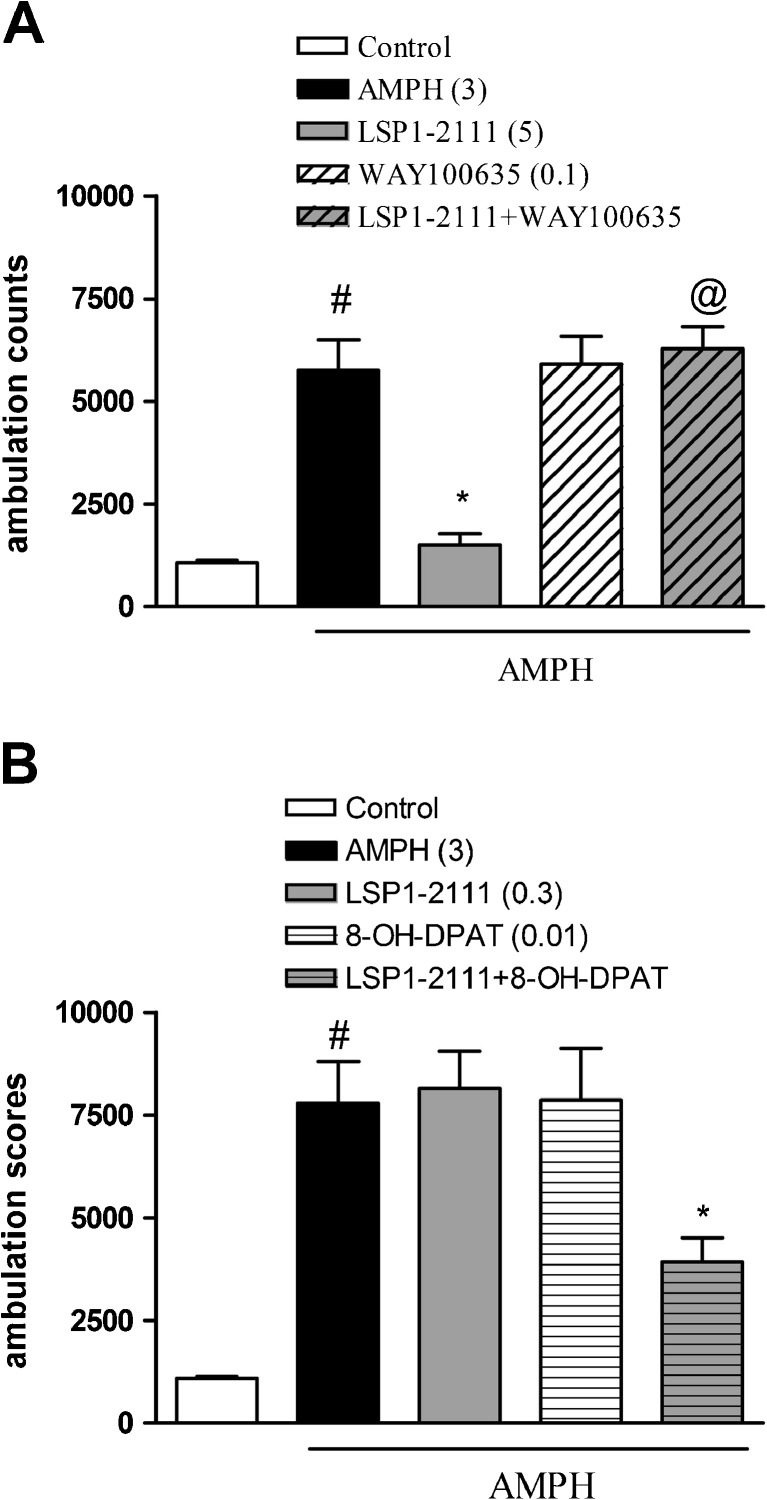
Here, we decided to investigate the possible role of LSP1-2111 in models of negative (social interaction) and cognitive (NOR) symptoms of psychosis. We also investigated the involvement of 5-HT1A receptors in the LSP1-2111-induced antipsychotic effects. Apart from the above-mentioned models of negative and cognitive symptoms, MK-801 and amphetamine-induced hyperactivity tests, plus the DOI-induced head twitches in mice as models for positive symptoms of psychosis, were used in this part of the investigations.
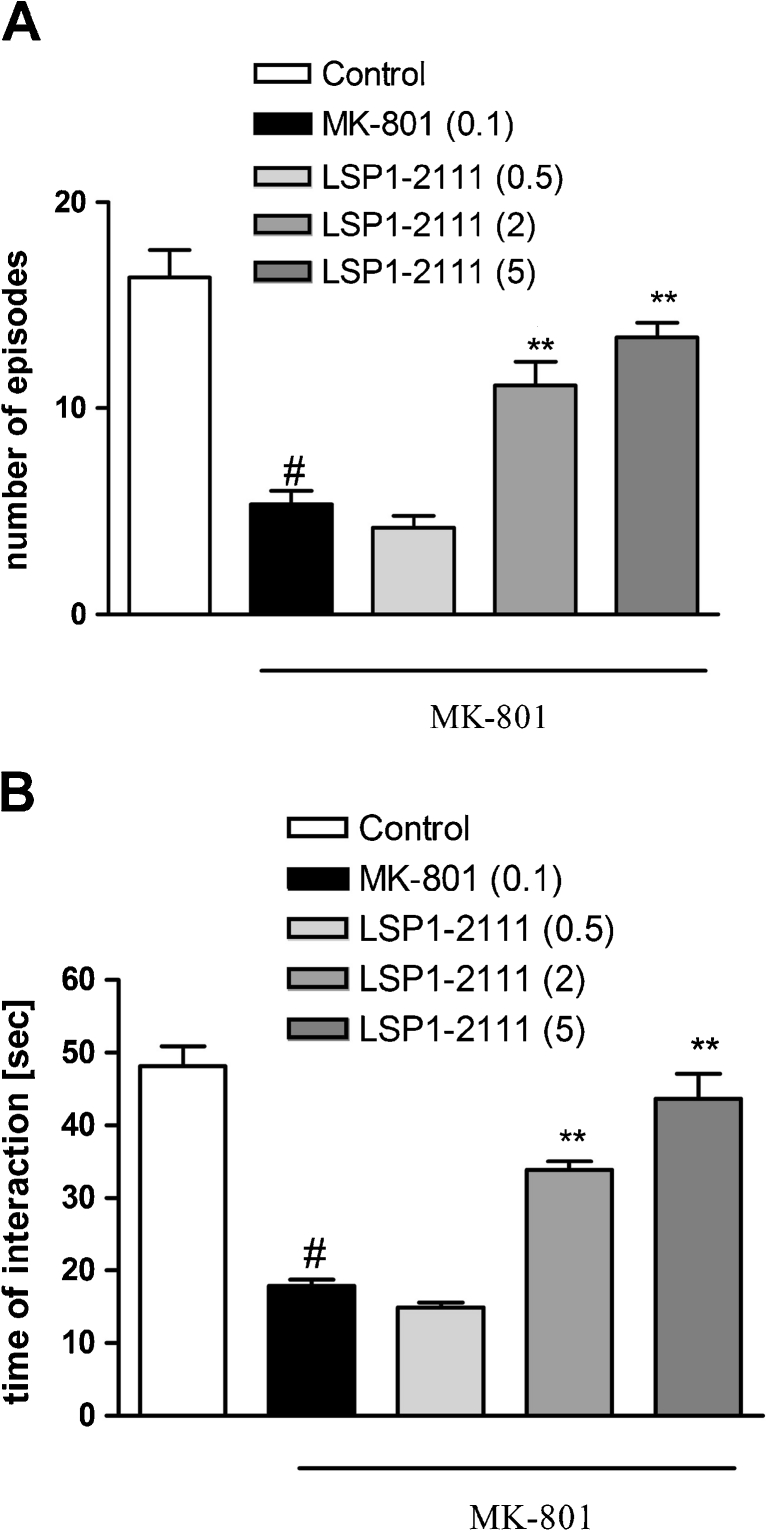
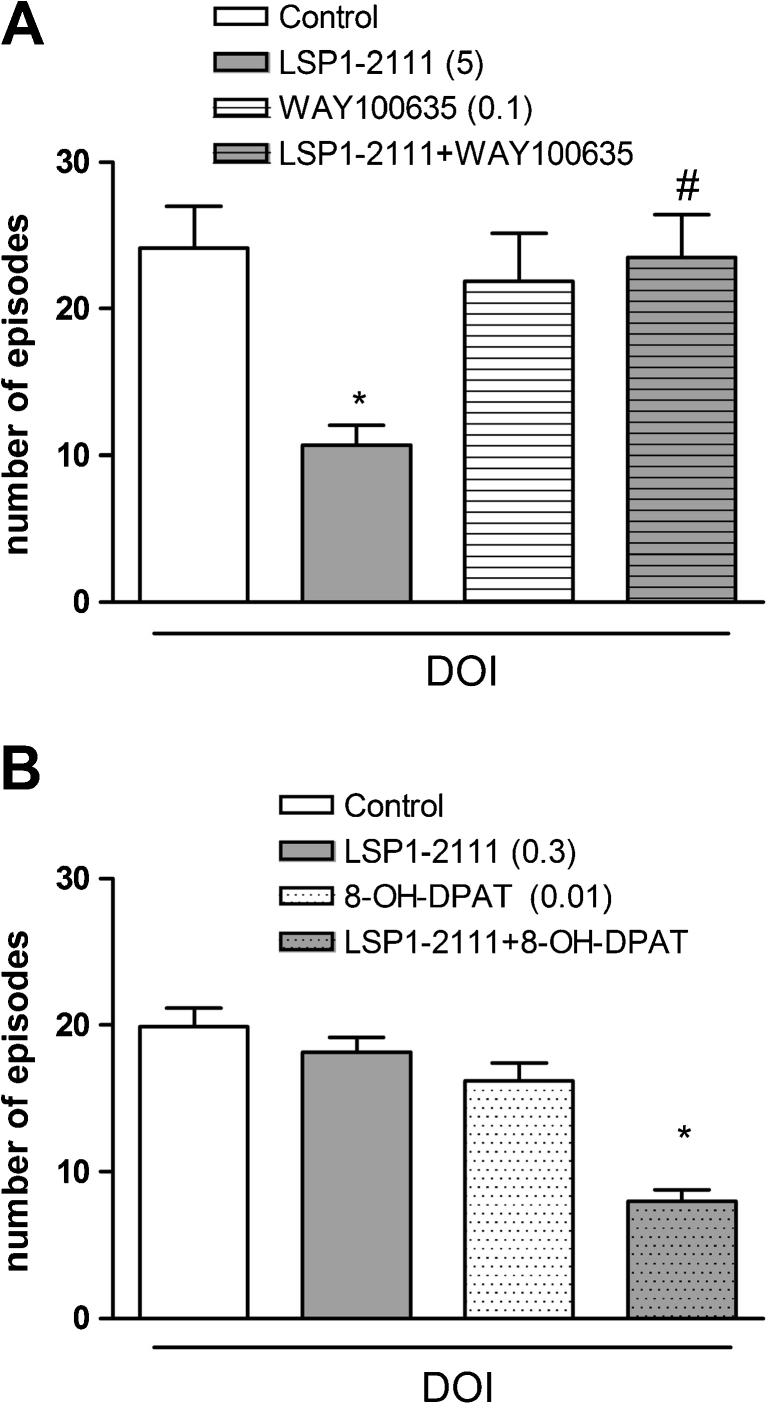
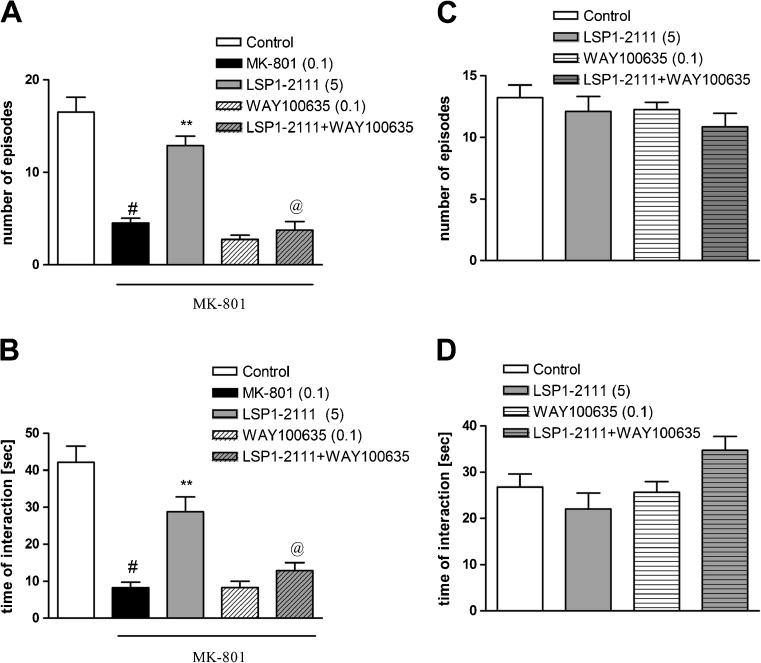
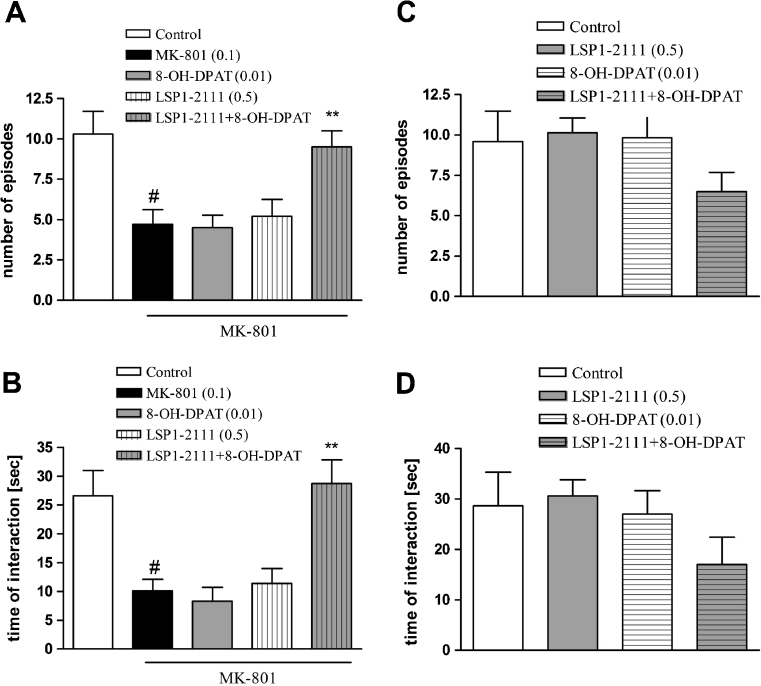
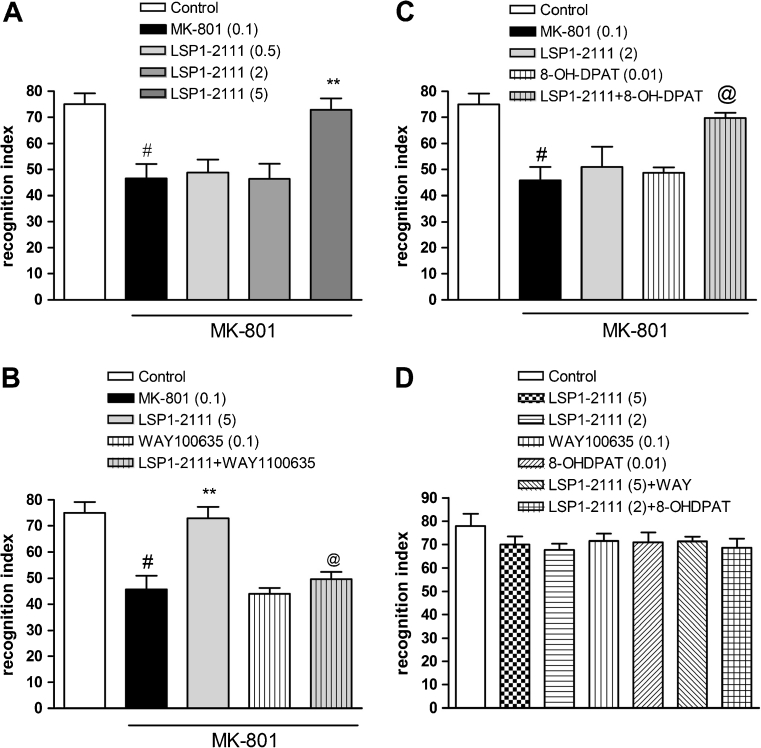
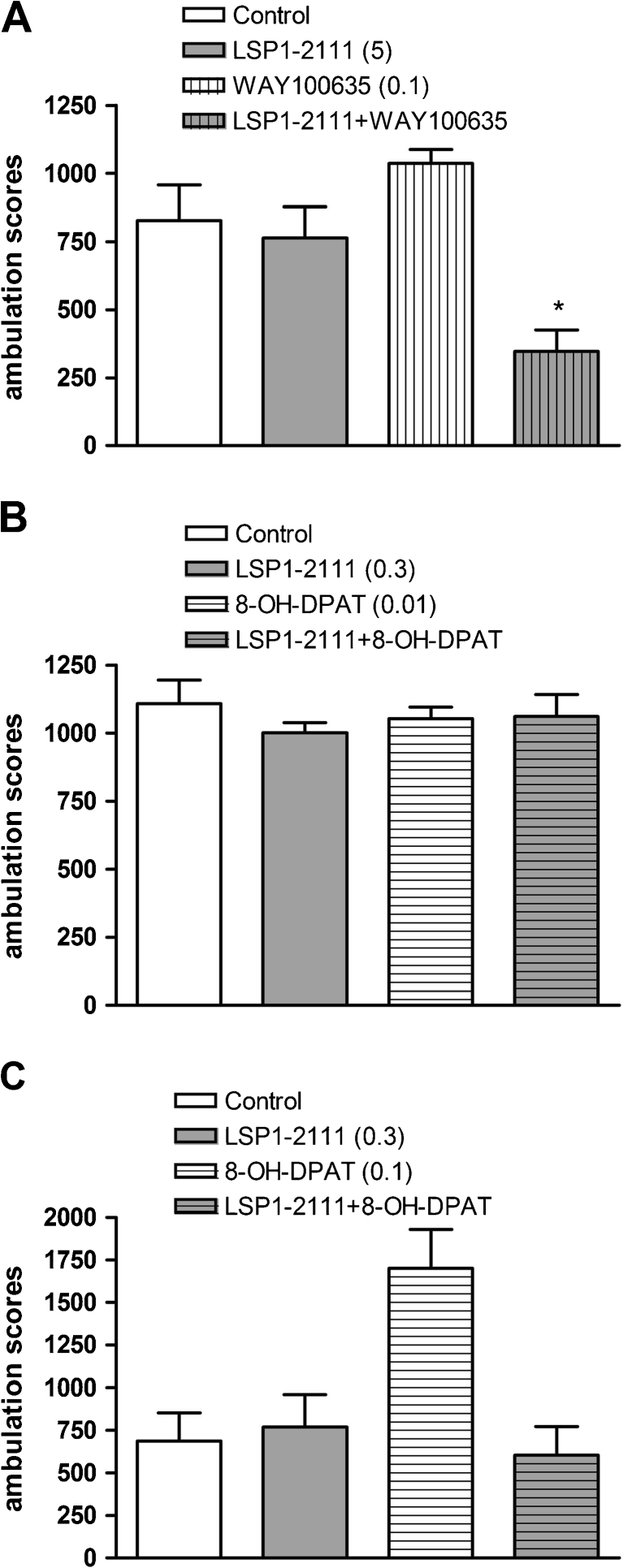
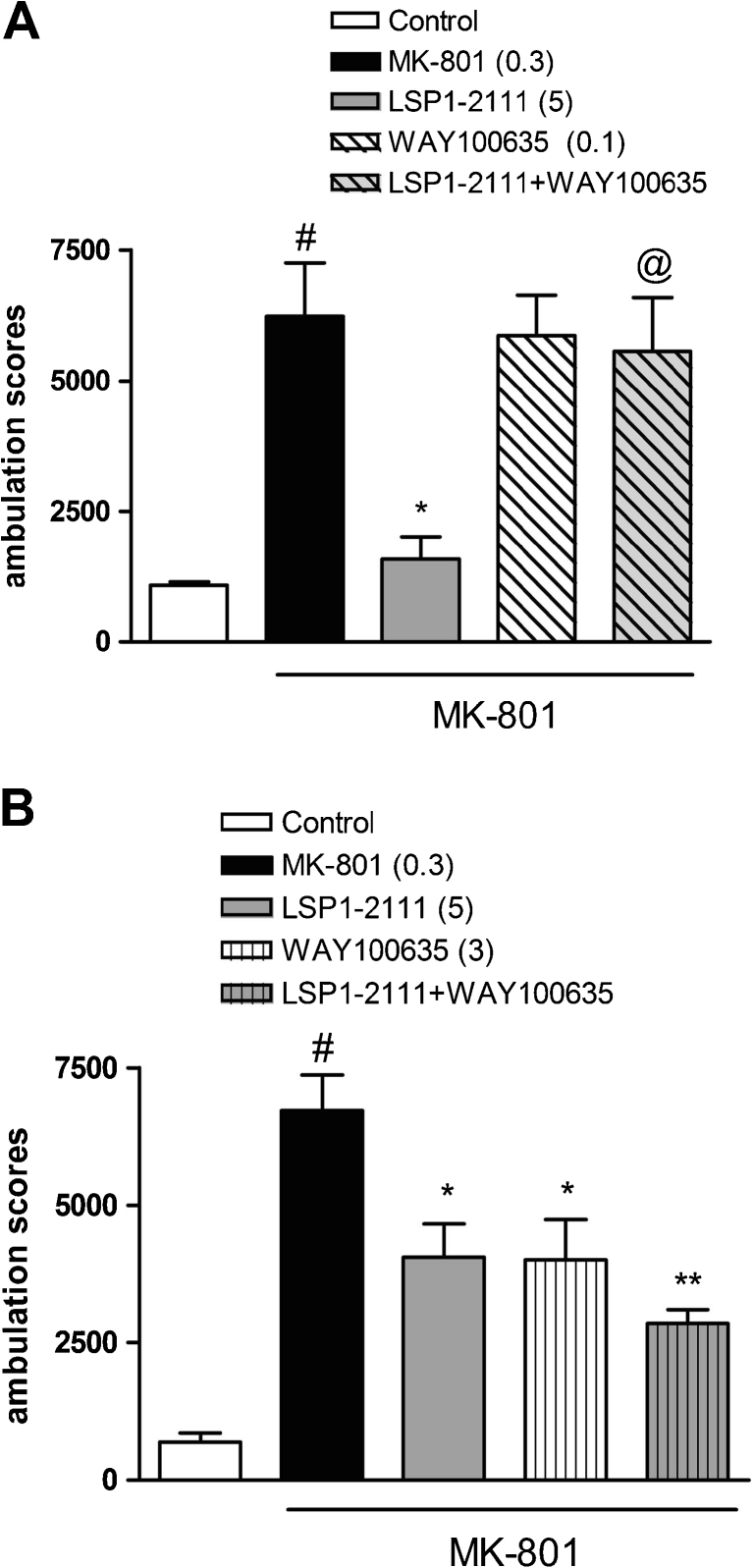
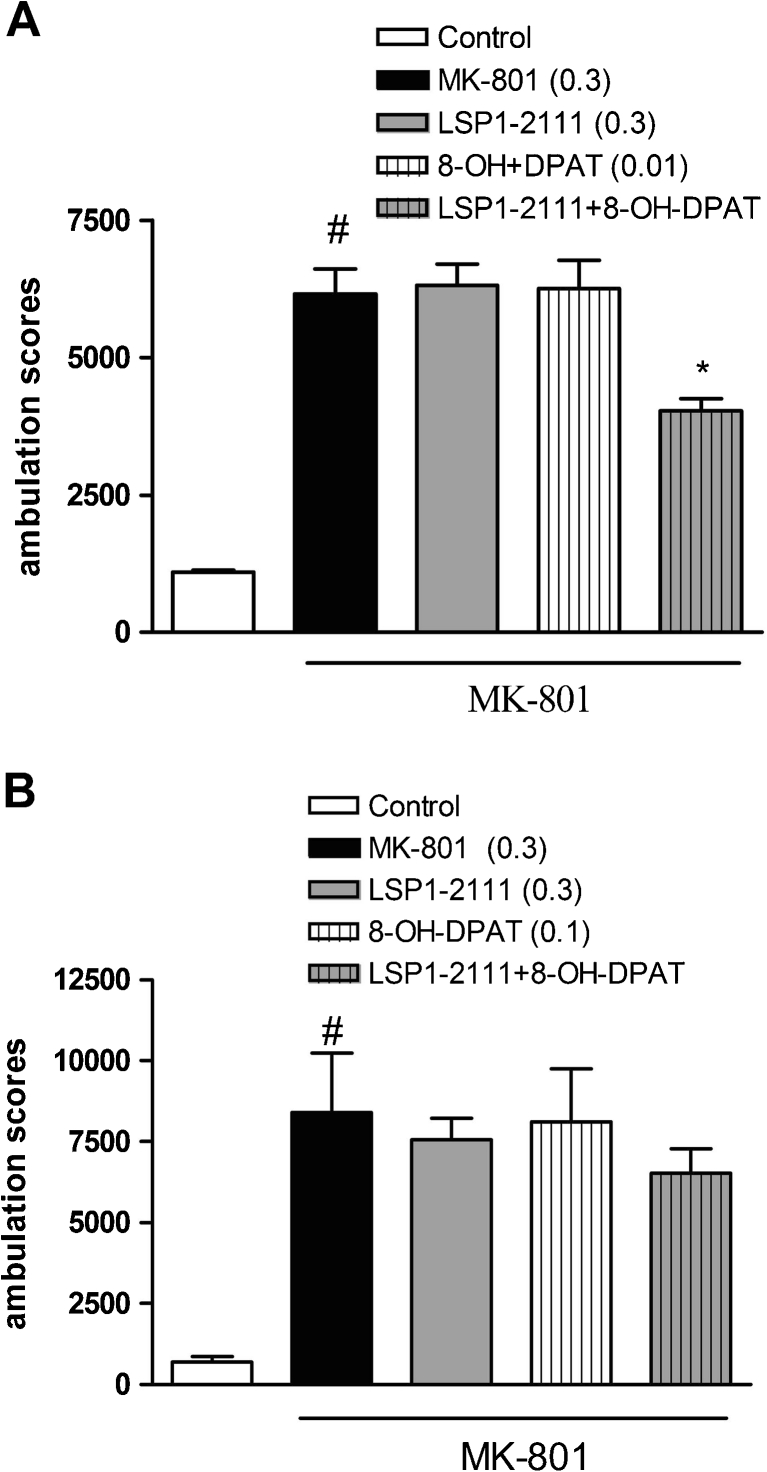
LSP1-2111 (0.5, 2, and 5 mg/ kg) dose-dependently inhibited MK-801-induced deficits in social interaction and NOR tests. The effects of the drug were antagonized by 5-HT1A antagonist, WAY100635 (0.1 mg/kg). A similar inhibition of LSP1-2111-induced effects was observed in models of positive symptoms of schizophrenia. Moreover, the concomitant administration of subeffective doses of LSP1-2111 (0.3-0.5 mg/kg) with a subeffective dose of 5-HT1A agonist, (R)-(+)-8-Hydroxy-DPAT (0.01 mg/kg), induced a clear antipsychotic-like effect in all of the procedures used.
Altogether, we propose that the activation of group III mGlu receptors may be a promising target for the development of novel antipsychotic drugs, towards not only positive but also negative and cognitive symptoms. The action of the compound is 5-HT1A-dependent.
几项研究表明,通过代谢型谷氨酸受体(mGlu)调节谷氨酸能系统可能是实现类似抗精神病作用的新方法。LSP1-2111 是一种 III 组 mGlu 受体正构激动剂,对 mGlu4 受体具有高亲和力,先前已显示在表现出精神分裂症阳性症状的动物模型中具有类似抗精神病作用。
在这里,我们决定研究 LSP1-2111 在阴性(社交互动)和认知(NOR)精神病症状模型中的可能作用。我们还研究了 5-HT1A 受体在 LSP1-2111 诱导的抗精神病作用中的参与。除了上述阴性和认知症状模型外,MK-801 和安非他命诱导的过度活动测试,以及 DOI 诱导的小鼠头部抽搐作为精神分裂症阳性症状的模型,也用于本研究的这一部分。
LSP1-2111(0.5、2 和 5mg/kg)剂量依赖性地抑制 MK-801 诱导的社交互动和 NOR 测试缺陷。该药物的作用被 5-HT1A 拮抗剂 WAY100635(0.1mg/kg)拮抗。在精神分裂症阳性症状的模型中也观察到药物的类似抑制作用。此外,在与亚效剂量的 LSP1-2111(0.3-0.5mg/kg)联合给药时,亚效剂量的 5-HT1A 激动剂(R)-(+)-8-羟基-DPAT(0.01mg/kg),在所有使用的程序中都诱导出明显的类似抗精神病作用。
总之,我们提出激活 III 组 mGlu 受体可能是开发新型抗精神病药物的有前途的靶点,不仅针对阳性症状,还针对阴性和认知症状。该化合物的作用是 5-HT1A 依赖性的。