Aponte-Tinao Luis A, Ayerza Miguel A, Muscolo D Luis, Farfalli German L
Institute of Orthopedics "Carlos E. Ottolenghi," Italian Hospital of Buenos Aires, 1199 Buenos Aires, Argentina.
Sarcoma. 2013;2013:925413. doi: 10.1155/2013/925413. Epub 2013 Feb 14.
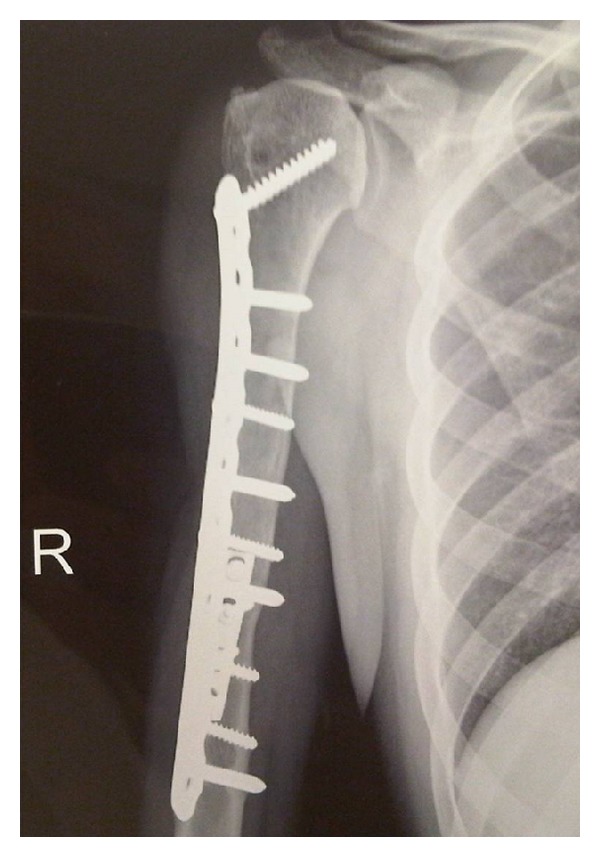
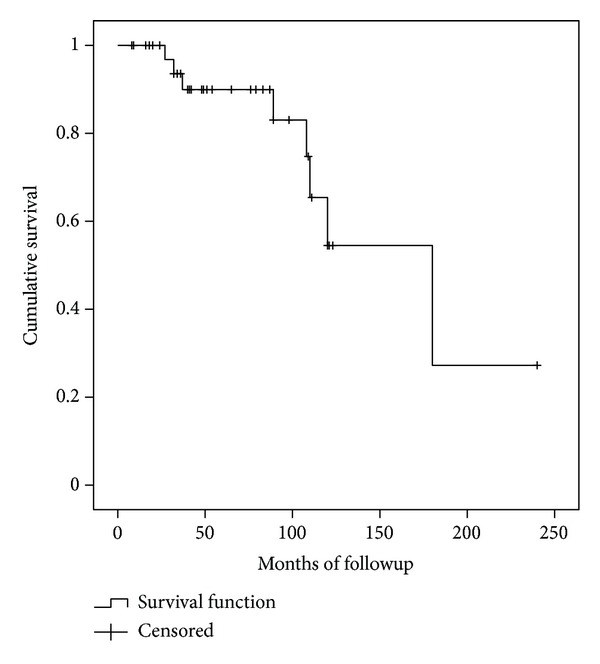
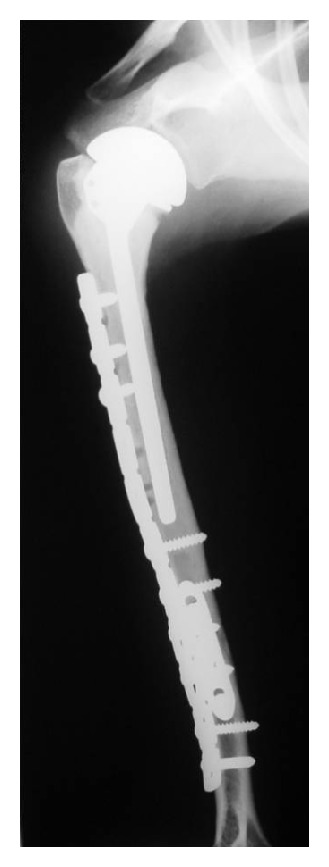
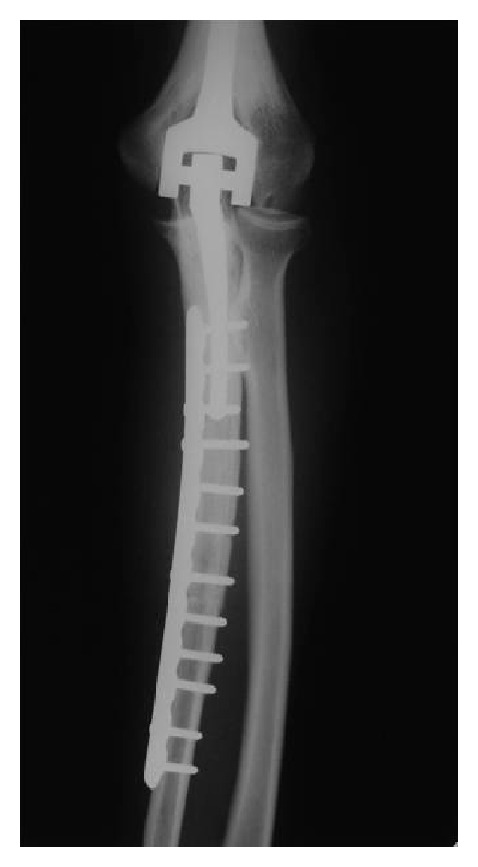
In comparison with the lower extremity, there is relatively paucity literature reporting survival and clinical results of allograft reconstructions after excision of a bone tumor of the upper extremity. We analyze the survival of allograft reconstructions in the upper extremity and analyze the final functional score according to anatomical site and type of reconstruction. A consecutive series of 70 allograft reconstruction in the upper limb with a mean followup of 5 years was analyzed, 38 osteoarticular allografts, 24 allograft-prosthetic composites, and 8 intercalary allografts. Kaplan-Meier survival analysis of the allografts was performed, with implant revision for any cause and amputation used as the end points. The function evaluation was performed using MSTS functional score. Sixteen patients (23%) had revision surgery for 5 factures, 2 infections, 5 allograft resorptions, and 2 local recurrences. Allograft survival at five years was 79% and 69% at ten years. In the group of patients treated with an osteoarticular allograft the articular surface survival was 90% at five years and 54% at ten years. The limb salvage rate was 98% at five and 10 years. We conclude that articular deterioration and fracture were the most frequent mode of failure in proximal humeral osteoarticular reconstructions and allograft resorption in elbow reconstructions. The best functional score was observed in the intercalary humeral allograft.
与下肢相比,关于上肢骨肿瘤切除术后同种异体移植重建的生存率和临床结果的文献相对较少。我们分析了上肢同种异体移植重建的生存率,并根据解剖部位和重建类型分析了最终功能评分。对连续70例上肢同种异体移植重建进行了分析,平均随访5年,其中38例为骨关节同种异体移植,24例为同种异体移植-假体复合物,8例为节段性同种异体移植。对同种异体移植进行了Kaplan-Meier生存分析,将因任何原因进行的植入物翻修和截肢作为终点。使用MSTS功能评分进行功能评估。16例患者(23%)因5例骨折、2例感染、5例同种异体移植吸收和2例局部复发接受了翻修手术。同种异体移植5年生存率为79%,10年生存率为69%。在接受骨关节同种异体移植治疗的患者组中,关节面5年生存率为90%,10年生存率为54%。5年和10年的保肢率均为98%。我们得出结论,关节退变和骨折是近端肱骨骨关节重建中最常见的失败模式,而肘关节重建中同种异体移植吸收是最常见的失败模式。节段性肱骨同种异体移植的功能评分最佳。