Gatto M R A, Bandini L, Montevecchi M, Checchi L
School of Dental Hygiene, Alma Mater Studiorum University of Bologna, 40125 Bologna, Italy.
ScientificWorldJournal. 2013;2013:459281. doi: 10.1155/2013/459281. Epub 2013 Feb 14.
Aim of this analysis was to identify trends that will aid in the prevention of injury.
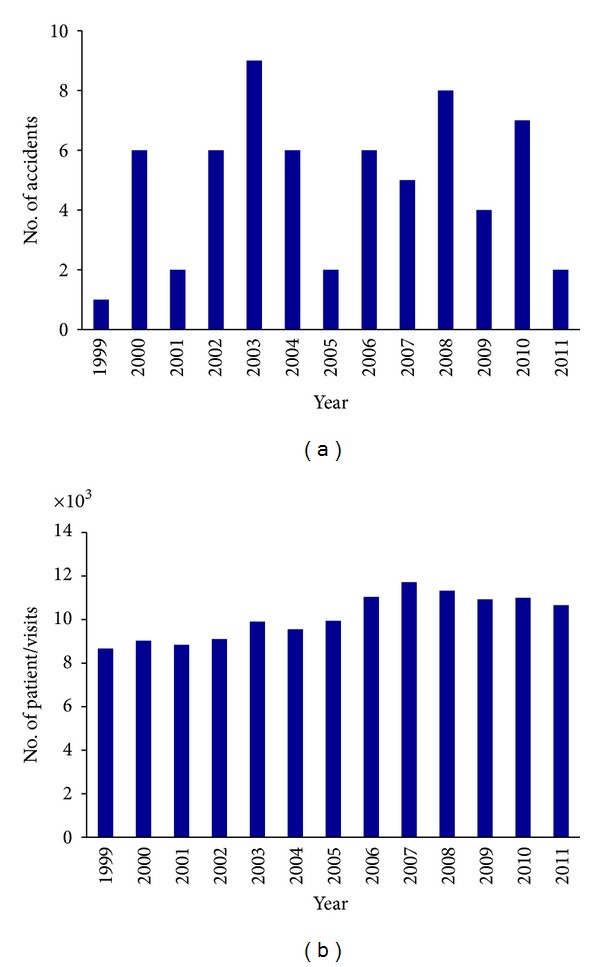
Our data were collected from 1999 to 2011 during a surveillance program of occupational exposures to blood or other potentially infectious materials in a Dental School by using a standard coded protocol.
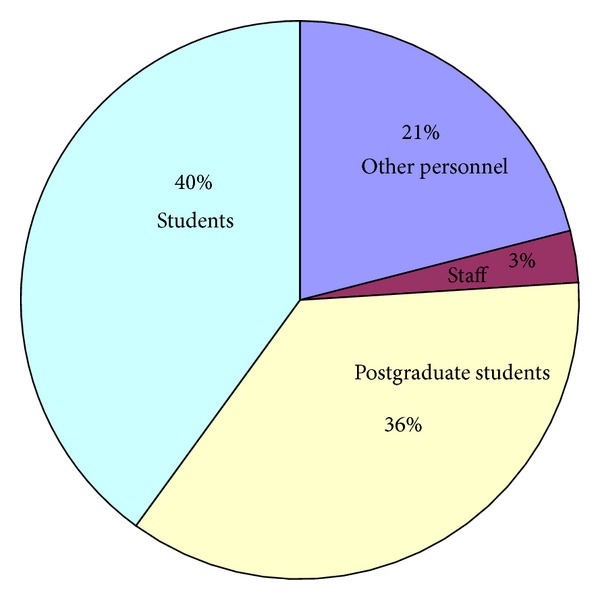
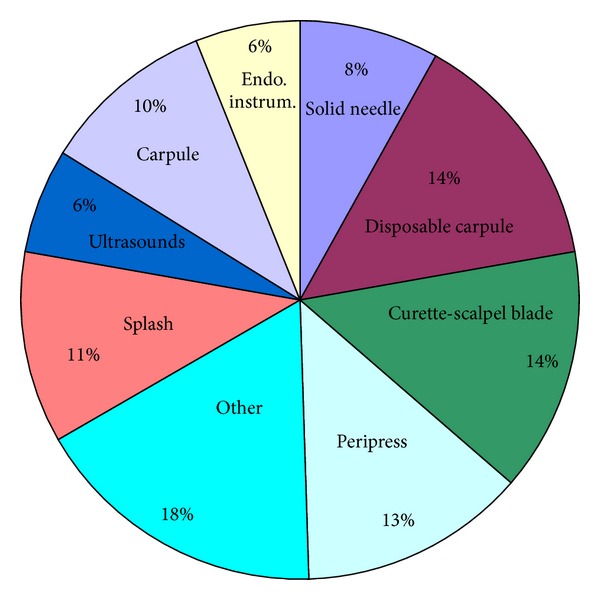
63 exposures were reported. 56/63 (89%) percutaneous and 7/63 (11%) mucosal, involving a splash to the eye of the dental care workers (DCW). 25/63 (40%) involved students, 23/63 (36%) DCW attending masters and doctorate, 13/63 (21%) DCW attending as tutors and 2/63 (3%) staff. 45/63 (71%) and 18/63 (29%) occurred respectively during and after the use of the device; of last ones, 1/18 (0.05%) were related to instrument clean-up and 1/18 (0.05%) to laboratory activity, 12/18 (67%) occurred when a DCW collided with a sharp object during the setting, and 4/18 (22%) during other activities. The instrument and the body part most likely involved were needle and finger respectively. The overall exposure rate was 4.78 per 10,000 patient visits.
Our results may serve as benchmark that Dental Schools can employ to assess their frequency of injury.
本分析的目的是确定有助于预防伤害的趋势。
我们的数据是在1999年至2011年期间,通过使用标准编码协议,在一所牙科学院对职业接触血液或其他潜在传染性物质的监测项目中收集的。
报告了63起暴露事件。63例中有56例(89%)为经皮暴露,7例(11%)为黏膜暴露,涉及牙科医护人员(DCW)眼睛溅入液体。63例中有25例(40%)涉及学生,23例(36%)涉及攻读硕士和博士学位的DCW,13例(21%)涉及担任导师的DCW,2例(3%)涉及工作人员。63例中有45例(71%)和18例(29%)分别发生在使用该设备期间和之后;在后者中,18例中有1例(0.05%)与器械清理有关,1例(0.05%)与实验室活动有关,18例中有12例(67%)发生在DCW在操作过程中与尖锐物体碰撞时,4例(22%)发生在其他活动期间。最常涉及的器械和身体部位分别是针头和手指。每10000次患者就诊的总体暴露率为4.78。
我们的结果可作为牙科学院评估其伤害发生率的基准。