Kwong Christina, Gilman-Sachs Alice, Beaman Kenneth
Department of Microbiology and Immunology; Chicago Medical School; Rosalind Franklin University of Medicine and Science; Chicago, IL USA.
Oncoimmunology. 2013 Jan 1;2(1):e22978. doi: 10.4161/onci.22978.
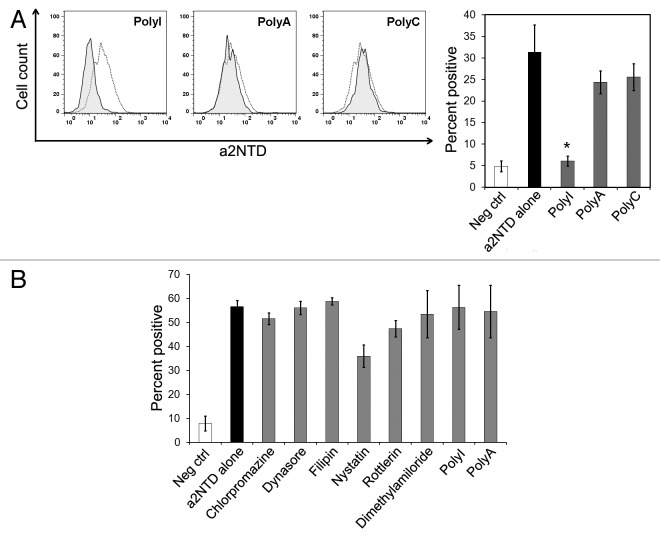
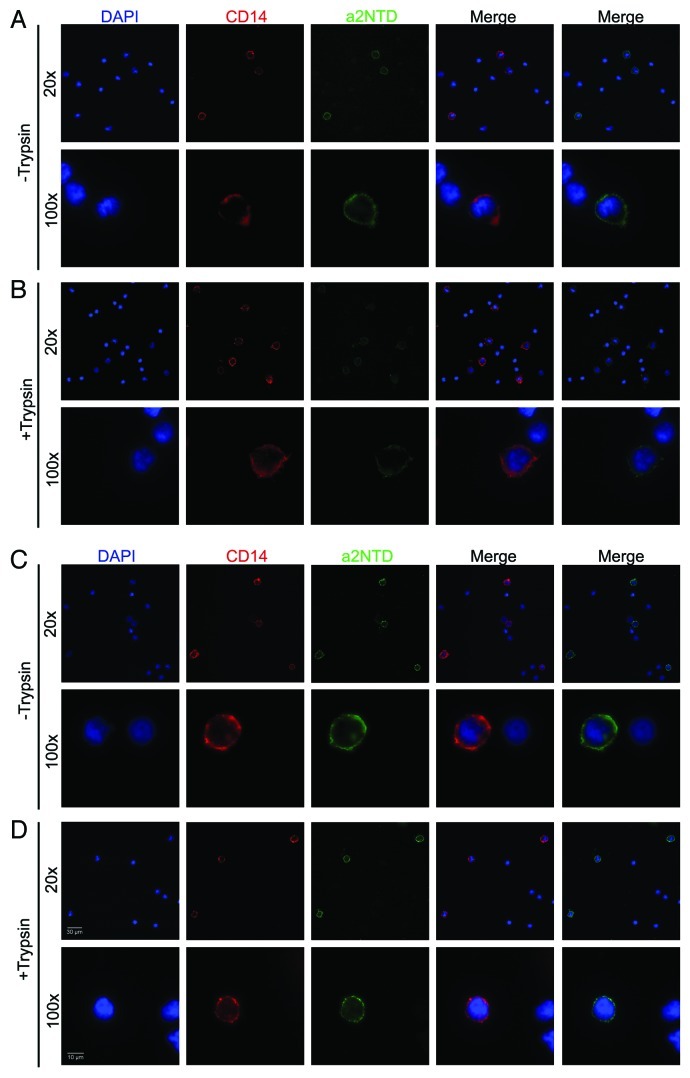
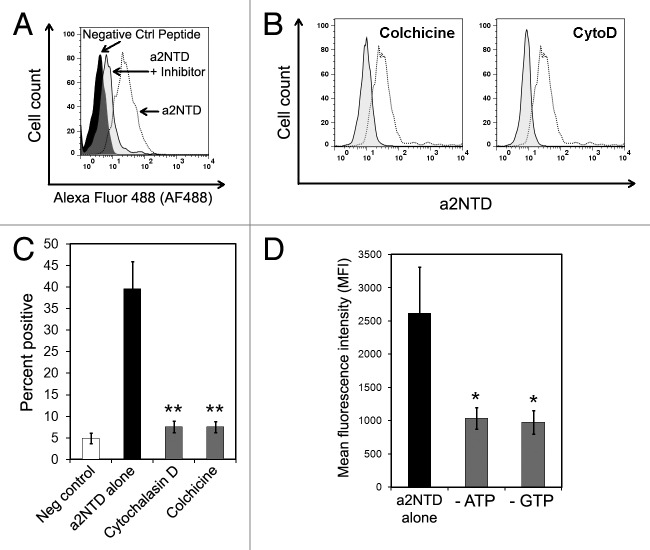
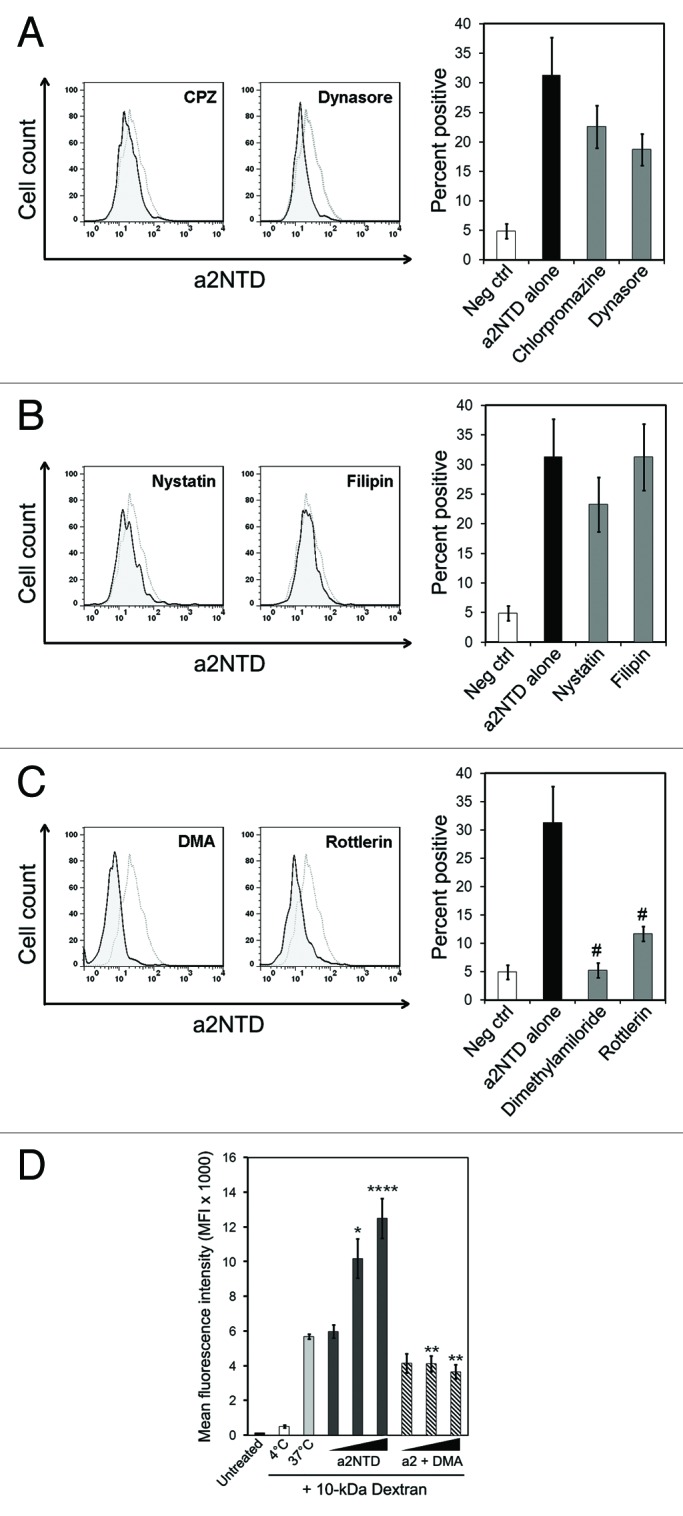
The vacuolar ATPase (V-ATPase) plays an important role in tumor progression and metastases. A novel peptide from the a2 isoform of V-ATPase called a2NTD has been shown to exert an immunoregulatory role in the tumor microenvironment by controlling the maturation of monocytes toward a tumor-associated macrophage phenotype. Our data indicate that a2NTD binds to the surface of monocytes. a2NTD was preferentially endocytosed by pro-inflammatory monocytes bearing a CD14CD16 phenotype, which is associated with the monocyte-to-macrophage maturation process. Both a2NTD binding and internalization led to production of the pro-inflammatory cytokines interleukin (IL)-1α and IL-1β by CD14CD16 (classical) and CD14CD16 (intermediate) monocytes. a2NTD was internalized via a macropinocytosis mechanism utilizing scavenger receptors. However, the inhibition of a2NTD endocytosis did not reduce cytokine production by monocytes. This points to the existence of two receptors that respond to a2NTD: scavengers receptors that mediate cellular uptake and an hitherto unidentified receptor stimulating the production of inflammatory cytokines. Both of these monocyte receptors may be important in generating the localized inflammation that is often required to promote tumor growth and hence may constitute novel targets for the development of anticancer drugs.
液泡型ATP酶(V-ATP酶)在肿瘤进展和转移中起重要作用。一种来自V-ATP酶a2亚型的新型肽,称为a2NTD,已被证明通过控制单核细胞向肿瘤相关巨噬细胞表型的成熟,在肿瘤微环境中发挥免疫调节作用。我们的数据表明,a2NTD与单核细胞表面结合。a2NTD优先被具有CD14CD16表型的促炎性单核细胞内吞,这与单核细胞向巨噬细胞的成熟过程相关。a2NTD的结合和内化均导致CD14CD16(经典型)和CD14CD16(中间型)单核细胞产生促炎性细胞因子白细胞介素(IL)-1α和IL-1β。a2NTD通过利用清道夫受体的巨胞饮作用机制被内化。然而,抑制a2NTD的内吞作用并不会降低单核细胞的细胞因子产生。这表明存在两种对a2NTD有反应的受体:介导细胞摄取的清道夫受体和迄今未鉴定的刺激炎性细胞因子产生的受体。这两种单核细胞受体在产生促进肿瘤生长通常所需的局部炎症中可能都很重要,因此可能构成抗癌药物开发的新靶点。