Department of Kinesiology and Nutrition, University of Illinois at Chicago, Chicago, Illinois, USA.
Diabetes. 2013 Jul;62(7):2579-87. doi: 10.2337/db12-1450. Epub 2013 Mar 14.
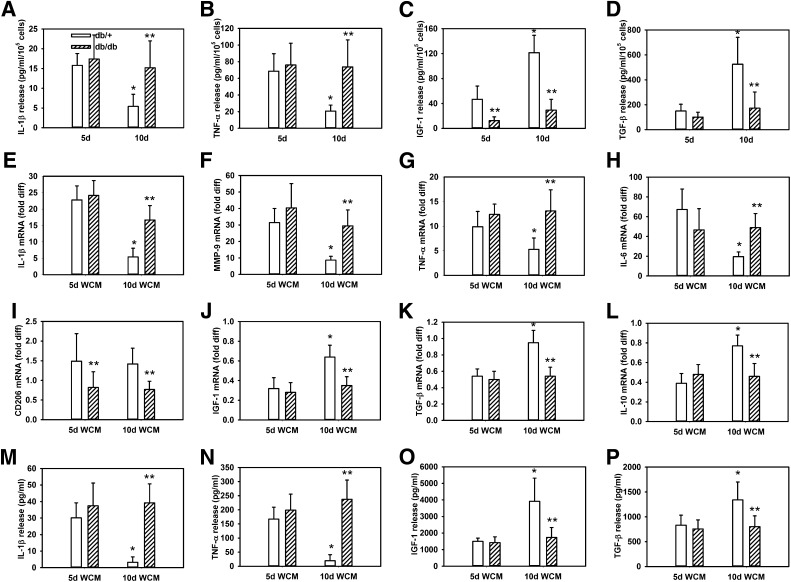
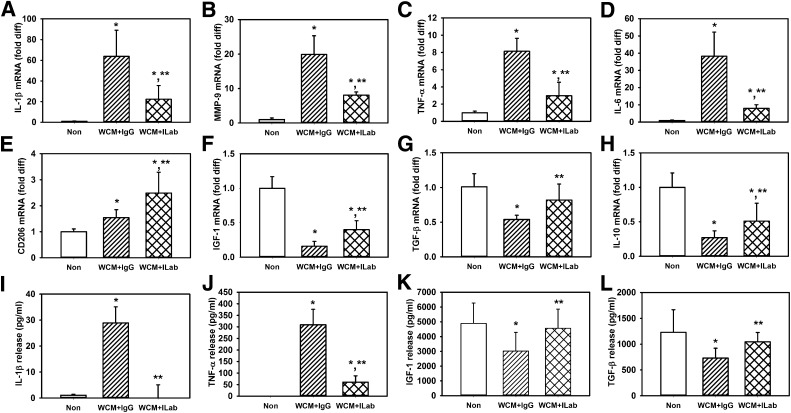
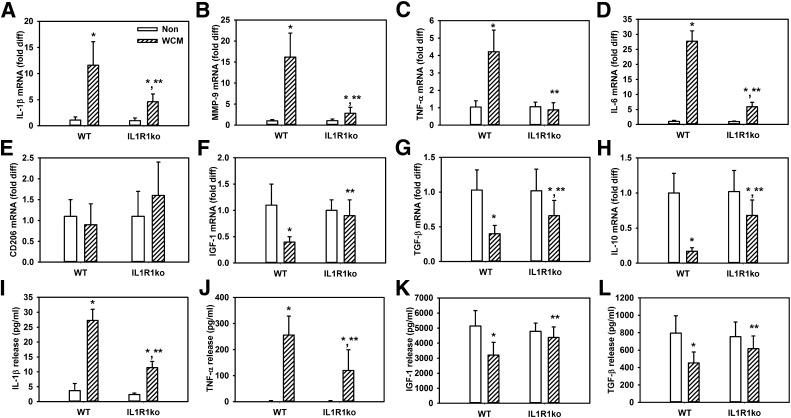
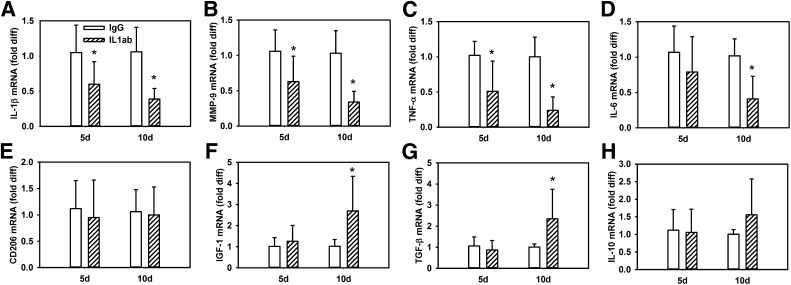
Diabetes is associated with persistent inflammation and defective tissue repair responses. The hypothesis of this study was that interleukin (IL)-1β is part of a proinflammatory positive feedback loop that sustains a persistent proinflammatory wound macrophage phenotype that contributes to impaired healing in diabetes. Macrophages isolated from wounds in diabetic humans and mice exhibited a proinflammatory phenotype, including expression and secretion of IL-1β. The diabetic wound environment appears to be sufficient to induce these inflammatory phenomena because in vitro studies demonstrated that conditioned medium of both mouse and human wounds upregulates expression of proinflammatory genes and downregulates expression of prohealing factors in cultured macrophages. Furthermore, inhibiting the IL-1β pathway using a neutralizing antibody and macrophages from IL-1 receptor knockout mice blocked the conditioned medium-induced upregulation of proinflammatory genes and downregulation of prohealing factors. Importantly, inhibiting the IL-1β pathway in wounds of diabetic mice using a neutralizing antibody induced a switch from proinflammatory to healing-associated macrophage phenotypes, increased levels of wound growth factors, and improved healing of these wounds. Our findings indicate that targeting the IL-1β pathway represents a new therapeutic approach for improving the healing of diabetic wounds.
糖尿病与持续的炎症和组织修复反应缺陷有关。本研究的假设是,白细胞介素 (IL)-1β 是炎症正反馈回路的一部分,这种正反馈回路维持了持续的炎症性伤口巨噬细胞表型,导致糖尿病伤口愈合受损。从糖尿病患者和小鼠的伤口中分离出的巨噬细胞表现出炎症表型,包括 IL-1β 的表达和分泌。糖尿病伤口环境似乎足以诱导这些炎症现象,因为体外研究表明,来自人和鼠的伤口的条件培养基可上调培养的巨噬细胞中促炎基因的表达,并下调促愈合因子的表达。此外,使用中和抗体和缺乏白细胞介素-1 受体的巨噬细胞抑制 IL-1β 通路可阻断条件培养基诱导的促炎基因上调和促愈合因子下调。重要的是,使用中和抗体在糖尿病小鼠的伤口中抑制 IL-1β 通路可诱导炎症相关巨噬细胞表型向愈合相关表型转变,增加伤口生长因子水平,并改善这些伤口的愈合。我们的研究结果表明,靶向 IL-1β 通路代表了改善糖尿病伤口愈合的一种新的治疗方法。