Laboratory for Proteolytic Neuroscience, RIKEN Brain Science Institute, 2-1 Hirosawa, Wako-shi, Saitama 351-0198, Japan.
Sci Rep. 2013;3:1472. doi: 10.1038/srep01472.
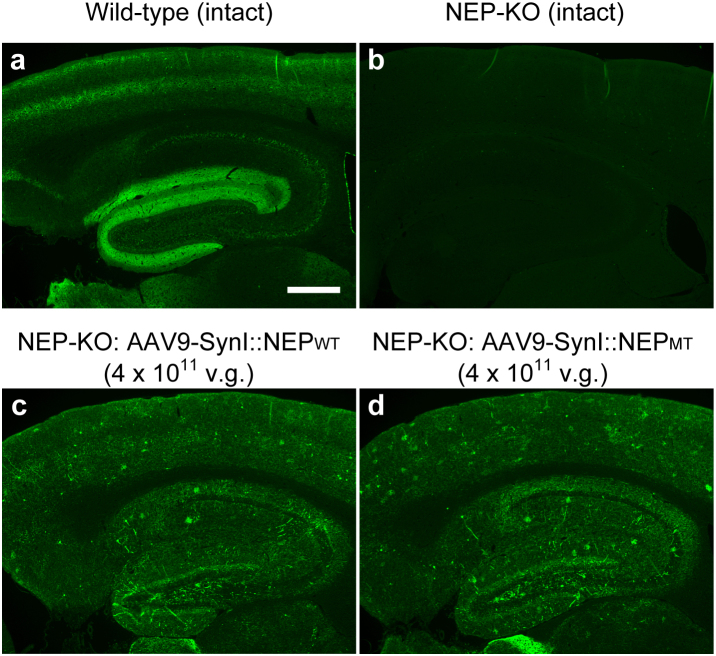
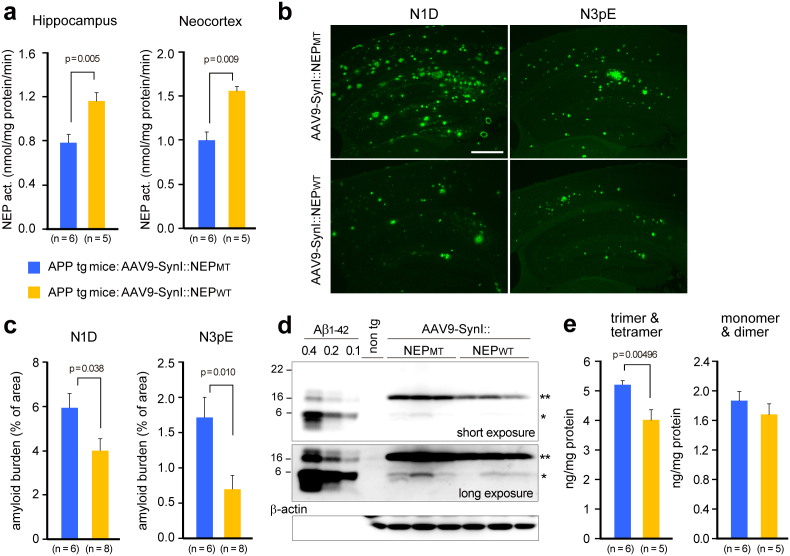
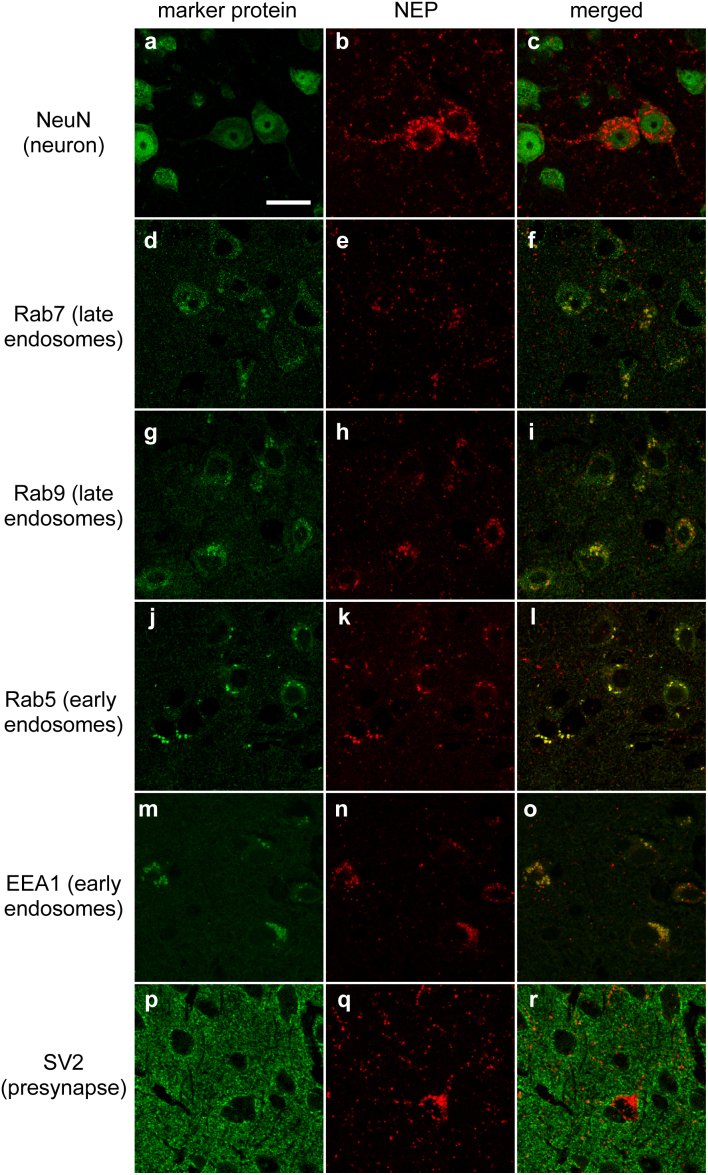
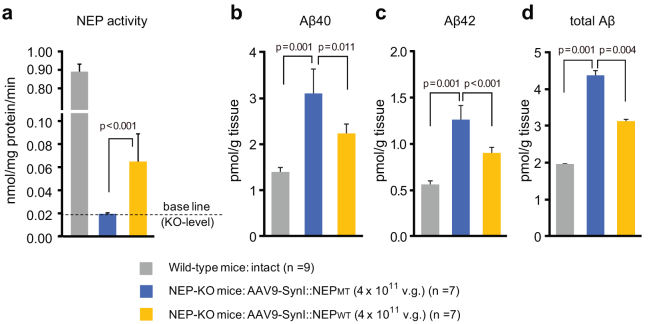
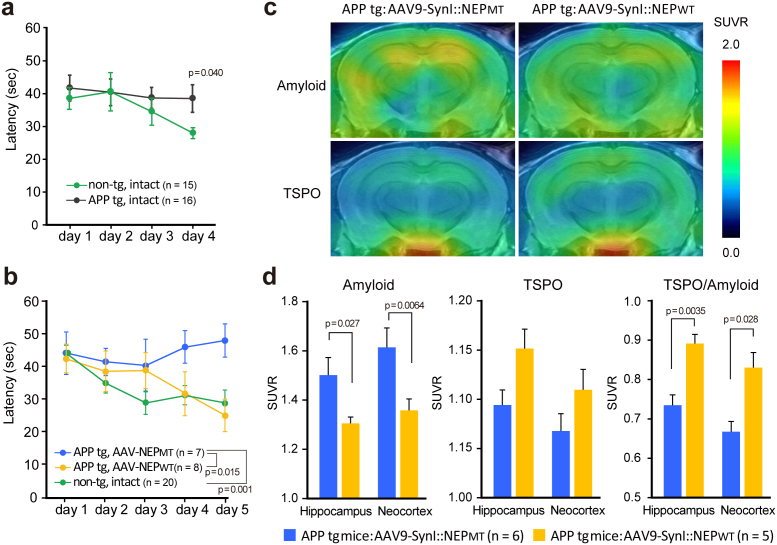
Accumulation of amyloid-β peptide (Aβ) in the brain is closely associated with cognitive decline in Alzheimer's disease (AD). Stereotaxic infusion of neprilysin-encoding viral vectors into the hippocampus has been shown to decrease Aβ in AD-model mice, but more efficient and global delivery is necessary to treat the broadly distributed burden in AD. Here we developed an adeno-associated virus (AAV) vector capable of providing neuronal gene expression throughout the brains after peripheral administration. A single intracardiac administration of the vector carrying neprilysin gene in AD-model mice elevated neprilysin activity broadly in the brain, and reduced Aβ oligomers, with concurrent alleviation of abnormal learning and memory function and improvement of amyloid burden. The exogenous neprilysin was localized mainly in endosomes, thereby effectively excluding Aβ oligomers from the brain. AAV vector-mediated gene transfer may provide a therapeutic strategy for neurodegenerative diseases, where global transduction of a therapeutic gene into the brain is necessary.
淀粉样蛋白-β肽(Aβ)在大脑中的积累与阿尔茨海默病(AD)的认知能力下降密切相关。立体定向注射神经肽酶编码病毒载体到海马体已被证明可以减少 AD 模型小鼠中的 Aβ,但需要更有效的和全局的传递来治疗 AD 中广泛分布的负担。在这里,我们开发了一种腺相关病毒(AAV)载体,能够在周围给药后在整个大脑中提供神经元基因表达。在 AD 模型小鼠中,单次心内给予携带神经肽酶基因的载体,可广泛提高大脑中的神经肽酶活性,减少 Aβ寡聚物,并伴有异常学习和记忆功能的改善和淀粉样蛋白负荷的减轻。外源性神经肽酶主要定位于内体中,从而有效地将 Aβ寡聚物从大脑中排除。AAV 载体介导的基因转移可能为神经退行性疾病提供一种治疗策略,其中需要将治疗基因全局转导到大脑中。