Penn State Milton S. Hershey Medical Center, Hershey, PA, USA.
Pancreas. 2013 Jul;42(5):819-28. doi: 10.1097/MPA.0b013e318279c577.
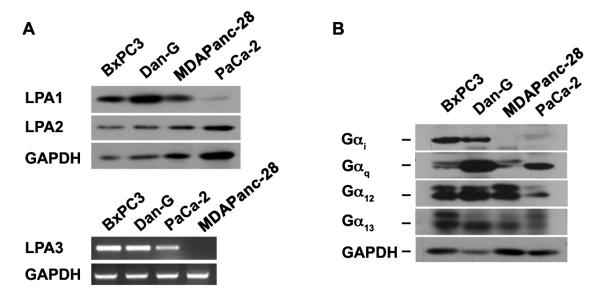
Tumor microenvironment, defined by a variety of growth factors including lysophosphatidic acid (LPA), whose levels are increased in pancreatic cancer patients, plays a major role in the genesis and progression of pancreatic cancer. Because the gep proto-oncogenes, Gα12 and Gα13, are implicated in LPA-stimulated oncogenic signaling, this study is focused on evaluating the role of these proto-oncogenes in LPA-stimulated invasive migration of pancreatic cancer cells.
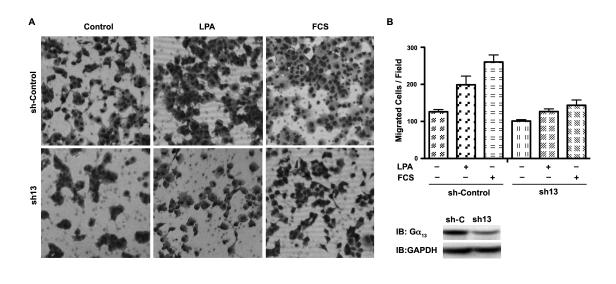
Effect of LPA on the migration and proliferation of pancreatic cancer cells was assessed using BxPC3, Dan-G, MDAPanc-28, Panc-1, and PaCa-2 cell lines. The role of Gα13 in the migration of pancreatic cancer cells was interrogated by disrupting lysophosphatidic acid receptor-Gα13 interaction using CT13, a dominant negative mutant of Gα13, and by silencing the expression of Gα13.
Results indicate that LPA stimulates the migration of pancreatic cancer cells and such LPA-stimulated migratory response is mediated by Gα13. Furthermore, the results establish that the silencing of Gα13, but not Gα12, abrogates LPA-stimulated invasive migration of pancreatic cancer cells.
These results report for the first time a critical role for Gα13 in LPA-stimulated invasive migration of pancreatic cancer cells. These findings identify LPA-lysophosphatidic acid receptor-Gα13 signaling node as a novel therapeutic target for pancreatic cancer treatment and control.
肿瘤微环境由多种生长因子定义,包括溶血磷脂酸(LPA),其水平在胰腺癌患者中增加,在胰腺癌的发生和进展中起主要作用。由于原癌基因 gep,Gα12 和 Gα13,与 LPA 刺激的致癌信号有关,因此本研究集中评估这些原癌基因在 LPA 刺激的胰腺癌细胞侵袭性迁移中的作用。
使用 BxPC3、Dan-G、MDAPanc-28、Panc-1 和 PaCa-2 细胞系评估 LPA 对胰腺癌细胞迁移和增殖的影响。通过使用 CT13(Gα13 的显性负突变体)破坏溶血磷脂酸受体-Gα13 相互作用,以及通过沉默 Gα13 的表达,来研究 Gα13 在胰腺癌细胞迁移中的作用。
结果表明,LPA 刺激胰腺癌细胞迁移,而这种 LPA 刺激的迁移反应是由 Gα13 介导的。此外,结果表明,沉默 Gα13(而非 Gα12)可消除 LPA 刺激的胰腺癌细胞侵袭性迁移。
这些结果首次报道了 Gα13 在 LPA 刺激的胰腺癌细胞侵袭性迁移中的关键作用。这些发现确定了 LPA-溶血磷脂酸受体-Gα13 信号节点作为治疗和控制胰腺癌的新的治疗靶点。