Department of Agricultural, Food and Nutritional Science, University of Alberta, Edmonton, AB Canada.
Islets. 2013 Jan-Feb;5(1):16-21. doi: 10.4161/isl.24058. Epub 2013 Jan 1.
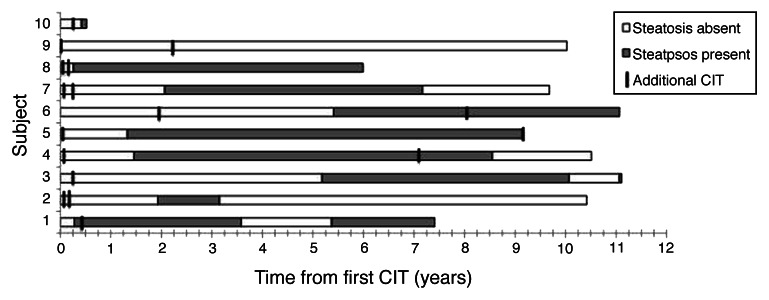
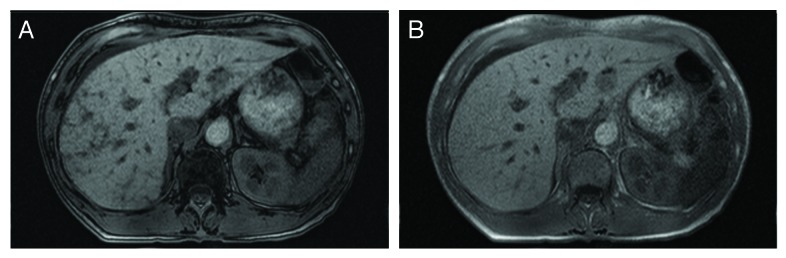
Hepatic steatosis is one complication patients may experience following clinical islet transplantation (CIT), yet the cause and consequences of this are poorly understood. The purpose of this case-control study was to examine the relationship between hepatic steatosis, metabolic parameters and graft function in an Albertan cohort of CIT recipients. Hepatic steatosis was detected by magnetic resonance imaging (MRI) in n = 10 cases age-matched with n=10 MRI-negative controls. Progression/regression of steatosis was determined by ultrasound (US) in cases. Hepatic steatosis first appeared 2.8 ± 2.2 (mean ± SD) years post-CIT, and lasted approximately 4.6 ± 2.0 years. In five cases steatosis resolved, with recurrence in two cases during the follow-up period (8.5 ± 3.2 years). No evidence of CIT causing deleterious effects on long-term liver function or graft outcome was observed.
肝脂肪变性是临床胰岛移植(CIT)后患者可能出现的一种并发症,但目前对此的病因和后果仍了解甚少。本病例对照研究的目的是在艾伯塔省的 CIT 受者队列中,检查肝脂肪变性与代谢参数和移植物功能之间的关系。通过磁共振成像(MRI)在 n = 10 例肝脂肪变性病例中与 n = 10 例 MRI 阴性对照进行匹配。在病例中通过超声(US)确定脂肪变性的进展/消退。肝脂肪变性在 CIT 后 2.8 ± 2.2(均值 ± 标准差)年首次出现,持续约 4.6 ± 2.0 年。在 5 例病例中脂肪变性得到解决,在随访期间(8.5 ± 3.2 年)有 2 例复发。未观察到 CIT 对长期肝功能或移植物结果产生有害影响。