Matsuzaki Keiichi, Suzuki Yusuke, Nakata Junichiro, Sakamoto Naoko, Horikoshi Satoshi, Kawamura Tetsuya, Matsuo Seiichi, Tomino Yasuhiko
Division of Nephrology, Department of Internal Medicine, Juntendo University Faculty of Medicine, 2-1-1 Hongo, Bunkyo-ku, Tokyo, 113-8421, Japan.
Clin Exp Nephrol. 2013 Dec;17(6):827-33. doi: 10.1007/s10157-013-0779-7. Epub 2013 Mar 22.
A wide variety of treatments, including tonsillectomy and steroid pulse therapy (TSP), are performed for the various stages of IgA nephropathy (IgAN) in Japan. However, the current status of treatments for IgAN patients in Japan is still unclear. The objective of the present study was to investigate the current status of treatments for IgAN patients.
A nationwide survey was conducted in 2008 by sending questionnaires to the 1,194 teaching hospitals of the Japanese Society of Nephrology (JSN) via Progressive Renal Diseases Research, Research on intractable disease, from the Ministry of Health, Labour and Welfare of Japan.
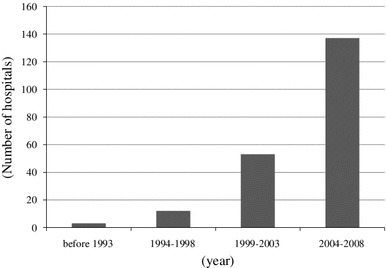
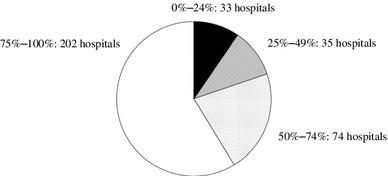
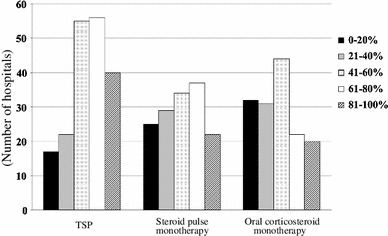
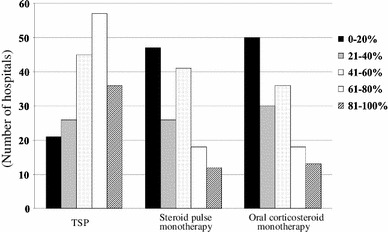
Among the total 376 hospitals (31.4 %) that responded, 188 hospitals (66.2 % in the internal medicine departments) performed TSP, out of which 137 hospitals (61.4 %) had begun to perform TSP in the period from 2004 to 2008. The following two major steroid pulse protocols in TSP were used: (1) three cycles over 3 consecutive weeks and (2) three cycles every 2 months. Approximately 68 % of pediatric hospitals (68 hospitals) performed combination therapy with prednisolone, azathioprine, heparin-warfarin and dipyridamole. The clinical remission rates for hematuria and proteinuria after TSP tended to be higher than those following other corticosteroid therapies. Almost all hospitals prescribed antiplatelet agents and renin angiotensin system inhibitor (RAS-I).
In addition to popular treatments such as antiplatelet agents and RAS-I, TSP is becoming a standard treatment for adult IgAN patients in Japan.
在日本,针对IgA肾病(IgAN)的各个阶段实施了包括扁桃体切除术和类固醇冲击疗法(TSP)在内的多种治疗方法。然而,日本IgAN患者的治疗现状仍不明确。本研究的目的是调查IgAN患者的治疗现状。
2008年,通过日本厚生劳动省难治性疾病研究中的进行性肾病研究,向日本肾脏病学会(JSN)的1194家教学医院发送问卷,进行了一项全国性调查。
在总共376家做出回应的医院(占31.4%)中,188家医院(内科部门占66.2%)实施了TSP,其中137家医院(占61.4%)在2004年至2008年期间开始实施TSP。TSP中使用了以下两种主要的类固醇冲击方案:(1)连续3周进行三个周期;(2)每2个月进行三个周期。约68%的儿科医院(68家医院)采用泼尼松龙、硫唑嘌呤、肝素-华法林和双嘧达莫联合治疗。TSP后血尿和蛋白尿的临床缓解率往往高于其他皮质类固醇疗法后的缓解率。几乎所有医院都开具了抗血小板药物和肾素血管紧张素系统抑制剂(RAS-I)。
除了抗血小板药物和RAS-I等常用治疗方法外,TSP正在成为日本成人IgAN患者的标准治疗方法。