Animal Nutrition Institute, Sichuan Agricultural University, Chengdu, Sichuan, China.
PLoS One. 2013;8(3):e58115. doi: 10.1371/journal.pone.0058115. Epub 2013 Mar 8.
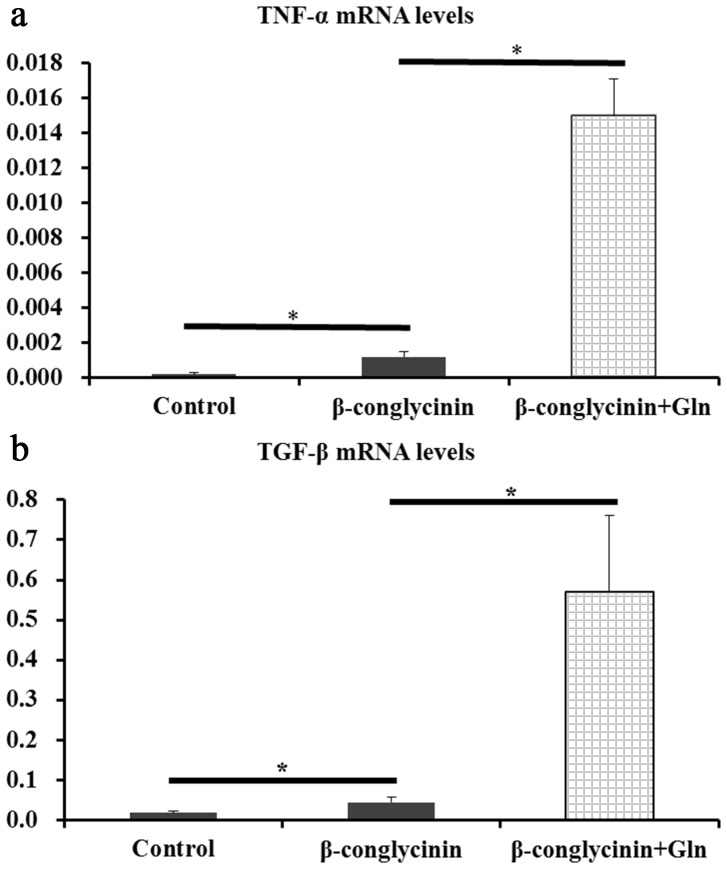
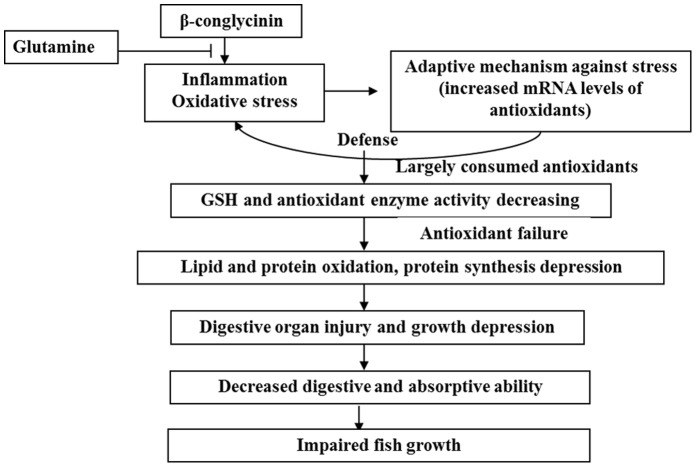
β-Conglycinin has been identified as one of the major feed allergens. However, studies of β-conglycinin on fish are scarce. This study investigated the effects of β-conglycinin on the growth, digestive and absorptive ability, inflammatory response, oxidative status and gene expression of juvenile Jian carp (Cyprinus carpio var. Jian) in vivo and their enterocytes in vitro. The results indicated that the specific growth rate (SGR), feed intake, and feed efficiency were reduced by β-conglycinin. In addition, activities of trypsin, chymotrypsin, lipase, creatine kinase, Na(+),K(+)-ATPase and alkaline phosphatase in the intestine showed similar tendencies. The protein content of the hepatopancreas and intestines, and the weight and length of the intestines were all reduced by β-conglycinin. β-Conglycinin increased lipid and protein oxidation in the detected tissues and cells. However, β-conglycinin decreased superoxide dismutase (SOD), catalase (CAT), glutathione-S-transferase (GST), glutathione peroxidase (GPx) and glutathione reductase (GR) activities and glutathione (GSH) content in the intestine and enterocytes. Similar antioxidant activity in the hepatopancreas was observed, except for GST. The expression of target of rapamycin (TOR) gene was reduced by β-conglycinin. Furthermore, mRNA levels of interleukin-8 (IL-8), tumor necrosis factor-α (TNF-α), and transforming growth factor-β (TGF-β) genes were increased by β-conglycinin. However, β-conglycinin increased CuZnSOD, MnSOD, CAT, and GPx1b gene expression. In conclusion, this study indicates that β-conglycinin induces inflammation and oxidation, and causes dysfunction of intestinal digestion and absorption in fish, and finally reduces fish growth. The results of this study provide some information to the mechanism of β-conglycinin-induced negative effects.
β-伴大豆球蛋白已被鉴定为主要的饲料过敏原之一。然而,关于鱼类β-伴大豆球蛋白的研究却很少。本研究在体内和体外研究了β-伴大豆球蛋白对幼建鲤(Cyprinus carpio var. Jian)生长、消化吸收能力、炎症反应、氧化状态和基因表达的影响。结果表明,β-伴大豆球蛋白降低了特定生长率(SGR)、饲料摄入量和饲料效率。此外,肠中胰蛋白酶、糜蛋白酶、脂肪酶、肌酸激酶、Na(+)、K(+)-ATP 酶和碱性磷酸酶的活性也呈现出相似的趋势。肝胰腺和肠道的蛋白质含量以及肠道的重量和长度均因β-伴大豆球蛋白而降低。β-伴大豆球蛋白增加了检测组织和细胞中的脂质和蛋白质氧化。然而,β-伴大豆球蛋白降低了肠和肠细胞中超氧化物歧化酶(SOD)、过氧化氢酶(CAT)、谷胱甘肽-S-转移酶(GST)、谷胱甘肽过氧化物酶(GPx)和谷胱甘肽还原酶(GR)的活性以及谷胱甘肽(GSH)的含量。除 GST 外,肝胰腺中也观察到类似的抗氧化活性。β-伴大豆球蛋白降低了雷帕霉素靶蛋白(TOR)基因的表达。此外,β-伴大豆球蛋白增加了白细胞介素-8(IL-8)、肿瘤坏死因子-α(TNF-α)和转化生长因子-β(TGF-β)基因的 mRNA 水平。然而,β-伴大豆球蛋白增加了 CuZnSOD、MnSOD、CAT 和 GPx1b 基因的表达。综上所述,本研究表明,β-伴大豆球蛋白在鱼类中引起炎症和氧化反应,导致肠道消化吸收功能障碍,最终降低鱼类生长。本研究的结果为β-伴大豆球蛋白诱导的负面效应的机制提供了一些信息。