Laboratory of Molecular and Cellular Biology, Department of Neurology, Faculdade de Medicina, Universidade de São Paulo, São Paulo, SP, Brazil.
Clinics (Sao Paulo). 2013;68(2):167-72. doi: 10.6061/clinics/2013(02)oa08.
We investigated four components of the Wnt signaling pathway in medulloblastomas. Medulloblastoma is the most common type of malignant pediatric brain tumor, and the Wnt signaling pathway has been shown to be activated in this type of tumor.
Sixty-one medulloblastoma cases were analyzed for β-catenin gene (CTNNB1) mutations, β-catenin protein expression via immunostaining and Wnt signaling pathway-related gene expression. All data were correlated with histological subtypes and patient clinical information.
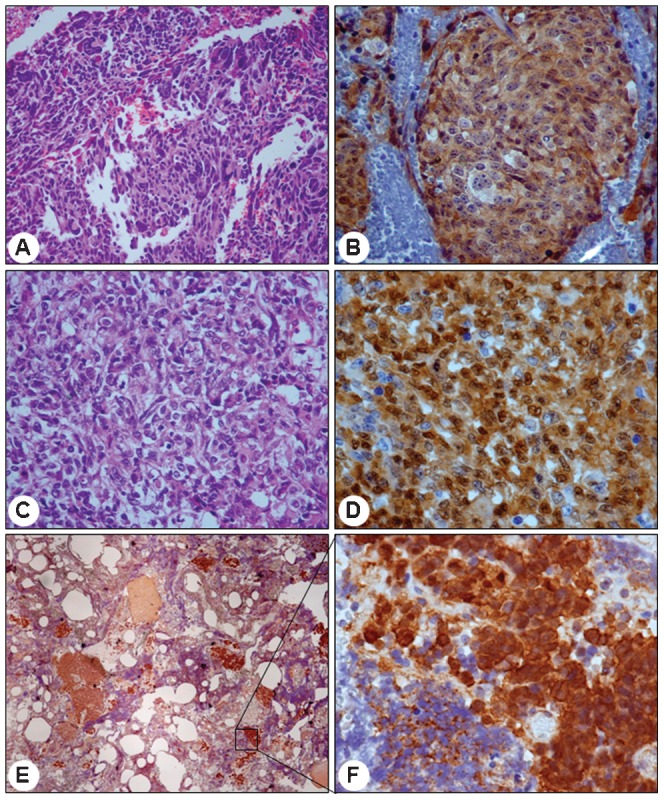
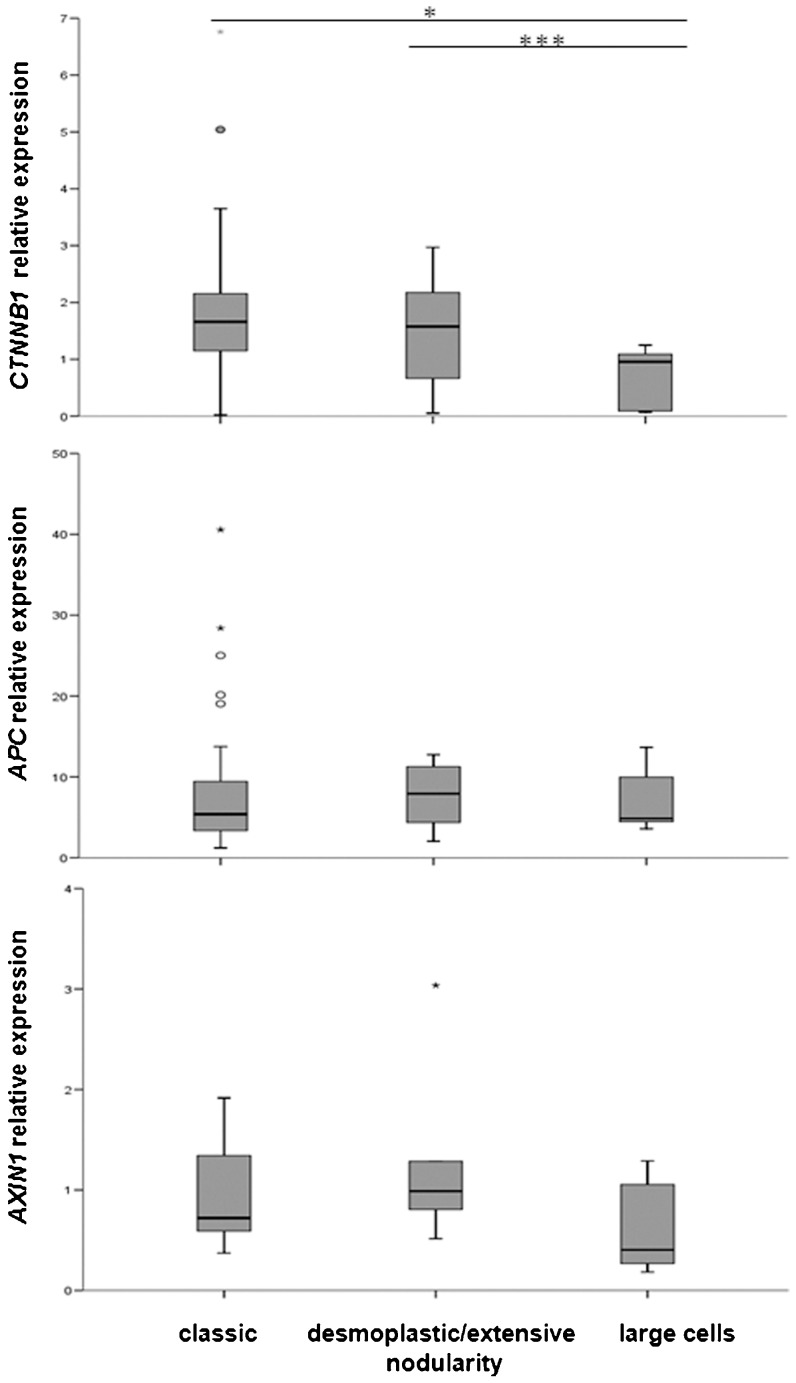
CTNNB1 sequencing analysis revealed that 11 out of 61 medulloblastomas harbored missense mutations in residues 32, 33, 34 and 37, which are located in exon 3. These mutations alter the glycogen synthase kinase-3β phosphorylation sites, which participate in β-catenin degradation. No significant differences were observed between mutation status and histological medulloblastoma type, patient age and overall or progression-free survival times. Nuclear β-catenin accumulation, which was observed in 27.9% of the cases, was not associated with the histological type, CTNNB1 mutation status or tumor cell dissemination. The relative expression levels of genes that code for proteins involved in the Wnt signaling pathway (CTNNB1, APC, AXIN1 and WNT1) were also analyzed, but no significant correlations were found. In addition, large-cell variant medulloblastomas presented lower relative CTNNB1 expression as compared to the other tumor variants.
A small subset of medulloblastomas carry CTNNB1 mutations with consequent nuclear accumulation of β-catenin. The Wnt signaling pathway plays a role in classic, desmoplastic and extensive nodularity medulloblastoma variants but not in large-cell medulloblastomas.
我们研究了髓母细胞瘤中 Wnt 信号通路的四个组成部分。髓母细胞瘤是最常见的儿童脑恶性肿瘤,Wnt 信号通路已被证明在这种肿瘤中被激活。
分析了 61 例髓母细胞瘤病例的β-连环蛋白基因(CTNNB1)突变、免疫组化检测β-连环蛋白蛋白表达和 Wnt 信号通路相关基因表达。所有数据均与组织学亚型和患者临床信息相关联。
CTNNB1 测序分析显示,61 例髓母细胞瘤中有 11 例存在位于外显子 3 的 32、33、34 和 37 位的错义突变。这些突变改变了糖原合酶激酶-3β磷酸化位点,参与β-连环蛋白降解。突变状态与组织学髓母细胞瘤类型、患者年龄以及总生存时间或无进展生存时间之间无显著差异。观察到 27.9%的病例存在核β-连环蛋白积聚,但与组织学分型、CTNNB1 突变状态或肿瘤细胞播散无关。还分析了编码参与 Wnt 信号通路的蛋白质的基因(CTNNB1、APC、AXIN1 和 WNT1)的相对表达水平,但未发现显著相关性。此外,与其他肿瘤变体相比,大细胞变体髓母细胞瘤的 CTNNB1 相对表达水平较低。
一小部分髓母细胞瘤存在 CTNNB1 突变,导致β-连环蛋白核内积聚。Wnt 信号通路在经典、促结缔组织形成和广泛结节性髓母细胞瘤变体中发挥作用,但不在大细胞髓母细胞瘤中发挥作用。