• 文献检索
  • 文档翻译
  • 深度研究
  • 学术资讯
  • Suppr Zotero 插件Zotero 插件
  • 邀请有礼
  • 套餐&价格
  • 历史记录
应用&插件
Suppr Zotero 插件Zotero 插件浏览器插件Mac 客户端Windows 客户端微信小程序
定价
高级版会员购买积分包购买API积分包
服务
文献检索文档翻译深度研究API 文档MCP 服务
关于我们
关于 Suppr公司介绍联系我们用户协议隐私条款
关注我们

Suppr 超能文献

核心技术专利:CN118964589B侵权必究
粤ICP备2023148730 号-1Suppr @ 2026

文献检索

告别复杂PubMed语法,用中文像聊天一样搜索,搜遍4000万医学文献。AI智能推荐,让科研检索更轻松。

立即免费搜索

文件翻译

保留排版,准确专业,支持PDF/Word/PPT等文件格式,支持 12+语言互译。

免费翻译文档

深度研究

AI帮你快速写综述,25分钟生成高质量综述,智能提取关键信息,辅助科研写作。

立即免费体验

从早期哺乳动物到人类大脑的进化。

The evolution of brains from early mammals to humans.

作者信息

Kaas Jon H

机构信息

Department of Psychology, Vanderbilt University, Nashville, TN, USA.

出版信息

Wiley Interdiscip Rev Cogn Sci. 2013 Jan;4(1):33-45. doi: 10.1002/wcs.1206. Epub 2012 Nov 8.

DOI:10.1002/wcs.1206
PMID:23529256
原文链接:https://pmc.ncbi.nlm.nih.gov/articles/PMC3606080/
Abstract

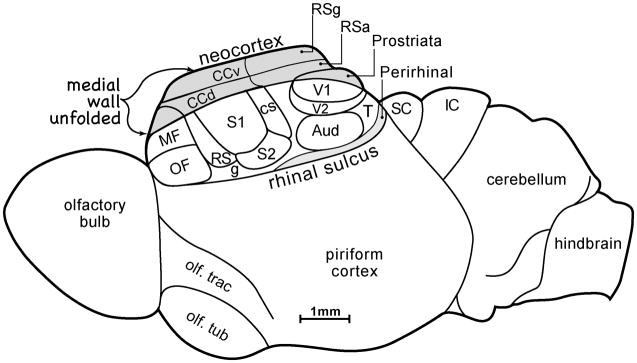
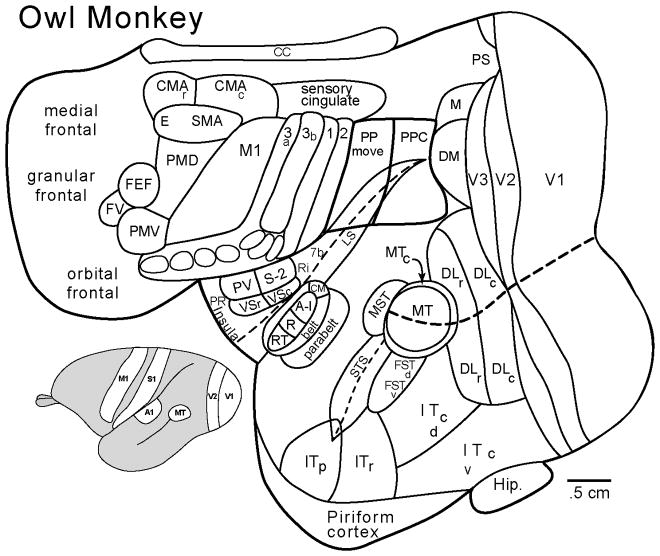
The large size and complex organization of the human brain makes it unique among primate brains. In particular, the neocortex constitutes about 80% of the brain, and this cortex is subdivided into a large number of functionally specialized regions, the cortical areas. Such a brain mediates accomplishments and abilities unmatched by any other species. How did such a brain evolve? Answers come from comparative studies of the brains of present-day mammals and other vertebrates in conjunction with information about brain sizes and shapes from the fossil record, studies of brain development, and principles derived from studies of scaling and optimal design. Early mammals were small, with small brains, an emphasis on olfaction, and little neocortex. Neocortex was transformed from the single layer of output pyramidal neurons of the dorsal cortex of earlier ancestors to the six layers of all present-day mammals. This small cap of neocortex was divided into 20-25 cortical areas, including primary and some of the secondary sensory areas that characterize neocortex in nearly all mammals today. Early placental mammals had a corpus callosum connecting the neocortex of the two hemispheres, a primary motor area, M1, and perhaps one or more premotor areas. One line of evolution, Euarchontoglires, led to present-day primates, tree shrews, flying lemurs, rodents, and rabbits. Early primates evolved from small-brained, nocturnal, insect-eating mammals with an expanded region of temporal visual cortex. These early nocturnal primates were adapted to the fine branch niche of the tropical rainforest by having an even more expanded visual system that mediated visually guided reaching and grasping of insects, small vertebrates, and fruits. Neocortex was greatly expanded and included an array of cortical areas that characterize neocortex of all living primates. Specializations of the visual system included new visual areas that contributed to a dorsal stream of visuomotor processing in a greatly enlarged region of posterior parietal cortex and an expanded motor system and the addition of a ventral premotor area. Higher visual areas in a large temporal lobe facilitated object recognition, and frontal cortex included granular prefrontal cortex. Auditory cortex included the primary and secondary auditory areas that characterize prosimian and anthropoid primates today. As anthropoids emerged as diurnal primates, the visual system specialized for detailed foveal vision. Other adaptations included an expansion of prefrontal cortex and insular cortex. The human and chimpanzee-bonobo lineages diverged some 6-8 million years ago with brains that were about one third the size of modern humans. Over the last 2 million years, the brains of our more recent ancestors increased greatly in size, especially in the prefrontal, posterior parietal, lateral temporal, and insular regions. Specialization of the two cerebral hemispheres for related, but different functions became pronounced, and language and other impressive cognitive abilities emerged. WIREs Cogn Sci 2013, 4:33-45. doi: 10.1002/wcs.1206 This article is categorized under: Neuroscience > Anatomy.
https://cdn.ncbi.nlm.nih.gov/pmc/blobs/612b/3606080/2208512535bd/nihms412237f2.jpg
https://cdn.ncbi.nlm.nih.gov/pmc/blobs/612b/3606080/4d0e938aa5c0/nihms412237f1.jpg
https://cdn.ncbi.nlm.nih.gov/pmc/blobs/612b/3606080/2208512535bd/nihms412237f2.jpg
https://cdn.ncbi.nlm.nih.gov/pmc/blobs/612b/3606080/4d0e938aa5c0/nihms412237f1.jpg
https://cdn.ncbi.nlm.nih.gov/pmc/blobs/612b/3606080/2208512535bd/nihms412237f2.jpg
摘要

人类大脑的庞大尺寸和复杂结构使其在灵长类动物的大脑中独树一帜。特别是,新皮层约占大脑的80%,且该皮层又被细分为大量功能特化的区域,即皮质区。这样的大脑介导了其他任何物种都无法比拟的成就和能力。这样的大脑是如何进化的呢?答案来自对当今哺乳动物和其他脊椎动物大脑的比较研究,结合化石记录中有关大脑大小和形状的信息、大脑发育研究,以及从缩放和最优设计研究中得出的原理。早期哺乳动物体型较小,大脑也小,侧重于嗅觉,新皮层很少。新皮层从早期祖先背侧皮层的单层输出锥体神经元转变为所有现代哺乳动物的六层结构。这块小小的新皮层帽被划分为20 - 25个皮质区,包括几乎所有当今哺乳动物新皮层所特有的初级和一些次级感觉区。早期胎盘哺乳动物有胼胝体连接两个半球的新皮层、一个初级运动区M1,或许还有一个或多个运动前区。一条进化路线,即真灵长大目,演化出了当今的灵长类动物、树鼩、鼯猴、啮齿动物和兔子。早期灵长类动物由大脑较小、夜行性、食虫的哺乳动物进化而来,其颞部视觉皮层区域有所扩大。这些早期夜行性灵长类动物通过拥有一个更加扩展的视觉系统适应了热带雨林的细枝生态位,该视觉系统介导视觉引导下对昆虫、小型脊椎动物和果实的抓取。新皮层大幅扩展,包括一系列所有现存灵长类动物新皮层所特有的皮质区。视觉系统的特化包括新的视觉区,这些区域在大大扩大的后顶叶皮层区域促成了视觉运动处理的背侧流,以及一个扩展的运动系统和一个腹侧运动前区的增加。大颞叶中的高级视觉区有助于物体识别,额叶皮层包括颗粒状前额叶皮层。听觉皮层包括当今原猴亚目和类人猿灵长类动物所特有的初级和次级听觉区。随着类人猿成为昼行性灵长类动物,视觉系统专门用于精细的中央凹视觉。其他适应性变化包括前额叶皮层和岛叶皮层的扩展。人类和黑猩猩 - 倭黑猩猩谱系在约600 - 800万年前分化,当时的大脑大小约为现代人类的三分之一。在过去的200万年里,我们近代祖先的大脑尺寸大幅增加,尤其是在前额叶、后顶叶、外侧颞叶和岛叶区域。两个大脑半球在相关但不同功能上的特化变得显著,语言和其他令人印象深刻的认知能力也随之出现。WIREs认知科学2013年,4:33 - 45。doi:10.1002/wcs.1206 本文分类如下:神经科学>解剖学

相似文献

1
The evolution of brains from early mammals to humans.从早期哺乳动物到人类大脑的进化。
Wiley Interdiscip Rev Cogn Sci. 2013 Jan;4(1):33-45. doi: 10.1002/wcs.1206. Epub 2012 Nov 8.
2
The evolution of neocortex in primates.灵长类动物新皮层的进化。
Prog Brain Res. 2012;195:91-102. doi: 10.1016/B978-0-444-53860-4.00005-2.
3
The evolution of the complex sensory and motor systems of the human brain.人类大脑复杂感觉和运动系统的进化。
Brain Res Bull. 2008 Mar 18;75(2-4):384-90. doi: 10.1016/j.brainresbull.2007.10.009. Epub 2007 Nov 20.
4
The evolution of parietal cortex in primates.灵长类动物顶叶皮质的进化。
Handb Clin Neurol. 2018;151:31-52. doi: 10.1016/B978-0-444-63622-5.00002-4.
5
Architectonic features and relative locations of primary sensory and related areas of neocortex in mouse lemurs.鼠狐猴新皮层初级感觉和相关区域的构筑特征和相对位置。
J Comp Neurol. 2019 Feb 15;527(3):625-639. doi: 10.1002/cne.24419. Epub 2018 Apr 26.
6
Evolution of somatosensory and motor cortex in primates.灵长类动物体感皮层和运动皮层的进化。
Anat Rec A Discov Mol Cell Evol Biol. 2004 Nov;281(1):1148-56. doi: 10.1002/ar.a.20120.
7
Escaping the nocturnal bottleneck, and the evolution of the dorsal and ventral streams of visual processing in primates.逃离夜间瓶颈,以及灵长类动物中视觉处理的背侧和腹侧流的演化。
Philos Trans R Soc Lond B Biol Sci. 2022 Feb 14;377(1844):20210293. doi: 10.1098/rstb.2021.0293. Epub 2021 Dec 27.
8
Cortical connections of MT in four species of primates: areal, modular, and retinotopic patterns.四种灵长类动物中MT的皮质连接:区域、模块和视网膜拓扑模式。
Vis Neurosci. 1990 Aug;5(2):165-204. doi: 10.1017/s0952523800000213.
9
Neocortex in early mammals and its subsequent variations.早期哺乳动物的新皮质及其后续变异。
Ann N Y Acad Sci. 2011 Apr;1225:28-36. doi: 10.1111/j.1749-6632.2011.05981.x.
10
The origin and evolution of neocortex: From early mammals to modern humans.新皮层的起源与进化:从早期哺乳动物到现代人类。
Prog Brain Res. 2019;250:61-81. doi: 10.1016/bs.pbr.2019.03.017. Epub 2019 Apr 5.

引用本文的文献

1
Distinct neurogenic pathways shape the diversification and mosaic organization of cortical output channels.不同的神经源性通路塑造了皮质输出通道的多样化和镶嵌式组织。
bioRxiv. 2025 Jul 23:2025.07.18.665624. doi: 10.1101/2025.07.18.665624.
2
Cortical areas associated to higher cognition drove primate brain evolution.与高级认知相关的皮质区域推动了灵长类动物大脑的进化。
Commun Biol. 2025 Jan 18;8(1):80. doi: 10.1038/s42003-025-07505-1.
3
Selective expansion of motor cortical projections in the evolution of vocal novelty.在声音新奇性进化过程中运动皮层投射的选择性扩展。

本文引用的文献

1
Why does the brain have so many visual areas?大脑为何有如此多的视觉区域?
J Cogn Neurosci. 1989 Spring;1(2):121-35. doi: 10.1162/jocn.1989.1.2.121.
2
Do rats have prefrontal cortex? The rose-woolsey-akert program reconsidered.老鼠有前额皮质吗?重新审视罗斯-伍尔西-阿克特计划。
J Cogn Neurosci. 1995 Winter;7(1):1-24. doi: 10.1162/jocn.1995.7.1.1.
3
Human brain evolution: from gene discovery to phenotype discovery.人类大脑进化:从基因发现到表型发现。
bioRxiv. 2024 Oct 24:2024.09.13.612752. doi: 10.1101/2024.09.13.612752.
4
Invariance of Mitochondria and Synapses in the Primary Visual Cortex of Mammals Provides Insight Into Energetics and Function.哺乳动物初级视觉皮层中线粒体和突触的不变性为能量学和功能提供了深入了解。
J Comp Neurol. 2024 Sep;532(9):e25669. doi: 10.1002/cne.25669.
5
Comparative analysis of the chimpanzee and human brain superficial structural connectivities.黑猩猩和人类大脑表面结构连接的比较分析。
Brain Struct Funct. 2024 Nov;229(8):1943-1977. doi: 10.1007/s00429-024-02823-2. Epub 2024 Jul 17.
6
First Immunohistochemical Demonstration of the Expression of a Type-2 Vomeronasal Receptor, V2R2, in Wild Canids.首例野生犬科动物 2 型犁鼻器受体 V2R2 表达的免疫组织化学研究
Int J Mol Sci. 2024 Jul 2;25(13):7291. doi: 10.3390/ijms25137291.
7
Domestic dogs as a comparative model for social neuroscience: Advances and challenges.家犬作为社会神经科学的比较模型:进展与挑战。
Neurosci Biobehav Rev. 2024 Jul;162:105700. doi: 10.1016/j.neubiorev.2024.105700. Epub 2024 May 4.
8
A biologically inspired repair mechanism for neuronal reconstructions with a focus on human dendrites.一种基于生物学的修复机制,用于神经元重建,重点是人类树突。
PLoS Comput Biol. 2024 Feb 23;20(2):e1011267. doi: 10.1371/journal.pcbi.1011267. eCollection 2024 Feb.
9
Secretagogin as a marker to distinguish between different neuron types in human frontal and temporal cortex.分泌粒蛋白作为区分人类额叶和颞叶皮质中不同神经元类型的标志物。
Front Neuroanat. 2023 Nov 1;17:1210502. doi: 10.3389/fnana.2023.1210502. eCollection 2023.
10
Resequencing of the TMF-1 (TATA Element Modulatory Factor) regulated protein (TRNP1) gene in domestic and wild canids.家犬和野生犬科动物中TMF-1(TATA元件调节因子)调控蛋白(TRNP1)基因的重测序
Canine Med Genet. 2023 Nov 15;10(1):10. doi: 10.1186/s40575-023-00133-0.
Proc Natl Acad Sci U S A. 2012 Jun 26;109 Suppl 1(Suppl 1):10709-16. doi: 10.1073/pnas.1201894109. Epub 2012 Jun 20.
4
Fibroblast growth factor 8 organizes the neocortical area map and regulates sensory map topography.成纤维细胞生长因子 8 组织新皮层区图并调节感觉图拓扑。
J Neurosci. 2012 May 23;32(21):7191-201. doi: 10.1523/JNEUROSCI.0071-12.2012.
5
Replacing the first-generation dentition in pufferfish with a unique beak.用独特的喙替换河豚的第一代牙齿。
Proc Natl Acad Sci U S A. 2012 May 22;109(21):8179-84. doi: 10.1073/pnas.1119635109. Epub 2012 May 7.
6
Evidence for a convergent slowdown in primate molecular rates and its implications for the timing of early primate evolution.灵长类分子速率趋同减速的证据及其对早期灵长类进化时间的影响。
Proc Natl Acad Sci U S A. 2012 Apr 17;109(16):6006-11. doi: 10.1073/pnas.1119506109. Epub 2012 Apr 2.
7
Development of the spinal cord and peripheral nervous system in platypus (Ornithorhynchus anatinus) and short-beaked echidna (Tachyglossus aculeatus).鸭嘴兽(Ornithorhynchus anatinus)和短吻针鼹(Tachyglossus aculeatus)脊髓和周围神经系统的发育
Somatosens Mot Res. 2012;29(1):13-27. doi: 10.3109/08990220.2012.662185. Epub 2012 Mar 8.
8
Continuity, divergence, and the evolution of brain language pathways.大脑语言通路的连续性、分歧及进化
Front Evol Neurosci. 2012 Jan 3;3:11. doi: 10.3389/fnevo.2011.00011. eCollection 2011.
9
Cytoarchitecture, areas, and neuron numbers of the Etruscan shrew cortex.伊特鲁里亚鼩鼱皮质的细胞构筑、脑区和神经元数量。
J Comp Neurol. 2012 Aug 1;520(11):2512-30. doi: 10.1002/cne.23053.
10
The evolution of neocortex in primates.灵长类动物新皮层的进化。
Prog Brain Res. 2012;195:91-102. doi: 10.1016/B978-0-444-53860-4.00005-2.