Food Function Division, National Food Research Institute, National Agriculture and Food Research Organization, Ibaraki, Japan.
PLoS One. 2013;8(3):e58994. doi: 10.1371/journal.pone.0058994. Epub 2013 Mar 11.
Previous studies have reported the effects of statistics of luminance distribution on visual freshness perception using pictures which included the degradation process of food samples. However, these studies did not examine the effect of individual differences between the same kinds of food. Here we elucidate whether luminance distribution would continue to have a significant effect on visual freshness perception even if visual stimuli included individual differences in addition to the degradation process of foods.
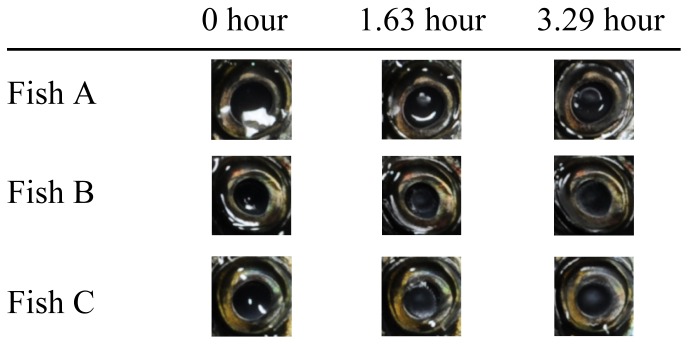
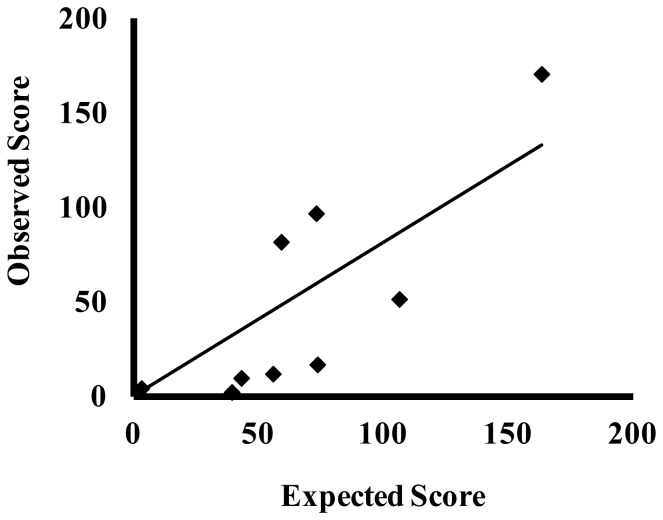
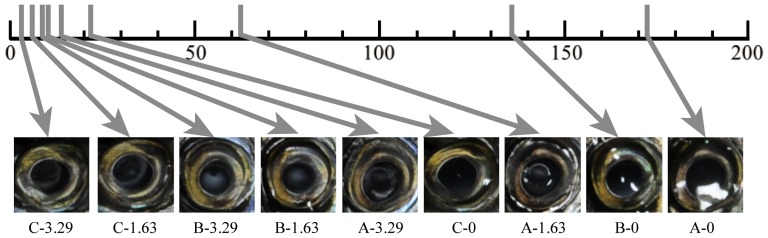
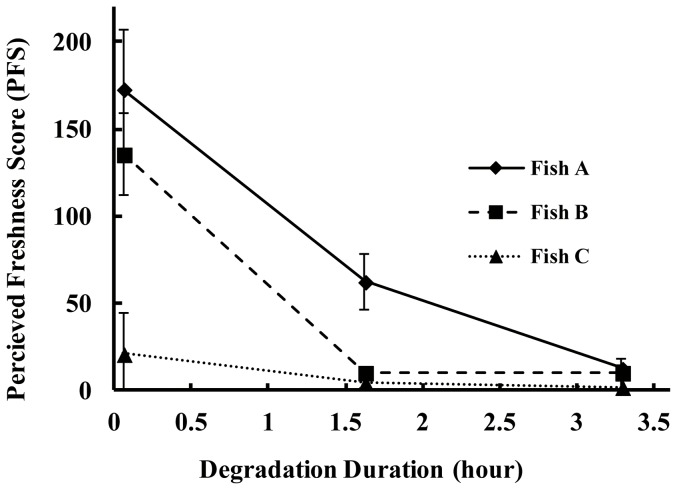
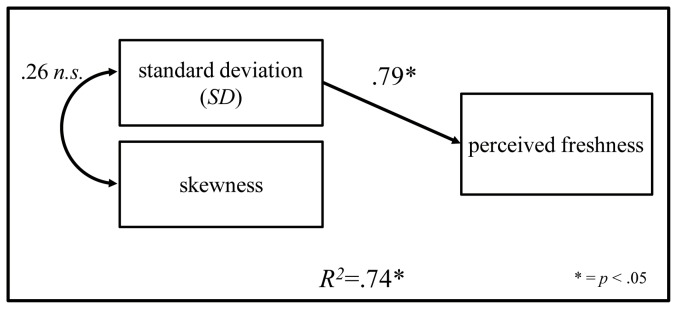
METHODOLOGY/PRINCIPAL FINDINGS: We took pictures of the degradation of three fishes over 3.29 hours in a controlled environment, then cropped square patches of their eyes from the original images as visual stimuli. Eleven participants performed paired comparison tests judging the visual freshness of the fish eyes at three points of degradation. Perceived freshness scores (PFS) were calculated using the Bradley-Terry Model for each image. The ANOVA revealed that the PFS for each fish decreased as the degradation time increased; however, the differences in the PFS between individual fish was larger for the shorter degradation time, and smaller for the longer degradation time. A multiple linear regression analysis was conducted in order to determine the relative importance of the statistics of luminance distribution of the stimulus images in predicting PFS. The results show that standard deviation and skewness in luminance distribution have a significant influence on PFS.
CONCLUSIONS/SIGNIFICANCE: These results show that even if foodstuffs contain individual differences, visual freshness perception and changes in luminance distribution correlate with degradation time.
先前的研究报告了使用包含食物样本降解过程的图片来研究亮度分布统计对视觉新鲜度感知的影响。然而,这些研究并没有检查同种类食物之间个体差异的影响。在这里,我们阐明了即使视觉刺激除了食物的降解过程之外还包括个体差异,亮度分布是否会继续对视觉新鲜度感知产生显著影响。
方法/主要发现:我们在受控环境中拍摄了三种鱼类在 3.29 小时内降解的照片,然后从原始图像中裁剪出它们眼睛的方形补丁作为视觉刺激。十一名参与者在三个降解点进行了成对比较测试,以判断鱼眼的视觉新鲜度。使用 Bradley-Terry 模型为每个图像计算感知新鲜度得分(PFS)。方差分析表明,每种鱼的 PFS 随着降解时间的增加而降低;然而,个体鱼之间 PFS 的差异在较短的降解时间更大,在较长的降解时间更小。进行了多元线性回归分析,以确定刺激图像亮度分布统计的相对重要性,以预测 PFS。结果表明,亮度分布的标准差和偏度对 PFS 有显著影响。
结论/意义:这些结果表明,即使食品包含个体差异,视觉新鲜度感知和亮度分布的变化与降解时间相关。