Pondugula Satyanarayana R, Kampalli Suresh B, Wu Tao, De Lisle Robert C, Raveendran Nithya N, Harbidge Donald G, Marcus Daniel C
Dept, Anatomy & Physiology, Kansas State University, Manhattan, KS 66506, USA.
BMC Physiol. 2013 Mar 27;13:6. doi: 10.1186/1472-6793-13-6.
The vestibular system controls the ion composition of its luminal fluid through several epithelial cell transport mechanisms under hormonal regulation. The semicircular canal duct (SCCD) epithelium has been shown to secrete Cl- under β2-adrenergic stimulation. In the current study, we sought to determine the ion transporters involved in Cl- secretion and whether secretion is regulated by PKA and glucocorticoids.
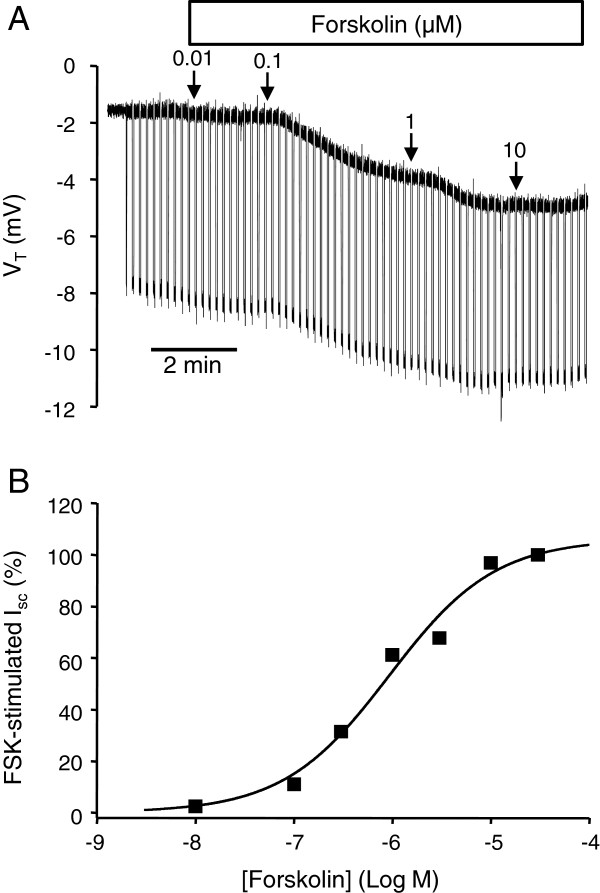
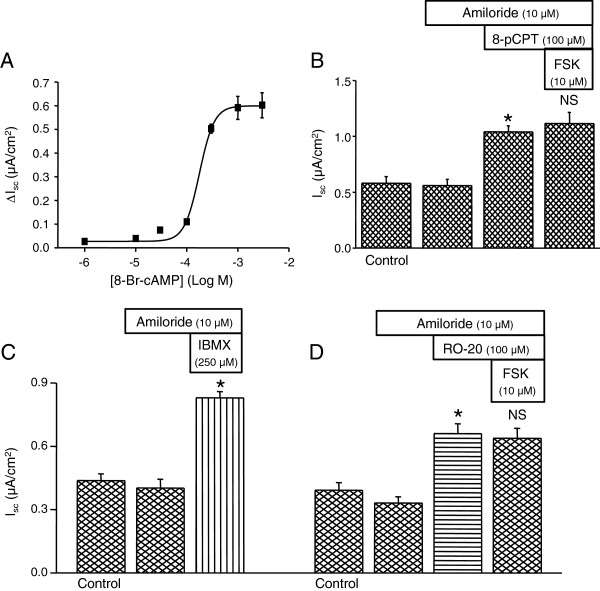
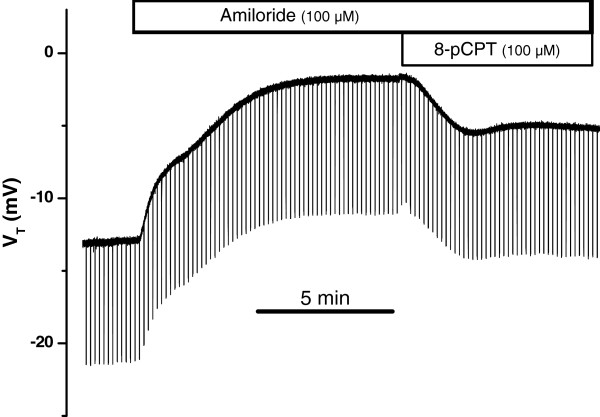
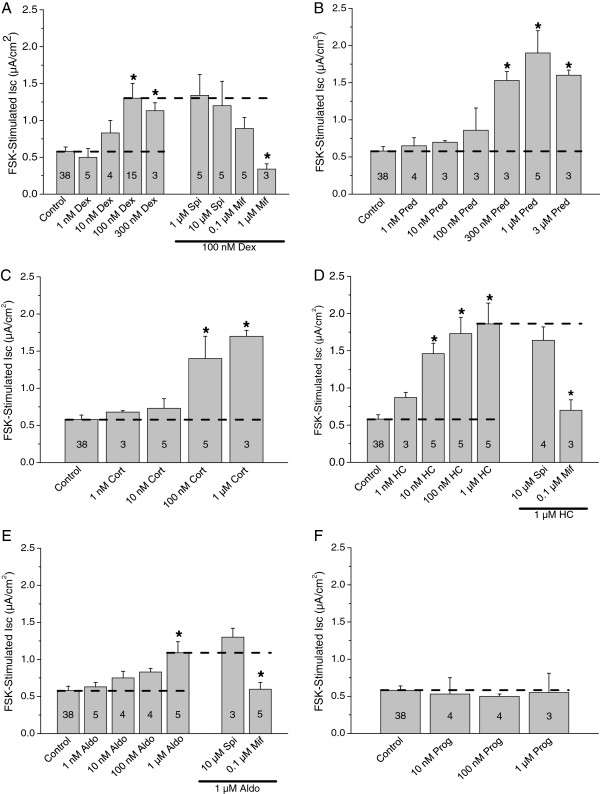
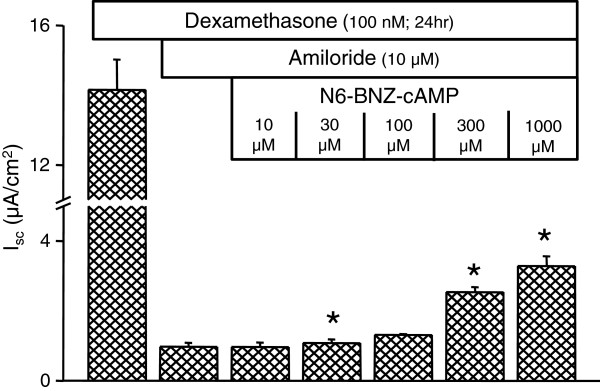
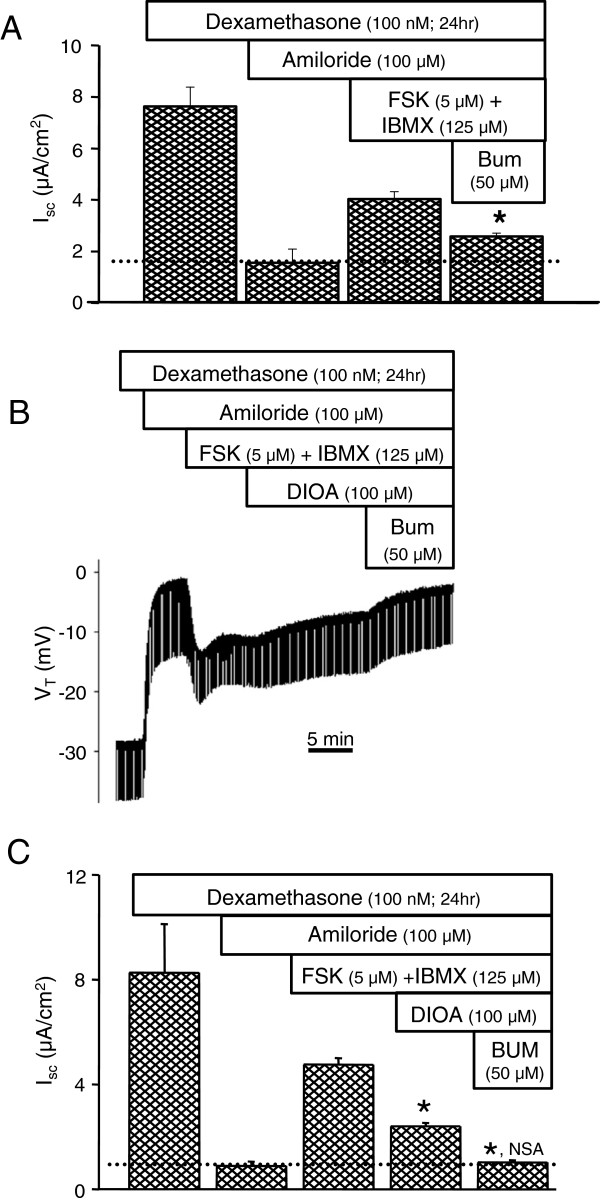
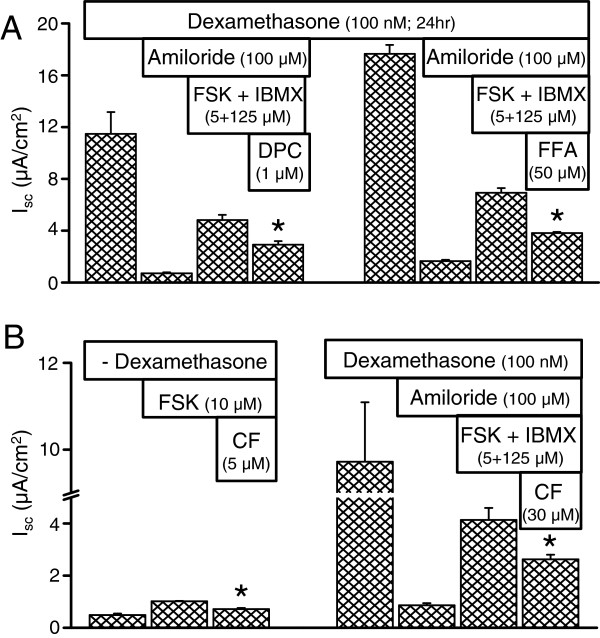
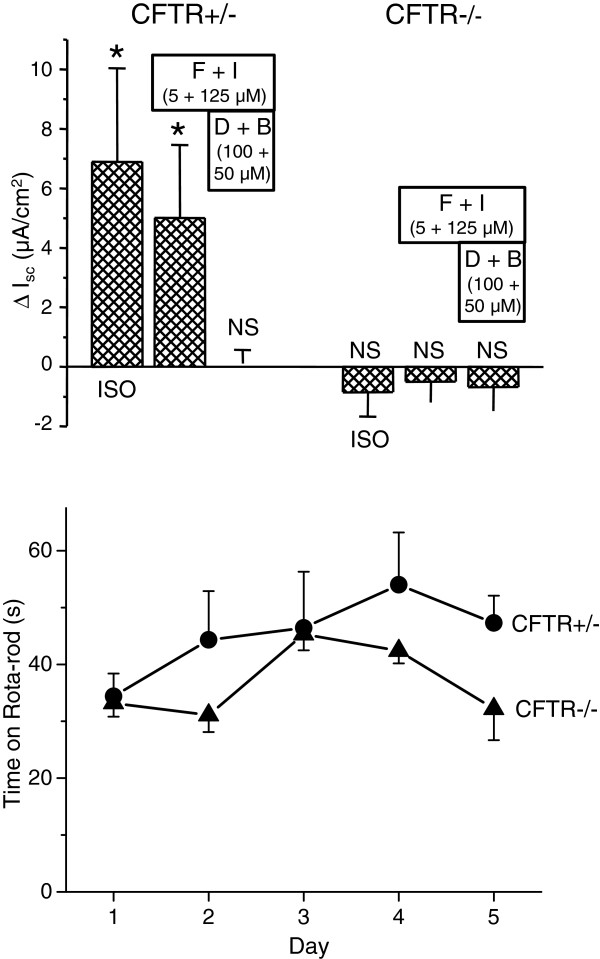
Short circuit current (Isc) from rat SCCD epithelia demonstrated stimulation by forskolin (EC50: 0.8 μM), 8-Br-cAMP (EC50: 180 μM), 8-pCPT-cAMP (100 μM), IBMX (250 μM), and RO-20-1724 (100 μM). The PKA activator N6-BNZ-cAMP (0.1, 0.3 & 1 mM) also stimulated Isc. Partial inhibition of stimulated Isc individually by bumetanide (10 & 50 μM), and [(dihydroindenyl)oxy]alkanoic acid (DIOA, 100 μM) were additive and complete. Stimulated Isc was also partially inhibited by CFTRinh-172 (5 & 30 μM), flufenamic acid (5 μM) and diphenylamine-2,2'-dicarboxylic acid (DPC; 1 mM). Native canals of CFTR+/- mice showed a stimulation of Isc from isoproterenol and forskolin+IBMX but not in the presence of both bumetanide and DIOA, while canals from CFTR-/- mice had no responses. Nonetheless, CFTR-/- mice showed no difference from CFTR+/- mice in their ability to balance (rota-rod). Stimulated Isc was greater after chronic incubation (24 hr) with the glucocorticoids dexamethasone (0.1 & 0.3 μM), prednisolone (0.3, 1 & 3 μM), hydrocortisone (0.01, 0.1 & 1 μM), and corticosterone (0.1 & 1 μM) and mineralocorticoid aldosterone (1 μM). Steroid action was blocked by mifepristone but not by spironolactone, indicating all the steroids activated the glucocorticoid, but not mineralocorticoid, receptor. Expression of transcripts for CFTR; for KCC1, KCC3a, KCC3b and KCC4, but not KCC2; for NKCC1 but not NKCC2 and for WNK1 but only very low WNK4 was determined.
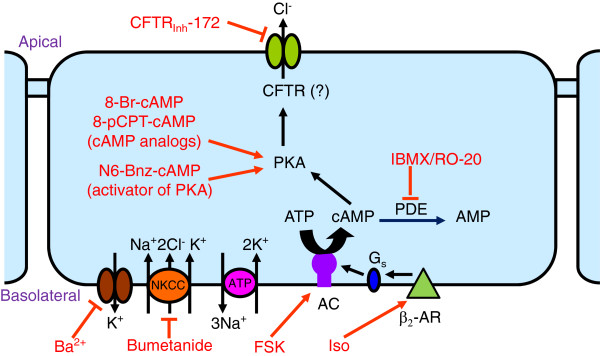
These results are consistent with a model of Cl- secretion whereby Cl- is taken up across the basolateral membrane by a Na+-K+-2Cl- cotransporter (NKCC) and potentially another transporter, is secreted across the apical membrane via a Cl- channel, likely CFTR, and demonstrate the regulation of Cl- secretion by protein kinase A and glucocorticoids.
前庭系统通过激素调节下的几种上皮细胞转运机制来控制其管腔内液体的离子组成。半规管管道(SCCD)上皮已被证明在β2-肾上腺素能刺激下分泌氯离子。在本研究中,我们试图确定参与氯离子分泌的离子转运体,以及分泌是否受蛋白激酶A(PKA)和糖皮质激素调节。
大鼠SCCD上皮的短路电流(Isc)显示可被福斯高林(EC50:0.8 μM)、8-溴-cAMP(EC50:180 μM)、8-对氯苯硫基-cAMP(100 μM)、异丁基甲基黄嘌呤(IBMX,250 μM)和RO-20-1724(100 μM)刺激。PKA激活剂N6-苯甲酰基-cAMP(0.1、0.3和1 mM)也能刺激Isc。布美他尼(10和50 μM)和[(二氢茚基)氧基]链烷酸(DIOA,100 μM)单独对刺激的Isc的部分抑制作用是相加的且完全。刺激的Isc也被CFTRinh-172(5和30 μM)、氟芬那酸(5 μM)和二苯胺-2,2'-二羧酸(DPC;1 mM)部分抑制。CFTR+/-小鼠的天然半规管显示异丙肾上腺素和福斯高林+IBMX能刺激Isc,但在布美他尼和DIOA同时存在时则无刺激,而CFTR-/-小鼠的半规管无反应。尽管如此,CFTR-/-小鼠在平衡能力(转棒试验)上与CFTR+/-小鼠无差异。用糖皮质激素地塞米松(0.1和0.3 μM)、泼尼松龙(0.3、1和3 μM)、氢化可的松(0.01、0.1和1 μM)、皮质酮(0.1和1 μM)和盐皮质激素醛固酮(1 μM)进行慢性孵育(24小时)后,刺激的Isc更大。米非司酮可阻断类固醇的作用,但螺内酯不能,这表明所有类固醇均激活糖皮质激素受体而非盐皮质激素受体。测定了CFTR;KCC1、KCC3a、KCC3b和KCC4但不包括KCC2;NKCC1但不包括NKCC2以及WNK1但仅极低水平的WNK4的转录本表达。
这些结果与氯离子分泌模型一致,即氯离子通过钠-钾-2-氯共转运体(NKCC)和可能的另一种转运体跨基底外侧膜摄取,通过氯离子通道(可能是CFTR)跨顶端膜分泌,并证明了蛋白激酶A和糖皮质激素对氯离子分泌的调节作用。