Department of Kinesiology, University of Wisconsin Oshkosh, 800 Algoma Boulevard, Oshkosh, WI 54901-8630, USA.
Exp Brain Res. 2013 Jun;227(2):161-74. doi: 10.1007/s00221-013-3496-2. Epub 2013 Apr 4.
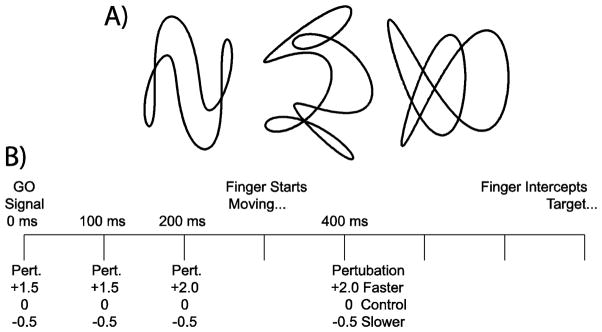
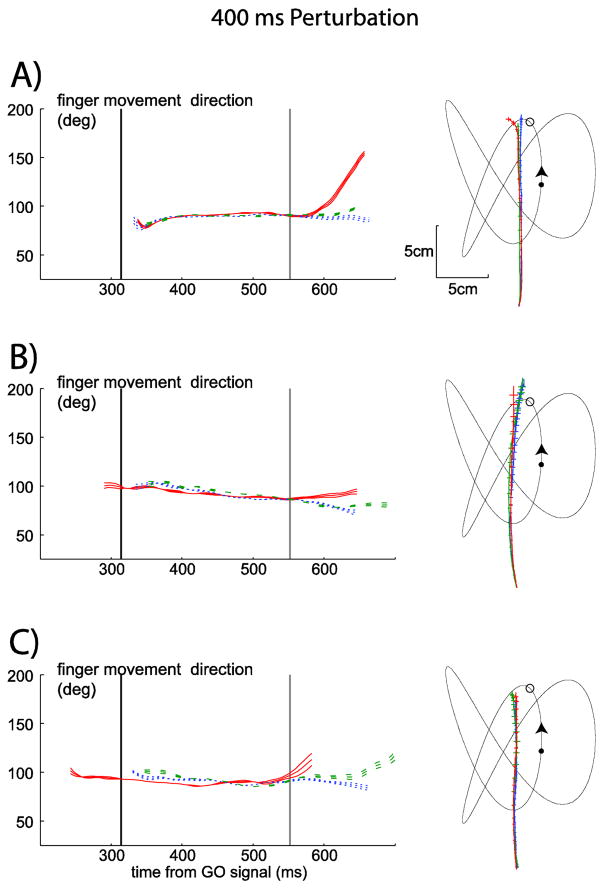
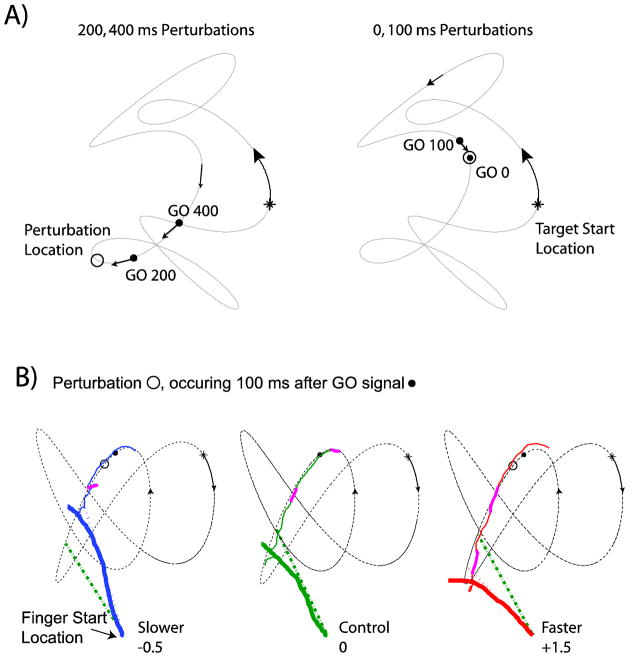
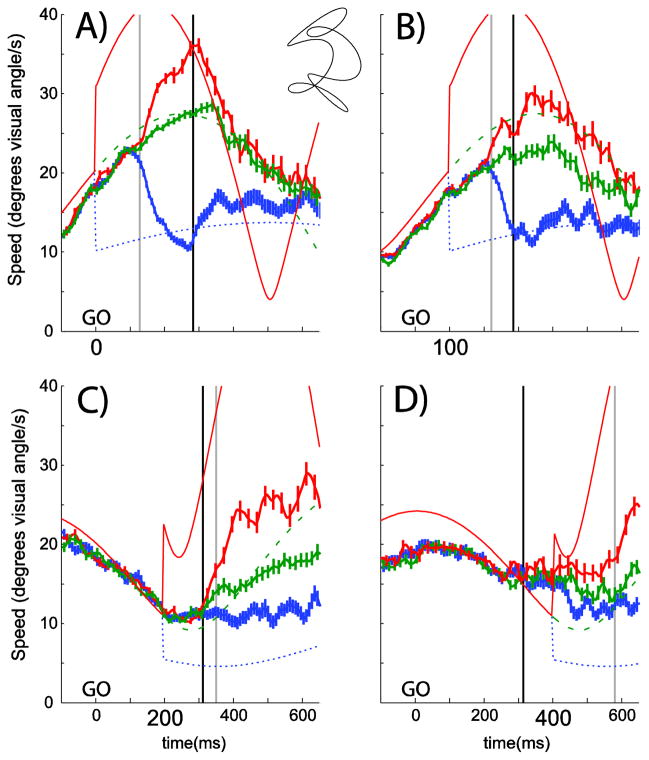
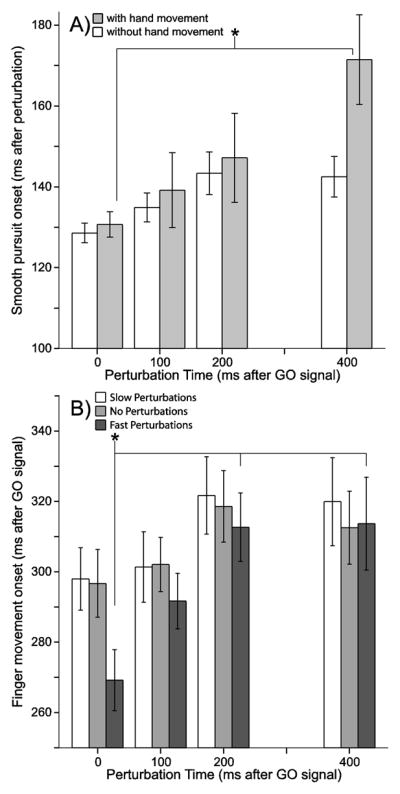
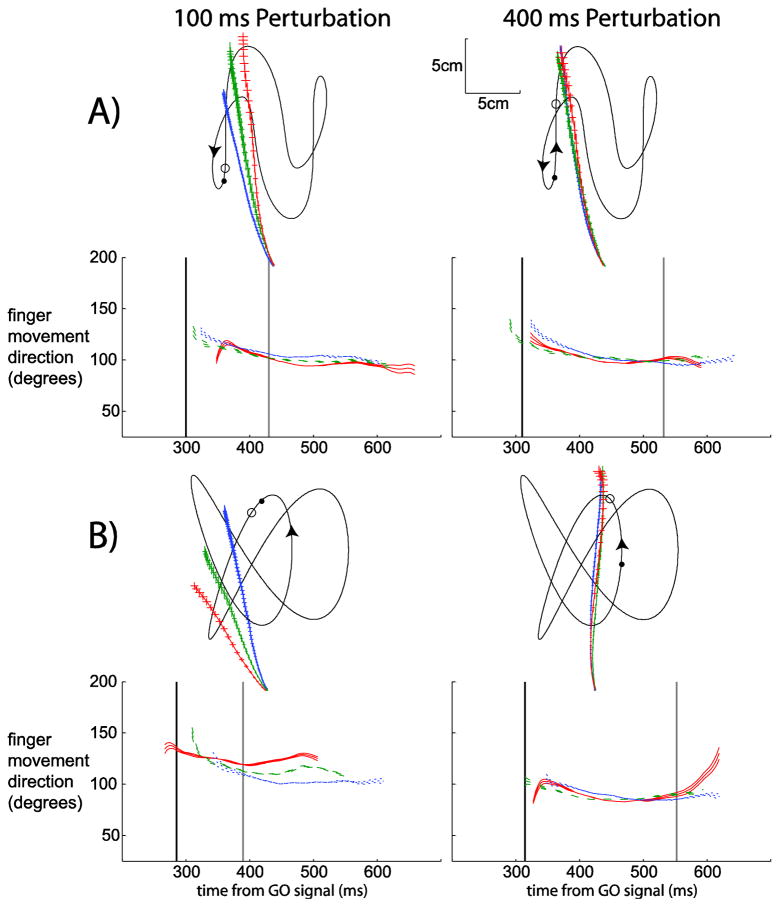
The smooth pursuit eye movement system appears to be importantly engaged during the planning and execution of interceptive hand movements. The present study sought to probe the interaction between eye and hand control systems by examining their responses during an interception task that included target speed perturbations. On 2/3 of trials, the target increased or decreased speed at various times, ranging from about 300 ms before to 150 ms after the onset of a finger movement directed to intercept the target and was triggered by a GO signal. Additionally, the same 2D sum-of-sines target trajectories were followed with the eyes without interception. The smooth pursuit system responded more quickly if the target speed perturbation occurred earlier during the reaction time (i.e., near the time of the GO signal). Similarly, the finger movement began more quickly if target speed was increased earlier during the reaction time. For early perturbation conditions, the initial direction of the finger movement matched the predicted target intercept using the new target speed. For perturbations occurring after finger movement, onset initial direction of finger movement did not match target interception such that the finger path began to curve toward the perturbed target after about 150-200 ms. The results support the idea of an active process of visual target path extrapolation simultaneously used to guide both the eye and hand.
眼追踪运动系统在规划和执行截球手运动时似乎起着重要作用。本研究通过检查在包括目标速度扰动的截球任务中它们的反应,试图探究眼和手控制系统之间的相互作用。在三分之二的试验中,目标在手指运动开始前约 300 毫秒到 150 毫秒之间的不同时间增加或减少速度,该运动被一个 GO 信号触发以拦截目标,并且用眼睛跟踪同样的 2D 正弦和目标轨迹而无需截球。如果目标速度扰动在反应时间内(即接近 GO 信号时间)更早发生,眼追踪系统的反应速度更快。类似地,如果目标速度在反应时间内更早增加,手指运动开始得更快。对于早期扰动条件,手指运动的初始方向与使用新目标速度预测的目标截球相匹配。对于在手指运动之后发生的扰动,手指运动开始时的初始方向与目标截球不匹配,使得手指路径在大约 150-200 毫秒后开始向受扰目标弯曲。研究结果支持了视觉目标路径外推的主动过程的观点,该过程同时用于指导眼睛和手。