Ebadian Behnaz, Farzin Mahmoud, Talebi Saeid, Khodaeian Niloufar
Torabinejad Dental Research Center and Department of Prosthodontics, School of Dentistry, Isfahan University of Medical Sciences, Isfahan, Iran.
Dent Res J (Isfahan). 2012 Nov;9(6):741-7.
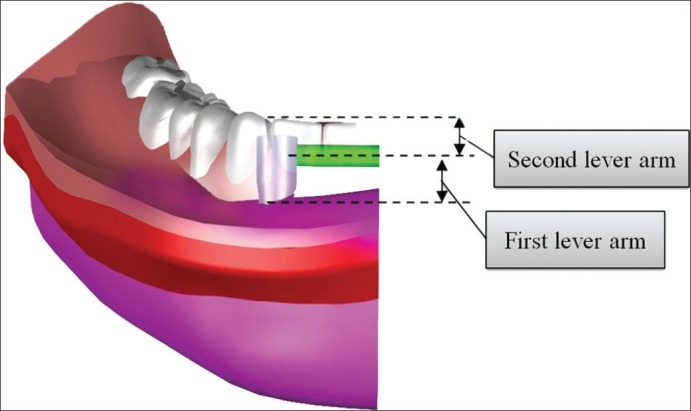
Available restorative space and bar height is an important factor in stress distribution of implant-supported overdentures. The purpose of this study was to evaluate the effect of different vertical restorative spaces and different bar heights on the stress distribution around implants by 3D finite element analysis.
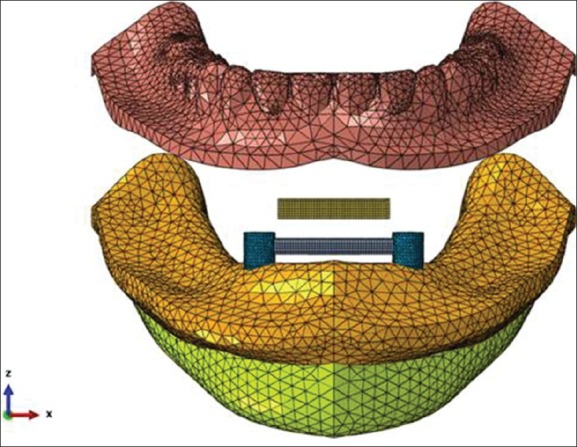
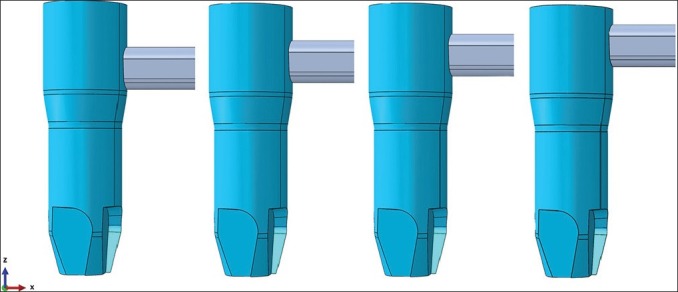
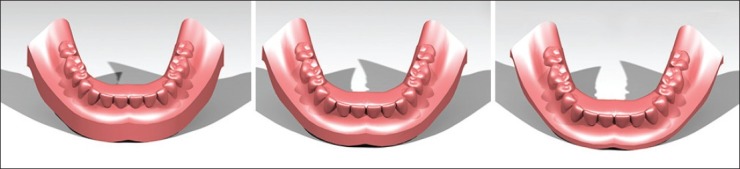
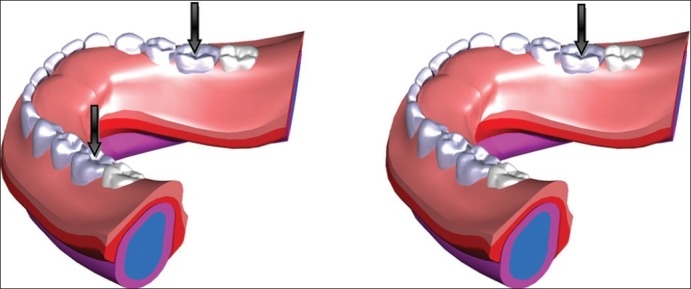
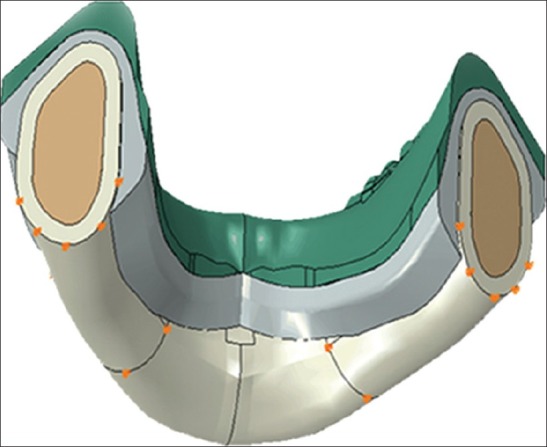
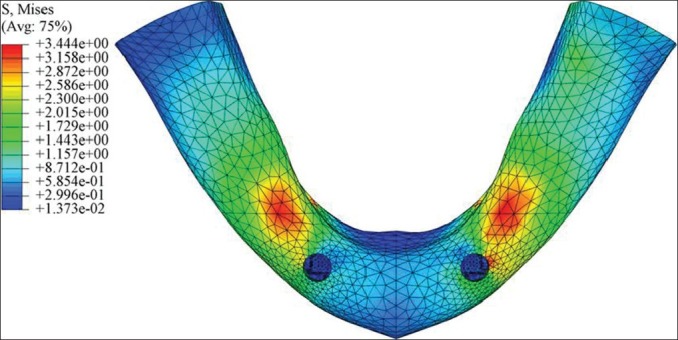
3D finite element models were developed from mandibular overdentures with two implants in the interforaminal region. In these models, four different bar heights from gingival crest (0.5, 1, 1.5, 2 mm) with 15 mm occlusal plane height and three different occlusal plane heights from gingival crest (9, 12, 15 mm) with 2 mm bar height were analyzed. A vertical unilateral and a bilateral load of 150 N were applied to the central occlusal fossa of the first molar and the stress of bone around implant was analyzed by finite element analysis.
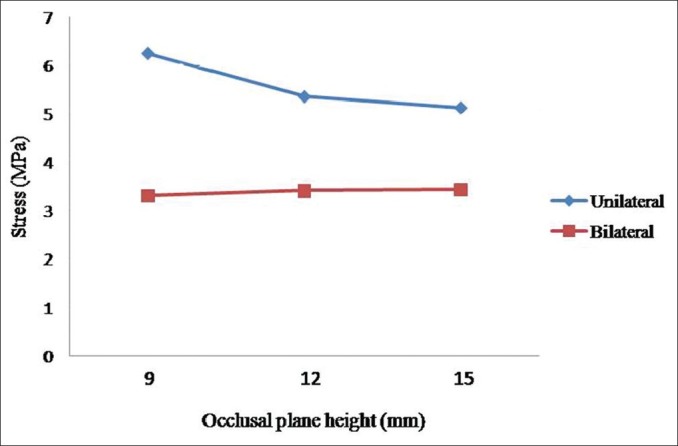
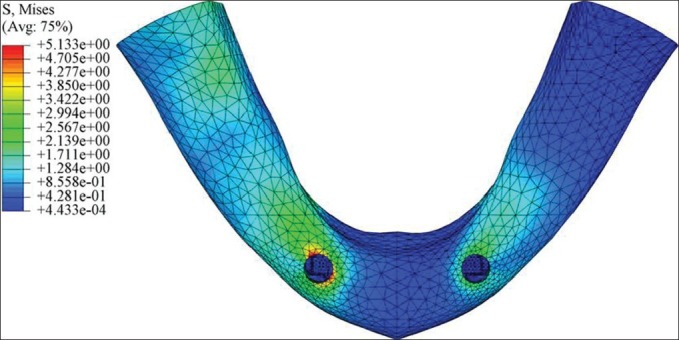
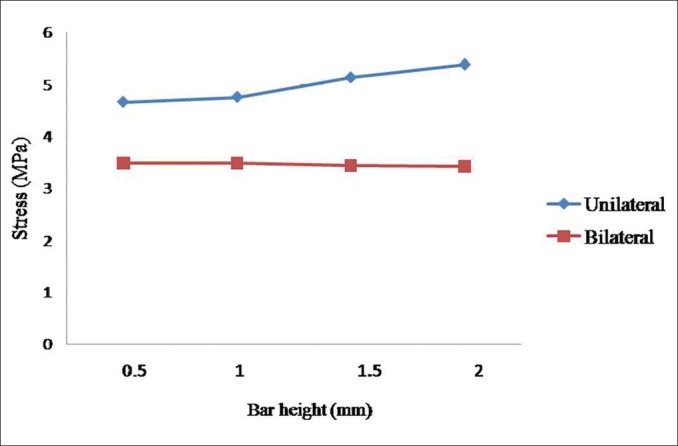
By increasing vertical restorative space, the maximum stress values around implants were found to be decreased in unilateral loading models but slightly increased in bilateral loading cases. By increasing bar height from gingival crest, the maximum stress values around implants were found to be increased in unilateral loading models but slightly decreased in bilateral loading cases. In unilateral loading models, maximum stress was found in a model with 9 mm occlusal plane height and 1.5 mm bar height (6.254 MPa), but in bilateral loading cases, maximum stress was found in a model with 15 mm occlusal plane height and 0.5 mm bar height (3.482 MPa).
The reduction of bar height and increase in the thickness of acrylic resin base in implant-supported overdentures are biomechanically favorable and may result in less stress in periimplant bone.
可用修复间隙和杆高度是种植体支持覆盖义齿应力分布的重要因素。本研究的目的是通过三维有限元分析评估不同垂直修复间隙和不同杆高度对种植体周围应力分布的影响。
在下颌覆盖义齿的下颌孔间区域有两个种植体的基础上建立三维有限元模型。在这些模型中,分析了距牙龈嵴的四种不同杆高度(0.5、1、1.5、2毫米)且咬合平面高度为15毫米的情况,以及距牙龈嵴的三种不同咬合平面高度(9、12、15毫米)且杆高度为2毫米的情况。对第一磨牙中央咬合窝施加150牛的垂直单侧和双侧载荷,并通过有限元分析来分析种植体周围骨的应力。
通过增加垂直修复间隙,在单侧加载模型中发现种植体周围的最大应力值降低,但在双侧加载情况下略有增加。通过增加距牙龈嵴的杆高度,在单侧加载模型中发现种植体周围的最大应力值增加,但在双侧加载情况下略有降低。在单侧加载模型中,在咬合平面高度为9毫米且杆高度为1.5毫米的模型中发现最大应力(6.254兆帕),但在双侧加载情况下,在咬合平面高度为15毫米且杆高度为0.5毫米的模型中发现最大应力(3.482兆帕)。
在种植体支持的覆盖义齿中,降低杆高度和增加丙烯酸树脂基托厚度在生物力学上是有利的,并且可能导致种植体周围骨的应力较小。