Jang Woo Jung, Choi Duk Yong, Jeon In-Sang
Department of Pediatrics, Graduate School of Medicine, Gachon University, Incheon, Korea.
Korean J Pediatr. 2013 Mar;56(3):130-4. doi: 10.3345/kjp.2013.56.3.130. Epub 2013 Mar 18.
Anthracyclines have been utilized in the treatment of children with acute lymphoblastic leukemia (ALL). Recent studies have shown that anthracyclines may induce toxicity in the vascular endothelium. This study was performed using brachial artery reactivity (BAR) to evaluate vascular endothelial function in ALL patients who were treated with anthracycline chemotherapy.
We included 21 children with ALL who received anthracycline chemotherapy and 20 healthy children. The cumulative dose of anthracyclines in the ALL patients was 142.5±18.2/m(2). The last anthracycline dose was administered to the patients 2 to 85 months prior to their examination using BAR. The diameter of the brachial artery was measured in both groups using echocardiography, and BAR was calculated as the percentage change in the arterial diameter after release of the cuff relative to the baseline vessel diameter.
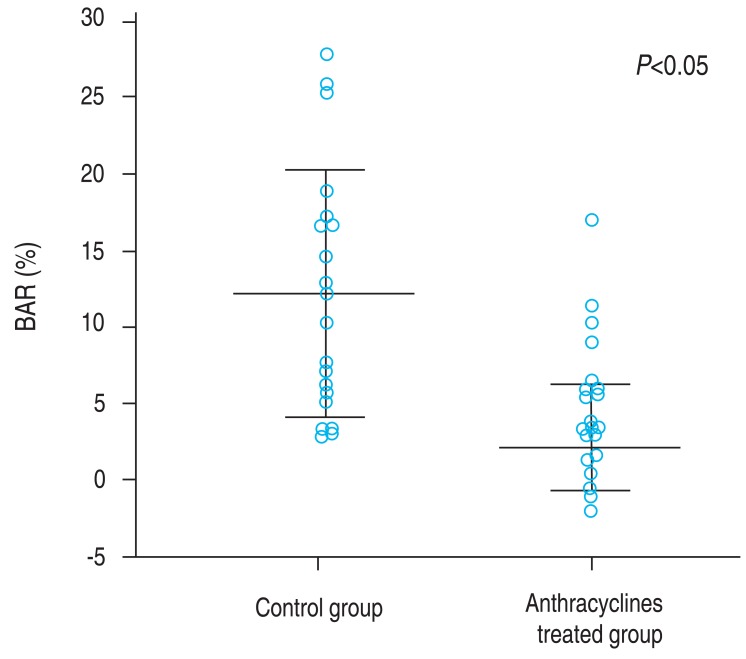
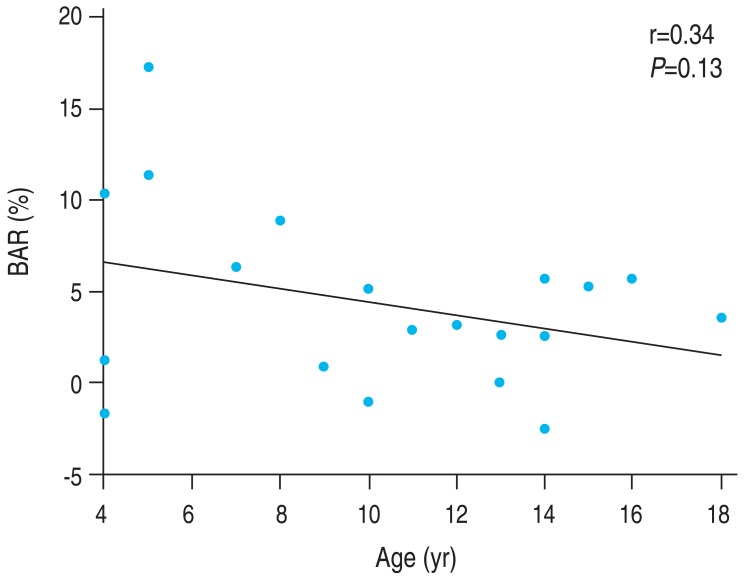
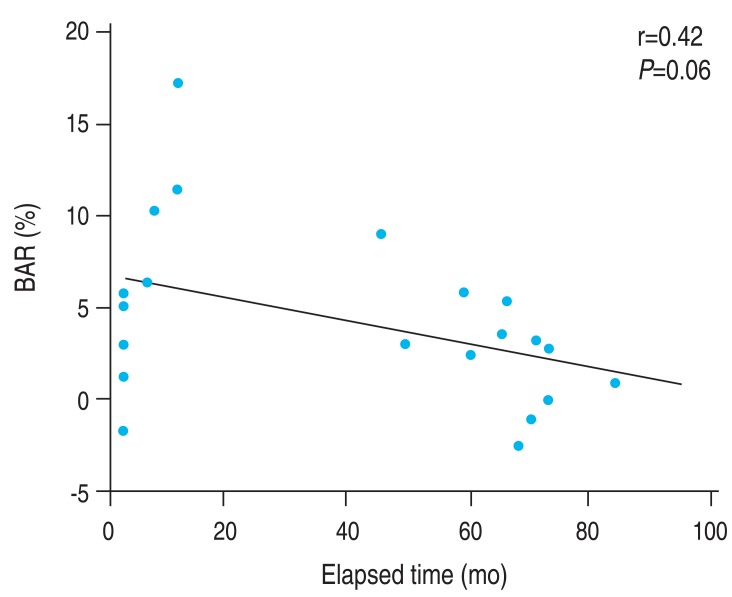
In the anthracycline-treated group, BAR was observed to be 3.4%±3.9%, which was significantly lower than that observed in the control group (12.1%±8.0%, P<0.05). The time elapsed after the last anthracycline treatment and the age at the time of treatment did not affect the change in BAR (P=0.06 and P=0.13, respectively).
These results provided evidence that treatment of ALL patients with anthracycline results in endothelial dysfunction. A larger cohort study and a longer follow-up period will be required to clarify the relationship between endothelial dysfunction resulting from anthracycline treatment for childhood ALL and occurrence of cardiovascular diseases later in life.
蒽环类药物已用于治疗儿童急性淋巴细胞白血病(ALL)。最近的研究表明,蒽环类药物可能会诱导血管内皮毒性。本研究采用肱动脉反应性(BAR)来评估接受蒽环类化疗的ALL患者的血管内皮功能。
我们纳入了21例接受蒽环类化疗的ALL患儿和20例健康儿童。ALL患者蒽环类药物的累积剂量为142.5±18.2/m²。在使用BAR检查前2至85个月,给患者使用了最后一剂蒽环类药物。两组均使用超声心动图测量肱动脉直径,并计算BAR,即袖带松开后动脉直径相对于基线血管直径的变化百分比。
在蒽环类药物治疗组中,观察到BAR为3.4%±3.9%,显著低于对照组(12.1%±8.0%,P<0.05)。最后一次蒽环类药物治疗后经过的时间和治疗时的年龄均未影响BAR的变化(分别为P=0.06和P=0.13)。
这些结果证明,用蒽环类药物治疗ALL患者会导致内皮功能障碍。需要进行更大规模的队列研究和更长时间的随访,以阐明儿童ALL蒽环类药物治疗导致的内皮功能障碍与日后心血管疾病发生之间的关系。