Institute of Biomedical Sciences, National Chung Hsing University, 250 Kuo-Kuang Road, Taichung 40227, Taiwan.
Evid Based Complement Alternat Med. 2013;2013:630415. doi: 10.1155/2013/630415. Epub 2013 Mar 13.
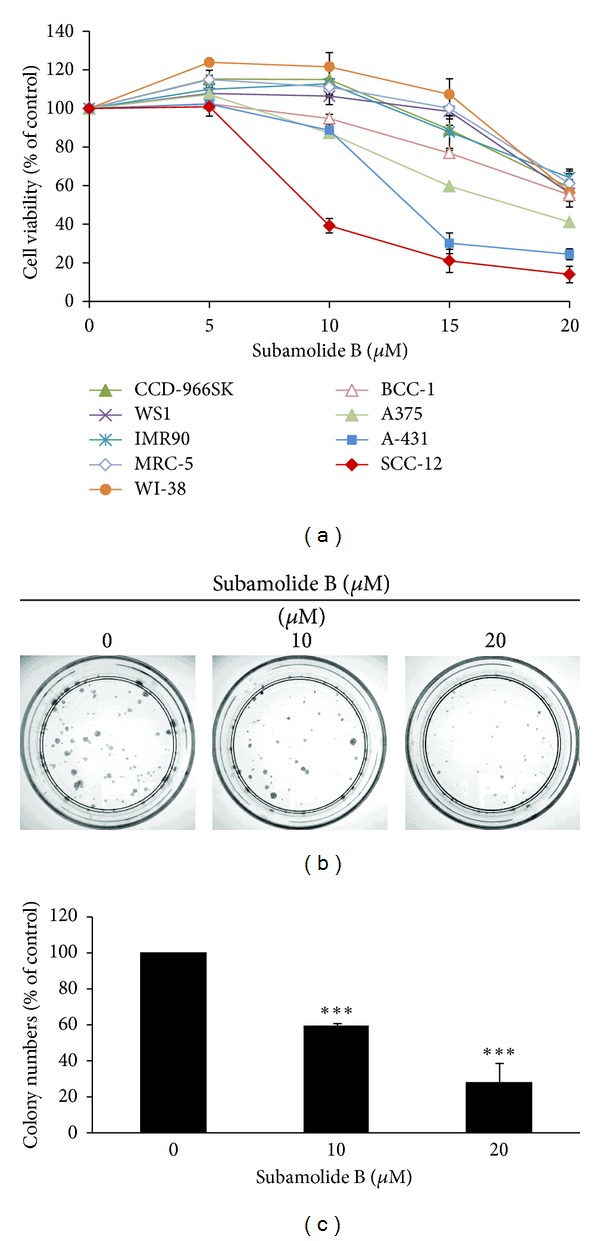
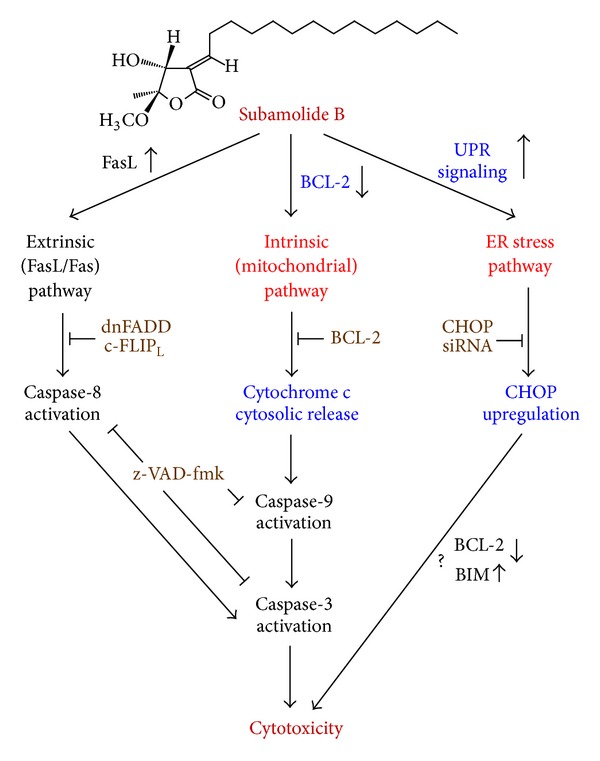
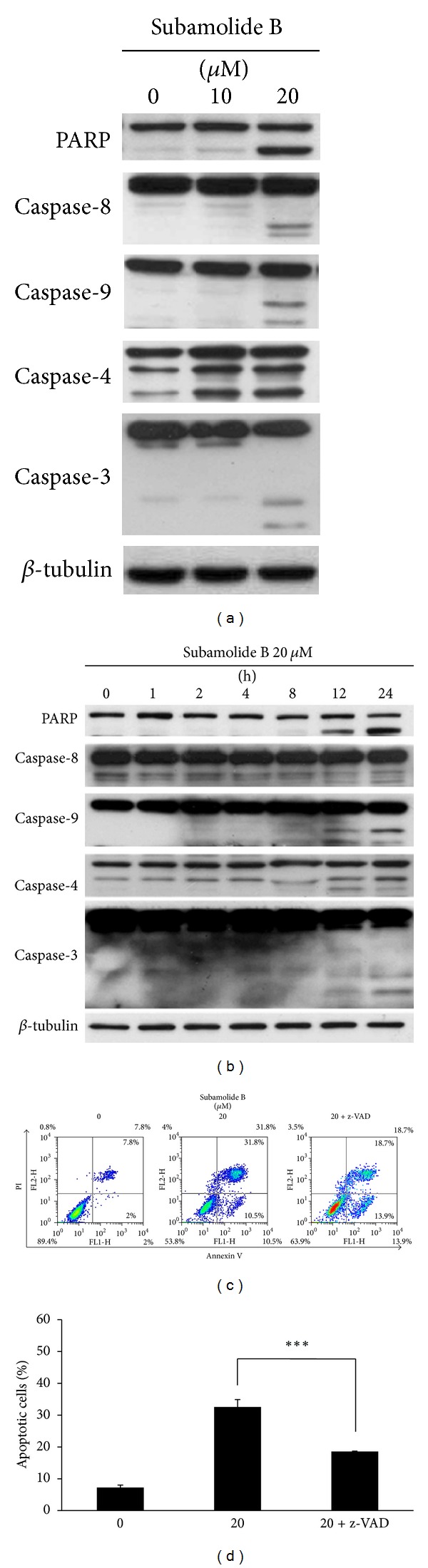
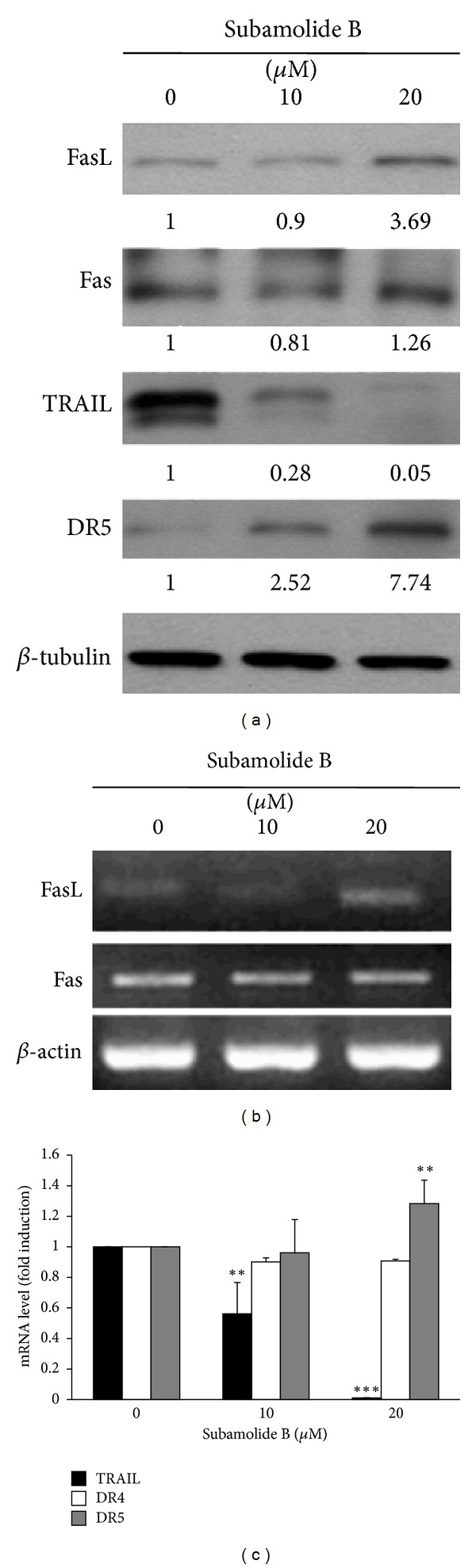
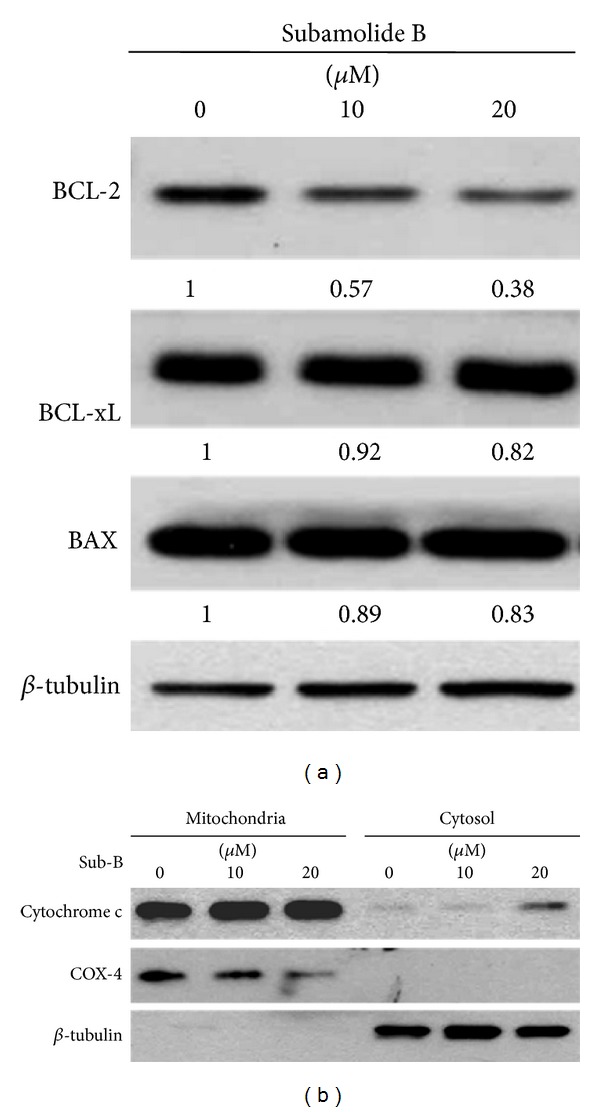
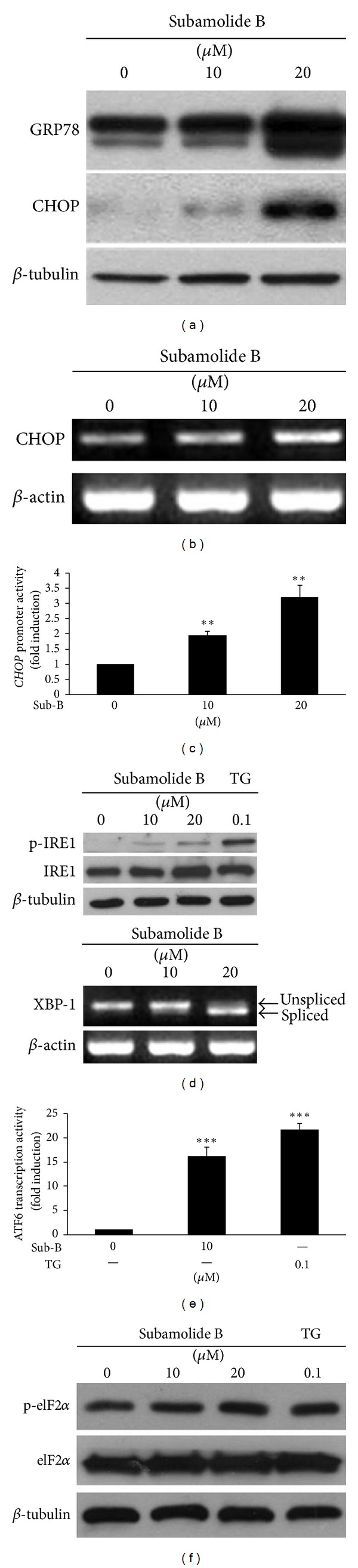
Subamolide B is a butanolide isolated from Cinnamomum subavenium, a medicinal plant traditionally used to treat various ailments including carcinomatous swelling. We herein reported for the first time that subamolide B potently induced cytotoxicity against diverse human skin cancer cell lines while sparing nonmalignant cells. Mechanistic studies on human cutaneous squamous cell carcinoma (SCC) cell line SCC12 highlighted the involvement of apoptosis in subamolide B-induced cytotoxicity, as evidenced by the activation of caspases-8, -9, -4, and -3, the increase in annexin V-positive population, and the partial restoration of cell viability by cotreatment with the pan-caspase inhibitor z-VAD-fmk. Additionally, subamolide B evoked cell death pathways mediated by FasL/Fas, mitochondria, and endoplasmic reticulum (ER) stress, as supported by subamolide B-induced FasL upregulation, BCL-2 suppression/cytosolic release of cytochrome c, and UPR activation/CHOP upregulation, respectively. Noteworthy, ectopic expression of c-FLIPL or dominant-negative mutant of FADD failed to impair subamolide B-induced cytotoxicity, whereas BCL-2 overexpression or CHOP depletion greatly rescued subamolide B-stimulated cells. Collectively, these results underscored the central role of mitochondrial and CHOP-mediated cell death pathways in subamolide B-induced cytotoxicity. Our findings further implicate the potential of subamolide B for cutaneous SCC therapy or as a lead compound for developing novel chemotherapeutic agents.
Subamolide B 是从肉桂属植物肉桂中分离得到的一种丁内酯,该植物传统上用于治疗各种疾病,包括癌性肿胀。我们首次报道,subamolide B 对多种人类皮肤癌细胞系具有很强的细胞毒性,而对非恶性细胞没有影响。对人皮肤鳞状细胞癌细胞系 SCC12 的机制研究强调了凋亡在 subamolide B 诱导的细胞毒性中的作用,这表现在 caspase-8、-9、-4 和 -3 的激活、膜联蛋白 V 阳性细胞群体的增加,以及用 pan-caspase 抑制剂 z-VAD-fmk 共处理部分恢复细胞活力。此外,subamolide B 引发了 FasL/Fas、线粒体和内质网 (ER) 应激介导的细胞死亡途径,subamolide B 诱导的 FasL 上调、BCL-2 抑制/细胞色素 c 胞浆释放以及 UPR 激活/CHOP 上调分别支持了这一点。值得注意的是,c-FLIPL 的异位表达或 FADD 的显性失活突变不能损害 subamolide B 诱导的细胞毒性,而 BCL-2 的过表达或 CHOP 的耗竭则大大挽救了 subamolide B 刺激的细胞。总之,这些结果强调了线粒体和 CHOP 介导的细胞死亡途径在 subamolide B 诱导的细胞毒性中的核心作用。我们的发现进一步表明,subamolide B 具有治疗皮肤鳞状细胞癌的潜力,或可作为开发新型化疗药物的先导化合物。