Department of Hematology/Oncology, University Hospital Freiburg, 79106 Freiburg, Germany
J Exp Med. 2013 May 6;210(5):1003-19. doi: 10.1084/jem.20120521.
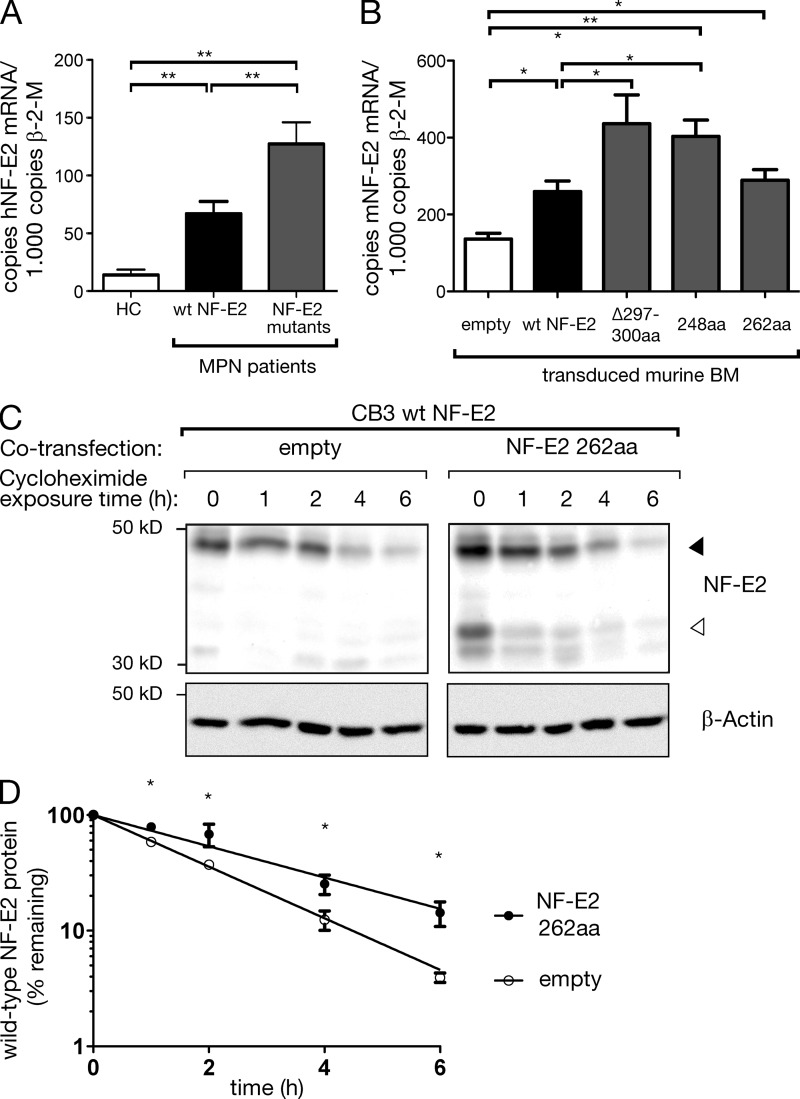
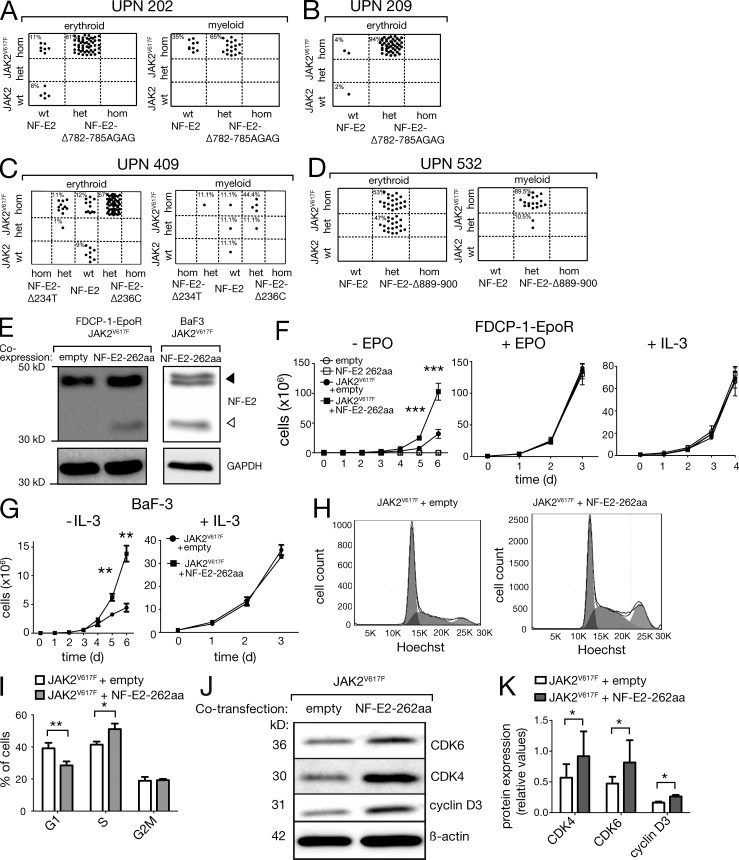
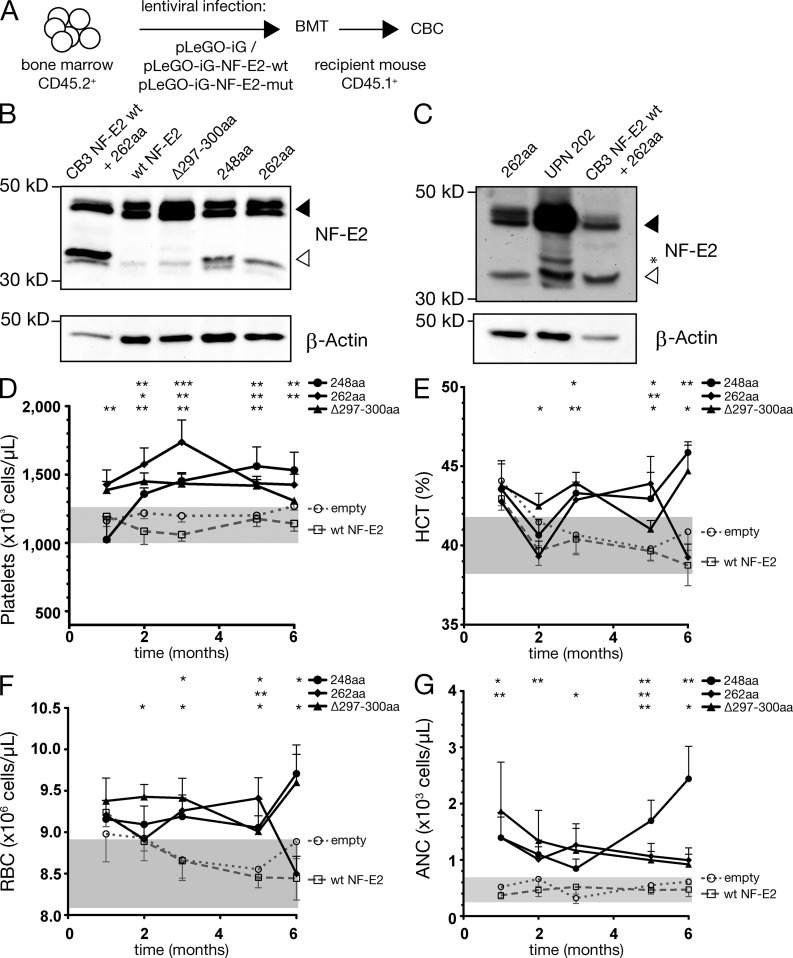
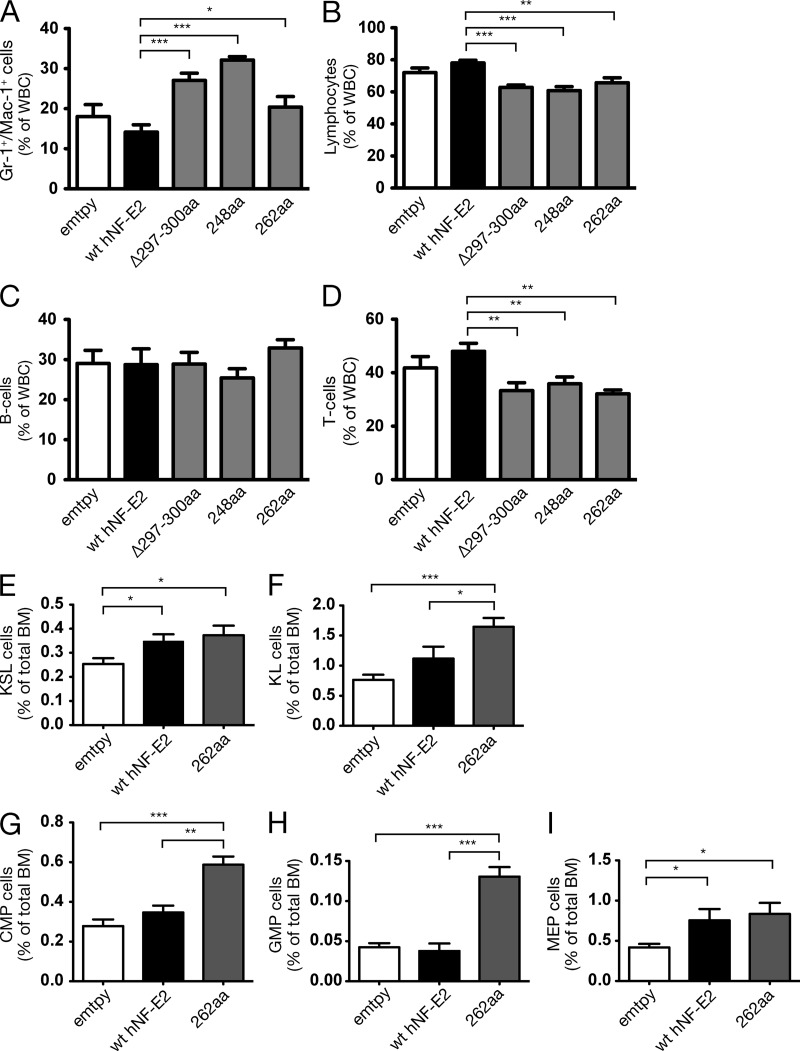
The molecular etiology of myeloproliferative neoplasms (MPNs) remains incompletely understood, despite recent advances incurred through the discovery of several different mutations in MPN patients. We have recently described overexpression of the transcription factor NF-E2 in MPN patients and shown that elevated NF-E2 levels in vivo cause an MPN phenotype and predispose to leukemic transformation in transgenic mice. We report the presence of acquired insertion and deletion mutations in the NF-E2 gene in MPN patients. These result in truncated NF-E2 proteins that enhance wild-type (WT) NF-E2 function and cause erythrocytosis and thrombocytosis in a murine model. NF-E2 mutant cells acquire a proliferative advantage, witnessed by clonal dominance over WT NF-E2 cells in MPN patients. Our data underscore the role of increased NF-E2 activity in the pathophysiology of MPNs.
骨髓增殖性肿瘤(MPN)的分子病因仍不完全清楚,尽管最近通过发现 MPN 患者的几种不同突变取得了一些进展。我们最近描述了转录因子 NF-E2 在 MPN 患者中的过度表达,并表明体内升高的 NF-E2 水平会导致 MPN 表型,并使转基因小鼠易发生白血病转化。我们报告了 MPN 患者 NF-E2 基因中获得的插入和缺失突变的存在。这些突变导致截断的 NF-E2 蛋白,增强野生型(WT)NF-E2 功能,并在小鼠模型中导致红细胞增多症和血小板增多症。NF-E2 突变细胞获得增殖优势,在 MPN 患者中,其克隆优势超过 WT NF-E2 细胞。我们的数据强调了 NF-E2 活性增加在 MPN 病理生理学中的作用。