Center for Orthopaedic Biomechanics, University of Denver, 2390 S. York St., Denver, Colorado 80208, USA.
J Orthop Res. 2013 Sep;31(9):1438-46. doi: 10.1002/jor.22366. Epub 2013 Apr 19.
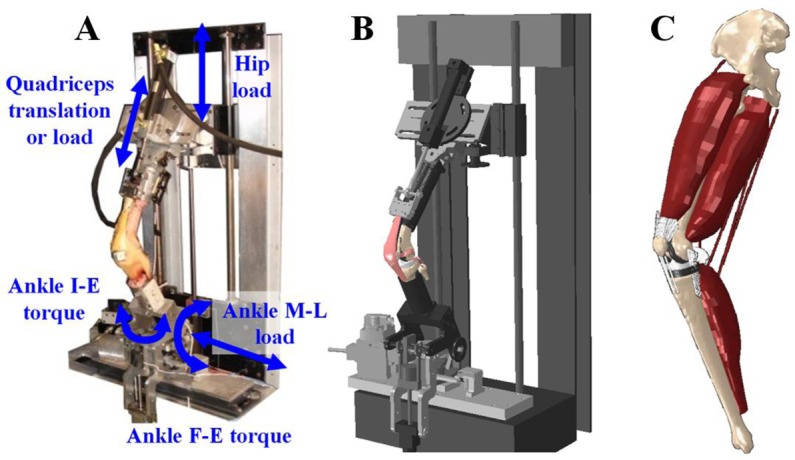
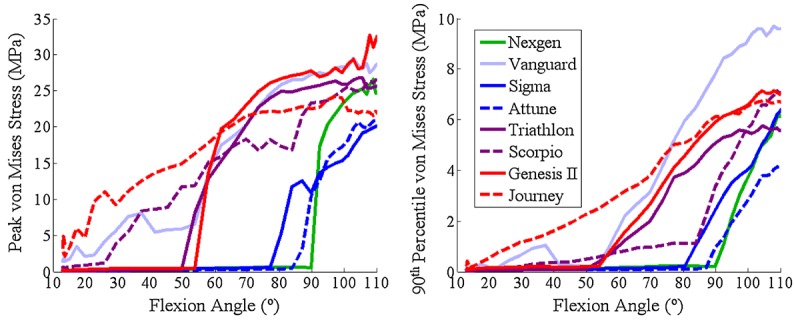
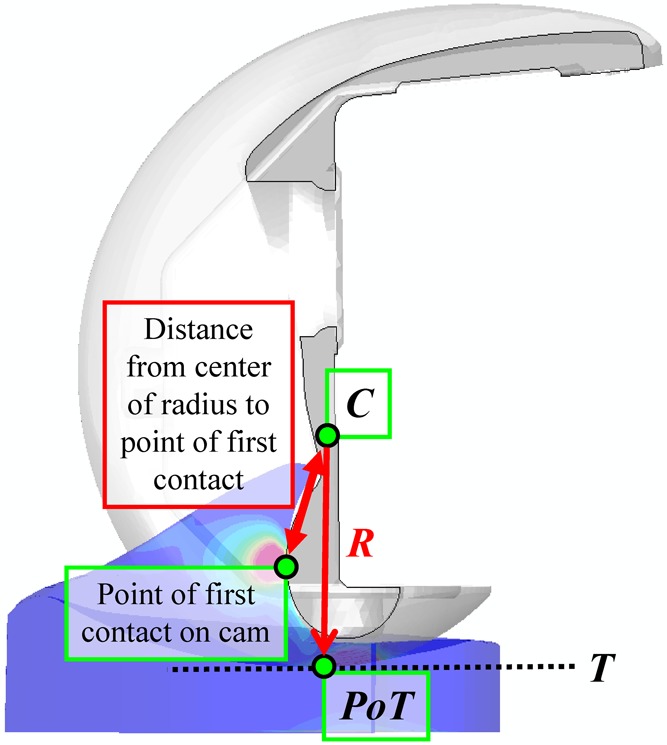
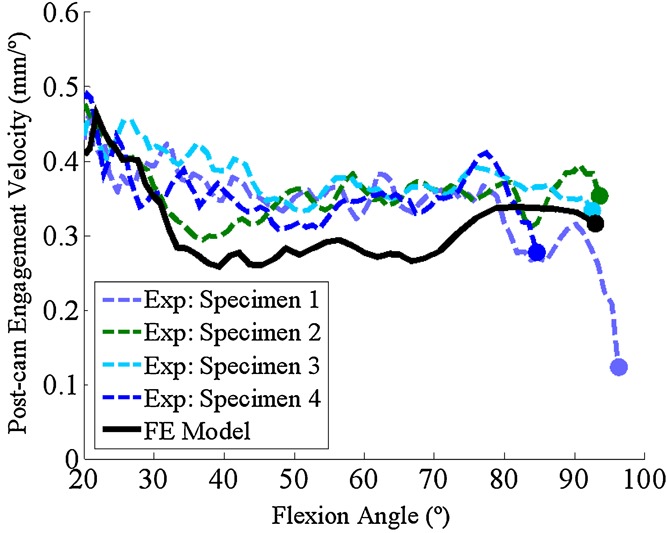
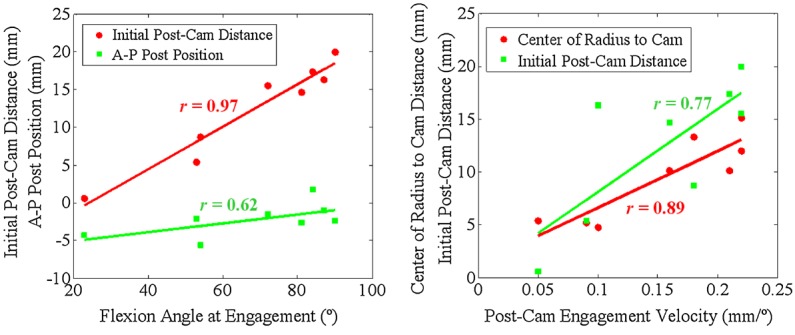
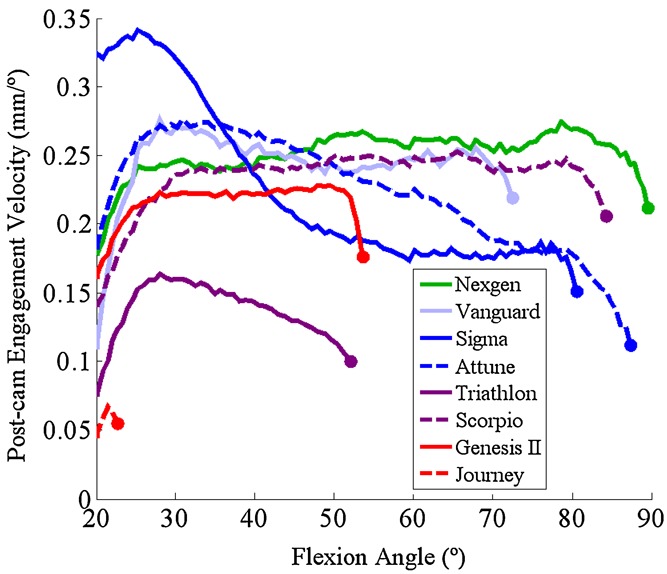
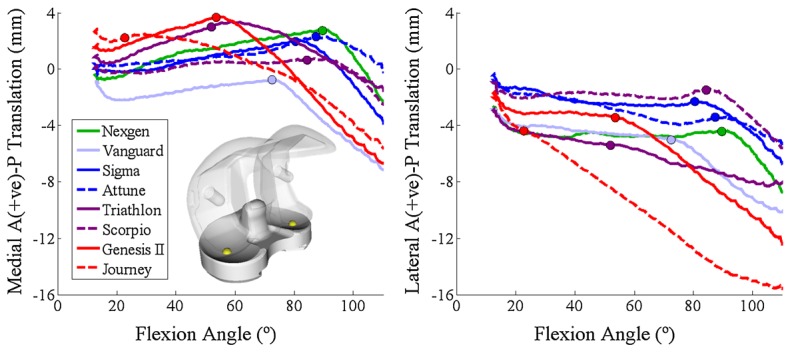
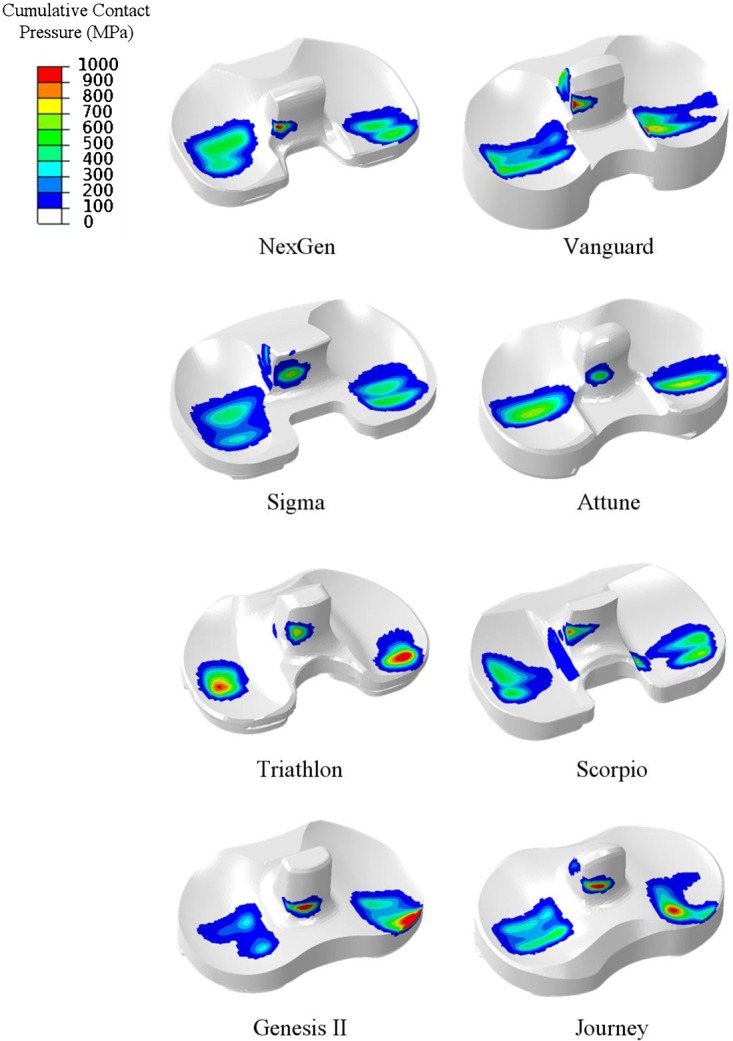
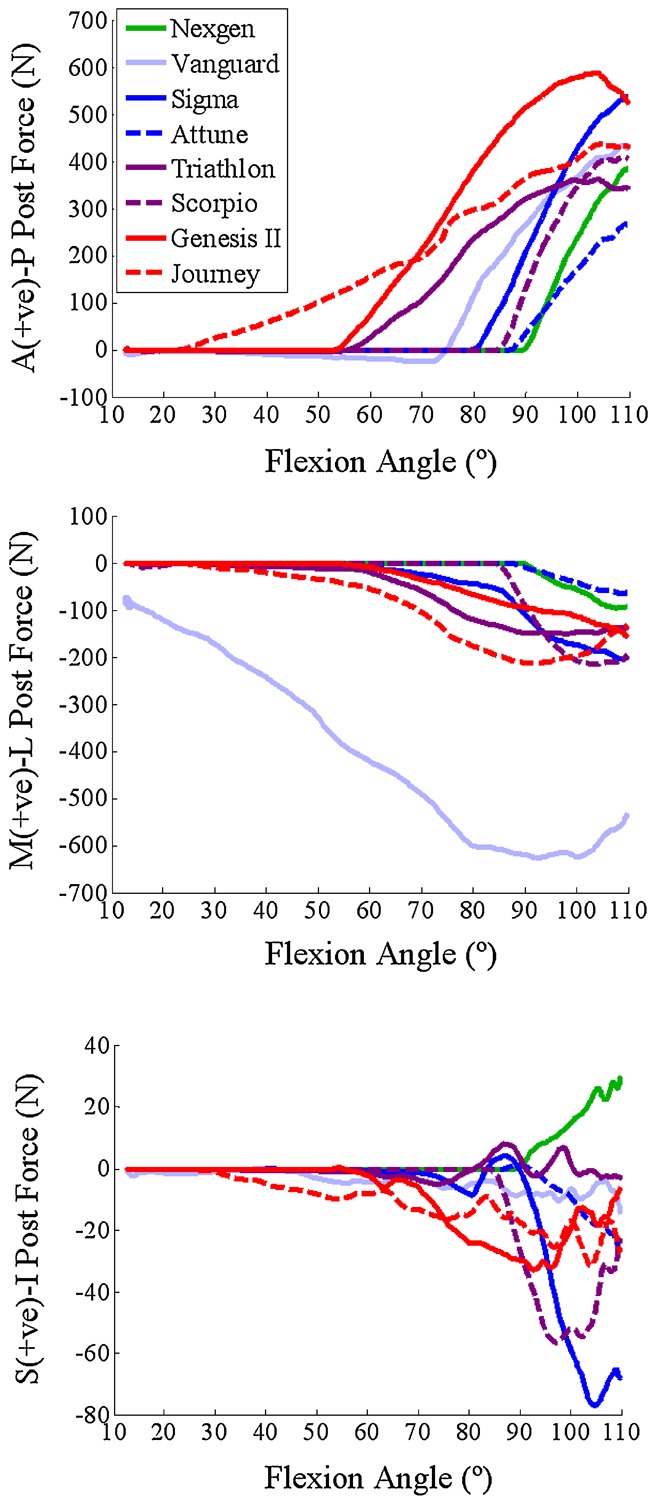
Posterior-stabilized (PS) total knee arthroplasty (TKA) components employ a tibial post and femoral cam mechanism to guide anteroposterior knee motion in lieu of the posterior cruciate ligament. Some PS TKA patients report a clicking sensation when the post and cam engage, while severe wear and fracture of the post; we hypothesize that these complications are associated with excessive impact velocity at engagement. We evaluated the effect of implant design on engagement dynamics of the post-cam mechanism and resulting polyethylene stresses during dynamic activity. In vitro simulation of a knee bend activity was performed for four cadaveric specimens implanted with PS TKA components. Post-cam engagement velocity and flexion angle at initial contact were determined. The experimental data were used to validate computational predictions of PS mechanics using the same loading conditions. A lower limb model was subsequently utilized to compare engagement mechanics of eight TKA designs, relating differences between implants to geometric design features. Flexion angle and post-cam velocity at engagement demonstrated considerable ranges among designs (23°-89°, and 0.05-0.22 mm/°, respectively). Post-cam velocity was correlated (r = 0.89) with tibiofemoral condylar design features. Condylar geometry, in addition to post-cam geometry, played a significant role in minimizing engagement velocity and forces and stresses in the post. This analysis guides selection and design of PS implants that facilitate smooth post-cam engagement and reduce edge loading of the post.
后稳定型(PS)全膝关节置换术(TKA)组件采用胫骨后髁和股骨凸轮机构来引导膝关节前后向运动,替代后交叉韧带。一些 PS TKA 患者在髁后和凸轮啮合时会报告有咔嗒声,而严重的磨损和后髁骨折;我们假设这些并发症与啮合时的过高冲击速度有关。我们评估了植入物设计对后凸轮机构啮合动力学的影响以及在动态活动中对聚乙烯的应力影响。对四个植入 PS TKA 组件的尸体标本进行了膝关节弯曲活动的体外模拟。确定了后凸轮的初始接触时的啮合速度和屈曲角度。将实验数据用于使用相同加载条件来验证 PS 力学的计算预测。随后利用下肢模型比较了八种 TKA 设计的啮合力学,将植入物之间的差异与几何设计特征联系起来。设计之间的啮合角度和后凸轮速度的差异非常大(分别为 23°-89°和 0.05-0.22mm/°)。后凸轮速度与胫骨股骨髁设计特征呈高度相关(r=0.89)。除了后凸轮几何形状外,髁状突几何形状在最小化啮合速度以及在后髁上的力和应力方面也起着重要作用。这种分析指导 PS 植入物的选择和设计,有助于实现后凸轮的顺利啮合,并减少后髁的边缘负荷。