Department of Molecular, Cellular & Biomedical Sciences, University of New Hampshire, Durham, NH 03824, USA.
Plant Mol Biol. 2013 Jun;82(3):267-78. doi: 10.1007/s11103-013-0061-0. Epub 2013 Apr 23.
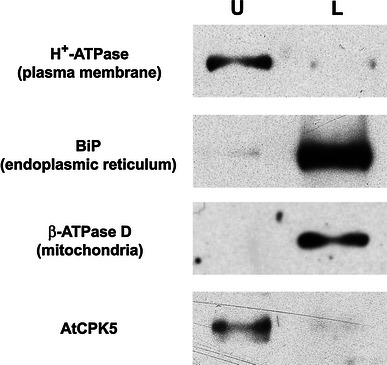
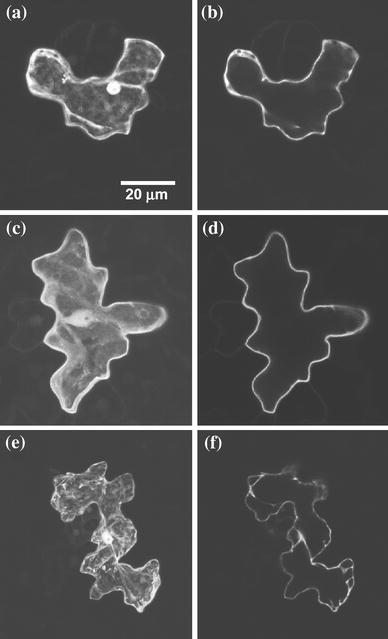
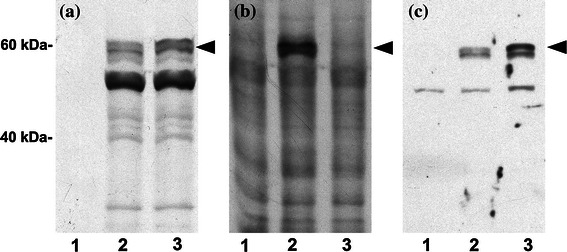
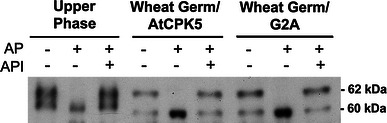
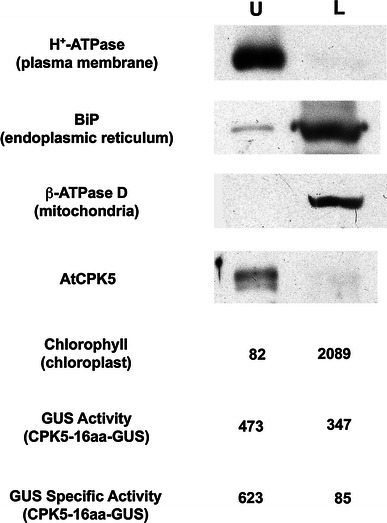
Calcium-dependent protein kinases (CDPK) are a major group of calcium-stimulated kinases found in plants and some protists. Many CDPKs are membrane-associated, presumably because of lipid modifications at their amino termini. We investigated the subcellular location and myristoylation of AtCPK5, a member of the Arabidopsis CDPK family. Most AtCPK5 was associated with the plasma membrane as demonstrated by two-phase fractionation of plant microsomes and by in vivo detection of AtCPK5-GFP fusion proteins. AtCPK5 was a substrate for plant N-myristoyltransferase and myristoylation was prevented by converting the glycine at the proposed site of myristate attachment to alanine (G2A). In transgenic plants, a G2A mutation completely abolished AtCPK5 membrane association, indicating that myristoylation was essential for membrane binding. The first sixteen amino acids of AtCPK5 were sufficient to direct plasma membrane localization. In addition, differentially phosphorylated forms of AtCPK5 were detected both in planta and after expression of AtCPK5 in a cell-free plant extract. Our results demonstrate that AtCPK5 is myristoylated at its amino terminus and that myristoylation is required for membrane binding.
钙依赖蛋白激酶(CDPK)是植物和一些原生生物中发现的一类主要的钙刺激激酶。许多 CDPK 与膜相关,推测是由于其氨基末端的脂质修饰。我们研究了拟南芥 CDPK 家族成员 AtCPK5 的亚细胞定位和豆蔻酰化。通过植物微粒体的两相分级分离和 AtCPK5-GFP 融合蛋白的体内检测,证明大多数 AtCPK5 与质膜相关。AtCPK5 是植物 N-豆蔻酰转移酶的底物,豆蔻酰化通过将假定的豆蔻酸附着部位的甘氨酸转换为丙氨酸(G2A)来阻止。在转基因植物中,G2A 突变完全消除了 AtCPK5 与膜的结合,表明豆蔻酰化对于膜结合是必需的。AtCPK5 的前十六个氨基酸足以指导质膜定位。此外,在植物体内和在无细胞植物提取物中表达 AtCPK5 后,都检测到了差异磷酸化形式的 AtCPK5。我们的结果表明,AtCPK5 在其氨基末端豆蔻酰化,豆蔻酰化是膜结合所必需的。