Department of Animal, Dairy, and Veterinary Sciences and Interdepartmental Graduate Toxicology Program, Utah State University, Logan, Utah, United States of America.
PLoS One. 2013 Apr 16;8(4):e60662. doi: 10.1371/journal.pone.0060662. Print 2013.
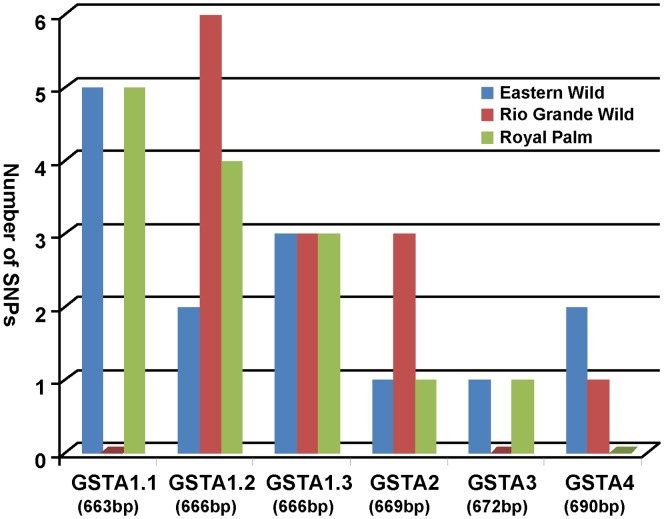
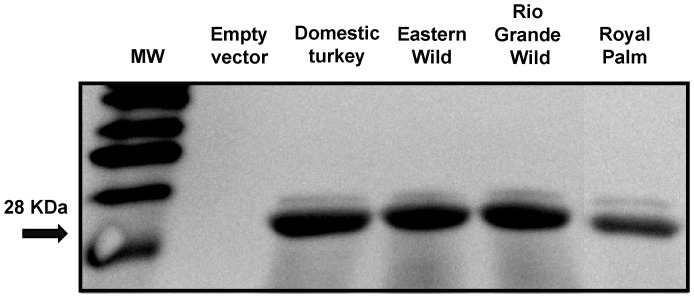
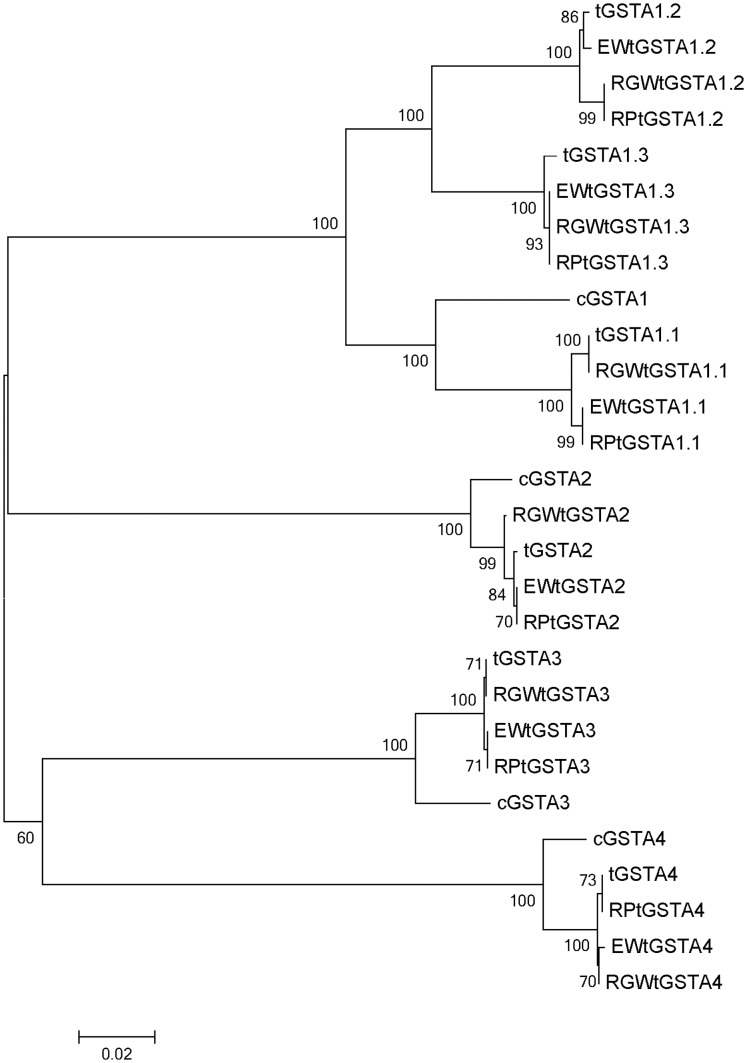
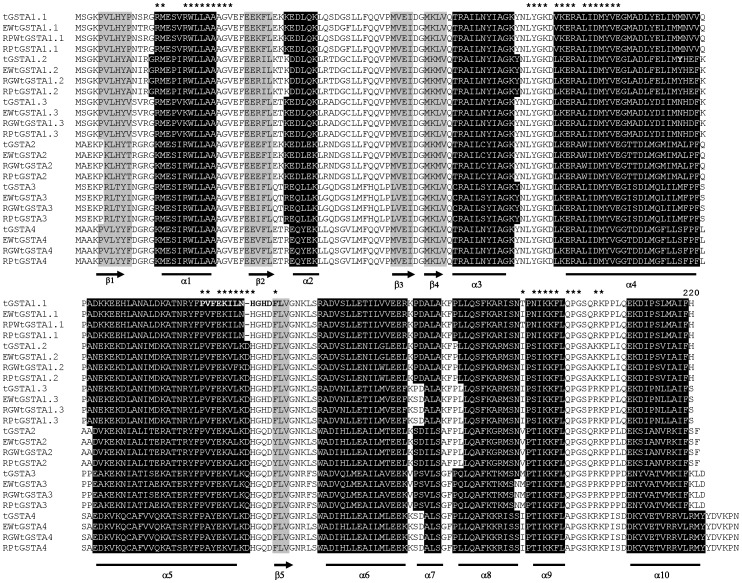
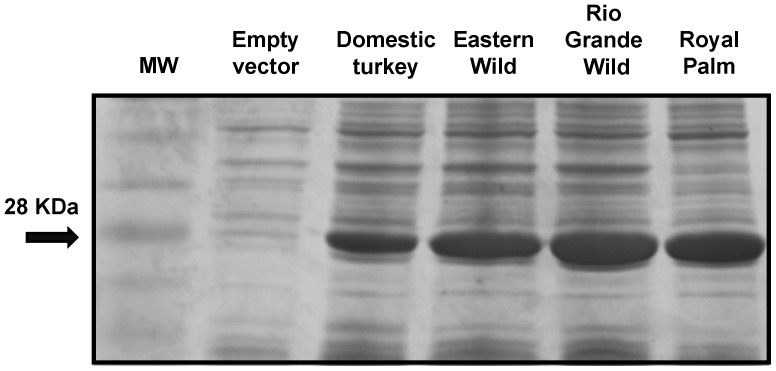
Domestic turkeys (Meleagris gallopavo) are one of the most susceptible animals known to the toxic effects of the mycotoxin aflatoxin B1 (AFB1), a potent human hepatocarcinogen, and universal maize contaminant. We have demonstrated that such susceptibility is associated with the inability of hepatic glutathione S-transferases (GSTs) to detoxify the reactive electrophilic metabolite exo-AFB1-8,9-epoxide (AFBO). Unlike their domestic counterparts, wild turkeys, which are relatively AFB1-resistant, possess hepatic GST-mediated AFBO conjugating activity. Here, we characterized the molecular and functional properties of hepatic alpha-class GSTs (GSTAs) from wild and domestic turkeys to shed light on the differences in resistance between these closely related strains. Six alpha-class GST genes (GSTA) amplified from wild turkeys (Eastern and Rio Grande subspecies), heritage breed turkeys (Royal Palm) and modern domestic (Nicholas strain) turkeys were sequenced, and catalytic activities of heterologously-expressed recombinant enzymes determined. Alpha-class identity was affirmed by conserved GST domains and four signature motifs. All GSTAs contained single nucleotide polymorphisms (SNPs) in their coding regions: GSTA1.1 (5 SNPs), GSTA1.2 (7), GSTA1.3 (3), GSTA2 (3), GSTA3 (1) and GSTA4 (2). E. coli-expressed GSTAs possessed varying activities toward GST substrates 1-chloro-2,4-dinitrobenzene (CDNB), 1,2-dichloro-4-nitrobenzene (DCNB), ethacrynic acid (ECA), cumene hydroperoxide (CHP). As predicted by their relative resistance, livers from domestic turkeys lacked detectable GST-mediated AFBO detoxification activity, whereas those from wild and heritage birds possessed this critical activity, suggesting that intensive breeding and selection resulted in loss of AFB1-protective alleles during domestication. Our observation that recombinant tGSTAs detoxify AFBO, whereas their hepatic forms do not, implies that the hepatic forms of these enzymes are down-regulated, silenced, or otherwise modified by one or more mechanisms. These data may inform of possible molecular mechanisms of resistance to AFB1, and may also have the benefit of identifying genetic markers which could be used to enhance AFB1 resistance in modern domestic strains.
家鸡(Meleagris gallopavo)是已知对真菌毒素黄曲霉毒素 B1(AFB1)的毒性作用最敏感的动物之一,AFB1 是一种强效的人类肝癌致癌物,也是玉米的普遍污染物。我们已经证明,这种易感性与肝脏谷胱甘肽 S-转移酶(GSTs)无法解毒活性亲电代谢物外-AFB1-8,9-环氧化物(AFBO)有关。与相对抗 AFB1 的野生火鸡不同,它们具有肝脏 GST 介导的 AFBO 共轭活性。在这里,我们对来自野生和家养火鸡的肝脏α类 GSTs(GSTAs)的分子和功能特性进行了表征,以阐明这两种密切相关的品系之间的抗性差异。从野生火鸡(东部和里奥格兰德亚种)、传统品种火鸡(皇家棕榈)和现代家养火鸡(尼古拉斯品系)中扩增了六个α类 GST 基因(GSTA),并对异源表达的重组酶的催化活性进行了测定。通过保守的 GST 结构域和四个特征基序确认了α类身份。所有 GSTAs 在其编码区都含有单核苷酸多态性(SNP):GSTA1.1(5 SNP)、GSTA1.2(7)、GSTA1.3(3)、GSTA2(3)、GSTA3(1)和 GSTA4(2)。大肠杆菌表达的 GSTAs 对 GST 底物 1-氯-2,4-二硝基苯(CDNB)、1,2-二氯-4-硝基苯(DCNB)、乙叉基脲(ECA)、cumene 过氧化物(CHP)具有不同的活性。正如它们相对抗性所预测的那样,家鸡肝脏缺乏可检测的 GST 介导的 AFBO 解毒活性,而野生和传统鸟类的肝脏则具有这种关键活性,这表明在驯化过程中,密集的繁殖和选择导致了对 AFB1 保护等位基因的丧失。我们观察到重组 tGSTAs 可解毒 AFBO,而其肝脏形式则不能,这意味着这些酶的肝脏形式可能通过一种或多种机制被下调、沉默或修饰。这些数据可以为 AFB1 抗性的可能分子机制提供信息,也可以识别出可用于增强现代家养品系对 AFB1 抗性的遗传标记。