Respiratory Diseases Research, Boehringer Ingelheim Pharma GmbH & Co. KG, Biberach a.d. Riss, Germany.
PLoS One. 2013 Apr 22;8(4):e61193. doi: 10.1371/journal.pone.0061193. Print 2013.
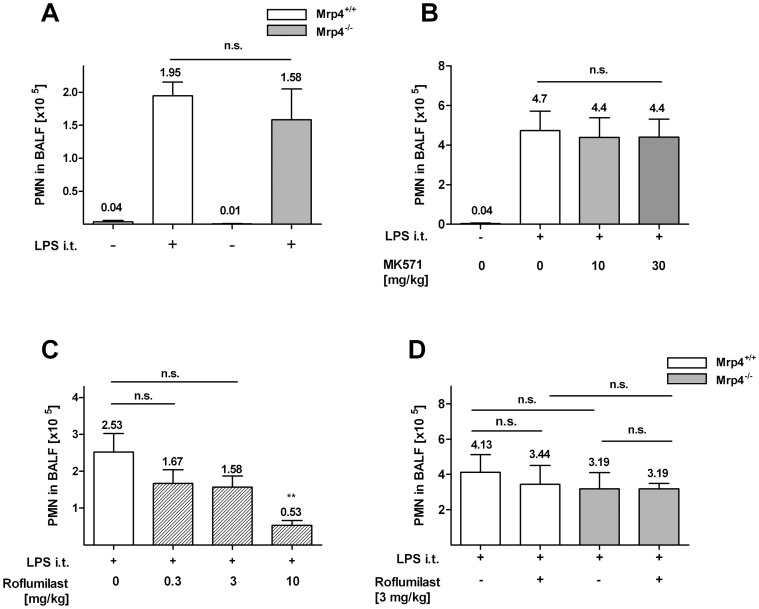
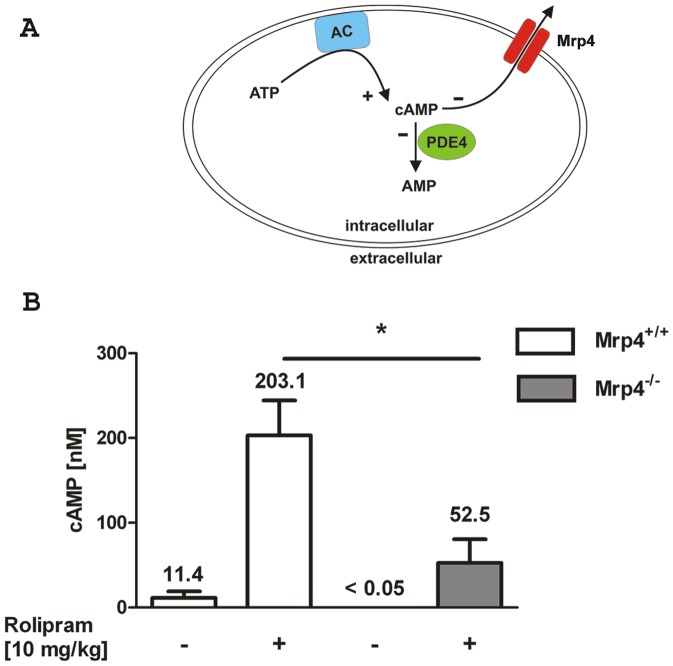
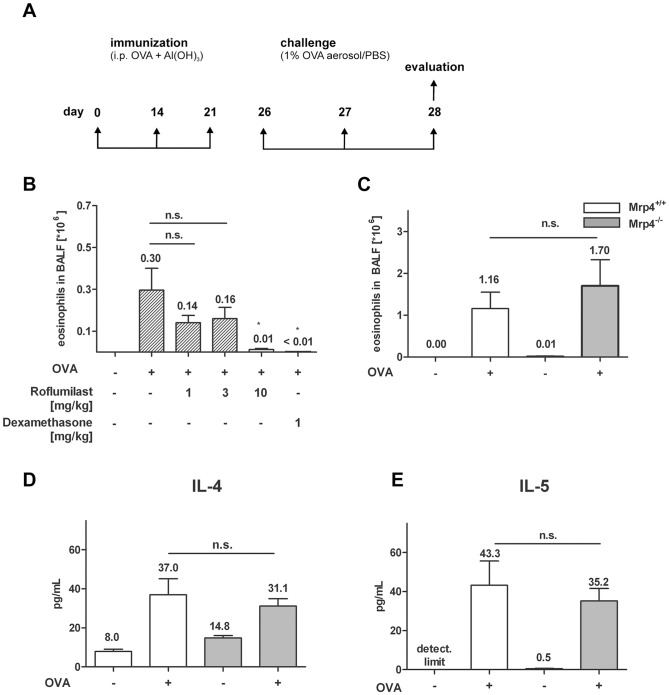
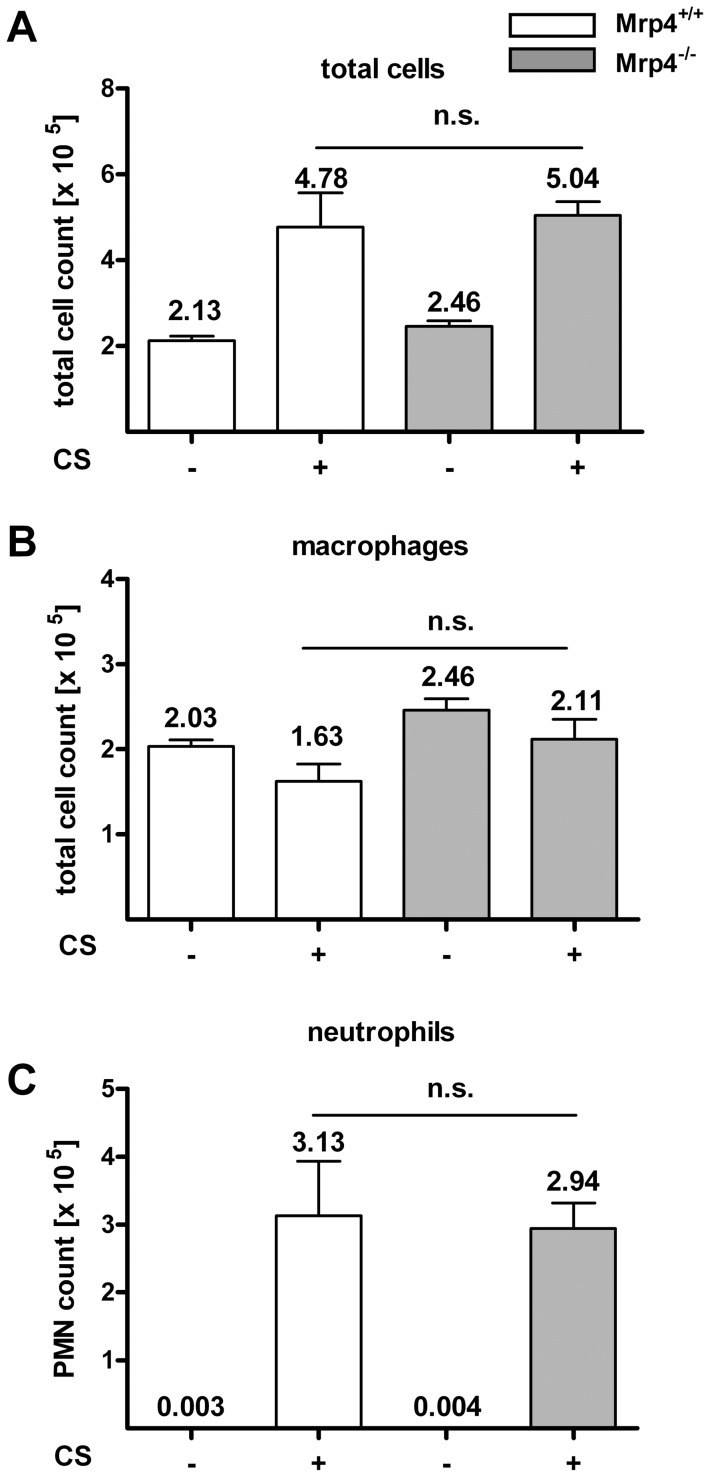
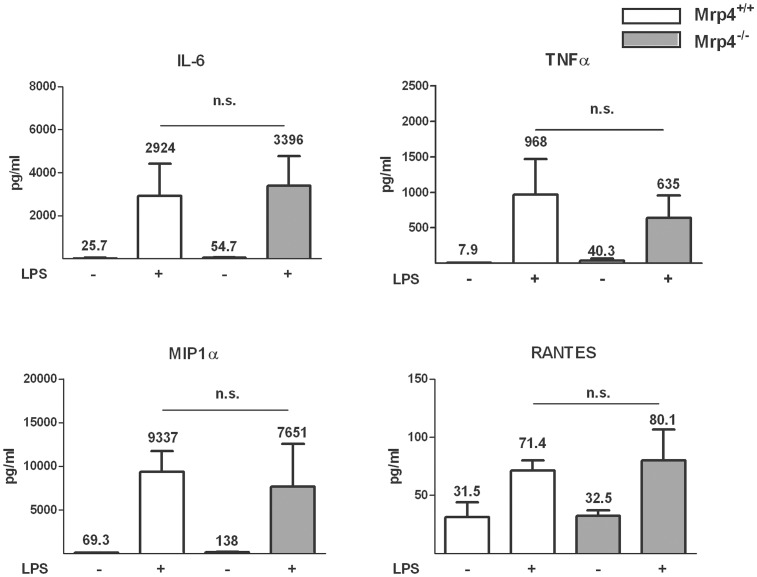
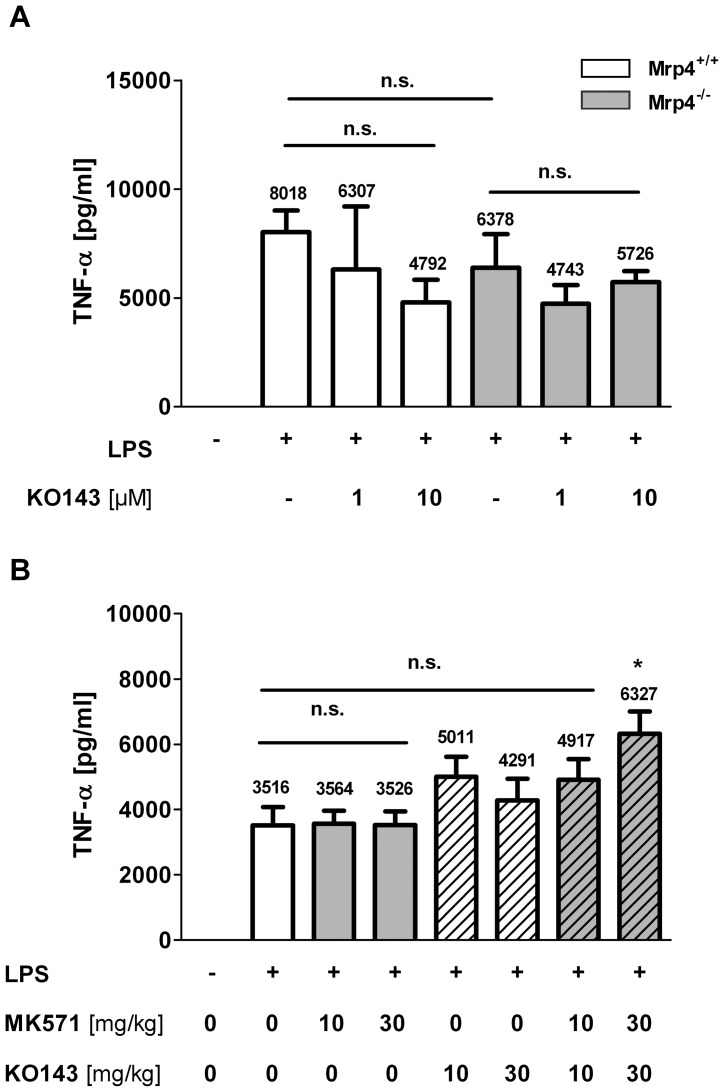
The multidrug resistance protein 4 (Mrp4) is an ATP-binding cassette transporter that is capable of exporting the second messenger cAMP from cells, a process that might regulate cAMP-mediated anti-inflammatory processes. However, using LPS- or cigarette smoke (CS)-inflammation models, we found that neutrophil numbers in the bronchoalveolar lavage fluid (BALF) were similar in Mrp4(-/-) and Mrp4(+/+) mice treated with LPS or CS. Similarly, neutrophil numbers were not reduced in the BALF of LPS-challenged wt mice after treatment with 10 or 30 mg/kg of the Mrp1/4 inhibitor MK571. The absence of Mrp4 also had no impact on the influx of eosinophils or IL-4 and IL-5 levels in the BALF after OVA airway challenge in mice sensitized with OVA/alum. LPS-induced cytokine release in whole blood ex vivo was also not affected by the absence of Mrp4. These data clearly suggest that Mrp4 deficiency alone is not sufficient to reduce inflammatory processes in vivo. We hypothesized that in combination with PDE4 inhibitors, used at suboptimal concentrations, the anti-inflammatory effect would be more pronounced. However, LPS-induced neutrophil recruitment into the lung was no different between Mrp4(-/-) and Mrp4(+/+) mice treated with 3 mg/kg Roflumilast. Finally, the single and combined administration of 10 and 30 mg/kg MK571 and the specific breast cancer resistance protein (BCRP) inhibitor KO143 showed no reduction of LPS-induced TNFα release into the BALF compared to vehicle treated control animals. Similarly, LPS-induced TNFα release in murine whole blood of Mrp4(+/+) or Mrp4(-/-) mice was not reduced by KO143 (1, 10 µM). Thus, BCRP seems not to be able to compensate for the absence or inhibition of Mrp4 in the used models. Taken together, our data suggest that Mrp4 is not essential for the recruitment of neutrophils into the lung after LPS or CS exposure or of eosinophils after allergen exposure.
多药耐药蛋白 4(Mrp4)是一种 ATP 结合盒转运蛋白,能够将第二信使 cAMP 从细胞内输出,这一过程可能调节 cAMP 介导的抗炎过程。然而,在 LPS 或香烟烟雾(CS)炎症模型中,我们发现 LPS 或 CS 处理的 Mrp4(-/-)和 Mrp4(+/+)小鼠支气管肺泡灌洗液(BALF)中的中性粒细胞数量相似。同样,在 LPS 挑战的 wt 小鼠中,用 Mrp1/4 抑制剂 MK571 以 10 或 30mg/kg 治疗后,BALF 中的中性粒细胞数量也没有减少。Mrp4 的缺失也没有影响卵清蛋白致敏小鼠 OVA 气道挑战后 BALF 中的嗜酸性粒细胞数量或 IL-4 和 IL-5 水平。体外全血中 LPS 诱导的细胞因子释放也不受 Mrp4 缺失的影响。这些数据清楚地表明,Mrp4 缺乏本身不足以减少体内的炎症过程。我们假设,与 PDE4 抑制剂联合使用,以亚最佳浓度使用,抗炎效果会更加明显。然而,在 LPS 诱导的中性粒细胞募集到肺部方面,Mrp4(-/-)和 Mrp4(+/+)小鼠用 3mg/kg Roflumilast 治疗之间没有差异。最后,单独和联合使用 10 和 30mg/kg MK571 和特异性乳腺癌耐药蛋白(BCRP)抑制剂 KO143 与载体处理的对照动物相比,没有减少 LPS 诱导的 TNFα 释放到 BALF 中。同样,在 Mrp4(+/+)或 Mrp4(-/-)小鼠的 LPS 诱导的全血中,BCRP 抑制剂 KO143(1、10µM)也没有减少 TNFα 释放。因此,在使用的模型中,BCRP 似乎无法弥补 Mrp4 的缺失或抑制。综上所述,我们的数据表明,Mrp4 对于 LPS 或 CS 暴露后中性粒细胞向肺部的募集或过敏原暴露后嗜酸性粒细胞的募集不是必需的。