Aix-Marseille Université (AMU), UMR CNRS 7287, Institut des Sciences du Mouvement (ISM)-Etienne-Jules MAREY Equipe Plasticité des Systèmes Nerveux et Musculaire Parc Scientifique et Technologique de Luminy, Faculté des Sciences du Sport de Marseille CC910-163 Avenue de Luminy F-13288, Marseille Cedex 09, France.
ASN Neuro. 2013 May 30;5(2):149-66. doi: 10.1042/AN20120082.
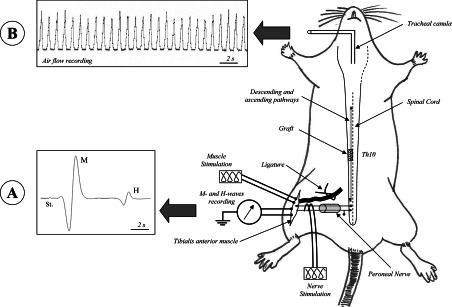
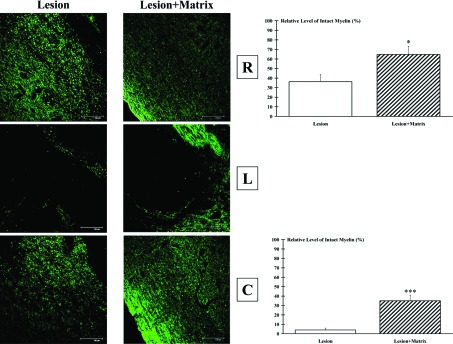
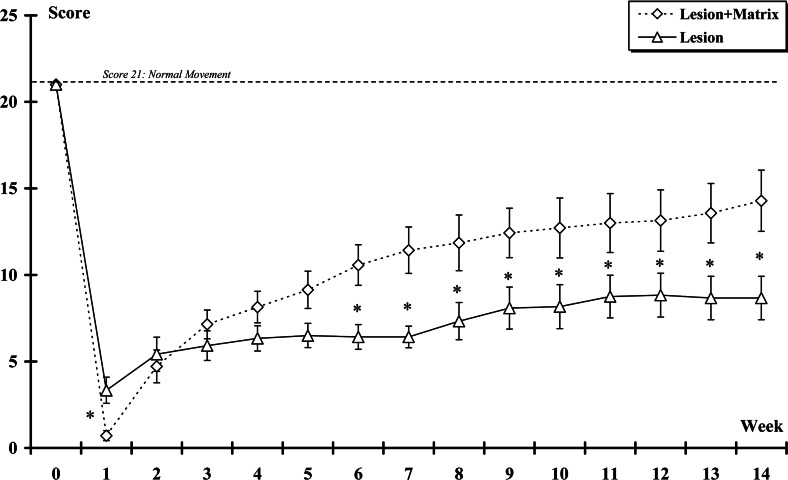
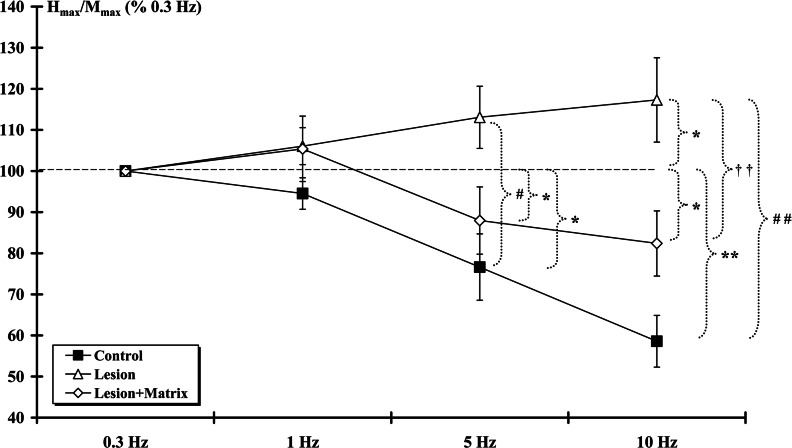
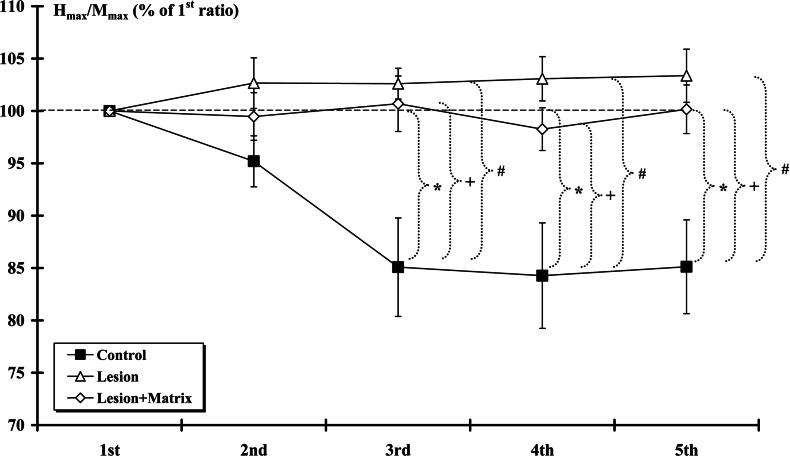
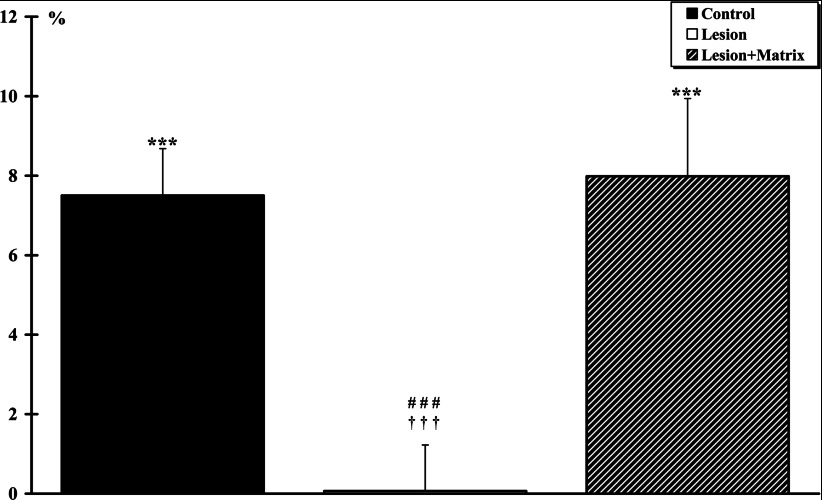
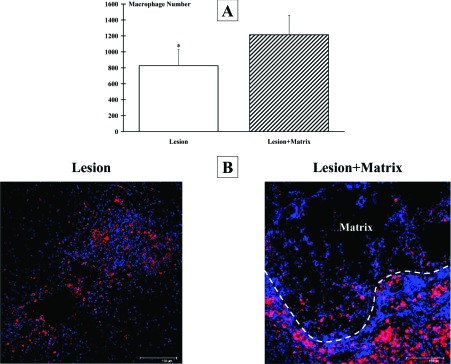
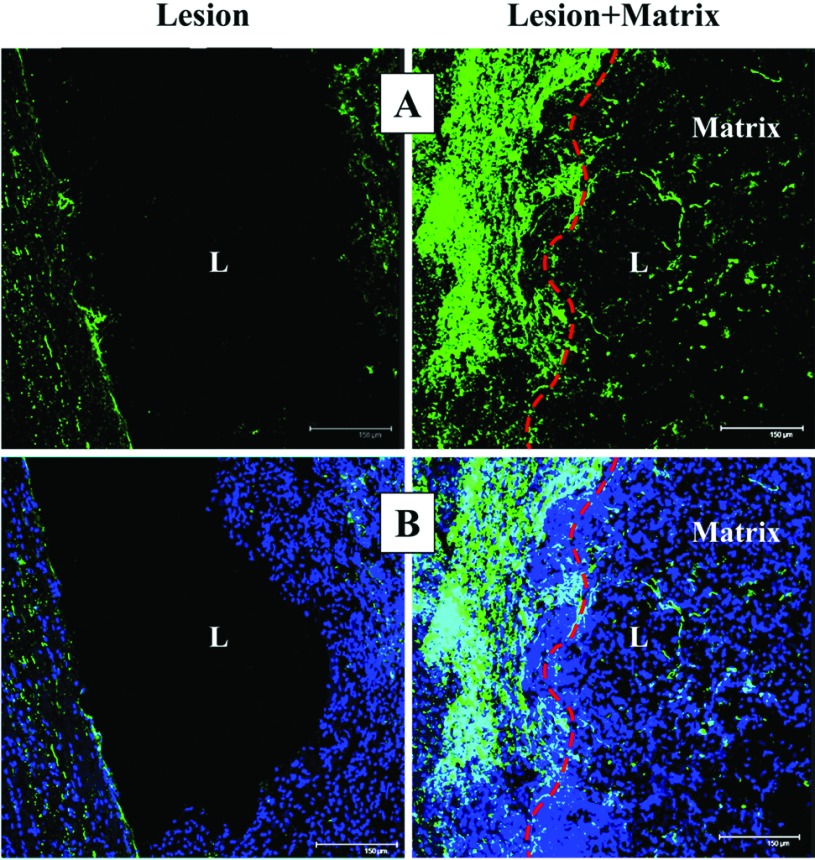
There have been considerable interests in attempting to reverse the deficit because of an SCI (spinal cord injury) by restoring neural pathways through the lesion and by rebuilding the tissue network. In order to provide an appropriate micro-environment for regrowing axotomized neurons and proliferating and migrating cells, we have implanted a small block of pHPMA [poly N-(2-hydroxypropyl)-methacrylamide] hydrogel into the hemisected T10 rat spinal cord. Locomotor activity was evaluated once a week during 14 weeks with the BBB rating scale in an open field. At the 14th week after SCI, the reflexivity of the sub-lesional region was measured. We also monitored the ventilatory frequency during an electrically induced muscle fatigue known to elicit the muscle metaboreflex and increase the respiratory rate. Spinal cords were then collected, fixed and stained with anti-ED-1 and anti-NF-H antibodies and FluoroMyelin. We show in this study that hydrogel-implanted animals exhibit: (i) an improved locomotor BBB score, (ii) an improved breathing adjustment to electrically evoked isometric contractions and (iii) an H-reflex recovery close to control animals. Qualitative histological results put in evidence higher accumulation of ED-1 positive cells (macrophages/monocytes) at the lesion border, a large number of NF-H positive axons penetrating the applied matrix, and myelin preservation both rostrally and caudally to the lesion. Our data confirm that pHPMA hydrogel is a potent biomaterial that can be used for improving neuromuscular adaptive mechanisms and H-reflex responses after SCI.
由于 SCI(脊髓损伤),人们对尝试通过修复损伤部位的神经通路和重建组织网络来逆转神经功能缺损产生了浓厚的兴趣。为了给轴突切断神经元的再生以及增殖和迁移的细胞提供适当的微环境,我们将一小块 pHPMA[聚 N-(2-羟丙基)-甲基丙烯酰胺]水凝胶植入 T10 脊髓半切大鼠的脊髓中。在 14 周的时间里,每周通过 BBB 评分量表在开放场中评估运动活动。在 SCI 后第 14 周,测量亚损伤区域的反射性。我们还监测了已知可引起肌肉代谢反射并增加呼吸频率的电诱发肌肉疲劳期间的呼吸频率。然后收集、固定脊髓,并使用抗 ED-1 和抗 NF-H 抗体以及 FluoroMyelin 进行染色。我们在这项研究中表明,水凝胶植入动物表现出:(i)运动 BBB 评分提高,(ii)对电诱发等长收缩的呼吸调节改善,(iii)H 反射恢复接近对照动物。定性组织学结果表明,在损伤边界处有更多的 ED-1 阳性细胞(巨噬细胞/单核细胞)积聚,大量 NF-H 阳性轴突穿透应用的基质,并且损伤的近端和远端都有髓鞘保存。我们的数据证实 pHPMA 水凝胶是一种有效的生物材料,可用于改善 SCI 后神经肌肉适应机制和 H 反射反应。