Hematology, Hemostasis, Oncology and Stem Cell Transplantation, Hannover Medical School (MHH), OE 6860, Carl-Neuberg Strasse 1, Hannover, Germany.
Ann Hematol. 2013 Aug;92(8):1079-90. doi: 10.1007/s00277-013-1744-y. Epub 2013 Apr 25.
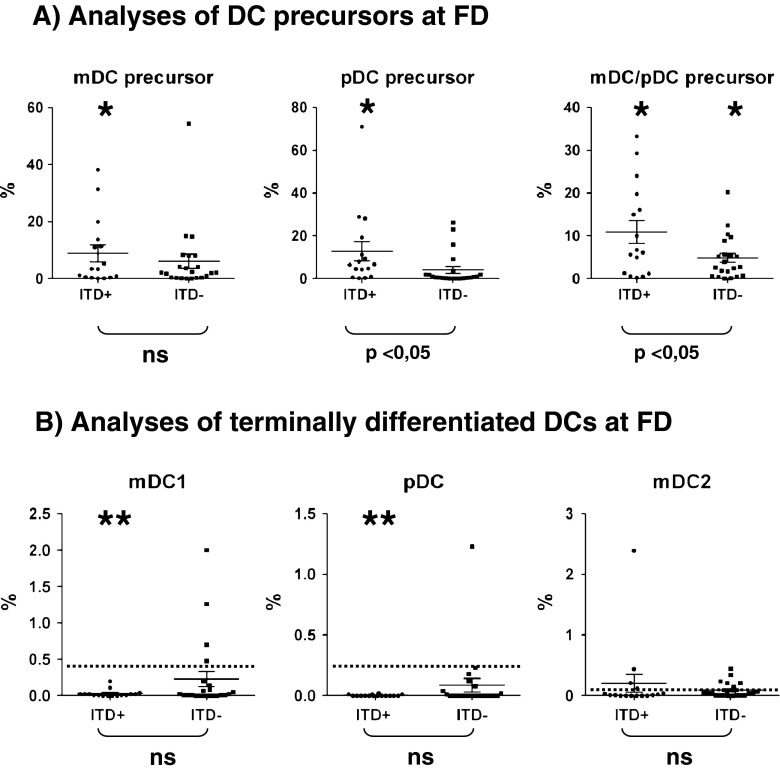
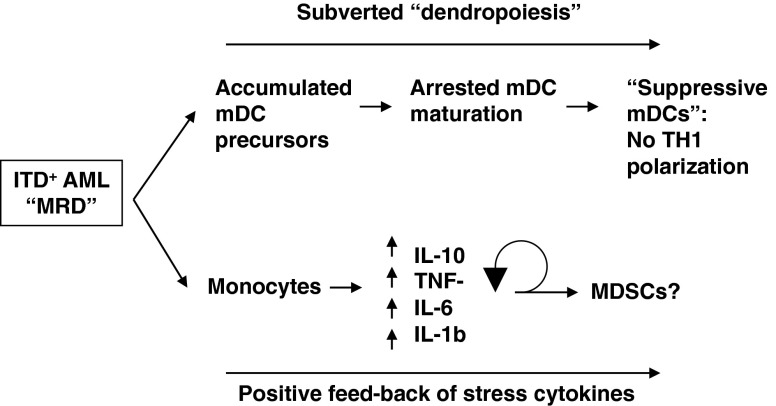
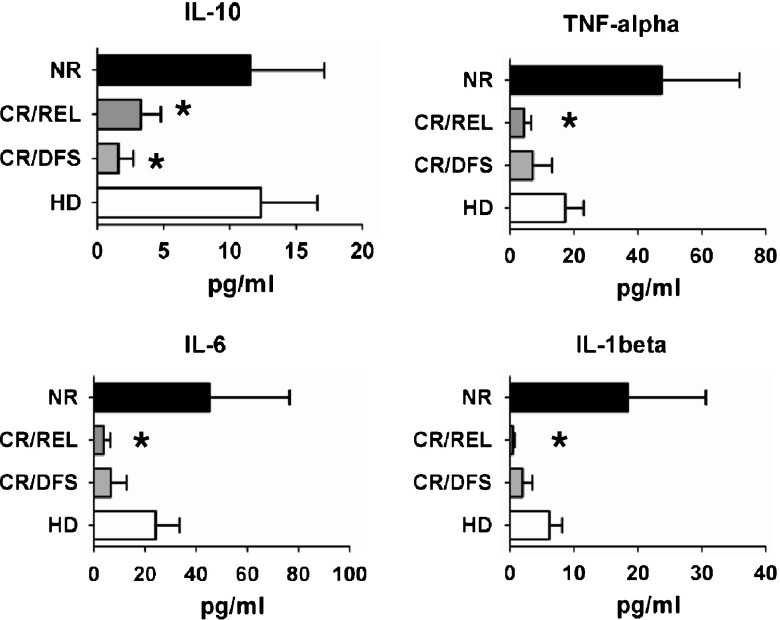
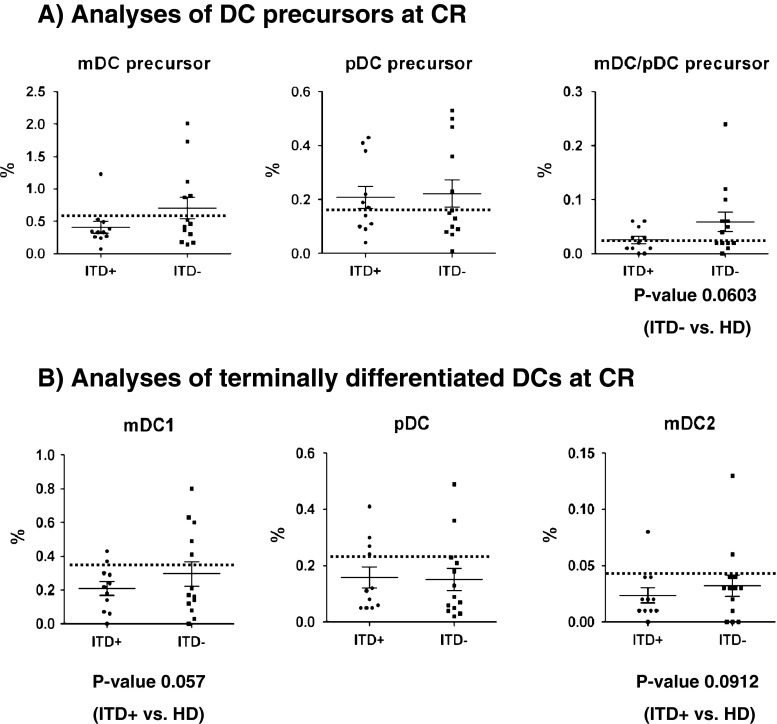
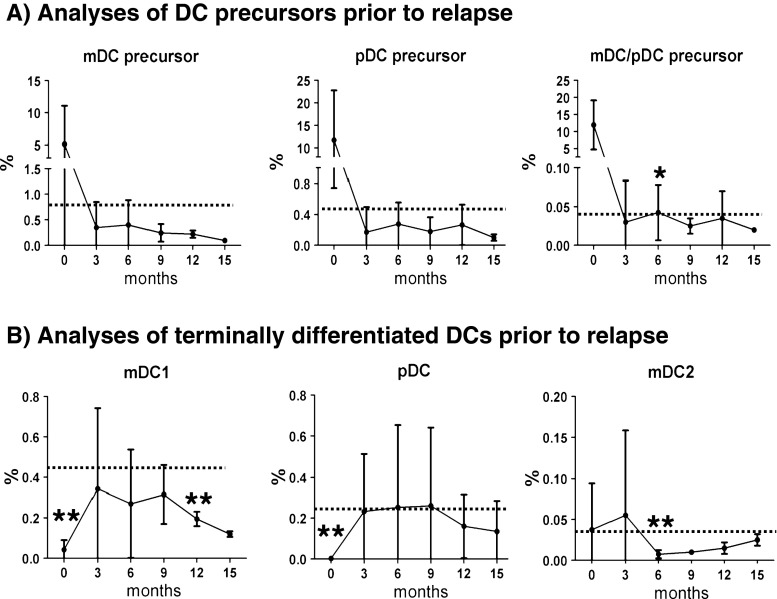
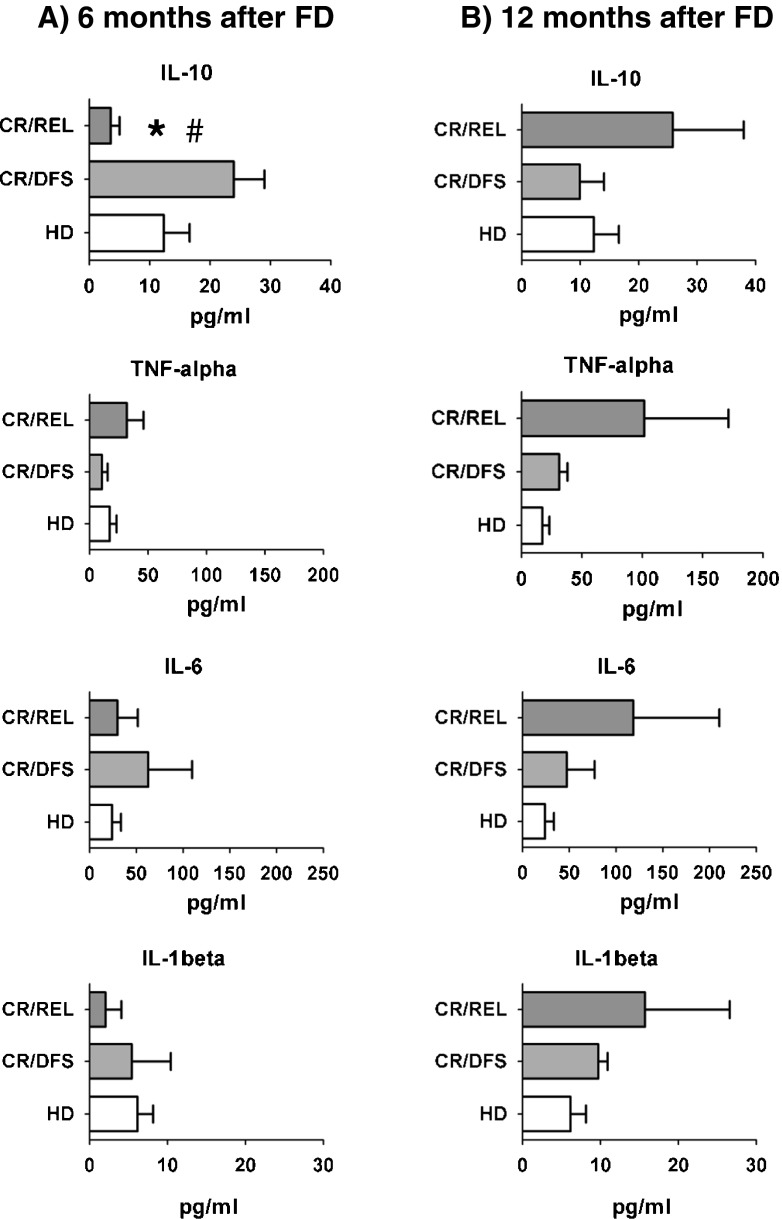
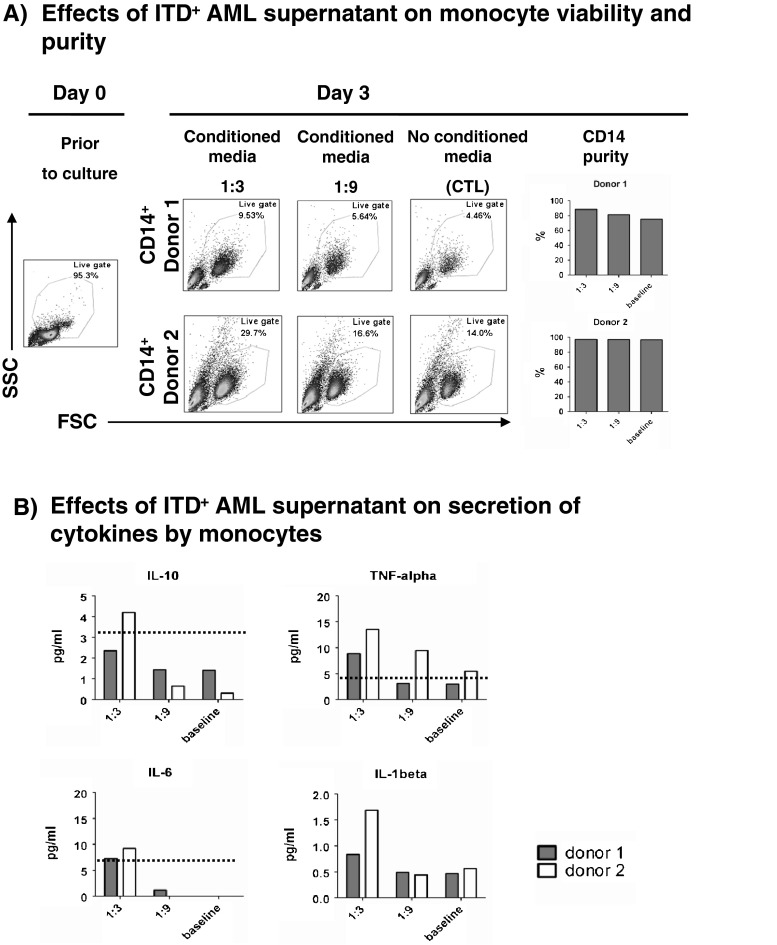
Relapse occurs frequently after treatment of acute myeloid leukemia (AML) patients with the FMS-like tyrosine kinase 3-internal tandem duplication (ITD) mutation. The availability of immunologic biomarkers to predict patients at high risk could allow clinicians to accelerate alternative treatments such as stem cell transplantation, immunotherapy, or novel drugs. We have previously reported that first diagnostic (FD) ITD(+) AML showed immunophenotypic and functional characteristics of arrested dendritic cell (DC) precursors. In this study, we show that the high frequency of precursor DCs in 16 FD ITD(+) AML samples (Lin(-)/HLA-DR(+)/CD11c(+)/CD123(+)) was associated with a lack of terminal DCs (myeloid DCs: BDCA-1(+) or BDCA-3(+); plasmacytoid DC: BDCA-2(+)). We further evaluated prospectively the peripheral blood complete remission (CR) samples obtained from 11 ITD(+) AML patients after chemotherapy regarding the frequency of DCs and their pattern of cytokine production. Whereas the aberrant frequencies of precursor and terminal plasmacytoid DCs resolved during remission, the myeloid DC compartment did not fully recover. For an available cohort of patients (n = 4) who could be monitored over a period of >15 months after FD, we identified IL-10, TNF-α, IL-6, and IL-1β as cytokines produced by the CR samples at high levels a few months prior to relapse. Cell-free supernatant of an FD ITD(+) AML sample stimulated monocytes obtained from two healthy donors to secrete IL-10, TNF-α, IL-6, and IL-1β. Thus, we hypothesize that ITD(+) AML minimal residual disease can act directly as dysfunctional antigen-presenting cells or indirectly by production of factors that convert monocytes into myeloid-derived suppressor cells secreting cytokines that promote immune evasion. Monitoring these immunologic biomarkers could improve prediction of relapse.
急性髓系白血病 (AML) 患者携带 FMS 样酪氨酸激酶 3 内部串联重复 (ITD) 突变接受治疗后常发生复发。如果能够获得免疫生物标志物来预测高危患者,临床医生就可以加速采用干细胞移植、免疫疗法或新型药物等替代疗法。我们之前曾报道,首次诊断(FD)ITD(+)AML 表现出树突状细胞(DC)前体停滞的免疫表型和功能特征。在这项研究中,我们发现 16 例 FD ITD(+)AML 样本(Lin(-)/HLA-DR(+)/CD11c(+)/CD123(+))中前体 DC 高频与终末 DC 缺乏相关(髓系 DC:BDCA-1(+) 或 BDCA-3(+);浆细胞样 DC:BDCA-2(+))。我们进一步前瞻性评估了 11 例 ITD(+)AML 患者化疗后外周血完全缓解(CR)样本中 DC 的频率及其细胞因子产生模式。虽然缓解时前体和终末浆细胞样 DC 的异常频率得到解决,但髓系 DC 部分未完全恢复。对于可监测的患者队列(n=4),在 FD 后超过 15 个月的时间内,我们发现复发前几个月 CR 样本中高水平产生的细胞因子有 IL-10、TNF-α、IL-6 和 IL-1β。来自 2 名健康供体的单核细胞在 FD ITD(+)AML 样本的无细胞上清液刺激下分泌 IL-10、TNF-α、IL-6 和 IL-1β。因此,我们假设 ITD(+)AML 微小残留病可以直接作为功能失调的抗原呈递细胞发挥作用,或通过产生将单核细胞转化为分泌细胞因子的髓源性抑制细胞的因子间接发挥作用,这些细胞因子促进免疫逃逸。监测这些免疫生物标志物可以提高复发预测能力。