Great Lakes Bioenergy Research Center, University of Wisconsin-Madison Madison, WI, USA.
Front Plant Sci. 2013 Apr 22;4:76. doi: 10.3389/fpls.2013.00076. eCollection 2013.
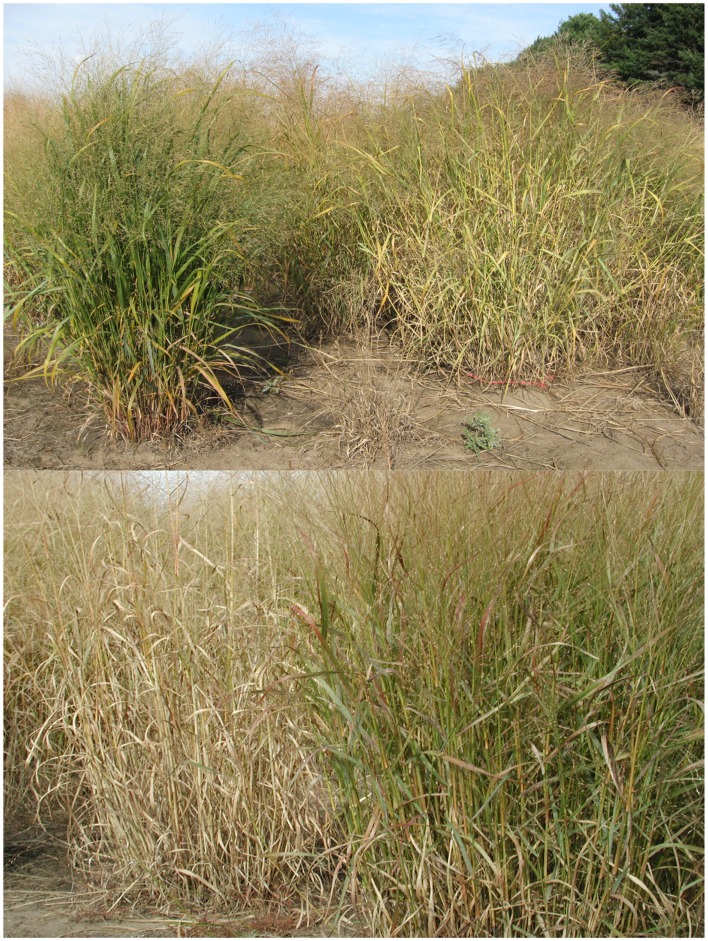
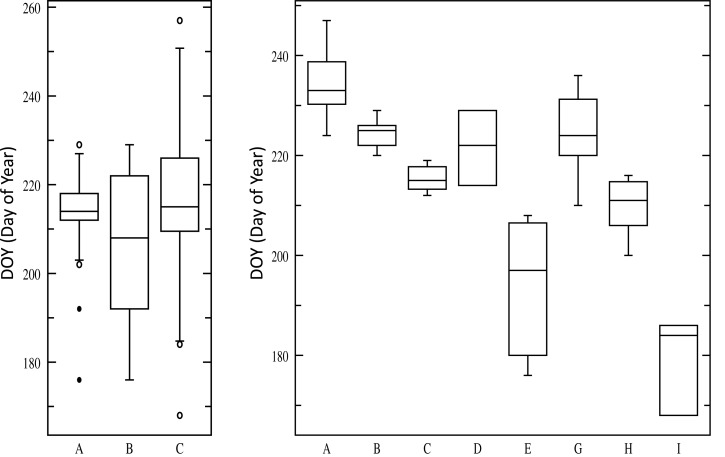
Perennials have a number of traits important for profitability and sustainability of a biofuel crop. Perennialism is generally defined as the ability to grow and reproduce in multiple years. In temperate climates, many perennial plants enter dormancy during winter and recycle nutrients, such as nitrogen, to below ground structures for the next growing season. Nitrogen is expensive to produce and application of nitrogen increases the potent greenhouse gas NO x . Perennial bioenergy crops have been evaluated for biomass yields with nitrogen fertilization, location, year, and genotype as variables. Flowering time and dormancy are closely related to the N recycling program. Substantial variation for flowering time and dormancy has been identified in the switchgrass (Panicum virgatum L.) species, which provides a source to identify the genetic components of N recycling, and for use in breeding programs. Some studies have addressed recycling specifically, but flowering time and developmental differences were largely ignored, complicating interpretation of the results. Future studies on recycling need to appreciate plant developmental stage to allow comparison between experiments. A perennial/annual model(s) and more environmentally controlled experiments would be useful to determine the genetic components of nitrogen recycling. Increasing biomass yield per unit of nitrogen by maximizing recycling might mean the difference for profitability of a biofuel crop and has the added benefit of minimizing negative environmental effects from agriculture.
多年生植物具有许多对生物燃料作物盈利能力和可持续性很重要的特性。多年生性通常被定义为在多年内生长和繁殖的能力。在温带气候中,许多多年生植物在冬季进入休眠状态,并将营养物质(如氮)回收至地下结构,以备下一个生长季节使用。氮的生产成本很高,施用氮会增加潜在的温室气体 NOx 的排放。已经对多年生生物能源作物进行了生物量产量评估,其中氮施肥、地点、年份和基因型是变量。开花时间和休眠与氮回收计划密切相关。在柳枝稷(Panicum virgatum L.)物种中已经确定了开花时间和休眠的大量差异,这为识别氮回收的遗传成分提供了来源,并可用于培育计划。一些研究专门针对回收进行了研究,但开花时间和发育差异在很大程度上被忽视了,这使得对结果的解释变得复杂。未来的回收研究需要了解植物的发育阶段,以便在实验之间进行比较。多年生/一年生模型和更多环境控制的实验将有助于确定氮回收的遗传成分。通过最大限度地回收来提高单位氮的生物量产量,可能意味着生物燃料作物盈利能力的差异,并且还有减少农业对环境负面影响的额外好处。