Laboratory of Dairy Food Science, Research Faculty of Agriculture, Hokkaido University, Sapporo, Japan.
PLoS One. 2013 Apr 23;8(4):e62187. doi: 10.1371/journal.pone.0062187. Print 2013.
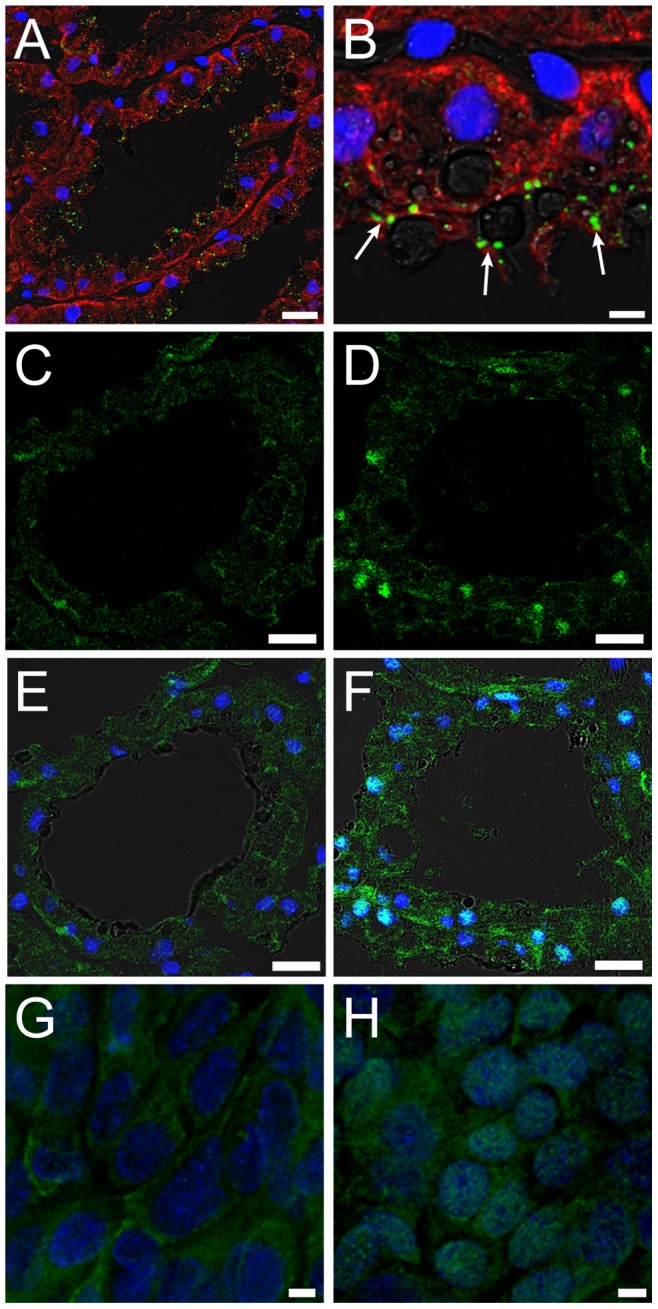
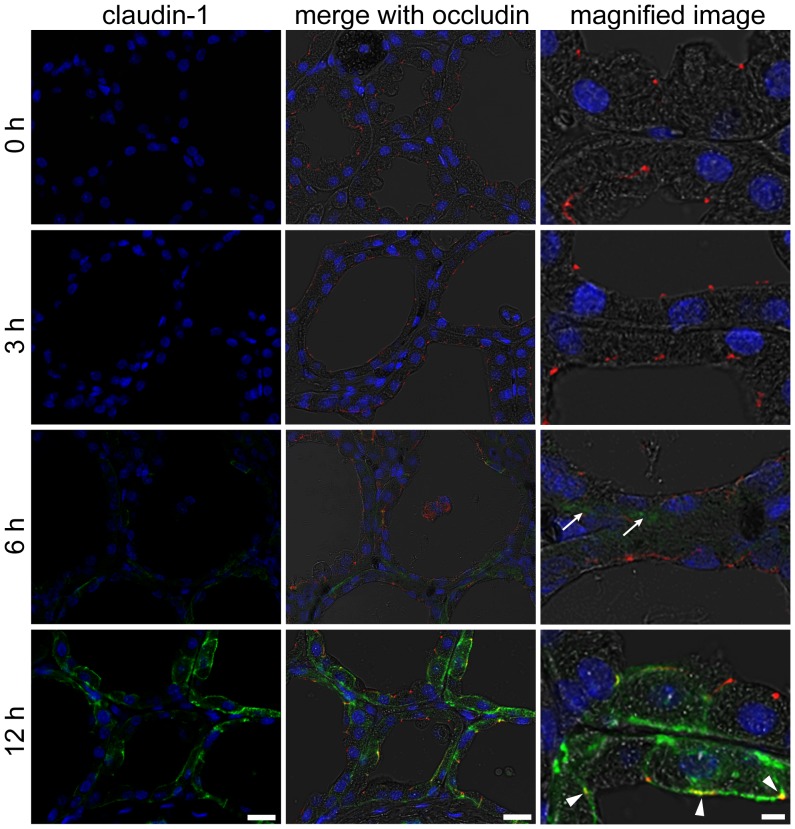
Mastitis, inflammation of the mammary gland, is the most costly common disease in the dairy industry, and is caused by mammary pathogenic bacteria, including Escherichia coli. The bacteria invade the mammary alveolar lumen and disrupt the blood-milk barrier. In normal mammary gland, alveolar epithelial tight junctions (TJs) contribute the blood-milk barrier of alveolar epithelium by blocking the leakage of milk components from the luminal side into the blood serum. In this study, we focused on claudin subtypes that participate in the alveolar epithelial TJs, because the composition of claudins is an important factor that affects TJ permeability. In normal mouse lactating mammary glands, alveolar TJs consist of claudin-3 without claudin-1, -4, and -7. In lipopolysaccharide (LPS)-induced mastitis, alveolar TJs showed 2-staged compositional changes in claudins. First, a qualitative change in claudin-3, presumably caused by phosphorylation and participation of claudin-7 in alveolar TJs, was recognized in parallel with the leakage of fluorescein isothiocyanate-conjugated albumin (FITC-albumin) via the alveolar epithelium. Second, claudin-4 participated in alveolar TJs with claudin-3 and claudin-7 12 h after LPS injection. The partial localization of claudin-1 was also observed by immunostaining. Coinciding with the second change of alveolar TJs, the severe disruption of the blood-milk barrier was recognized by ectopic localization of β-casein and much leakage of FITC-albumin. Furthermore, the localization of toll-like receptor 4 (TLR4) on the luminal side and NFκB activation by LPS was observed in the alveolar epithelial cells. We suggest that the weakening and disruption of the blood-milk barrier are caused by compositional changes of claudins in alveolar epithelial TJs through LPS/TLR4 signaling.
乳腺炎是奶牛养殖业中最昂贵的常见疾病,由乳腺病原菌引起,包括大肠杆菌。细菌侵入乳腺腺泡腔,破坏血乳屏障。在正常乳腺中,腺泡上皮紧密连接(TJ)通过阻止乳成分从腔侧漏入血清来构成腺泡上皮的血乳屏障。在本研究中,我们专注于参与腺泡上皮 TJ 的 Claudin 亚型,因为 Claudin 的组成是影响 TJ 通透性的重要因素。在正常的小鼠哺乳期乳腺中,腺泡 TJ 由 Claudin-3 组成,没有 Claudin-1、-4 和 -7。在脂多糖(LPS)诱导的乳腺炎中,腺泡 TJ 在 Claudin 中表现出 2 阶段的组成变化。首先,Claudin-3 的定性变化,推测是由于磷酸化和 Claudin-7 的参与,与通过腺泡上皮的荧光素异硫氰酸酯结合白蛋白(FITC-白蛋白)的渗漏同时发生。其次,Claudin-4 与 Claudin-3 和 Claudin-7 一起参与 LPS 注射后 12 小时的腺泡 TJ。通过免疫染色也观察到 Claudin-1 的部分定位。与第二个 TJ 变化一致,β-酪蛋白的异位定位和 FITC-白蛋白的大量渗漏导致血乳屏障的严重破坏。此外,在肺泡上皮细胞中观察到 TLR4 在腔侧的定位和 LPS 对 NFκB 的激活。我们认为,通过 LPS/TLR4 信号,Claudin 在腺泡上皮 TJ 中的组成变化导致血乳屏障的减弱和破坏。