• 文献检索
  • 文档翻译
  • 深度研究
  • 学术资讯
  • Suppr Zotero 插件Zotero 插件
  • 邀请有礼
  • 套餐&价格
  • 历史记录
应用&插件
Suppr Zotero 插件Zotero 插件浏览器插件Mac 客户端Windows 客户端微信小程序
定价
高级版会员购买积分包购买API积分包
服务
文献检索文档翻译深度研究API 文档MCP 服务
关于我们
关于 Suppr公司介绍联系我们用户协议隐私条款
关注我们

Suppr 超能文献

核心技术专利:CN118964589B侵权必究
粤ICP备2023148730 号-1Suppr @ 2026

文献检索

告别复杂PubMed语法,用中文像聊天一样搜索,搜遍4000万医学文献。AI智能推荐,让科研检索更轻松。

立即免费搜索

文件翻译

保留排版,准确专业,支持PDF/Word/PPT等文件格式,支持 12+语言互译。

免费翻译文档

深度研究

AI帮你快速写综述,25分钟生成高质量综述,智能提取关键信息,辅助科研写作。

立即免费体验

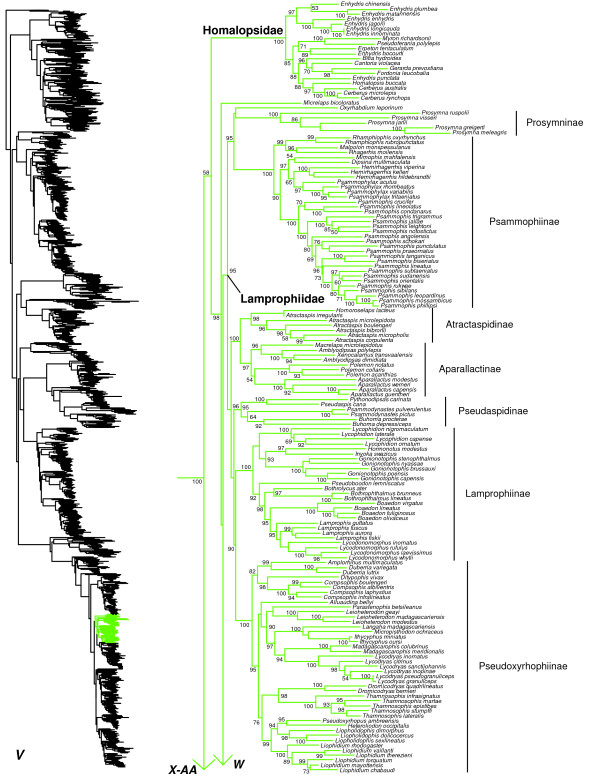
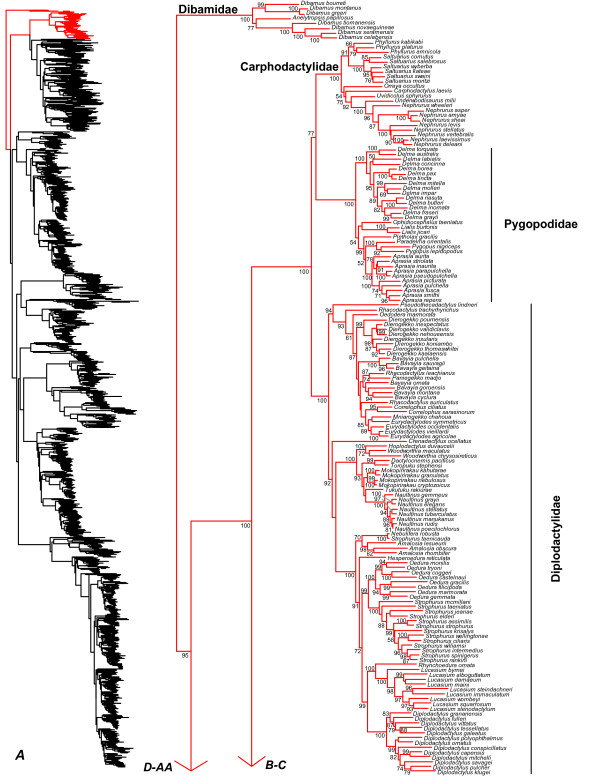
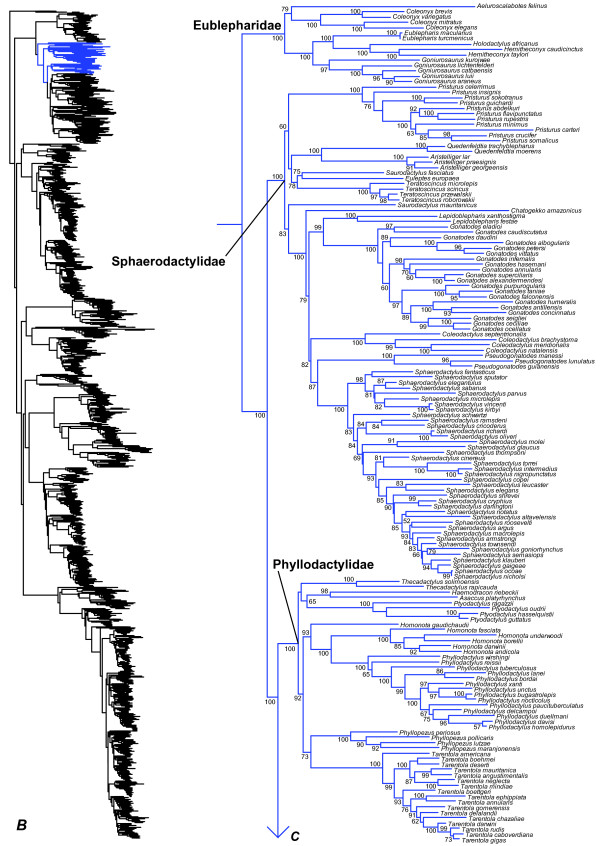
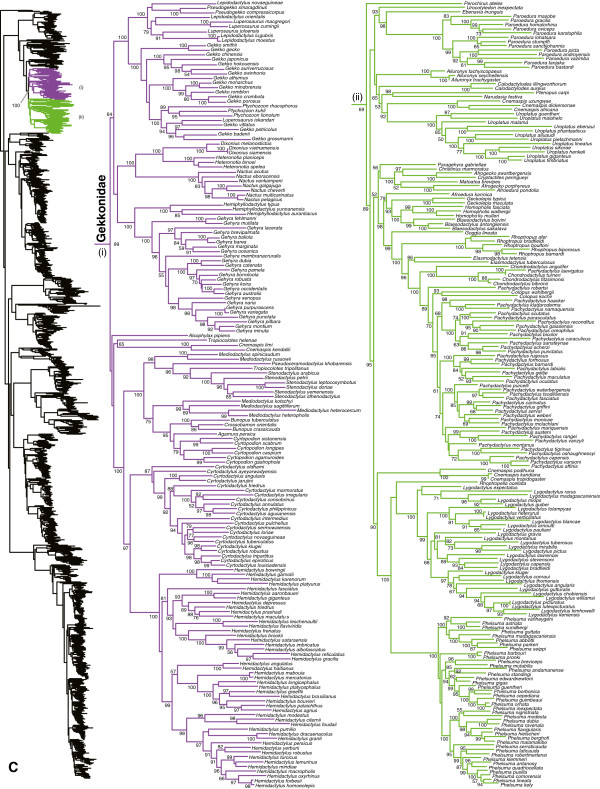
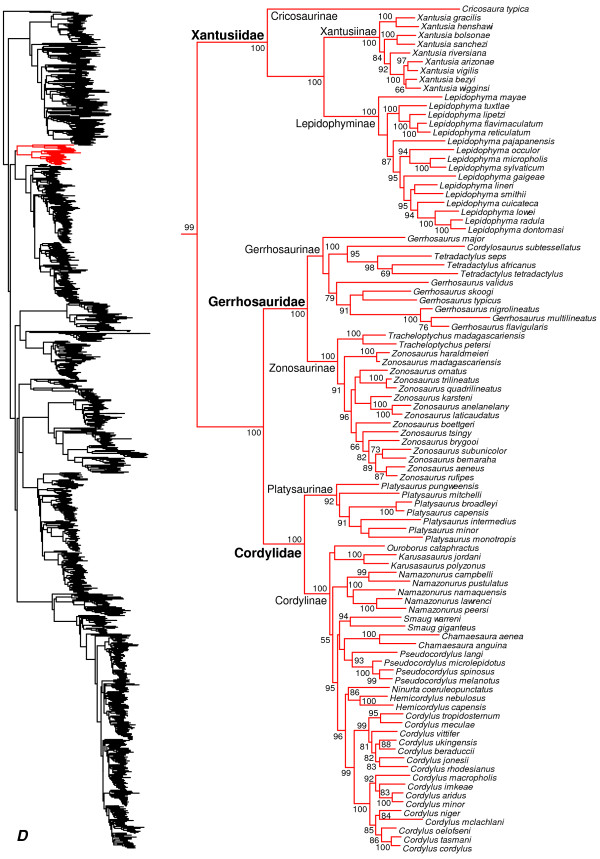
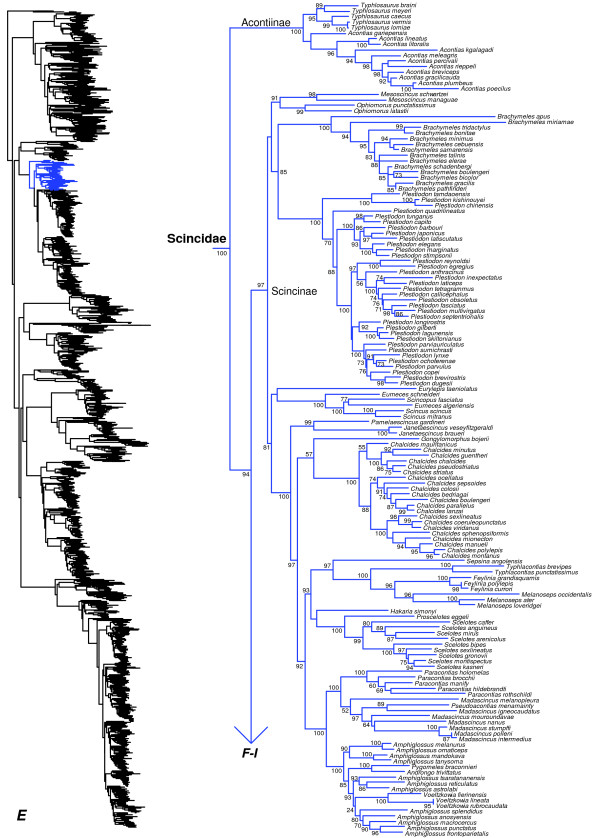
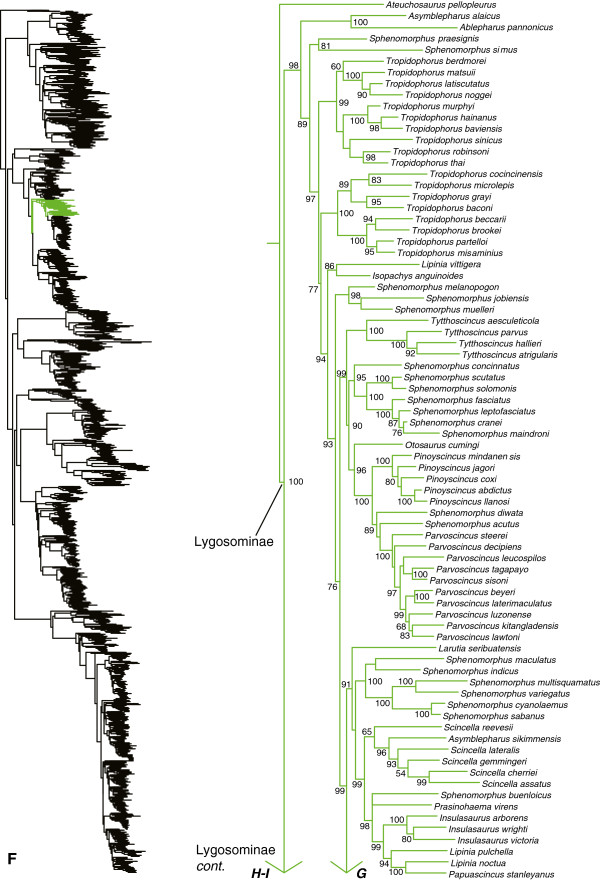
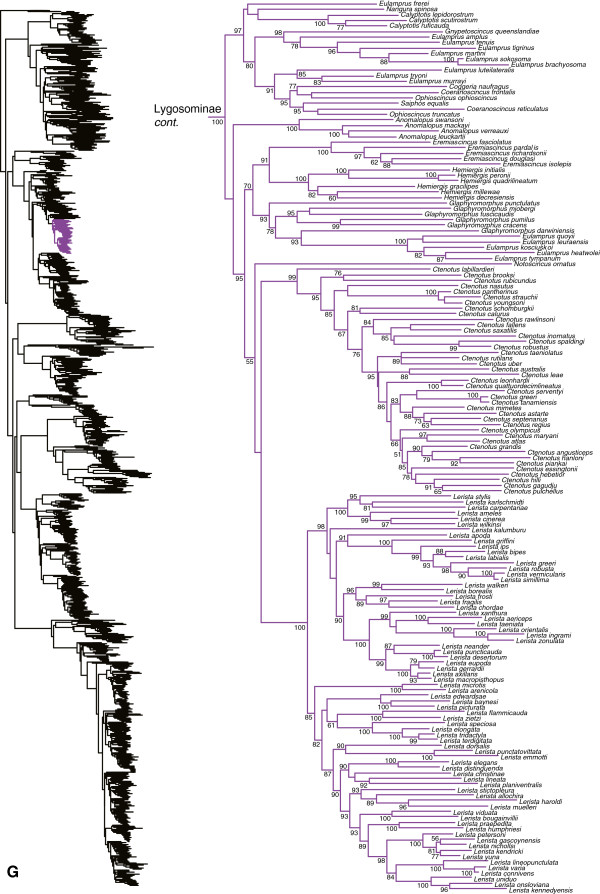
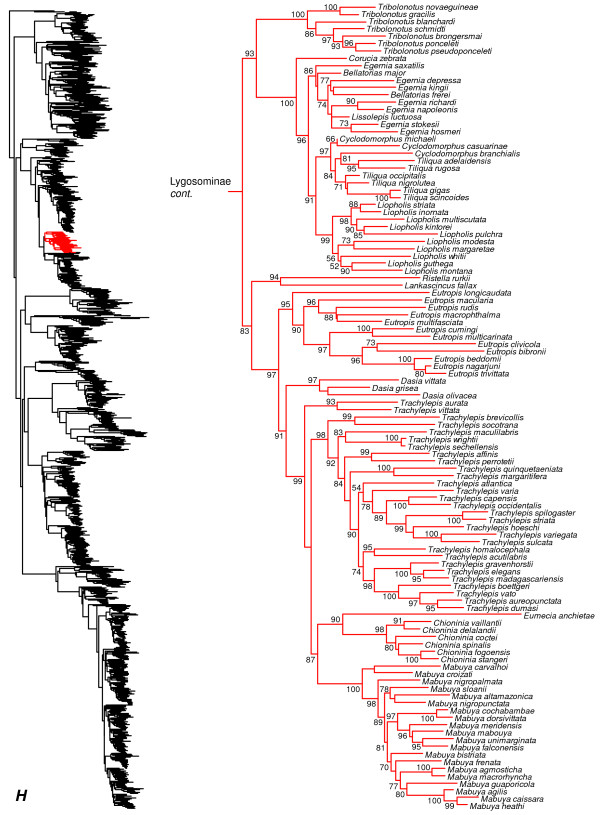
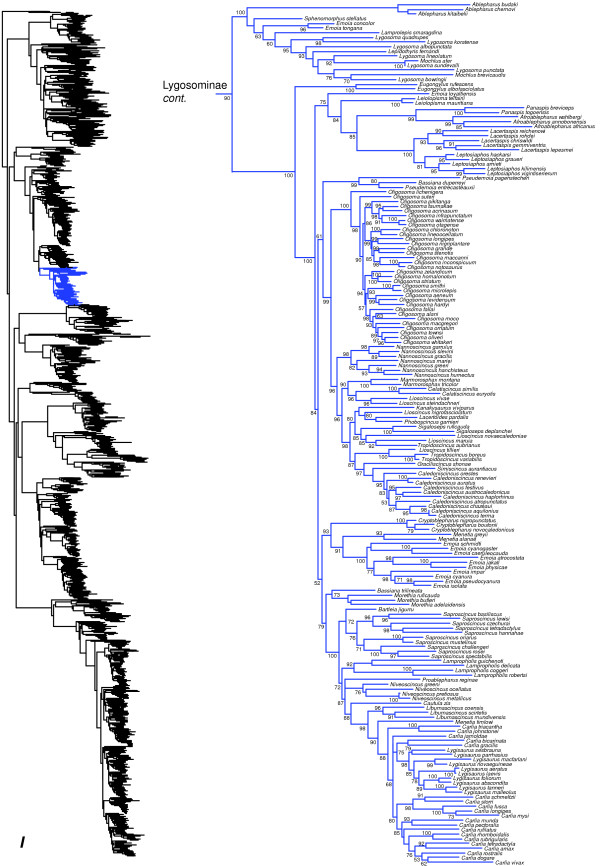
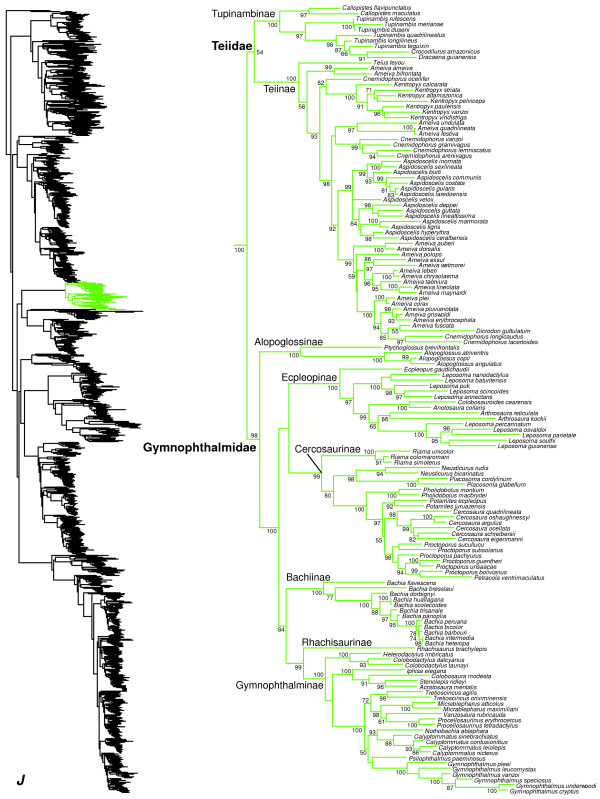
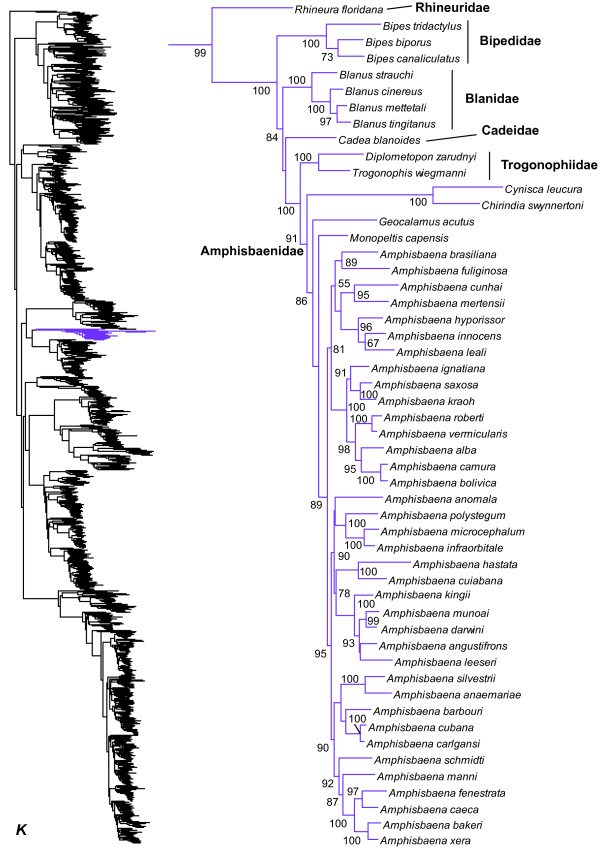
蜥蜴和蛇的系统发育和修订分类,包括 4161 种蜥蜴和蛇。

A phylogeny and revised classification of Squamata, including 4161 species of lizards and snakes.

机构信息

Department of Biological Sciences, The George Washington University, 2023 G St. NW, Washington, DC 20052, USA.

出版信息

BMC Evol Biol. 2013 Apr 29;13:93. doi: 10.1186/1471-2148-13-93.

DOI:10.1186/1471-2148-13-93
PMID:23627680
原文链接:https://pmc.ncbi.nlm.nih.gov/articles/PMC3682911/
Abstract

BACKGROUND

The extant squamates (>9400 known species of lizards and snakes) are one of the most diverse and conspicuous radiations of terrestrial vertebrates, but no studies have attempted to reconstruct a phylogeny for the group with large-scale taxon sampling. Such an estimate is invaluable for comparative evolutionary studies, and to address their classification. Here, we present the first large-scale phylogenetic estimate for Squamata.

RESULTS

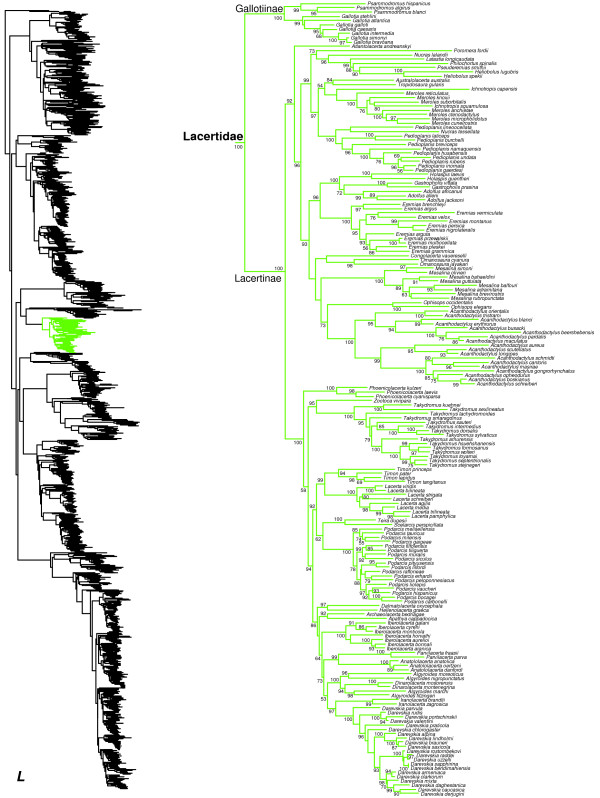
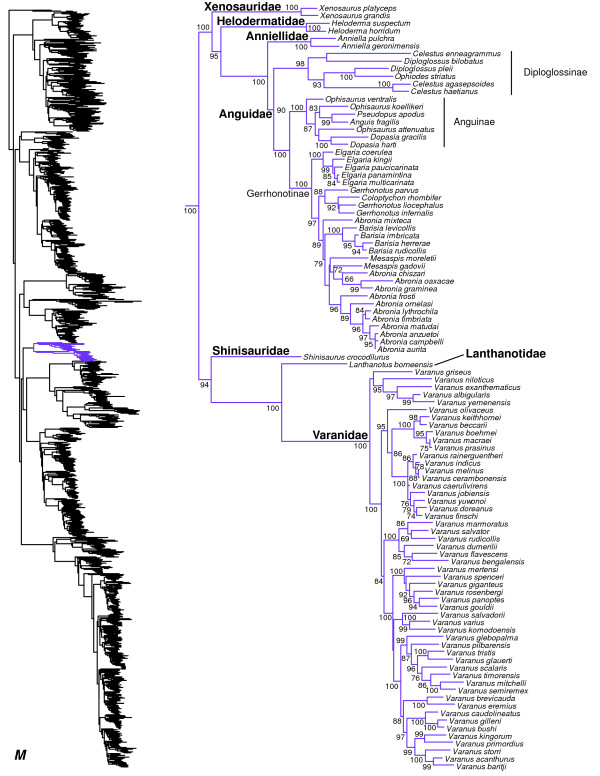
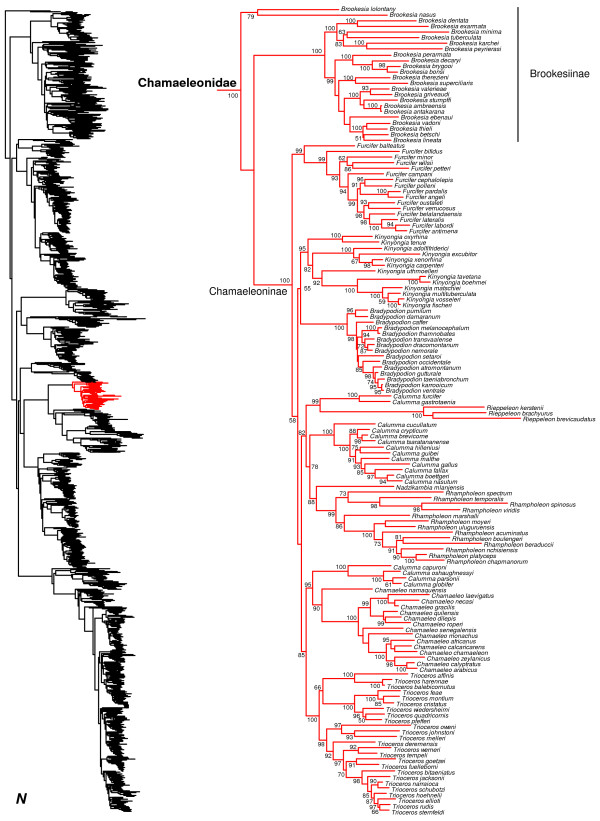
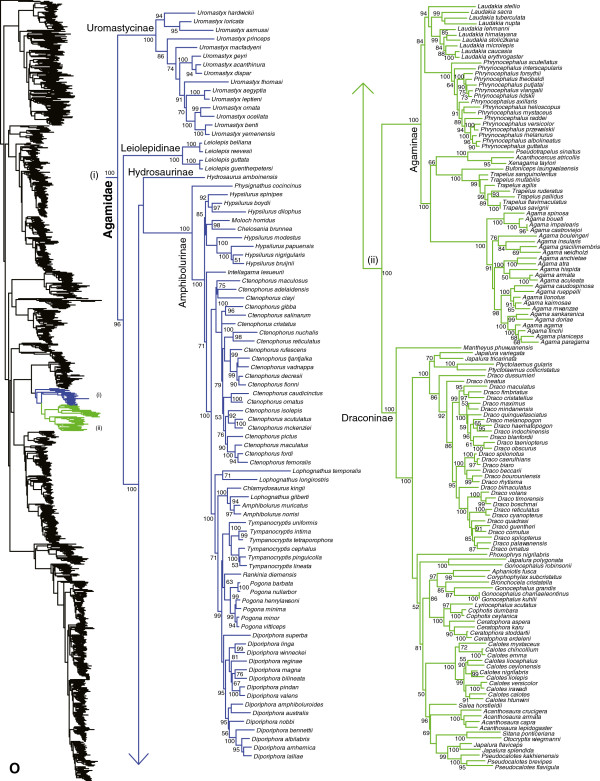
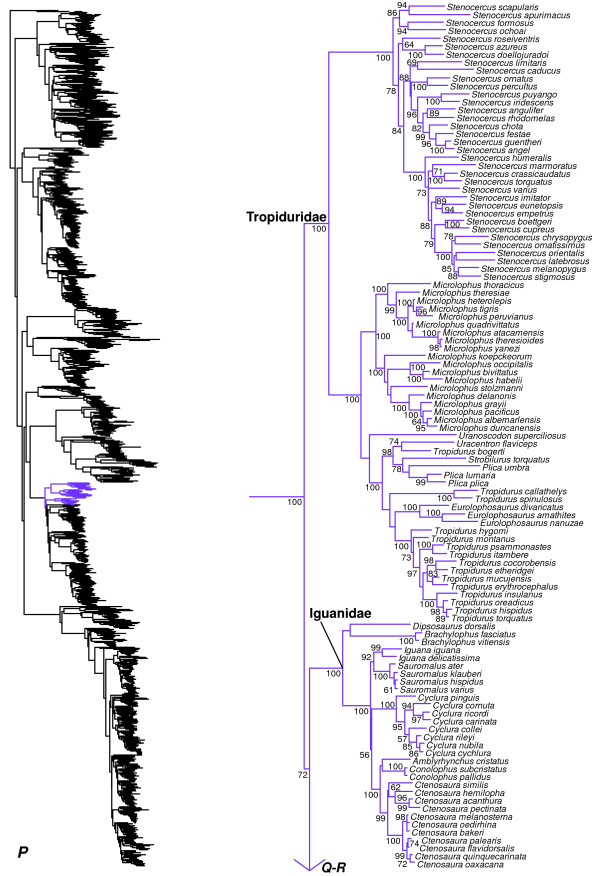
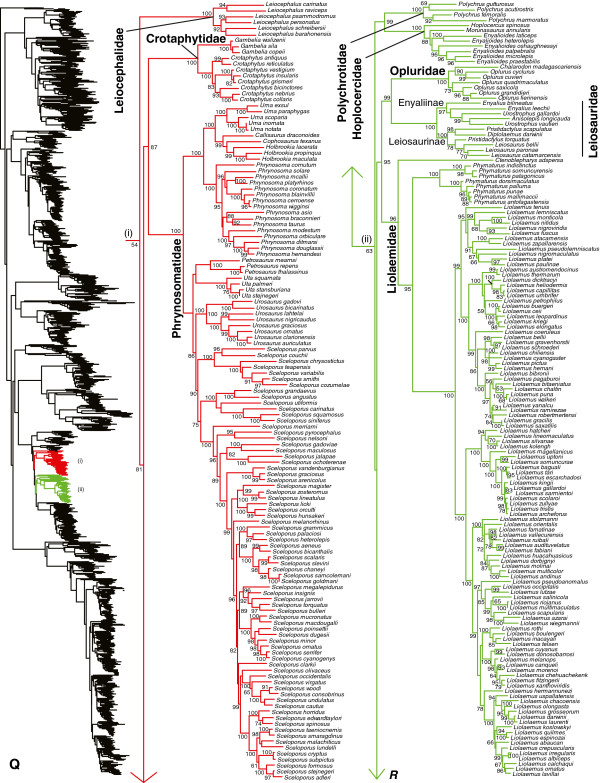
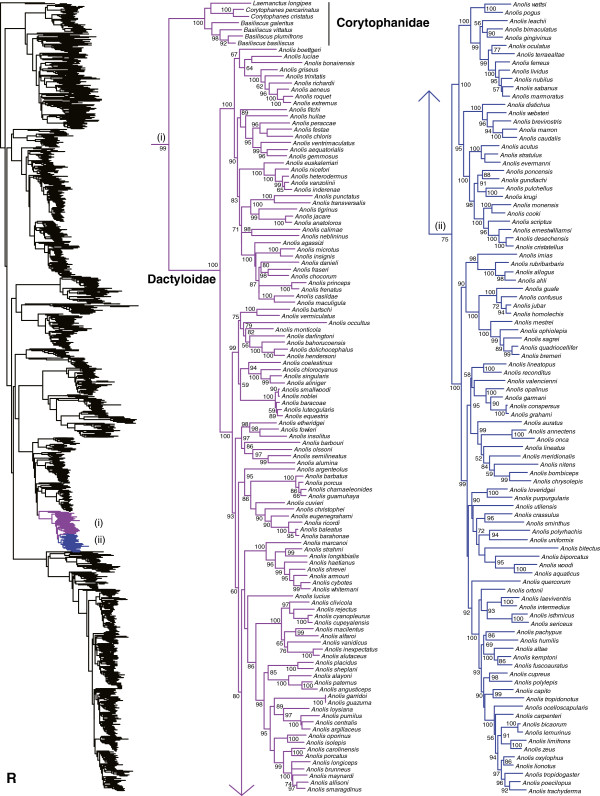
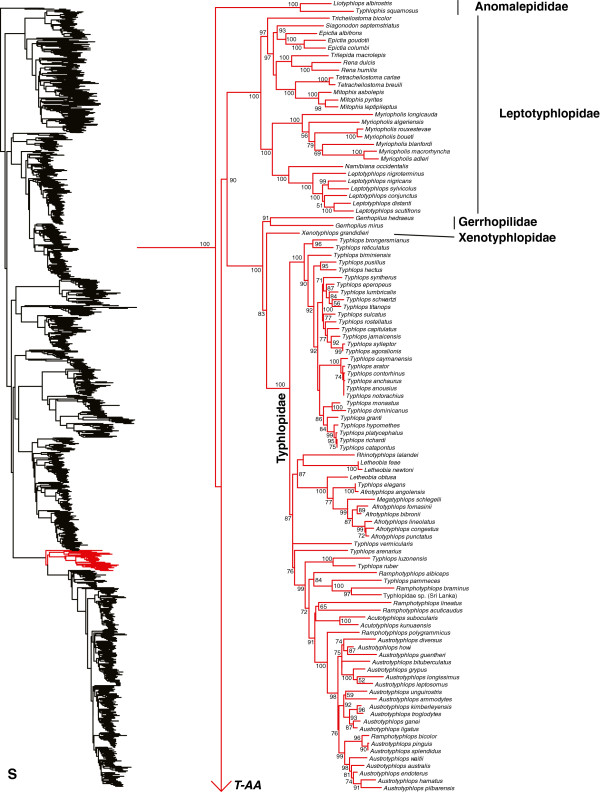
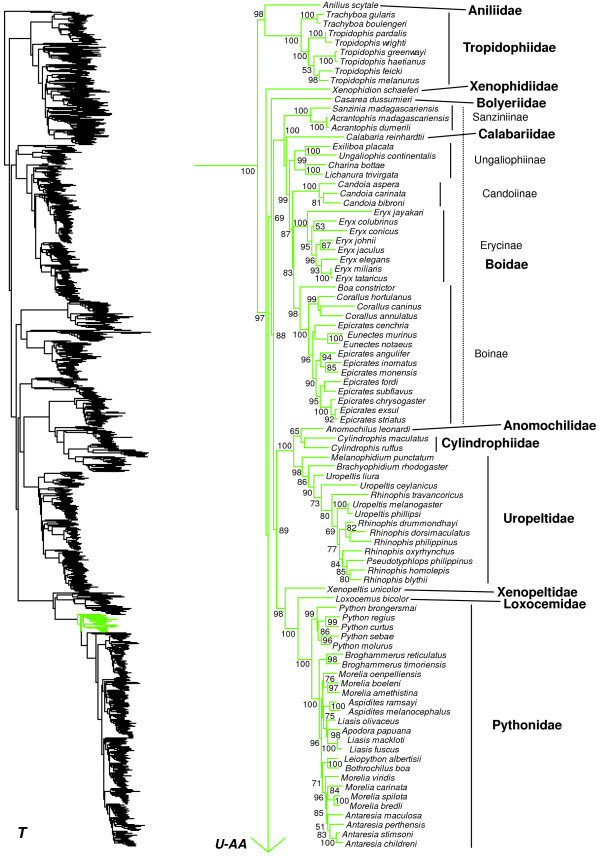
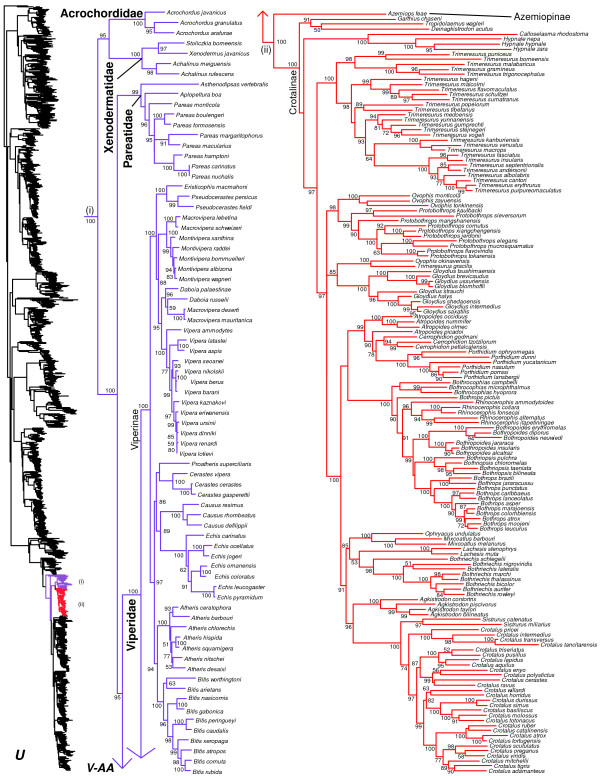
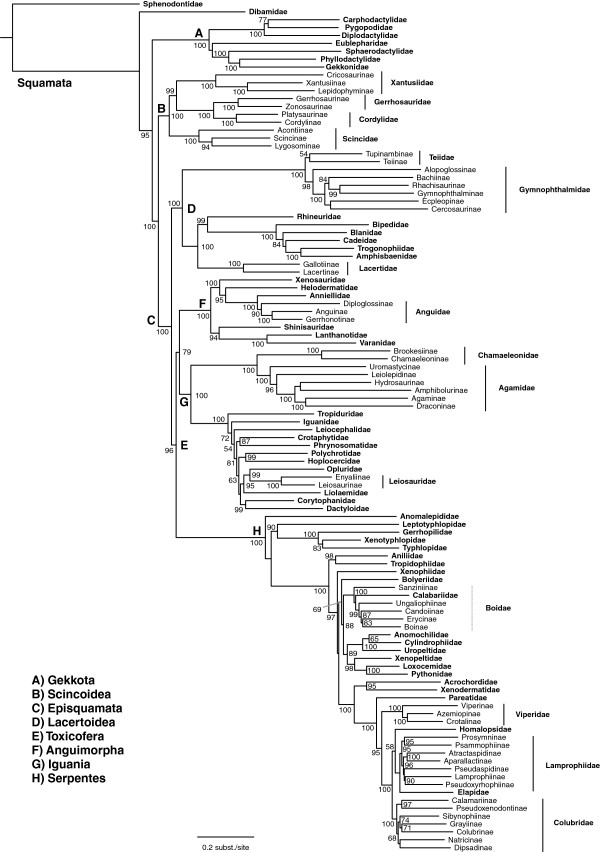
The estimated phylogeny contains 4161 species, representing all currently recognized families and subfamilies. The analysis is based on up to 12896 base pairs of sequence data per species (average = 2497 bp) from 12 genes, including seven nuclear loci (BDNF, c-mos, NT3, PDC, R35, RAG-1, and RAG-2), and five mitochondrial genes (12S, 16S, cytochrome b, ND2, and ND4). The tree provides important confirmation for recent estimates of higher-level squamate phylogeny based on molecular data (but with more limited taxon sampling), estimates that are very different from previous morphology-based hypotheses. The tree also includes many relationships that differ from previous molecular estimates and many that differ from traditional taxonomy.

CONCLUSIONS

We present a new large-scale phylogeny of squamate reptiles that should be a valuable resource for future comparative studies. We also present a revised classification of squamates at the family and subfamily level to bring the taxonomy more in line with the new phylogenetic hypothesis. This classification includes new, resurrected, and modified subfamilies within gymnophthalmid and scincid lizards, and boid, colubrid, and lamprophiid snakes.

摘要

背景

现存的有鳞目动物(已知蜥蜴和蛇类超过 9400 种)是陆地脊椎动物中最多样化和最引人注目的辐射之一,但没有研究试图对该群体进行大规模分类群采样的系统发育重建。这种估计对于比较进化研究和解决它们的分类非常有价值。在这里,我们提出了有鳞目动物的第一个大规模系统发育估计。

结果

估计的系统发育包含 4161 个物种,代表了所有目前公认的科和亚科。该分析基于每个物种多达 12896 个碱基对的序列数据(平均为 2497bp),来自 12 个基因,包括 7 个核基因座(BDNF、c-mos、NT3、PDC、R35、RAG-1 和 RAG-2)和 5 个线粒体基因(12S、16S、细胞色素 b、ND2 和 ND4)。该树为基于分子数据的最近对有鳞目高级系统发育的估计提供了重要的确认(但分类群采样更有限),这些估计与以前基于形态学的假设非常不同。该树还包括许多与以前的分子估计不同的关系,以及许多与传统分类学不同的关系。

结论

我们提出了一个新的有鳞目爬行动物的大规模系统发育,这应该是未来比较研究的宝贵资源。我们还提出了一个有鳞目动物的修订分类,在科和亚科水平上,使分类更符合新的系统发育假设。这一分类包括在蚓蜥目和石龙子目蜥蜴中新增、复活和修改的亚科,以及蚺科、游蛇科和眼镜蛇科蛇类。
https://cdn.ncbi.nlm.nih.gov/pmc/blobs/c1d4/3682911/0a2bc095895d/1471-2148-13-93-23.jpg
https://cdn.ncbi.nlm.nih.gov/pmc/blobs/c1d4/3682911/70a2d5d9d8fe/1471-2148-13-93-1.jpg
https://cdn.ncbi.nlm.nih.gov/pmc/blobs/c1d4/3682911/985f255475e3/1471-2148-13-93-2.jpg
https://cdn.ncbi.nlm.nih.gov/pmc/blobs/c1d4/3682911/7c6e45159b16/1471-2148-13-93-3.jpg
https://cdn.ncbi.nlm.nih.gov/pmc/blobs/c1d4/3682911/bdbf8cb09bd7/1471-2148-13-93-4.jpg
https://cdn.ncbi.nlm.nih.gov/pmc/blobs/c1d4/3682911/3048460b16eb/1471-2148-13-93-5.jpg
https://cdn.ncbi.nlm.nih.gov/pmc/blobs/c1d4/3682911/f093eee5b143/1471-2148-13-93-6.jpg
https://cdn.ncbi.nlm.nih.gov/pmc/blobs/c1d4/3682911/3113a81860ad/1471-2148-13-93-7.jpg
https://cdn.ncbi.nlm.nih.gov/pmc/blobs/c1d4/3682911/5dc32b07b7ec/1471-2148-13-93-8.jpg
https://cdn.ncbi.nlm.nih.gov/pmc/blobs/c1d4/3682911/f3d235b7bb12/1471-2148-13-93-9.jpg
https://cdn.ncbi.nlm.nih.gov/pmc/blobs/c1d4/3682911/3e02affd7ef9/1471-2148-13-93-10.jpg
https://cdn.ncbi.nlm.nih.gov/pmc/blobs/c1d4/3682911/b7421c6d9f6b/1471-2148-13-93-11.jpg
https://cdn.ncbi.nlm.nih.gov/pmc/blobs/c1d4/3682911/35f206fedffa/1471-2148-13-93-12.jpg
https://cdn.ncbi.nlm.nih.gov/pmc/blobs/c1d4/3682911/41d0d4f3e9d6/1471-2148-13-93-13.jpg
https://cdn.ncbi.nlm.nih.gov/pmc/blobs/c1d4/3682911/6e047f985947/1471-2148-13-93-14.jpg
https://cdn.ncbi.nlm.nih.gov/pmc/blobs/c1d4/3682911/b7313521368c/1471-2148-13-93-15.jpg
https://cdn.ncbi.nlm.nih.gov/pmc/blobs/c1d4/3682911/ac6251646b12/1471-2148-13-93-16.jpg
https://cdn.ncbi.nlm.nih.gov/pmc/blobs/c1d4/3682911/f234520b361c/1471-2148-13-93-17.jpg
https://cdn.ncbi.nlm.nih.gov/pmc/blobs/c1d4/3682911/2fd7ce262dc6/1471-2148-13-93-18.jpg
https://cdn.ncbi.nlm.nih.gov/pmc/blobs/c1d4/3682911/223f2c731ae9/1471-2148-13-93-19.jpg
https://cdn.ncbi.nlm.nih.gov/pmc/blobs/c1d4/3682911/4b6c1f83e503/1471-2148-13-93-20.jpg
https://cdn.ncbi.nlm.nih.gov/pmc/blobs/c1d4/3682911/8dc3dca79ba5/1471-2148-13-93-21.jpg
https://cdn.ncbi.nlm.nih.gov/pmc/blobs/c1d4/3682911/8588ad7214ea/1471-2148-13-93-22.jpg
https://cdn.ncbi.nlm.nih.gov/pmc/blobs/c1d4/3682911/0a2bc095895d/1471-2148-13-93-23.jpg
https://cdn.ncbi.nlm.nih.gov/pmc/blobs/c1d4/3682911/70a2d5d9d8fe/1471-2148-13-93-1.jpg
https://cdn.ncbi.nlm.nih.gov/pmc/blobs/c1d4/3682911/985f255475e3/1471-2148-13-93-2.jpg
https://cdn.ncbi.nlm.nih.gov/pmc/blobs/c1d4/3682911/7c6e45159b16/1471-2148-13-93-3.jpg
https://cdn.ncbi.nlm.nih.gov/pmc/blobs/c1d4/3682911/bdbf8cb09bd7/1471-2148-13-93-4.jpg
https://cdn.ncbi.nlm.nih.gov/pmc/blobs/c1d4/3682911/3048460b16eb/1471-2148-13-93-5.jpg
https://cdn.ncbi.nlm.nih.gov/pmc/blobs/c1d4/3682911/f093eee5b143/1471-2148-13-93-6.jpg
https://cdn.ncbi.nlm.nih.gov/pmc/blobs/c1d4/3682911/3113a81860ad/1471-2148-13-93-7.jpg
https://cdn.ncbi.nlm.nih.gov/pmc/blobs/c1d4/3682911/5dc32b07b7ec/1471-2148-13-93-8.jpg
https://cdn.ncbi.nlm.nih.gov/pmc/blobs/c1d4/3682911/f3d235b7bb12/1471-2148-13-93-9.jpg
https://cdn.ncbi.nlm.nih.gov/pmc/blobs/c1d4/3682911/3e02affd7ef9/1471-2148-13-93-10.jpg
https://cdn.ncbi.nlm.nih.gov/pmc/blobs/c1d4/3682911/b7421c6d9f6b/1471-2148-13-93-11.jpg
https://cdn.ncbi.nlm.nih.gov/pmc/blobs/c1d4/3682911/35f206fedffa/1471-2148-13-93-12.jpg
https://cdn.ncbi.nlm.nih.gov/pmc/blobs/c1d4/3682911/41d0d4f3e9d6/1471-2148-13-93-13.jpg
https://cdn.ncbi.nlm.nih.gov/pmc/blobs/c1d4/3682911/6e047f985947/1471-2148-13-93-14.jpg
https://cdn.ncbi.nlm.nih.gov/pmc/blobs/c1d4/3682911/b7313521368c/1471-2148-13-93-15.jpg
https://cdn.ncbi.nlm.nih.gov/pmc/blobs/c1d4/3682911/ac6251646b12/1471-2148-13-93-16.jpg
https://cdn.ncbi.nlm.nih.gov/pmc/blobs/c1d4/3682911/f234520b361c/1471-2148-13-93-17.jpg
https://cdn.ncbi.nlm.nih.gov/pmc/blobs/c1d4/3682911/2fd7ce262dc6/1471-2148-13-93-18.jpg
https://cdn.ncbi.nlm.nih.gov/pmc/blobs/c1d4/3682911/223f2c731ae9/1471-2148-13-93-19.jpg
https://cdn.ncbi.nlm.nih.gov/pmc/blobs/c1d4/3682911/4b6c1f83e503/1471-2148-13-93-20.jpg
https://cdn.ncbi.nlm.nih.gov/pmc/blobs/c1d4/3682911/8dc3dca79ba5/1471-2148-13-93-21.jpg
https://cdn.ncbi.nlm.nih.gov/pmc/blobs/c1d4/3682911/8588ad7214ea/1471-2148-13-93-22.jpg
https://cdn.ncbi.nlm.nih.gov/pmc/blobs/c1d4/3682911/0a2bc095895d/1471-2148-13-93-23.jpg

相似文献

1
A phylogeny and revised classification of Squamata, including 4161 species of lizards and snakes.蜥蜴和蛇的系统发育和修订分类,包括 4161 种蜥蜴和蛇。
BMC Evol Biol. 2013 Apr 29;13:93. doi: 10.1186/1471-2148-13-93.
2
The phylogeny of squamate reptiles (lizards, snakes, and amphisbaenians) inferred from nine nuclear protein-coding genes.从九个核蛋白编码基因推断出的有鳞目爬行动物(蜥蜴、蛇和蚓蜥)的系统发育。
C R Biol. 2005 Oct-Nov;328(10-11):1000-8. doi: 10.1016/j.crvi.2005.10.001. Epub 2005 Oct 27.
3
Resolving the phylogeny of lizards and snakes (Squamata) with extensive sampling of genes and species.广泛采样基因和物种,解析蜥蜴和蛇类(有鳞目)的系统发育关系。
Biol Lett. 2012 Dec 23;8(6):1043-6. doi: 10.1098/rsbl.2012.0703. Epub 2012 Sep 19.
4
Molecular phylogenetics of squamata: the position of snakes, amphisbaenians, and dibamids, and the root of the squamate tree.有鳞目分子系统发育学:蛇类、蚓蜥目和双足蜥科的位置以及有鳞目谱系的根源
Syst Biol. 2004 Oct;53(5):735-57. doi: 10.1080/10635150490522340.
5
Combining phylogenomic and supermatrix approaches, and a time-calibrated phylogeny for squamate reptiles (lizards and snakes) based on 52 genes and 4162 species.结合系统发育基因组学和超矩阵方法,以及基于52个基因和4162个物种的有鳞目爬行动物(蜥蜴和蛇)的时间校准系统发育树。
Mol Phylogenet Evol. 2016 Jan;94(Pt B):537-547. doi: 10.1016/j.ympev.2015.10.009. Epub 2015 Oct 22.
6
Estimating divergence dates and evaluating dating methods using phylogenomic and mitochondrial data in squamate reptiles.使用系统基因组学和线粒体数据估计有鳞目爬行动物的分歧时间并评估其时间测定方法。
Mol Phylogenet Evol. 2012 Dec;65(3):974-91. doi: 10.1016/j.ympev.2012.08.018. Epub 2012 Sep 7.
7
[Genomic structure and sex determination in squamate reptiles].[有鳞目爬行动物的基因组结构与性别决定]
Tsitologiia. 2013;55(4):253-8.
8
Integration of molecules and new fossils supports a Triassic origin for Lepidosauria (lizards, snakes, and tuatara).分子与新化石的整合支持了有鳞目(蜥蜴、蛇和楔齿蜥)起源于三叠纪的观点。
BMC Evol Biol. 2013 Sep 25;13:208. doi: 10.1186/1471-2148-13-208.
9
A Species-Level Phylogeny of Extant Snakes with Description of a New Colubrid Subfamily and Genus.现存蛇类的科级系统发育及一个新游蛇亚科和属的描述
PLoS One. 2016 Sep 7;11(9):e0161070. doi: 10.1371/journal.pone.0161070. eCollection 2016.
10
Fossil-informed biogeographic analysis suggests Eurasian regionalization in crown Squamata during the early Jurassic.化石信息生物地理学分析表明,早侏罗世时欧亚大陆的有鳞目发生了区域性分化。
PeerJ. 2024 Apr 30;12:e17277. doi: 10.7717/peerj.17277. eCollection 2024.

引用本文的文献

1
First record of Miller, Davis, Luong, Do, Pham, Ziegler, Lee, De Queiroz, Reynolds & Nguyen, 2020 from China (Serpentes, Xenodermidae), with updated diagnosis of this species.米勒、戴维斯、卢昂、多、范、齐格勒、李、德凯罗斯、雷诺兹和阮于2020年在中国(有鳞目,异盾盲蛇科)的首次记录,并对该物种进行了更新诊断。
Biodivers Data J. 2025 Aug 22;13:e161176. doi: 10.3897/BDJ.13.e161176. eCollection 2025.
2
A mobile hybrid deep learning approach for classifying 3D-like representations of Amazonian lizards.一种用于对亚马逊蜥蜴的类三维表示进行分类的移动混合深度学习方法。
Front Artif Intell. 2025 Aug 12;8:1524380. doi: 10.3389/frai.2025.1524380. eCollection 2025.
3

本文引用的文献

1
Phylogeny, biogeography and classification of the snake superfamily Elapoidea: a rapid radiation in the late Eocene.眼镜蛇超科的系统发育、生物地理学与分类:始新世晚期的快速辐射分化
Cladistics. 2009 Feb;25(1):38-63. doi: 10.1111/j.1096-0031.2008.00237.x. Epub 2009 Jan 5.
2
A combined evidence phylogenetic analysis of Anguimorpha (Reptilia: Squamata).蛇蜥亚目(爬行纲:有鳞目)的综合证据系统发育分析
Cladistics. 2011 Jun;27(3):230-277. doi: 10.1111/j.1096-0031.2010.00330.x. Epub 2010 Jul 22.
3
Molecular phylogeny of the New World Dipsadidae (Serpentes: Colubroidea): a reappraisal.
Femoral metadiaphyseal and nutrient foramen perfusion suggests comparable maximal metabolic rates in a pterosaur and in a semi-aquatic maniraptoran dinosaur.
股骨骨干中段和滋养孔灌注表明翼龙和半水生手盗龙类恐龙的最大代谢率相当。
PeerJ. 2025 Aug 18;13:e19806. doi: 10.7717/peerj.19806. eCollection 2025.
4
Make Acetylcholine Great Again! Australian Skinks Evolved Multiple Neurotoxin-Proof Nicotinic Acetylcholine Receptors in Defiance of Snake Venom.让乙酰胆碱再次强大!澳大利亚石龙子无视蛇毒,进化出多种抗神经毒素的烟碱型乙酰胆碱受体。
Int J Mol Sci. 2025 Aug 4;26(15):7510. doi: 10.3390/ijms26157510.
5
Reduction of Tooth Replacement Disproportionately Affects the Evolution of Enamel Matrix Proteins.牙齿替换的减少对釉质基质蛋白的进化产生了不成比例的影响。
J Mol Evol. 2025 Aug 7. doi: 10.1007/s00239-025-10258-4.
6
The relative withdrawal of GFAP-An essential component of brain evolution.胶质纤维酸性蛋白的相对减少——大脑进化的一个重要组成部分。
Front Neuroanat. 2025 Jul 17;19:1607603. doi: 10.3389/fnana.2025.1607603. eCollection 2025.
7
New monstersaur specimens from the Kaiparowits Formation of Utah reveal unexpected richness of large-bodied lizards in Late Cretaceous North America.来自犹他州凯帕罗维茨组的新型怪物蜥蜴标本揭示了晚白垩世北美洲大型蜥蜴出乎意料的丰富性。
R Soc Open Sci. 2025 Jun 18;12(6):250435. doi: 10.1098/rsos.250435. eCollection 2025 Jun.
8
Does the Post-Natal Social Environment Influence Cognitive Development in a Social Gecko?产后社会环境会影响群居壁虎的认知发展吗?
Ecol Evol. 2025 Jun 17;15(6):e71560. doi: 10.1002/ece3.71560. eCollection 2025 Jun.
9
Dietary preferences affect the gut microbiota of three snake species (Squamata: Colubridae).饮食偏好影响三种蛇类(有鳞目:游蛇科)的肠道微生物群。
Front Microbiol. 2025 May 21;16:1559646. doi: 10.3389/fmicb.2025.1559646. eCollection 2025.
10
Neuroimaging and immunofluorescence of the Pseudopus apodus brain: unraveling its structural complexity.盲蛇蛉大脑的神经成像与免疫荧光:揭示其结构复杂性
Brain Struct Funct. 2025 May 28;230(5):76. doi: 10.1007/s00429-025-02940-6.
新大陆游蛇科(蛇目:游蛇超科)的分子系统发育:重新评估
Cladistics. 2012 Oct;28(5):437-459. doi: 10.1111/j.1096-0031.2012.00393.x. Epub 2012 Apr 26.
4
Molecular systematics of the Philippine forest skinks (Squamata: Scincidae: ): testing morphological hypotheses of interspecific relationships.菲律宾森林石龙子的分子系统学(有鳞目:石龙子科: ):检验种间关系的形态学假说
Zool J Linn Soc. 2011 Dec;163(4):1217-1243. doi: 10.1111/j.1096-3642.2011.00747.x. Epub 2011 Nov 25.
5
Phylogenetic relationships and molecular evolution in uropeltid snakes (Serpentes: Uropeltidae): allozymes and albumin immunology.穴蝰科蛇类(有鳞目:穴蝰科)的系统发育关系与分子进化:等位酶与白蛋白免疫学
Biol J Linn Soc Lond. 1990 Jul;40(3):293-320. doi: 10.1111/j.1095-8312.1990.tb00541.x. Epub 2008 Jan 14.
6
THE EVOLUTION OF FORM AND FUNCTION: MORPHOLOGY AND LOCOMOTOR PERFORMANCE IN WEST INDIAN ANOLIS LIZARDS.形态与功能的演变:西印度安乐蜥的形态学与运动表现
Evolution. 1990 Aug;44(5):1189-1203. doi: 10.1111/j.1558-5646.1990.tb05225.x.
7
PHYLOGENETIC STUDIES OF COADAPTATION: PREFERRED TEMPERATURES VERSUS OPTIMAL PERFORMANCE TEMPERATURES OF LIZARDS.协同适应的系统发育研究:蜥蜴的偏好温度与最佳表现温度
Evolution. 1987 Sep;41(5):1098-1115. doi: 10.1111/j.1558-5646.1987.tb05879.x.
8
1986 Redux: New genera of anoles (Squamata: Dactyloidae) are unwarranted.1986年再审视:绿安乐蜥(有鳞目:安乐蜥科)新属并不成立。
Zootaxa. 2013;3626:295-9. doi: 10.11646/zootaxa.3626.2.7.
9
To name or not to name: Criteria to promote economy of change in Linnaean classification schemes.命名还是不命名:促进林奈分类系统中分类变更简约性的标准。
Zootaxa. 2013;3636:201-44. doi: 10.11646/zootaxa.3636.2.1.
10
Large-scale phylogeny of chameleons suggests African origins and Eocene diversification.大型变色龙系统发育研究表明其起源于非洲,并在始新世多样化。
Proc Biol Sci. 2013 Mar 27;280(1759):20130184. doi: 10.1098/rspb.2013.0184. Print 2013 May 22.