Helen Wills Neuroscience Institute, University of California, Berkeley, California, United States of America.
PLoS One. 2013 Apr 22;8(4):e61417. doi: 10.1371/journal.pone.0061417. Print 2013.
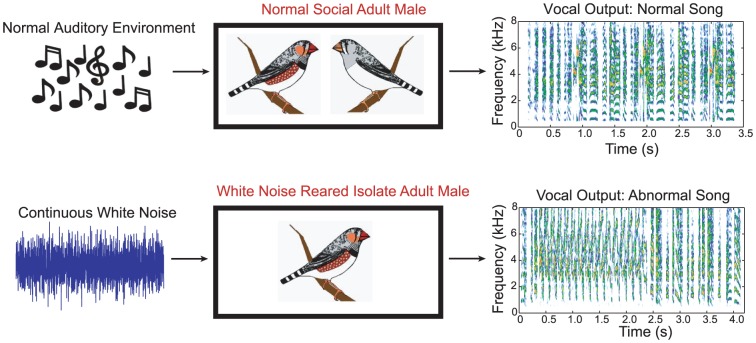
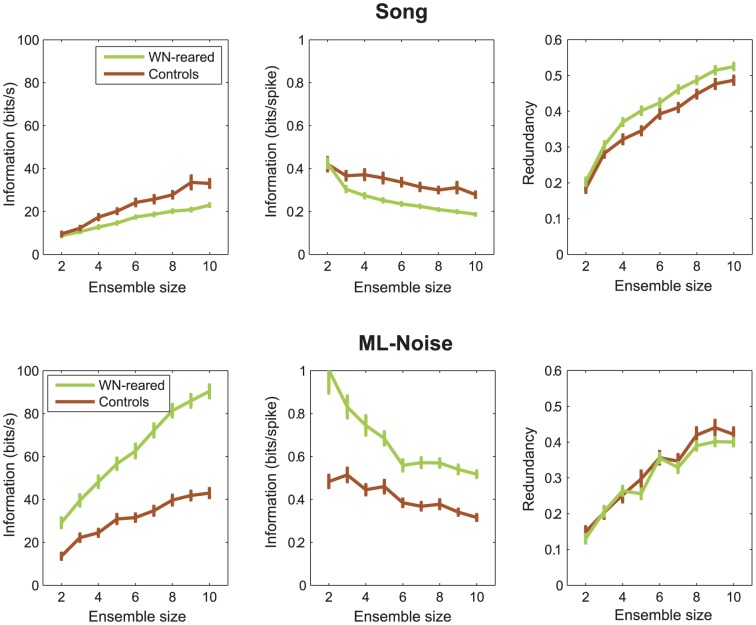
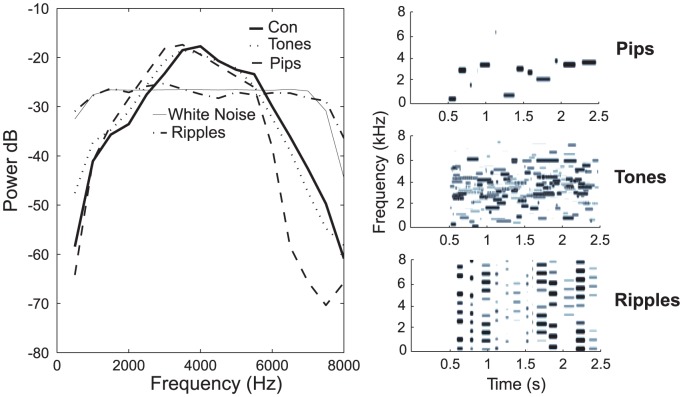
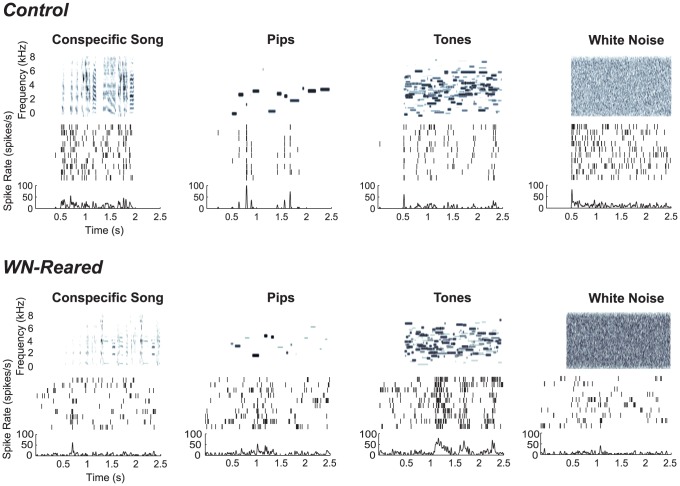
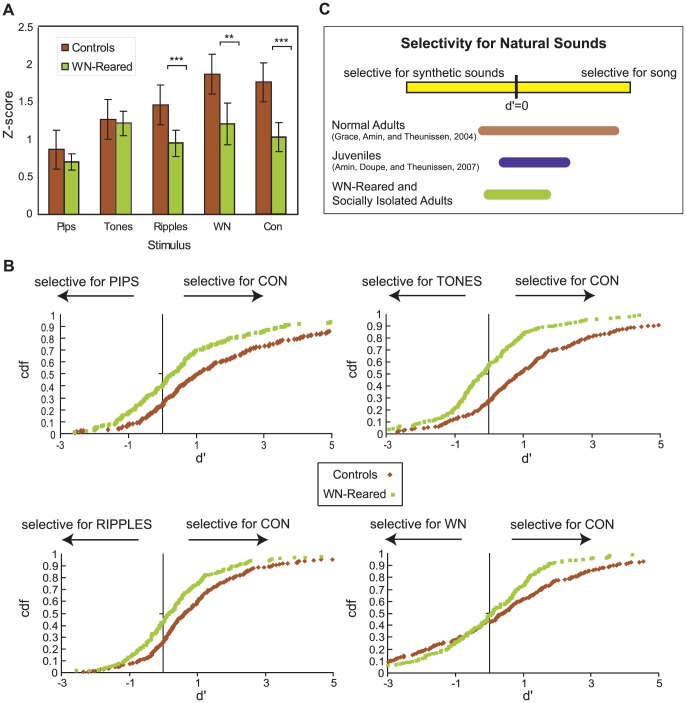
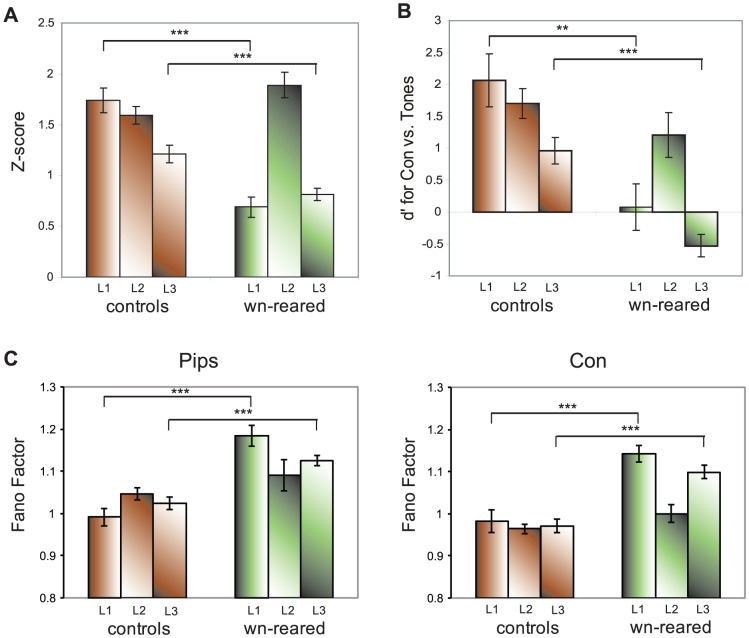
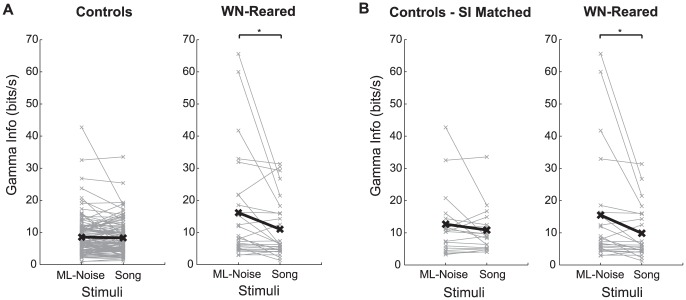
Previous research has shown that postnatal exposure to simple, synthetic sounds can affect the sound representation in the auditory cortex as reflected by changes in the tonotopic map or other relatively simple tuning properties, such as AM tuning. However, their functional implications for neural processing in the generation of ethologically-based perception remain unexplored. Here we examined the effects of noise-rearing and social isolation on the neural processing of communication sounds such as species-specific song, in the primary auditory cortex analog of adult zebra finches. Our electrophysiological recordings reveal that neural tuning to simple frequency-based synthetic sounds is initially established in all the laminae independent of patterned acoustic experience; however, we provide the first evidence that early exposure to patterned sound statistics, such as those found in native sounds, is required for the subsequent emergence of neural selectivity for complex vocalizations and for shaping neural spiking precision in superficial and deep cortical laminae, and for creating efficient neural representations of song and a less redundant ensemble code in all the laminae. Our study also provides the first causal evidence for 'sparse coding', such that when the statistics of the stimuli were changed during rearing, as in noise-rearing, that the sparse or optimal representation for species-specific vocalizations disappeared. Taken together, these results imply that a layer-specific differential development of the auditory cortex requires patterned acoustic input, and a specialized and robust sensory representation of complex communication sounds in the auditory cortex requires a rich acoustic and social environment.
先前的研究表明,产后暴露于简单的合成声音会影响听觉皮层中的声音表示,这反映在调谐图或其他相对简单的调谐特性(如 AM 调谐)的变化。然而,它们对基于行为的感知的神经处理的功能意义仍未被探索。在这里,我们研究了噪音饲养和社会隔离对通讯声音(如特定物种的歌曲)的神经处理的影响,这些声音是成年斑胸草雀初级听觉皮层模拟物。我们的电生理记录显示,对基于简单频率的合成声音的神经调谐最初是在所有层独立于模式声学经验建立的;然而,我们提供了第一个证据,即早期暴露于模式声音统计数据(如在本地声音中发现的那些)对于随后出现的对复杂发声的神经选择性以及在浅层和深层皮质层中塑造神经尖峰精度以及在所有层中创建歌曲的有效神经表示和较少冗余的集合代码是必要的。我们的研究还为“稀疏编码”提供了第一个因果证据,即当刺激的统计数据在饲养期间发生变化时,例如在噪音饲养期间,特定物种发声的稀疏或最优表示就会消失。总之,这些结果表明,听觉皮层的特定层差异发育需要模式化的声学输入,而听觉皮层对复杂通讯声音的专门而强大的感觉表示需要丰富的声学和社会环境。