Department of Ecology and Environmental Science, Umeå University, Umeå, Sweden.
PLoS One. 2013 Apr 18;8(4):e61293. doi: 10.1371/journal.pone.0061293. Print 2013.
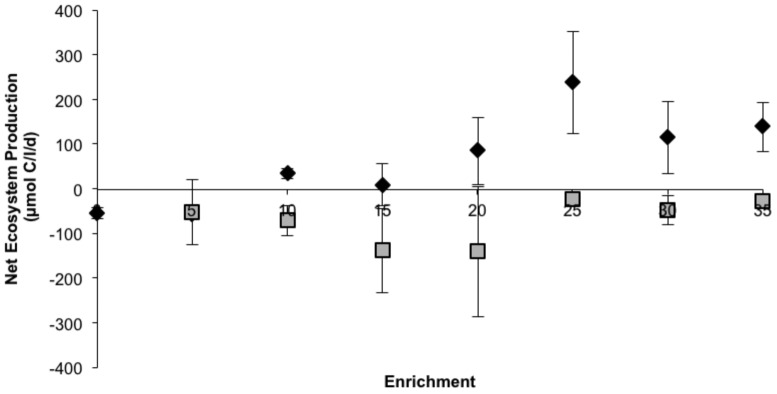
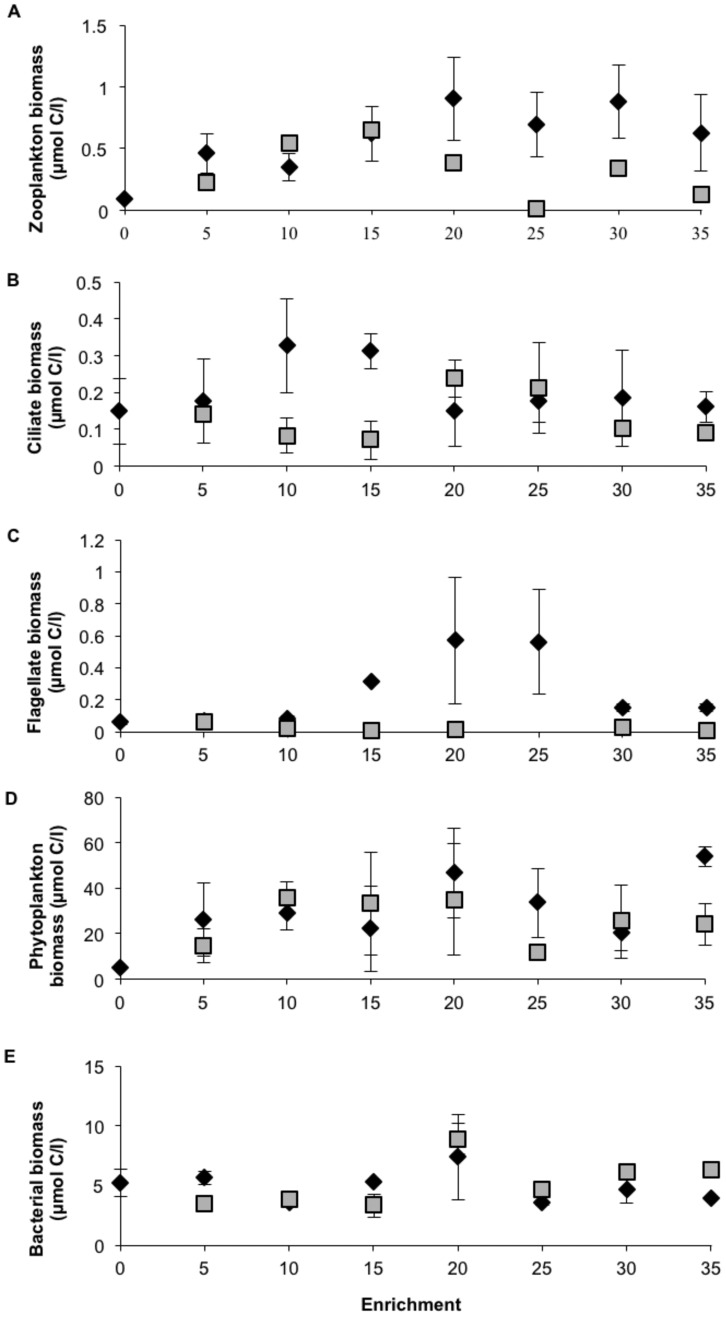
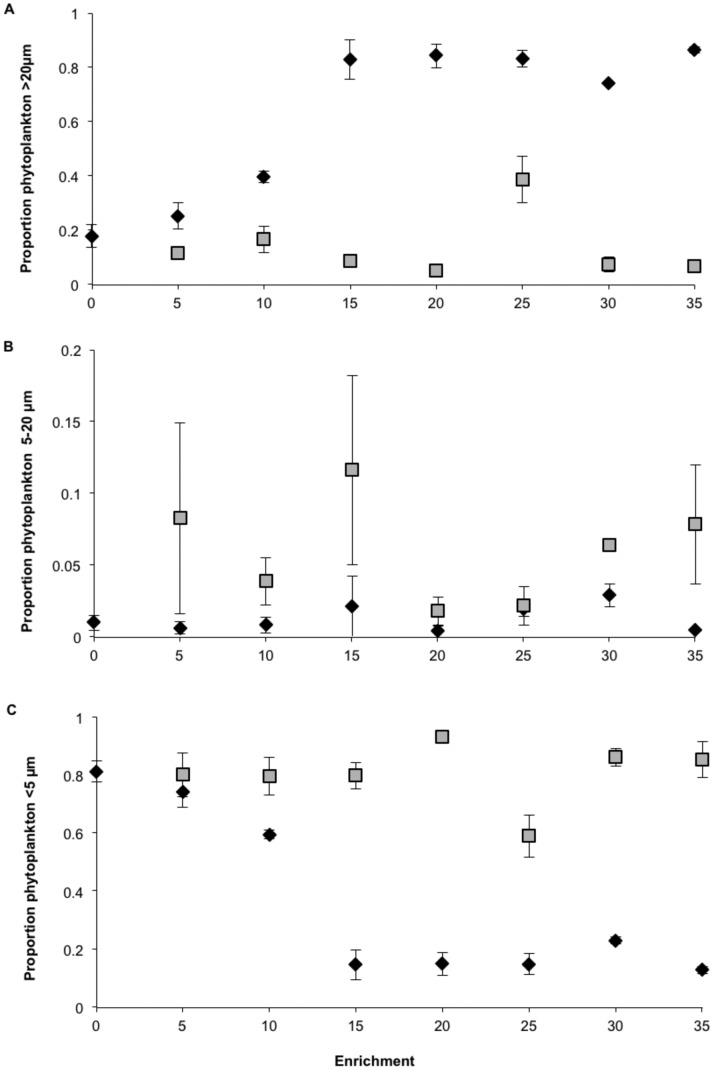
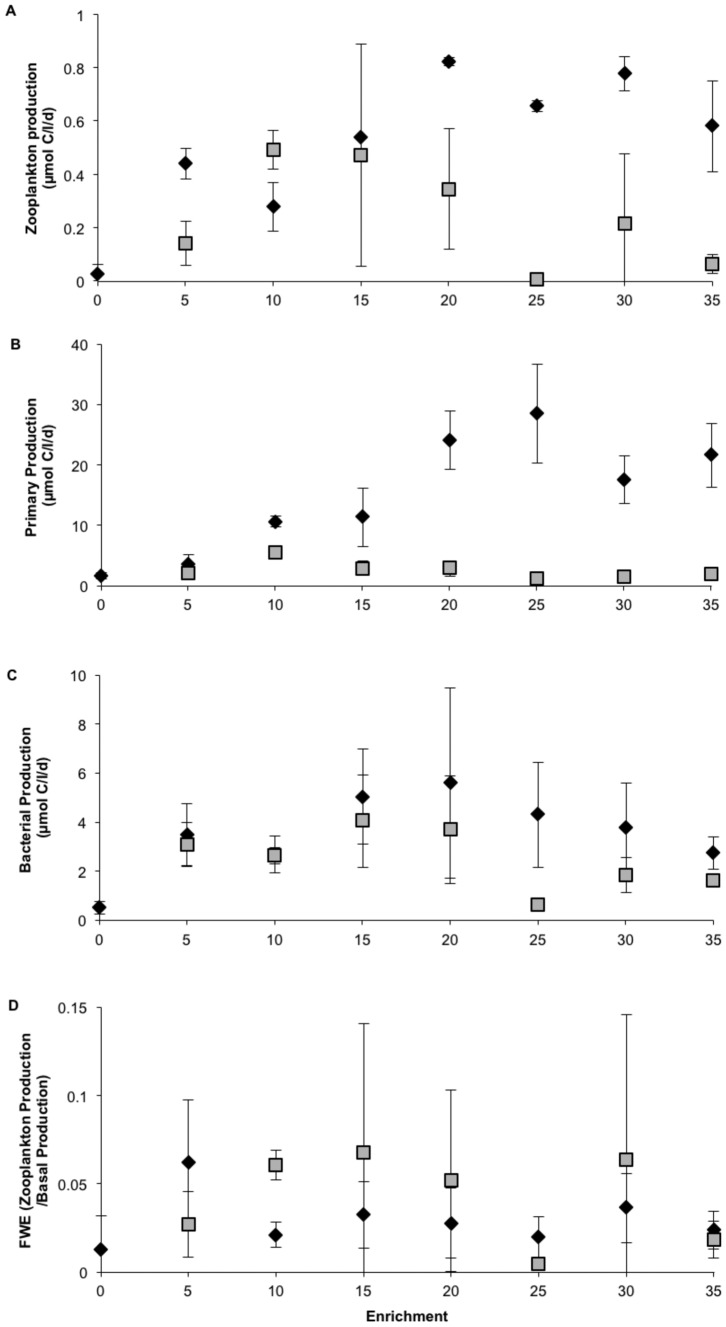
A common and established view is that increased inputs of nutrients to the sea, for example via river flooding, will cause eutrophication and phytoplankton blooms in coastal areas. We here show that this concept may be questioned in certain scenarios. Climate change has been predicted to cause increased inflow of freshwater to coastal areas in northern Europe. River waters in these areas are often brown from the presence of high concentrations of allochthonous dissolved organic carbon (humic carbon), in addition to nitrogen and phosphorus. In this study we investigated whether increased inputs of humic carbon can change the structure and production of the pelagic food web in the recipient seawater. In a mesocosm experiment unfiltered seawater from the northern Baltic Sea was fertilized with inorganic nutrients and humic carbon (CNP), and only with inorganic nutrients (NP). The system responded differently to the humic carbon addition. In NP treatments bacterial, phytoplankton and zooplankton production increased and the systems turned net autotrophic, whereas the CNP-treatment only bacterial and zooplankton production increased driving the system to net heterotrophy. The size-structure of the food web showed large variations in the different treatments. In the enriched NP treatments the phytoplankton community was dominated by filamentous >20 µm algae, while in the CNP treatments the phytoplankton was dominated by picocyanobacteria <5 µm. Our results suggest that climate change scenarios, resulting in increased humic-rich river inflow, may counteract eutrophication in coastal waters, leading to a promotion of the microbial food web and other heterotrophic organisms, driving the recipient coastal waters to net-heterotrophy.
一种普遍且公认的观点认为,例如通过河流洪水增加向海洋输入的营养物质,将导致沿海地区富营养化和浮游植物大量繁殖。我们在这里表明,在某些情况下,这一概念可能值得质疑。气候变化预计将导致北欧沿海地区淡水流入量增加。这些地区的河水通常因存在高浓度的异源溶解有机碳(腐殖碳)以及氮和磷而呈棕色。在这项研究中,我们研究了增加腐殖碳的输入是否会改变受纳海水中浮游食物链的结构和生产力。在一个中观实验中,用无机养分和腐殖碳(CNP)而不是只用无机养分(NP)对来自波罗的海北部的未经过滤海水进行施肥。该系统对腐殖碳的添加有不同的反应。在 NP 处理中,细菌、浮游植物和浮游动物的生产力增加,系统变为净自养型,而 CNP 处理仅增加细菌和浮游动物的生产力,导致系统变为净异养型。不同处理的食物网的大小结构表现出很大的差异。在富营养化的 NP 处理中,浮游植物群落主要由>20 µm 的丝状藻类组成,而在 CNP 处理中,浮游植物主要由<5 µm 的微藻组成。我们的研究结果表明,气候变化情景导致富含有机物的河流流入增加,可能会抵消沿海地区的富营养化,导致微生物食物网和其他异养生物的促进,使受纳沿海地区变为净异养型。