Lung Research Laboratory, Hanson Institute, Adelaide, South Australia, Australia.
PLoS One. 2013 Apr 26;8(4):e61573. doi: 10.1371/journal.pone.0061573. Print 2013.
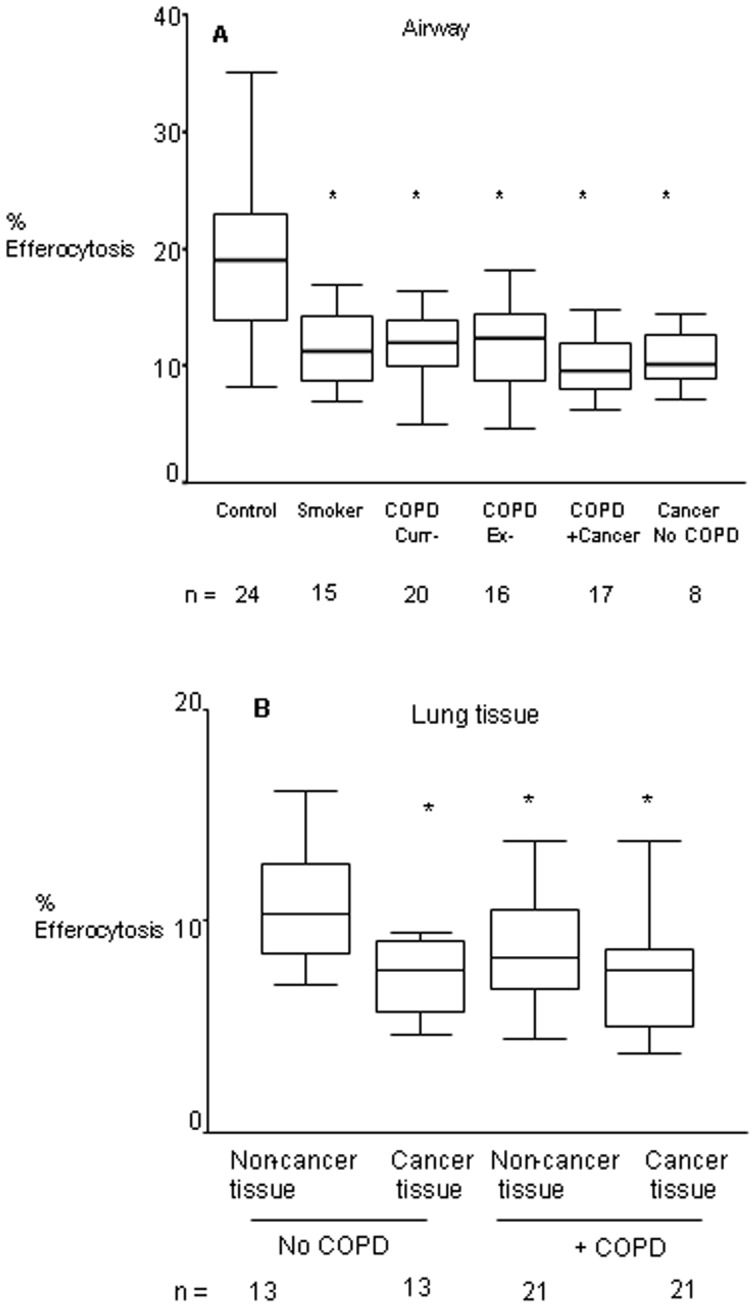
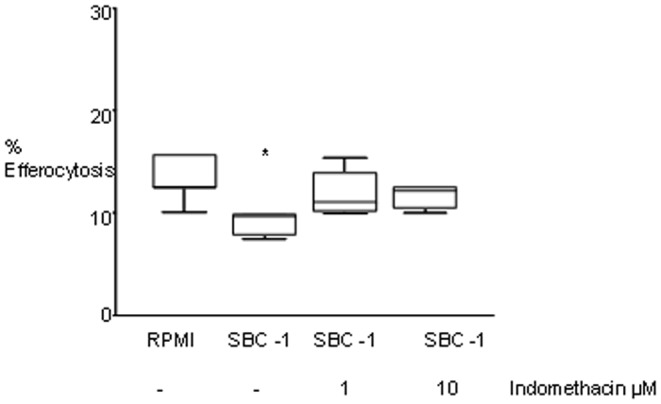
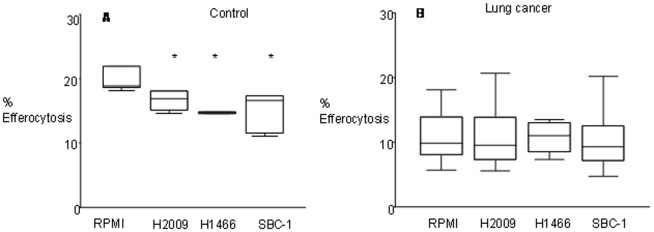
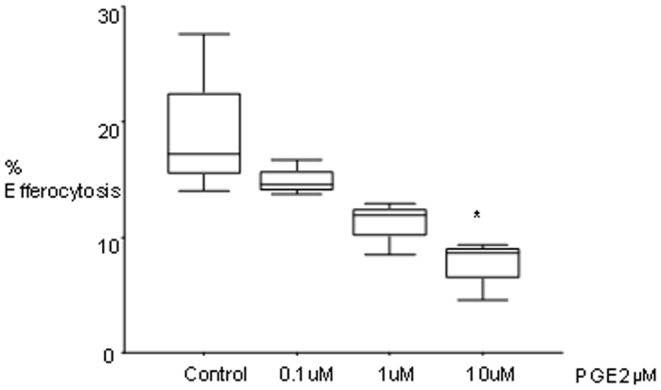
In chronic obstructive pulmonary disease (COPD/emphysema) we have shown a reduced ability of lung and alveolar (AM) macrophages to phagocytose apoptotic cells (defective 'efferocytosis'), associated with evidence of secondary cellular necrosis and a resultant inflammatory response in the airway. It is unknown whether this defect is present in cancer (no COPD) and if so, whether this results from soluble mediators produced by cancer cells. We investigated efferocytosis in AM (26 controls, 15 healthy smokers, 37 COPD, 20 COPD+ non small cell lung cancer (NSCLC) and 8 patients with NSCLC without COPD) and tumor and tumor-free lung tissue macrophages (21 NSCLC with/13 without COPD). To investigate the effects of soluble mediators produced by lung cancer cells we then treated AM or U937 macrophages with cancer cell line supernatant and assessed their efferocytosis ability. We qualitatively identified Arachidonic Acid (AA) metabolites in cancer cells by LC-ESI-MSMS, and assessed the effects of COX inhibition (using indomethacin) on efferocytosis. Decreased efferocytosis was noted in all cancer/COPD groups in all compartments. Conditioned media from cancer cell cultures decreased the efferocytosis ability of both AM and U937 macrophages with the most pronounced effects occurring with supernatant from SCLC (an aggressive lung cancer type). AA metabolites identified in cancer cells included PGE2. The inhibitory effect of PGE2 on efferocytosis, and the involvement of the COX-2 pathway were shown. Efferocytosis is decreased in COPD/emphysema and lung cancer; the latter at least partially a result of inhibition by soluble mediators produced by cancer cells that include PGE2.
在慢性阻塞性肺疾病(COPD/肺气肿)中,我们已经发现肺和肺泡(AM)巨噬细胞吞噬凋亡细胞的能力降低(“吞噬作用缺陷”),这与细胞继发性坏死的证据以及气道中的炎症反应有关。目前尚不清楚这种缺陷是否存在于癌症(无 COPD)中,如果存在,是否是由癌细胞产生的可溶性介质引起的。我们研究了 AM(26 名对照、15 名健康吸烟者、37 名 COPD、20 名 COPD+非小细胞肺癌(NSCLC)和 8 名无 COPD 的 NSCLC 患者)和肿瘤及肿瘤周围肺组织巨噬细胞(21 名 NSCLC 合并/13 名不合并 COPD)中的吞噬作用。为了研究由肺癌细胞产生的可溶性介质的影响,我们用癌细胞系上清液处理 AM 或 U937 巨噬细胞,并评估其吞噬作用能力。我们通过 LC-ESI-MSMS 定性鉴定了癌细胞中的花生四烯酸(AA)代谢物,并评估了 COX 抑制(使用吲哚美辛)对吞噬作用的影响。所有癌症/COPD 组在所有部位的吞噬作用均降低。癌细胞培养物的条件培养基降低了 AM 和 U937 巨噬细胞的吞噬作用能力,其中小细胞肺癌(一种侵袭性肺癌类型)的上清液效果最为明显。在癌细胞中鉴定出的 AA 代谢物包括 PGE2。显示了 PGE2 对吞噬作用的抑制作用以及 COX-2 途径的参与。COPD/肺气肿和肺癌中的吞噬作用降低;后者至少部分是由癌细胞产生的可溶性介质抑制引起的,其中包括 PGE2。