• 文献检索
  • 文档翻译
  • 深度研究
  • 学术资讯
  • Suppr Zotero 插件Zotero 插件
  • 邀请有礼
  • 套餐&价格
  • 历史记录
应用&插件
Suppr Zotero 插件Zotero 插件浏览器插件Mac 客户端Windows 客户端微信小程序
定价
高级版会员购买积分包购买API积分包
服务
文献检索文档翻译深度研究API 文档MCP 服务
关于我们
关于 Suppr公司介绍联系我们用户协议隐私条款
关注我们

Suppr 超能文献

核心技术专利:CN118964589B侵权必究
粤ICP备2023148730 号-1Suppr @ 2026

文献检索

告别复杂PubMed语法,用中文像聊天一样搜索,搜遍4000万医学文献。AI智能推荐,让科研检索更轻松。

立即免费搜索

文件翻译

保留排版,准确专业,支持PDF/Word/PPT等文件格式,支持 12+语言互译。

免费翻译文档

深度研究

AI帮你快速写综述,25分钟生成高质量综述,智能提取关键信息,辅助科研写作。

立即免费体验

牙齿磨损的进化悖论:单纯的破坏还是必然的适应?

The evolutionary paradox of tooth wear: simply destruction or inevitable adaptation?

机构信息

Department of Human Evolution, Max Planck Institute for Evolutionary Anthropology, Leipzig, Germany.

出版信息

PLoS One. 2013 Apr 24;8(4):e62263. doi: 10.1371/journal.pone.0062263. Print 2013.

DOI:10.1371/journal.pone.0062263
PMID:23638020
原文链接:https://pmc.ncbi.nlm.nih.gov/articles/PMC3634733/
Abstract

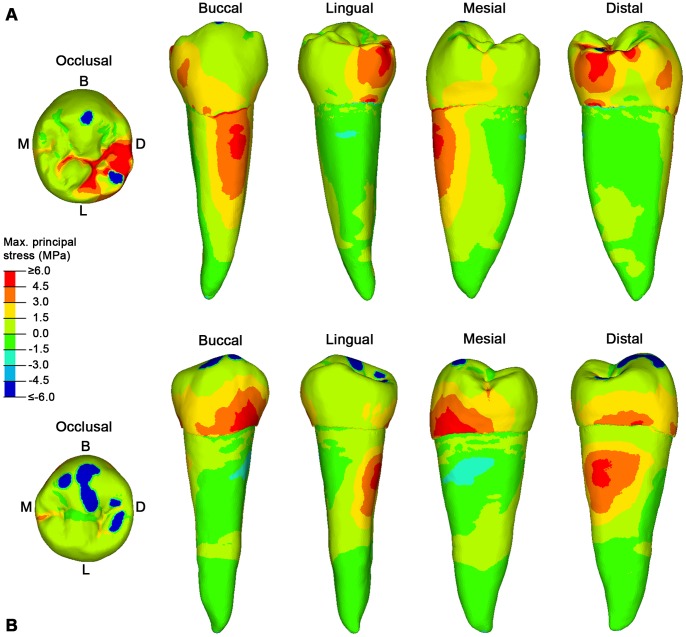
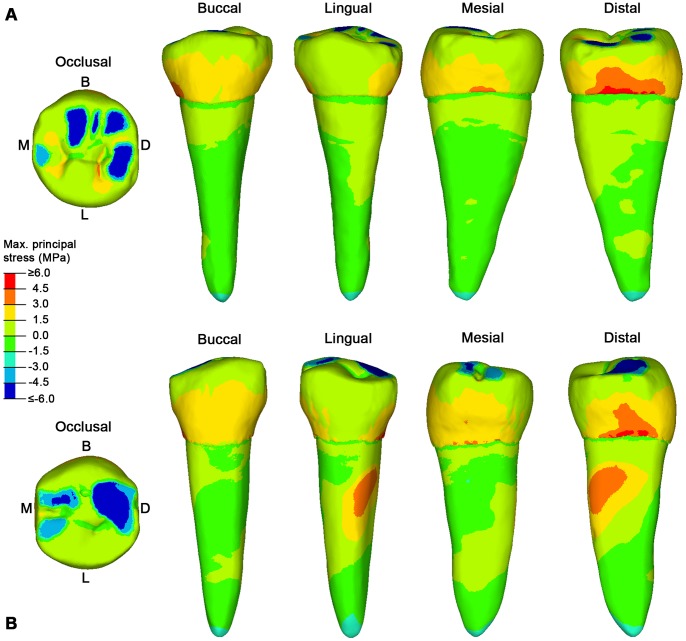
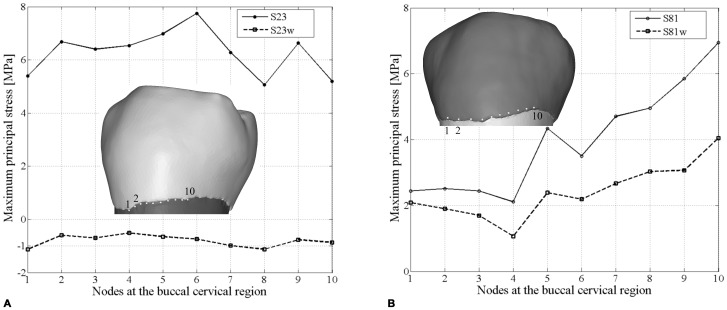
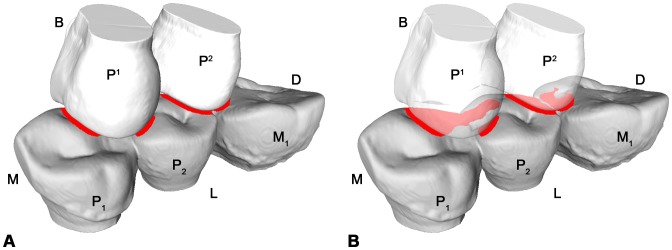
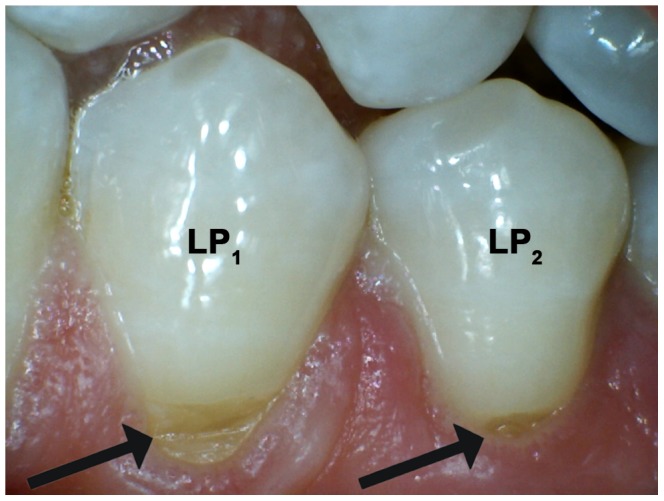
Over the last century, humans from industrialized societies have witnessed a radical increase in some dental diseases. A severe problem concerns the loss of dental materials (enamel and dentine) at the buccal cervical region of the tooth. This "modern-day" pathology, called non-carious cervical lesions (NCCLs), is ubiquitous and worldwide spread, but is very sporadic in modern humans from pre-industrialized societies. Scholars believe that several factors are involved, but the real dynamics behind this pathology are far from being understood. Here we use an engineering approach, finite element analysis (FEA), to suggest that the lack of dental wear, characteristic of industrialized societies, might be a major factor leading to NCCLs. Occlusal loads were applied to high resolution finite element models of lower second premolars (P2) to demonstrate that slightly worn P2s envisage high tensile stresses in the buccal cervical region, but when worn down artificially in the laboratory the pattern of stress distribution changes and the tensile stresses decrease, matching the results obtained in naturally worn P2s. In the modern industrialized world, individuals at advanced ages show very moderate dental wear when compared to past societies, and teeth are exposed to high tensile stresses at the buccal cervical region for decades longer. This is the most likely mechanism explaining enamel loss in the cervical region, and may favor the activity of other disruptive processes such as biocorrosion. Because of the lack of dental abrasion, our masticatory apparatus faces new challenges that can only be understood in an evolutionary perspective.

摘要

在上个世纪,工业化社会的人类见证了一些口腔疾病的急剧增加。一个严重的问题涉及到牙齿颊颈区域的牙体硬组织(牙釉质和牙本质)的丧失。这种“现代”病理学,称为非龋性颈病变(NCCLs),是普遍存在且全球性分布的,但在工业化前社会的现代人中非常罕见。学者们认为有几个因素与此相关,但这种病理学背后的真正动态还远未被理解。在这里,我们使用工程方法,有限元分析(FEA),来表明工业化社会中缺乏牙齿磨损可能是导致 NCCLs 的一个主要因素。我们将咬合负荷施加到下颌第二前磨牙(P2)的高分辨率有限元模型上,以证明稍微磨损的 P2 会在颊颈区域产生高拉伸应力,但当在实验室中人为地磨损时,应力分布的模式会发生变化,拉伸应力会降低,与在自然磨损的 P2 中获得的结果相匹配。在现代工业化世界中,与过去的社会相比,高龄个体的牙齿磨损程度非常适中,而牙齿在颊颈区域要承受数十年的高强度拉伸应力。这是解释牙颈部釉质丧失的最可能机制,并且可能有利于其他破坏性过程(如生物腐蚀)的活动。由于缺乏牙齿磨损,我们的咀嚼器官面临着新的挑战,只有从进化的角度才能理解这些挑战。
https://cdn.ncbi.nlm.nih.gov/pmc/blobs/4daf/3634733/3e3a7bd8c547/pone.0062263.g008.jpg
https://cdn.ncbi.nlm.nih.gov/pmc/blobs/4daf/3634733/1498a84cd592/pone.0062263.g001.jpg
https://cdn.ncbi.nlm.nih.gov/pmc/blobs/4daf/3634733/26d58e59667b/pone.0062263.g002.jpg
https://cdn.ncbi.nlm.nih.gov/pmc/blobs/4daf/3634733/9479e85ae784/pone.0062263.g003.jpg
https://cdn.ncbi.nlm.nih.gov/pmc/blobs/4daf/3634733/824a55b08689/pone.0062263.g004.jpg
https://cdn.ncbi.nlm.nih.gov/pmc/blobs/4daf/3634733/41d476574343/pone.0062263.g005.jpg
https://cdn.ncbi.nlm.nih.gov/pmc/blobs/4daf/3634733/434f6307bb41/pone.0062263.g006.jpg
https://cdn.ncbi.nlm.nih.gov/pmc/blobs/4daf/3634733/79c2741d74ef/pone.0062263.g007.jpg
https://cdn.ncbi.nlm.nih.gov/pmc/blobs/4daf/3634733/3e3a7bd8c547/pone.0062263.g008.jpg
https://cdn.ncbi.nlm.nih.gov/pmc/blobs/4daf/3634733/1498a84cd592/pone.0062263.g001.jpg
https://cdn.ncbi.nlm.nih.gov/pmc/blobs/4daf/3634733/26d58e59667b/pone.0062263.g002.jpg
https://cdn.ncbi.nlm.nih.gov/pmc/blobs/4daf/3634733/9479e85ae784/pone.0062263.g003.jpg
https://cdn.ncbi.nlm.nih.gov/pmc/blobs/4daf/3634733/824a55b08689/pone.0062263.g004.jpg
https://cdn.ncbi.nlm.nih.gov/pmc/blobs/4daf/3634733/41d476574343/pone.0062263.g005.jpg
https://cdn.ncbi.nlm.nih.gov/pmc/blobs/4daf/3634733/434f6307bb41/pone.0062263.g006.jpg
https://cdn.ncbi.nlm.nih.gov/pmc/blobs/4daf/3634733/79c2741d74ef/pone.0062263.g007.jpg
https://cdn.ncbi.nlm.nih.gov/pmc/blobs/4daf/3634733/3e3a7bd8c547/pone.0062263.g008.jpg

相似文献

1
The evolutionary paradox of tooth wear: simply destruction or inevitable adaptation?牙齿磨损的进化悖论:单纯的破坏还是必然的适应?
PLoS One. 2013 Apr 24;8(4):e62263. doi: 10.1371/journal.pone.0062263. Print 2013.
2
Unravelling the functional biomechanics of dental features and tooth wear.揭示牙齿特征和磨损的功能生物力学。
PLoS One. 2013 Jul 23;8(7):e69990. doi: 10.1371/journal.pone.0069990. Print 2013.
3
Finite element analysis of mechanism of cervical lesion formation in simulated molars during mastication and parafunction.模拟磨牙咀嚼及偏侧咀嚼过程中颈部病变形成机制的有限元分析
J Prosthet Dent. 2005 Dec;94(6):520-9. doi: 10.1016/j.prosdent.2005.10.001.
4
Comparison of pattern of failure of resin composite restorations in non-carious cervical lesions with and without occlusal wear facets.有和无咬合磨损小平面的非龋性颈部病变中树脂复合材料修复体的失败模式比较。
J Dent. 2014 Jul;42(7):824-30. doi: 10.1016/j.jdent.2014.04.003. Epub 2014 Apr 16.
5
Cervical wear and occlusal wear from a periodontal perspective.从牙周病学角度看牙颈部磨损和咬合面磨损。
J Oral Rehabil. 2011 Feb;38(2):95-100. doi: 10.1111/j.1365-2842.2010.02137.x.
6
Loading and composite restoration assessment of various non-carious cervical lesions morphologies - 3D finite element analysis.各种非龋性颈部病变形态的加载与复合树脂修复评估——三维有限元分析
Aust Dent J. 2015 Sep;60(3):309-16. doi: 10.1111/adj.12233.
7
Correlation of noncarious cervical lesion size and occlusal wear in a single adult over a 14-year time span.一名成年人在14年时间跨度内非龋性颈部病变大小与咬合磨损的相关性。
J Prosthet Dent. 2000 Oct;84(4):436-43. doi: 10.1067/mpr.2000.109477.
8
Strain patterns in cervical enamel of teeth subjected to occlusal loading.承受咬合负荷牙齿的颈部牙釉质应变模式。
Dent Mater. 2000 Nov;16(6):412-9. doi: 10.1016/s0109-5641(00)00036-1.
9
3D finite element model and cervical lesion formation in normal occlusion and in malocclusion.正常咬合和错颌中3D有限元模型与颈椎病变形成
J Oral Rehabil. 2005 Jul;32(7):504-10. doi: 10.1111/j.1365-2842.2005.01455.x.
10
Functional dental occlusion: an anthropological perspective and implications for practice.功能性牙合:一种人类学视角及其对实践的启示。
Aust Dent J. 2014 Jun;59 Suppl 1:162-73. doi: 10.1111/adj.12133. Epub 2014 Jan 21.

引用本文的文献

1
Adapting Clinical Tooth Wear Assessment Methods for Biological Anthropology Contexts.使临床牙齿磨损评估方法适用于生物人类学背景。
Am J Biol Anthropol. 2025 Jun;187(2):e70080. doi: 10.1002/ajpa.70080.
2
Comparative Evaluation of Microleakage in Class V Cavities Restored with Newer Bioactive Restorative Materials: Activa Bioactive Restorative and Activa Pronto.新型生物活性修复材料修复Ⅴ类洞微渗漏的比较评估:Activa生物活性修复材料与Activa Pronto
Int J Clin Pediatr Dent. 2024 Nov;17(11):1272-1276. doi: 10.5005/jp-journals-10005-2958. Epub 2024 Dec 19.
3
Assessing tooth wear progression in non-human primates: a longitudinal study using intraoral scanning technology.

本文引用的文献

1
Dental arch restoration using tooth macrowear patterns with application to Rudapithecus hungaricus, from the late Miocene of Rudabánya, Hungary.利用牙齿宏观磨痕模式对匈牙利鲁达班雅尼晚中新世的 Rudapithecus hungaricus 进行牙弓修复。
J Hum Evol. 2013 Feb;64(2):151-60. doi: 10.1016/j.jhevol.2012.10.009. Epub 2013 Jan 24.
2
Individual tooth macrowear pattern guides the reconstruction of Sts 52 (Australopithecus africanus) dental arches.个体牙齿宏观磨耗模式指导 Sts 52(南方古猿非洲种)牙弓的重建。
Am J Phys Anthropol. 2013 Feb;150(2):324-9. doi: 10.1002/ajpa.22225. Epub 2013 Jan 7.
3
A cross-sectional study: non-carious cervical lesions, cervical dentine hypersensitivity and related risk factors.
评估非人类灵长类动物的牙齿磨损进展:使用口腔内扫描技术的纵向研究。
PeerJ. 2024 Jul 9;12:e17614. doi: 10.7717/peerj.17614. eCollection 2024.
4
The biomechanics of tooth strength: testing the utility of simple models for predicting fracture in geometrically complex teeth.牙齿强度的生物力学:测试简单模型在预测几何复杂牙齿骨折中的效用。
J R Soc Interface. 2023 Jun;20(203):20230195. doi: 10.1098/rsif.2023.0195. Epub 2023 Jun 28.
5
Secondary Dentin Formation Mechanism: The Effect of Attrition.继发性牙本质形成机制:磨损的影响。
Int J Environ Res Public Health. 2021 Sep 22;18(19):9961. doi: 10.3390/ijerph18199961.
6
Tooth wear development in the Australian Aboriginal dentition from Yuendumu: A longitudinal study.澳大利亚原住民牙列中牙磨损的发展:一项纵向研究。
PLoS One. 2021 Jul 9;16(7):e0254151. doi: 10.1371/journal.pone.0254151. eCollection 2021.
7
Is Continuous Eruption Related to Periodontal Changes? A 16-Year Follow-up.连续喷发与牙周变化有关吗?一项长达 16 年的随访研究。
J Dent Res. 2021 Jul;100(8):875-882. doi: 10.1177/0022034521999363. Epub 2021 Mar 3.
8
The physiological linkage between molar inclination and dental macrowear pattern.磨牙倾斜度与牙齿宏观磨损模式之间的生理联系。
Am J Phys Anthropol. 2018 Aug;166(4):941-951. doi: 10.1002/ajpa.23476. Epub 2018 Apr 6.
9
3D enamel thickness in Neandertal and modern human permanent canines.尼安德特人和现代人类恒牙犬齿的三维牙釉质厚度
J Hum Evol. 2017 Dec;113:162-172. doi: 10.1016/j.jhevol.2017.08.009. Epub 2017 Sep 21.
10
Dynamic Modelling of Tooth Deformation Using Occlusal Kinematics and Finite Element Analysis.利用咬合运动学和有限元分析对牙齿变形进行动态建模
PLoS One. 2016 Mar 31;11(3):e0152663. doi: 10.1371/journal.pone.0152663. eCollection 2016.
一项横断面研究:非龋性颈部缺损、牙颈部牙本质敏感及其相关危险因素。
J Oral Rehabil. 2013 Jan;40(1):24-32. doi: 10.1111/j.1365-2842.2012.02342.x. Epub 2012 Aug 7.
4
Non-carious cervical lesions and occlusion: a systematic review of clinical studies.非龋性颈病损与咬合:临床研究的系统综述。
J Oral Rehabil. 2012 Jun;39(6):450-62. doi: 10.1111/j.1365-2842.2012.02290.x. Epub 2012 Mar 21.
5
An experimental approach to evaluate the correspondence between wear facet position and occlusal movements.评估磨损面位置与咬合运动之间一致性的实验方法。
Anat Rec (Hoboken). 2012 May;295(5):846-52. doi: 10.1002/ar.22440. Epub 2012 Mar 15.
6
Abfraction, abrasion, biocorrosion, and the enigma of noncarious cervical lesions: a 20-year perspective.微裂、磨损、生物腐蚀以及非龋性颈领病变之谜:20 年的视角。
J Esthet Restor Dent. 2012 Feb;24(1):10-23. doi: 10.1111/j.1708-8240.2011.00487.x. Epub 2011 Nov 17.
7
A review of root fractures: diagnosis, treatment and prognosis.根折的综述:诊断、治疗与预后
Dent Update. 2011 Nov;38(9):615-6, 619-20, 623-4 passim. doi: 10.12968/denu.2011.38.9.615.
8
Restoration of noncarious cervical lesions: when, why, and how.非龋性颈部病变的修复:时机、原因及方法
Int J Dent. 2012;2012:687058. doi: 10.1155/2012/687058. Epub 2011 Dec 18.
9
Brief communication: comparing loading scenarios in lower first molar supporting bone structure using 3D finite element analysis.短篇交流:使用三维有限元分析比较下颌第一磨牙支持骨结构的加载情况。
Am J Phys Anthropol. 2012 Jan;147(1):128-34. doi: 10.1002/ajpa.21607. Epub 2011 Sep 27.
10
Using occlusal wear information and finite element analysis to investigate stress distributions in human molars.利用咬合磨损信息和有限元分析研究人磨牙的应力分布。
J Anat. 2011 Sep;219(3):259-72. doi: 10.1111/j.1469-7580.2011.01396.x. Epub 2011 May 25.