Division of Transplant Surgery and Transplant Surgery Research Laboratory, Brigham and Women's Hospital, Harvard Medical School, Boston, MA, USA.
Transplant Rev (Orlando). 2013 Jul;27(3):65-75. doi: 10.1016/j.trre.2013.03.001. Epub 2013 Apr 30.
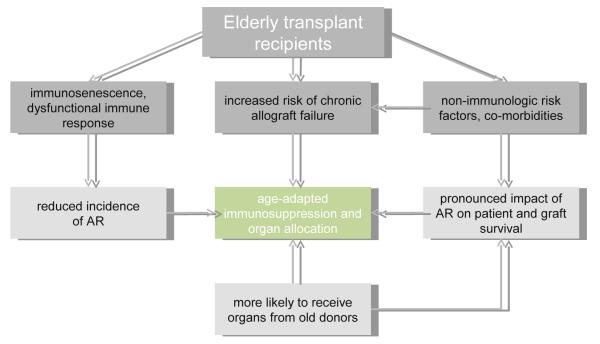
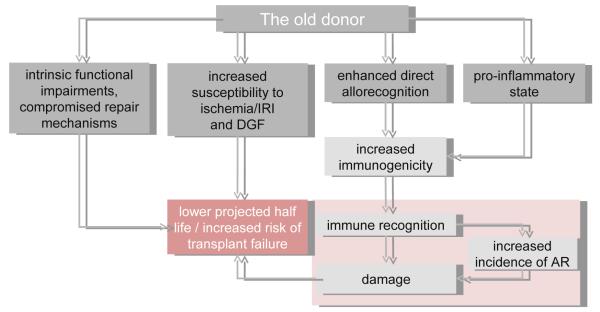
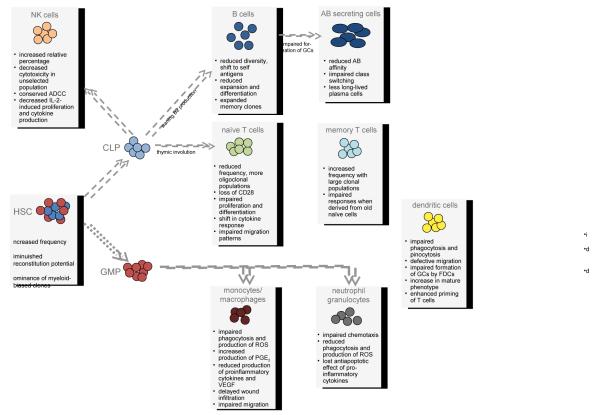
Increasing numbers of elderly transplant recipients and a growing demand for organs from older donors impose pressing challenges on transplantation medicine. Continuous and complex modifications of the immune system in parallel to aging have a major impact on transplant outcome and organ quality. Both, altered alloimmune responses and increased immunogenicity of organs present risk factors for inferior patient and graft survival. Moreover, a growing body of knowledge on age-dependent modifications of allorecognition and alloimmune responses may require age-adapted immunosuppression and organ allocation. Here, we summarize relevant aspects of immunosenescence and their possible clinical impact on organ transplantation.
越来越多的老年移植受者和对老年供体器官的需求增长,给移植医学带来了紧迫的挑战。免疫系统在衰老过程中的持续和复杂改变对移植结果和器官质量有重大影响。改变的同种异体免疫反应和器官的免疫原性增加都是导致患者和移植物存活率降低的危险因素。此外,关于年龄相关的同种异体识别和同种免疫反应改变的大量知识可能需要适应年龄的免疫抑制和器官分配。在这里,我们总结了免疫衰老的相关方面及其对器官移植的可能临床影响。