Department of Physiology, Hebei Medical University, Shijiazhuang, China.
PLoS One. 2013 May 7;8(5):e63386. doi: 10.1371/journal.pone.0063386. Print 2013.
Anandamide, one of the endocannabinoids, has been reported to exhibit cardioprotective properties, particularly in its ability to limit the damage produced by ischemia reperfusion injury. However, the mechanisms underlying the effect are not well known. This study is to investigate whether anandamide alter Na(+)/Ca(2+) exchanger and the intracellular free Ca(2+) concentration ([Ca(2+)]i).
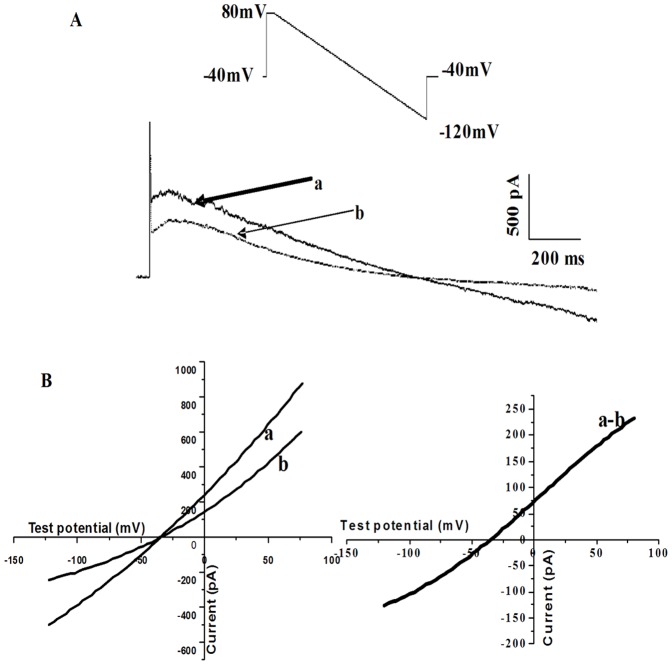
Na(+)/Ca(2+) exchanger current (I(NCX)) was recorded and analysed by using whole-cell patch-clamp technique and [Ca(2+)]i was measured by loading myocytes with the fluorescent Ca(2+) indicator Fura-2/AM.
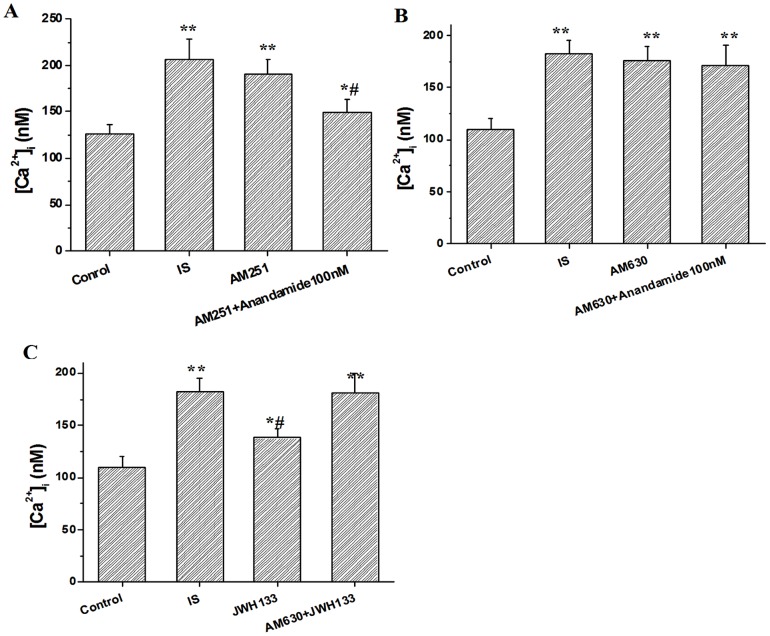
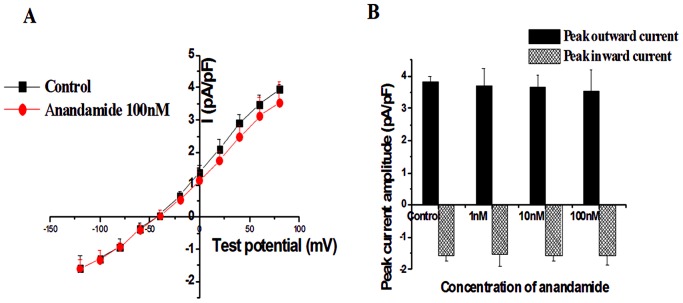
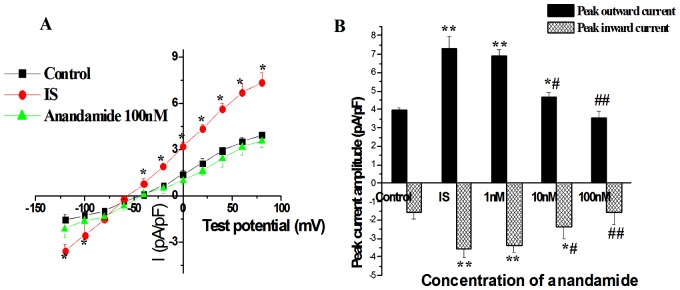
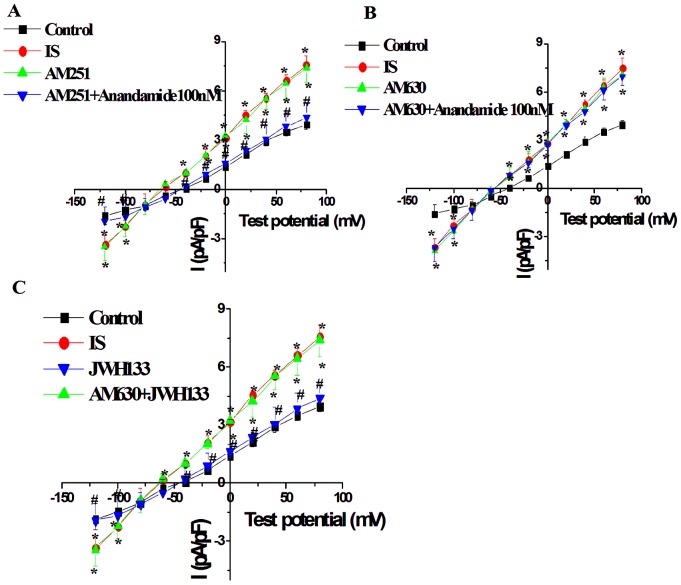
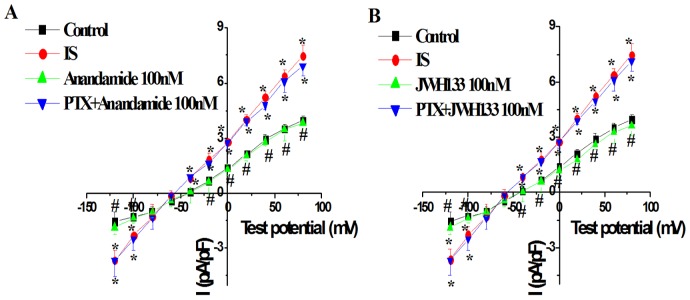
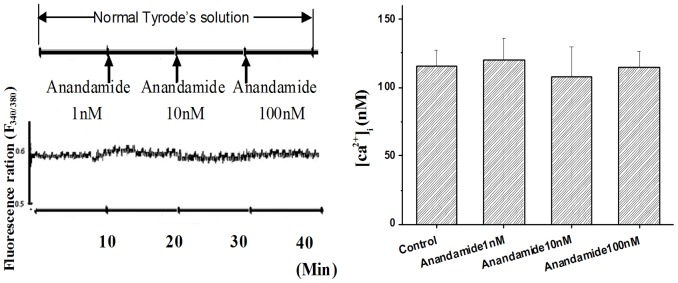
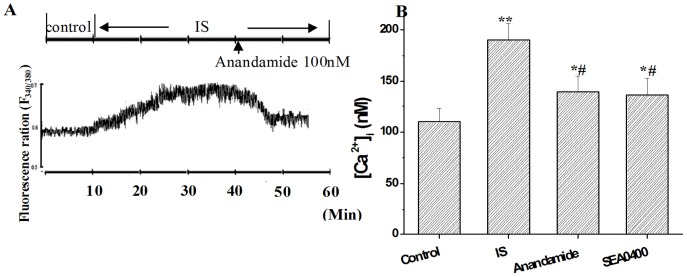
We found that I(NCX) was enhanced significantly after perfusion with simulated ischemic external solution; [Ca(2+)]i was also significantly increased by simulated ischemic solution. The reversal potential of I(NCX) was shifted to negative potentials in simulated ischemic external solution. Anandamide (1-100 nM) failed to affect I(NCX) and [Ca(2+)]i in normal solution. However, anandamide (1-100 nM) suppressed the increase in INCX in simulated ischemic external solution concentration-dependently and normalized INCX reversal potential. Furthermore, anandamide (100 nM) significantly attenuated the increase in [Ca(2+)]i in simulated ischemic solution. Blocking CB1 receptors with the specific antagonist AM251 (500 nM) failed to affect the effects of anandamide on I(NCX) and [Ca(2+)]i in simulated ischemic solution. CB2 receptor antagonist AM630 (100 nM) eliminated the effects of anandamide on I(NCX) and [Ca(2+)]i in simulated ischemic solution, and CB2 receptor agonist JWH133 (100 nM) simulated the effects of anandamide that suppressed the increase in I(NCX) and [Ca(2+)]i in simulated ischemic solution. In addition, pretreatment with the Gi/o-specific inhibitor pertussis toxin (PTX, 500 ng/ml) eliminated the effects of anandamide and JWH133 on I(NCX) in simulated ischemic solution.
Collectively, these findings suggest that anandamide suppresses calcium overload through inhibition of I(NCX) during perfusion with simulated ischemic solution; the effects may be mediated by CB2 receptor via PTX-sensitive Gi/o proteins. This mechanism is importantly involved in the anti-ischemia injury caused by endocannabinoids.
内源性大麻素之一的花生四烯酸乙醇胺(anandamide)具有心脏保护作用,特别是在限制缺血再灌注损伤所产生的损伤方面。然而,其作用机制尚不清楚。本研究旨在探讨花生四烯酸乙醇胺是否会改变钠钙交换体(Na(+)/Ca(2+) exchanger)和细胞内游离钙浓度([Ca(2+)]i)。
采用全细胞膜片钳技术记录钠钙交换体电流(I(NCX))并进行分析,并用荧光钙离子指示剂 Fura-2/AM 测量[Ca(2+)]i。
我们发现,用模拟缺血性细胞外液灌流后,I(NCX)显著增强;[Ca(2+)]i也明显增加。模拟缺血性细胞外液中,I(NCX)的反转电位向负电位移动。1-100 nM 的花生四烯酸乙醇胺在正常溶液中不能影响 I(NCX)和[Ca(2+)]i。然而,1-100 nM 的花生四烯酸乙醇胺浓度依赖性地抑制模拟缺血性细胞外液中 INCX 的增加,并使 INCX 反转电位正常化。此外,100 nM 的花生四烯酸乙醇胺显著减轻模拟缺血性溶液中[Ca(2+)]i 的增加。用特异性拮抗剂 AM251(500 nM)阻断 CB1 受体,不能影响花生四烯酸乙醇胺对模拟缺血性溶液中 I(NCX)和[Ca(2+)]i 的作用。CB2 受体拮抗剂 AM630(100 nM)消除了花生四烯酸乙醇胺对模拟缺血性溶液中 I(NCX)和[Ca(2+)]i 的作用,而 CB2 受体激动剂 JWH133(100 nM)模拟了抑制模拟缺血性溶液中 I(NCX)和[Ca(2+)]i 增加的花生四烯酸乙醇胺的作用。此外,用 Gi/o 特异性抑制剂百日咳毒素(PTX,500 ng/ml)预处理消除了花生四烯酸乙醇胺和 JWH133 对模拟缺血性溶液中 I(NCX)的作用。
综上所述,这些发现表明,花生四烯酸乙醇胺通过抑制模拟缺血性溶液灌流过程中的 I(NCX)来抑制钙超载;该作用可能通过 PTX 敏感的 Gi/o 蛋白介导的 CB2 受体来实现。这种机制与内源性大麻素引起的抗缺血性损伤有关。