Wellcome Trust/Cancer Research UK Gurdon Institute, Department of Physiology, Development and Neuroscience, University of Cambridge, Tennis Court Road, Cambridge CB2 1QN, UK.
EMBO Rep. 2013 Jul;14(7):629-37. doi: 10.1038/embor.2013.67. Epub 2013 May 14.
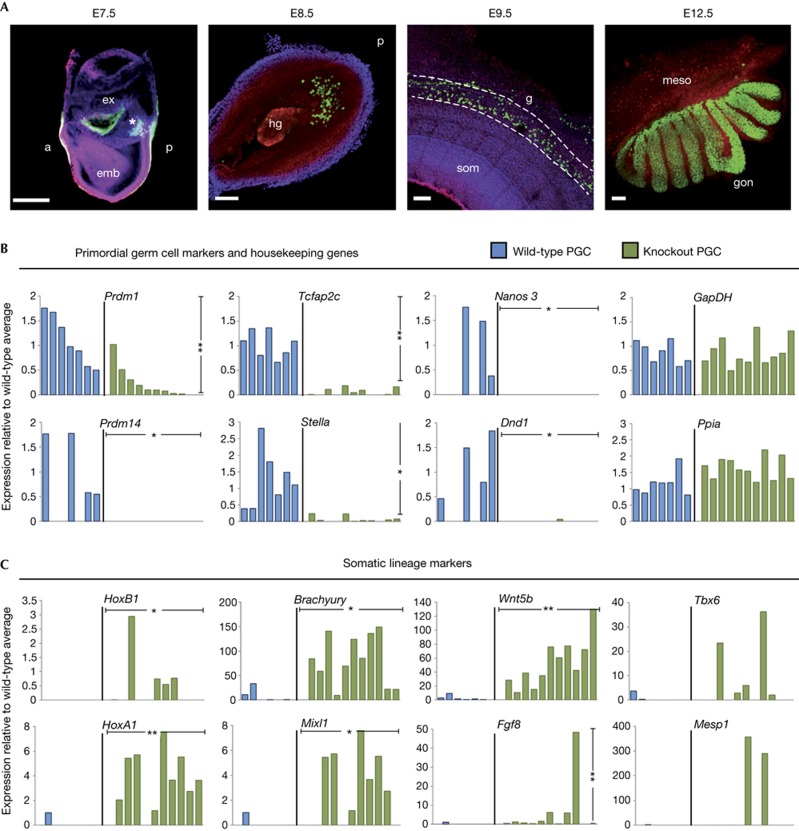
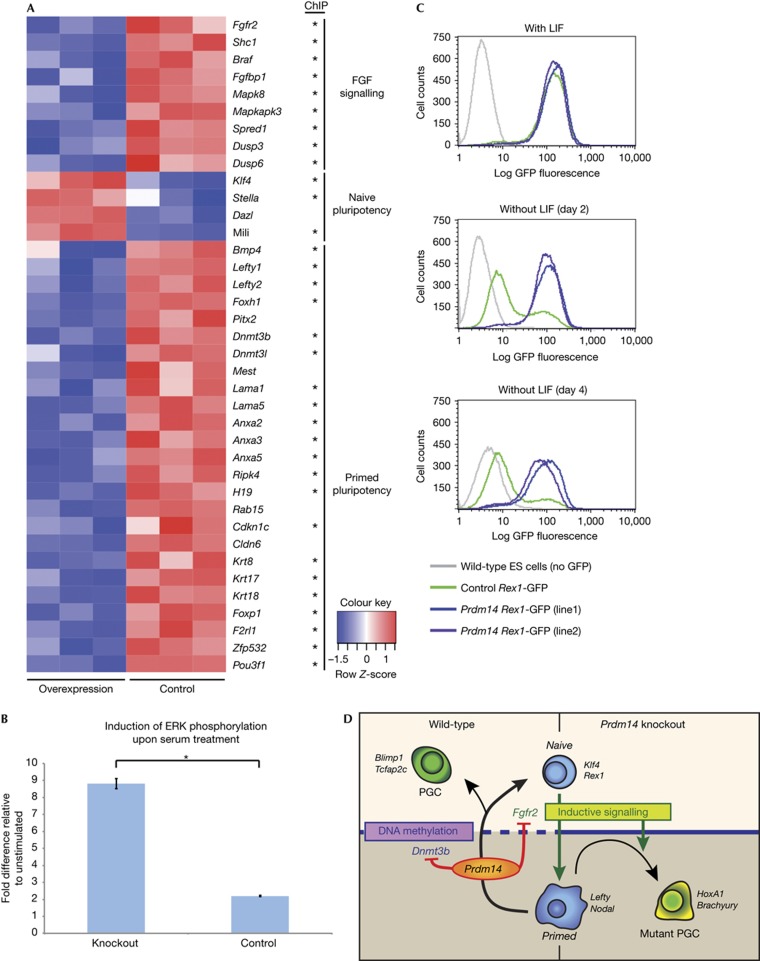
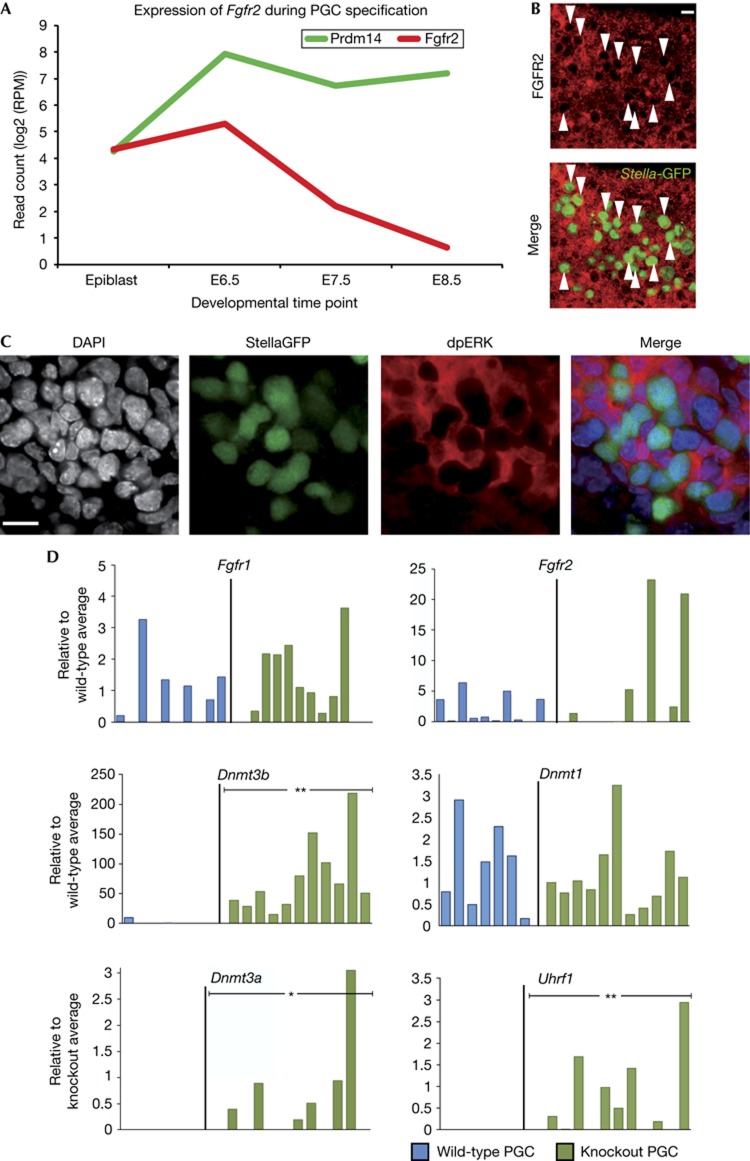
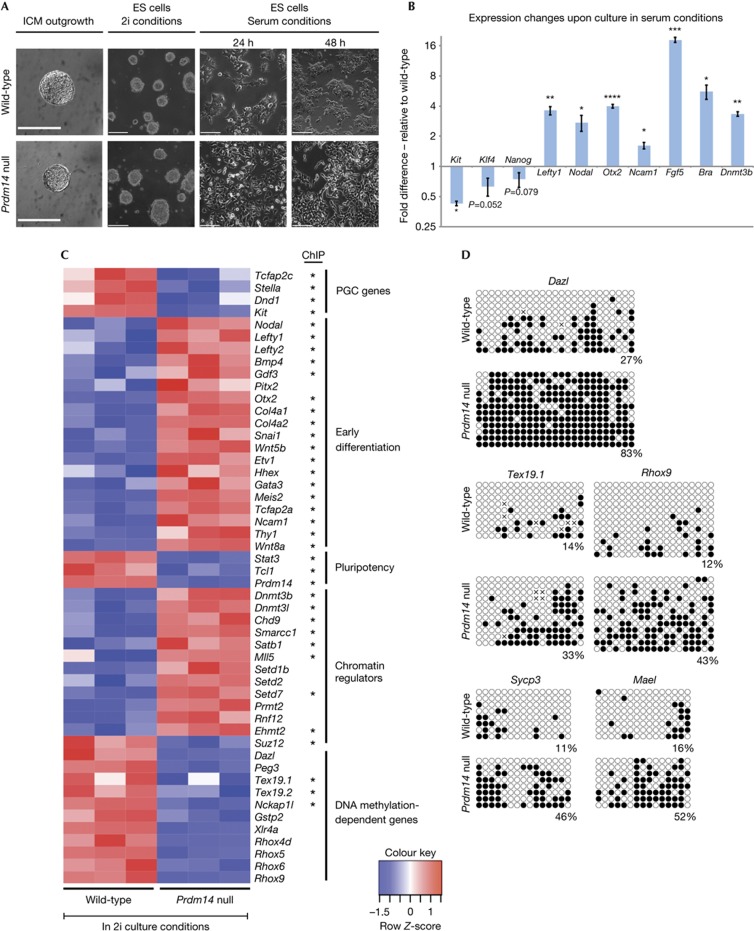
Primordial germ cells (PGCs) and somatic cells originate from postimplantation epiblast cells in mice. As pluripotency is lost upon differentiation of somatic lineages, a naive epigenome and the pluripotency network are re-established during PGC development. Here we demonstrate that Prdm14 contributes not only to PGC specification, but also to naive pluripotency in embryonic stem (ES) cells by repressing the DNA methylation machinery and fibroblast growth factor (FGF) signalling. This indicates a critical role for Prdm14 in programming PGCs and promoting pluripotency in ES cells.
原始生殖细胞(PGCs)和体细胞起源于小鼠的着床后胚外细胞。由于体细胞谱系的分化会丧失多能性,因此在 PGC 发育过程中会重新建立原始的表观基因组和多能性网络。在这里,我们证明 Prdm14 不仅有助于 PGC 的特化,而且通过抑制 DNA 甲基化机制和成纤维细胞生长因子(FGF)信号来维持胚胎干细胞(ES 细胞)中的原始多能性。这表明 Prdm14 在编程 PGC 和促进 ES 细胞多能性方面发挥着关键作用。