Department of Hematology and Oncology, Stavanger University Hospital, Stavanger, Norway.
PLoS One. 2013 May 3;8(5):e62153. doi: 10.1371/journal.pone.0062153. Print 2013.
Recent evidence suggests that microscopic lymph node metastases and circulating tumor cells may have clinical importance in lung cancer. The purpose of this study was to identify new molecular markers for tumor cells in regional lymph nodes (LNs) and peripheral blood (PB) from patients with non-small cell lung cancer (NSCLC).
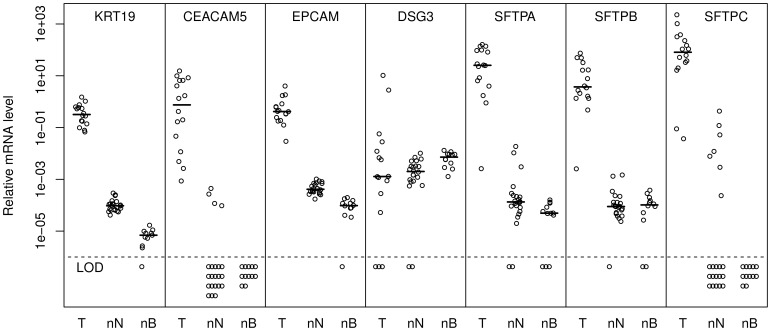
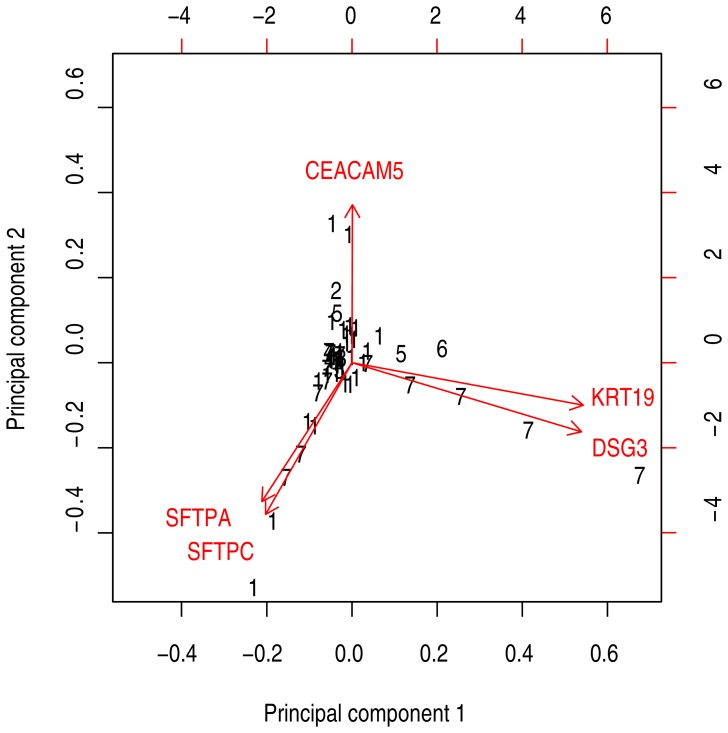
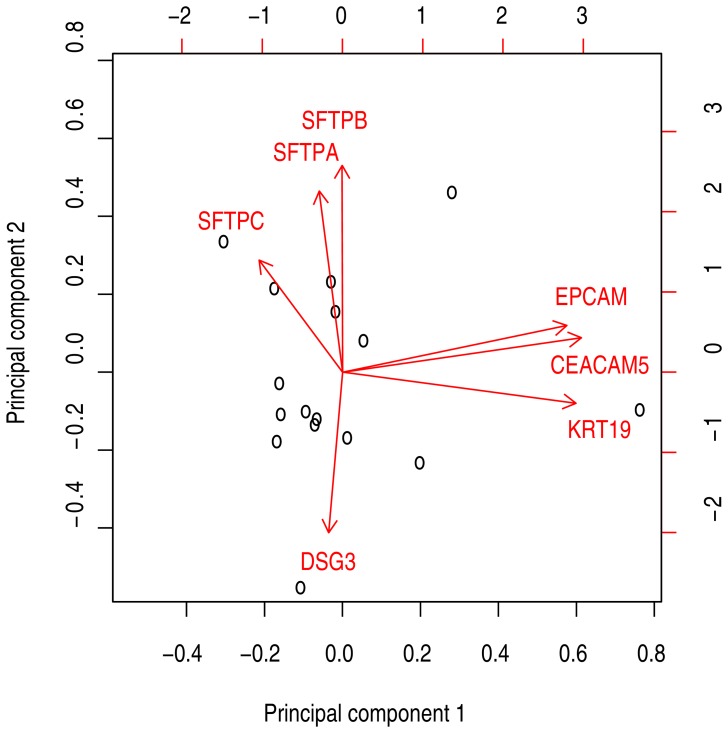
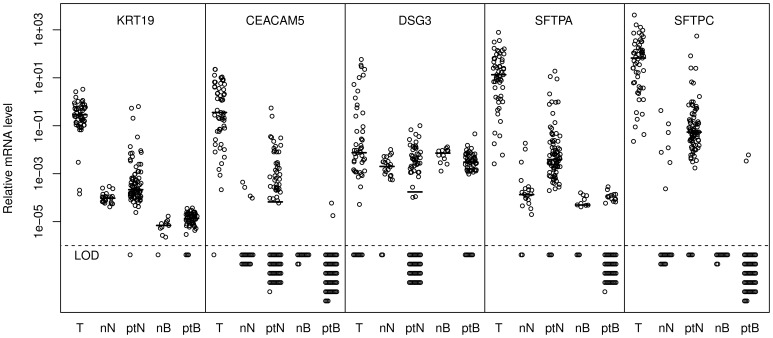
Candidate markers were selected based on digital transcript profiling and previous literature. KRT19, CEACAM5, EPCAM, DSG3, SFTPA, SFTPC and SFTPB mRNA levels were initially validated by real-time reverse transcription PCR-based quantification in 16 NSCLC tumors and 22 LNs and 12 PB samples from individuals without known cancer. Five of the candidate markers were selected for secondary validation by quantification in parallel tumor biopsies, regional LNs and PB samples from 55 patients undergoing surgery for NSCLC. LN and PB marker status were compared to clinicopathological patient data.
All selected markers except DSG3 were present at high levels in the primary tumors and at very low or non-detectable levels in normal LNs and PB in the first round of validation, indicating a potential for detecting tumor cells in NSCLC patients. The expression profiles of KRT19, CEACAM5, DSG3, SFTPA and SFTPC mRNA were confirmed in the larger group during the secondary validation. Using the highest normal LN level of each marker as threshold, 39 (71%) of the 55 patients had elevated levels of at least one marker in regional LNs. Similarly, 26 (47%) patients had elevated levels of at least one marker in PB. A significantly higher number of patients with adenocarcinomas had positive LN status for these markers, compared with other histological types (P = 0.004).
Several promising molecular tumor cell markers in regional LNs and PB were identified, including the new SFTPA and SFTPC mRNAs. Clinical follow-up in a larger cohort is needed to elucidate their prognostic value.
最近的证据表明,微小的淋巴结转移和循环肿瘤细胞在肺癌中可能具有临床意义。本研究的目的是鉴定非小细胞肺癌(NSCLC)患者区域淋巴结(LN)和外周血(PB)中肿瘤细胞的新分子标志物。
根据数字转录谱和先前的文献选择候选标志物。在 16 例 NSCLC 肿瘤和 22 例 LN 和 12 例无已知癌症个体的 PB 样本中,通过实时逆转录 PCR 定量初步验证了 KRT19、CEACAM5、EPCAM、DSG3、SFTPA、SFTPC 和 SFTPB mRNA 水平。选择 5 个候选标志物通过 55 例 NSCLC 手术患者的肿瘤活检、区域 LN 和 PB 样本的定量进行二级验证。比较 LN 和 PB 标志物状态与临床病理患者数据。
在第一轮验证中,除 DSG3 外,所有选定的标志物在原发肿瘤中均呈高表达,在正常 LN 和 PB 中表达水平极低或无法检测,表明在 NSCLC 患者中检测肿瘤细胞的潜力。在更大的组中,在第二轮验证中确认了 KRT19、CEACAM5、DSG3、SFTPA 和 SFTPC mRNA 的表达谱。使用每个标志物的最高正常 LN 水平作为阈值,55 例患者中有 39 例(71%)LN 存在至少一种标志物水平升高。同样,26 例(47%)患者的 PB 中存在至少一种标志物水平升高。与其他组织学类型相比,腺癌患者的 LN 标志物阳性状态明显更高(P=0.004)。
在区域 LN 和 PB 中鉴定了几种有前途的分子肿瘤细胞标志物,包括新的 SFTPA 和 SFTPC mRNAs。需要对更大的队列进行临床随访,以阐明它们的预后价值。