Department of Pathology, Brigham and Women's Hospital, Harvard Medical School, Boston, MA 02115, USA.
Clin Cancer Res. 2013 Jul 1;19(13):3462-73. doi: 10.1158/1078-0432.CCR-13-0855. Epub 2013 May 14.
Programmed cell death ligand 1 (PD-L1) is an immunomodulatory molecule expressed by antigen-presenting cells and select tumors that engages receptors on T cells to inhibit T-cell immunity. Immunotherapies targeting the PD-1/PD-L1 pathway have shown durable antitumor effects in a subset of patients with solid tumors. PD-L1 can be expressed by Reed-Sternberg cells comprising classical Hodgkin lymphoma (CHL) and by malignant B cells comprising EBV-positive posttransplant lymphoproliferative disorders (PTLD). We sought to determine whether the expression of PD-L1 represents a general strategy of immune evasion among aggressive B-cell lymphomas and virus- and immunodeficiency-associated tumors.
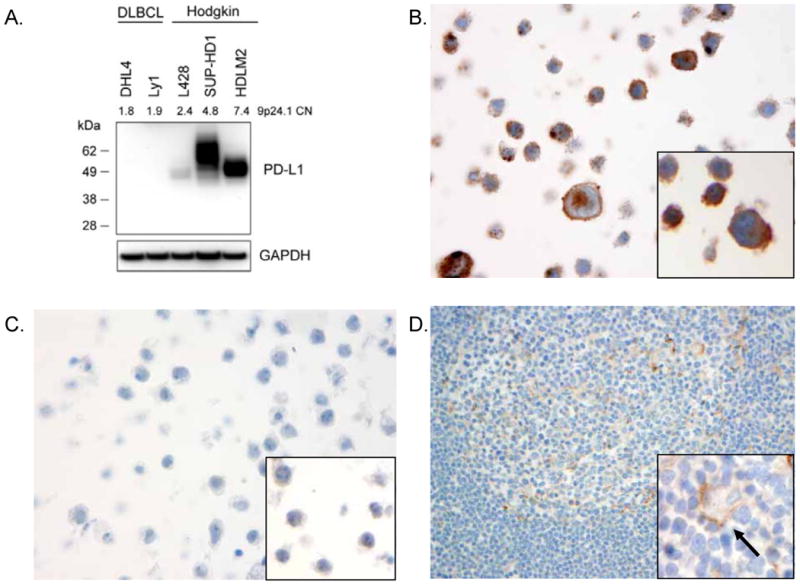
Using novel antibodies and formalin-fixed, paraffin-embedded (FFPE) tissue biopsies, we examined 237 primary tumors for expression of PD-L1.
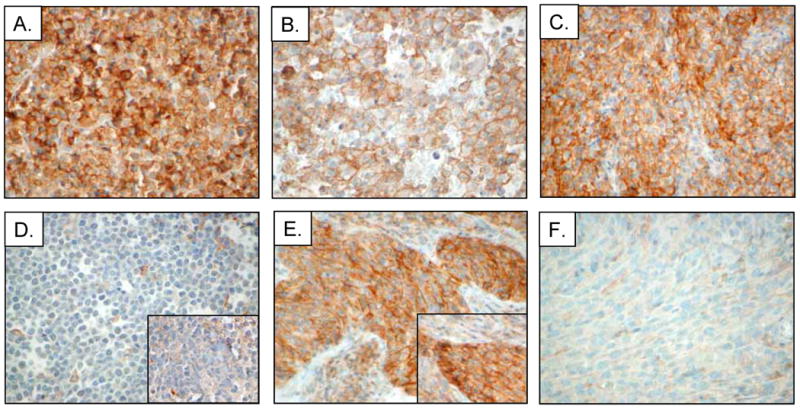
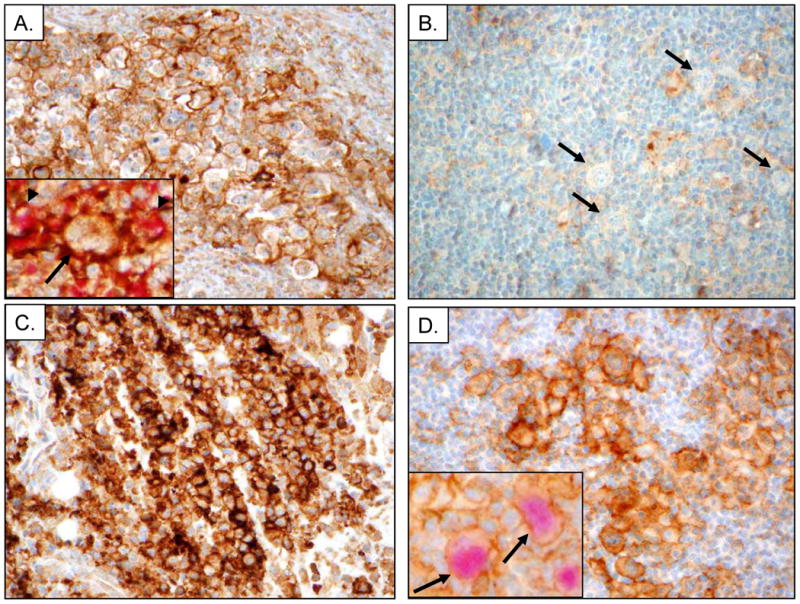
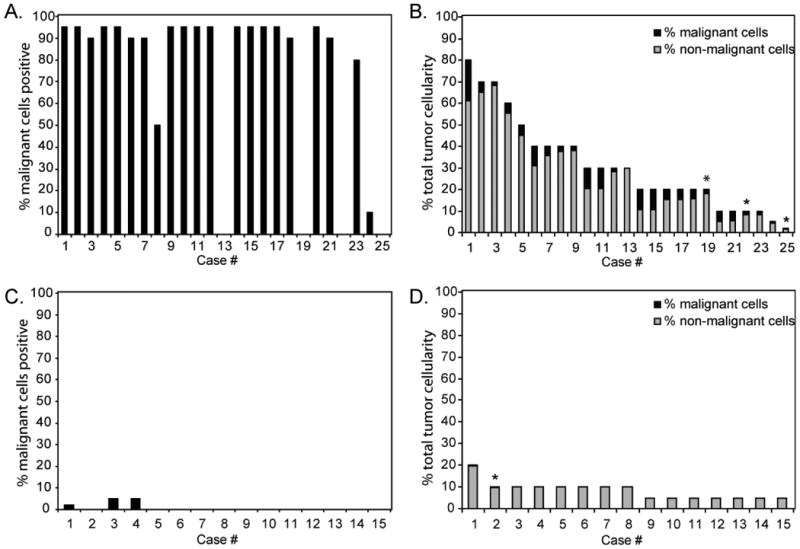
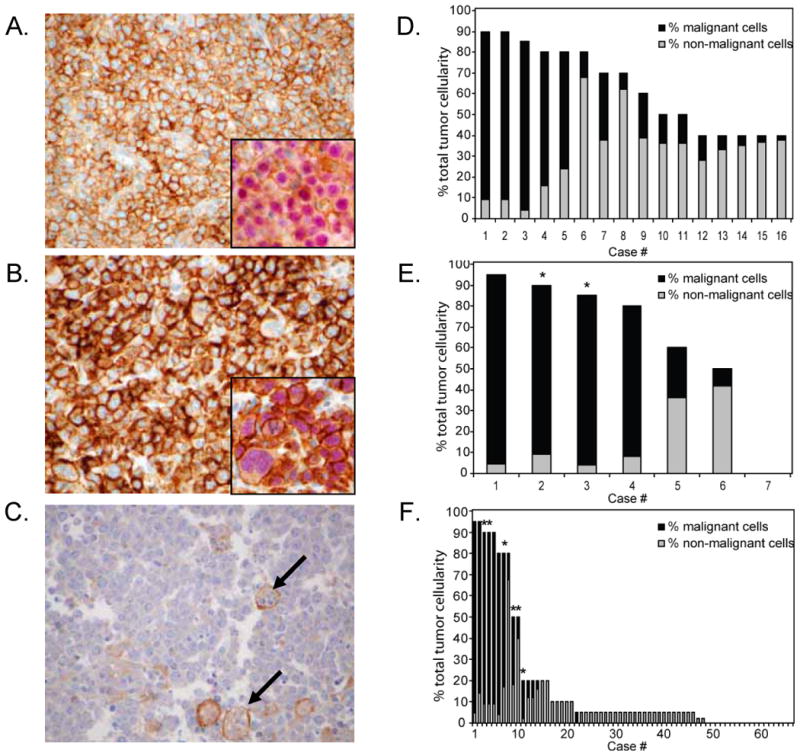
Robust PD-L1 protein expression was found in the majority of nodular sclerosis and mixed cellularity CHL, primary mediastinal large B-cell lymphoma, T-cell/histiocyte-rich B-cell lymphoma, EBV-positive and -negative PTLD, and EBV-associated diffuse large B-cell lymphoma (DLBCL), plasmablastic lymphoma, extranodal NK/T-cell lymphoma, nasopharyngeal carcinoma, and HHV8-associated primary effusion lymphoma. Within these tumors, PD-L1 was highly expressed by malignant cells and tumor-infiltrating macrophages. In contrast, neither the malignant nor the nonmalignant cells comprising nodular lymphocyte-predominant Hodgkin lymphoma, DLBCL-not otherwise specified, Burkitt lymphoma, and HHV8-associated Kaposi sarcoma expressed detectable PD-L1.
Certain aggressive B-cell lymphomas and virus- and immunodeficiency-associated malignancies associated with an ineffective T-cell immune response express PD-L1 on tumor cells and infiltrating macrophages. These results identify a group of neoplasms that should be considered for PD-1/PD-L1-directed therapies, and validate methods to detect PD-L1 in FFPE tissue biopsies.
程序性死亡配体 1(PD-L1)是一种免疫调节分子,由抗原呈递细胞和某些肿瘤表达,与 T 细胞上的受体结合,抑制 T 细胞免疫。针对 PD-1/PD-L1 通路的免疫疗法在一些实体瘤患者中显示出持久的抗肿瘤作用。PD-L1 可由经典霍奇金淋巴瘤(CHL)的 Reed-Sternberg 细胞和 EBV 阳性移植后淋巴组织增生性疾病(PTLD)的恶性 B 细胞表达。我们试图确定 PD-L1 的表达是否代表侵袭性 B 细胞淋巴瘤和病毒及免疫缺陷相关肿瘤中普遍的免疫逃避策略。
使用新型抗体和福尔马林固定、石蜡包埋(FFPE)组织活检,我们检查了 237 例原发性肿瘤的 PD-L1 表达情况。
大多数结节性硬化型和混合细胞型 CHL、原发性纵隔大 B 细胞淋巴瘤、T 细胞/组织细胞丰富型 B 细胞淋巴瘤、EBV 阳性和阴性 PTLD 以及 EBV 相关弥漫性大 B 细胞淋巴瘤(DLBCL)、浆母细胞淋巴瘤、结外 NK/T 细胞淋巴瘤、鼻咽癌和 HHV8 相关原发性渗出性淋巴瘤中发现 PD-L1 蛋白表达丰富。在这些肿瘤中,PD-L1 高度表达于恶性细胞和肿瘤浸润性巨噬细胞。相比之下,结节性淋巴细胞为主型霍奇金淋巴瘤、未分类的 DLBCL、伯基特淋巴瘤和 HHV8 相关卡波西肉瘤的恶性细胞和非恶性细胞均不表达可检测到的 PD-L1。
某些侵袭性 B 细胞淋巴瘤和与无效 T 细胞免疫反应相关的病毒及免疫缺陷相关恶性肿瘤在肿瘤细胞和浸润性巨噬细胞上表达 PD-L1。这些结果确定了一组应考虑进行 PD-1/PD-L1 靶向治疗的肿瘤,并验证了在 FFPE 组织活检中检测 PD-L1 的方法。