Department of Molecular Genetics, Kanazawa University Graduate School of Medical Science, Kanazawa, Japan.
PLoS Pathog. 2013;9(5):e1003361. doi: 10.1371/journal.ppat.1003361. Epub 2013 May 16.
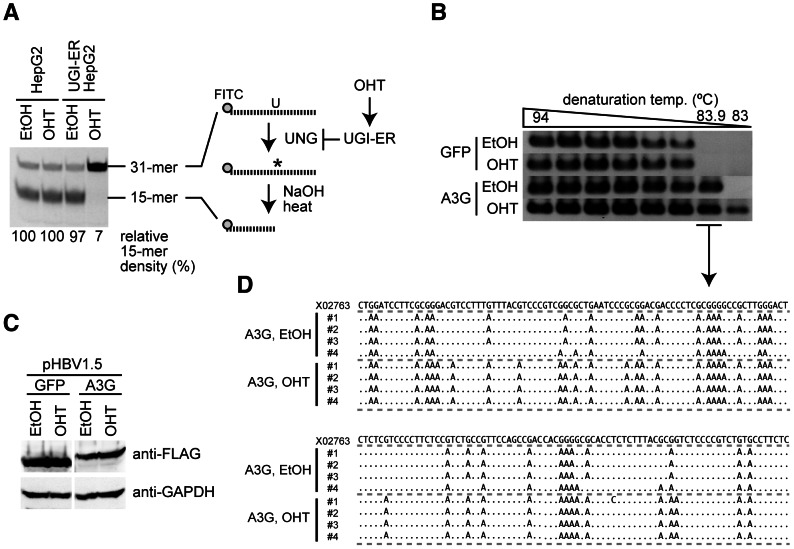
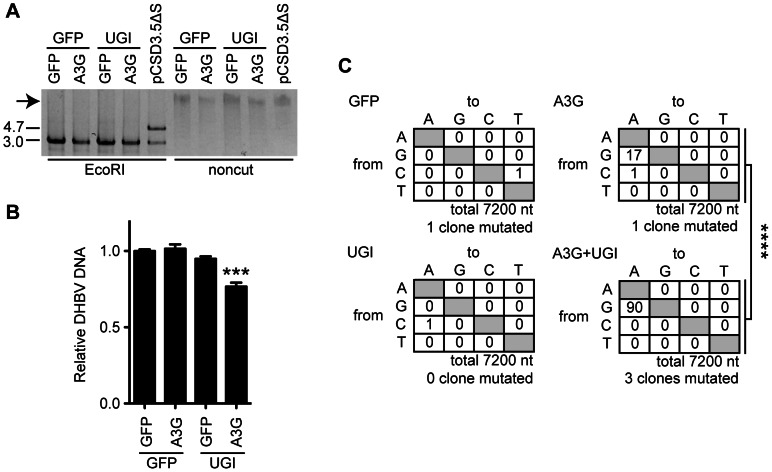
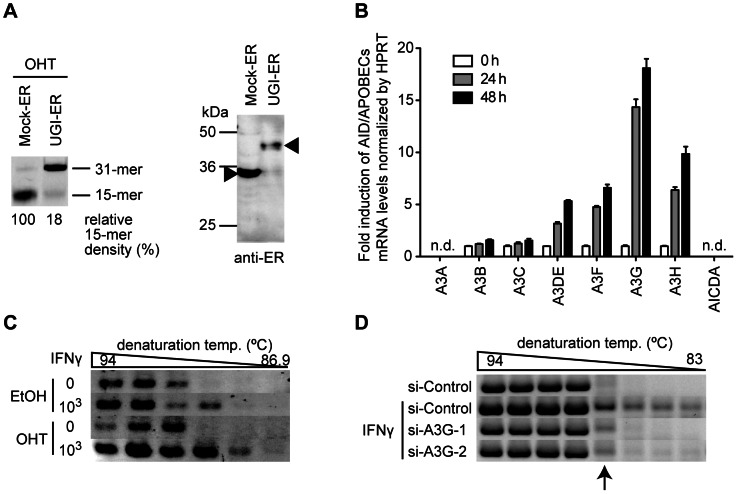
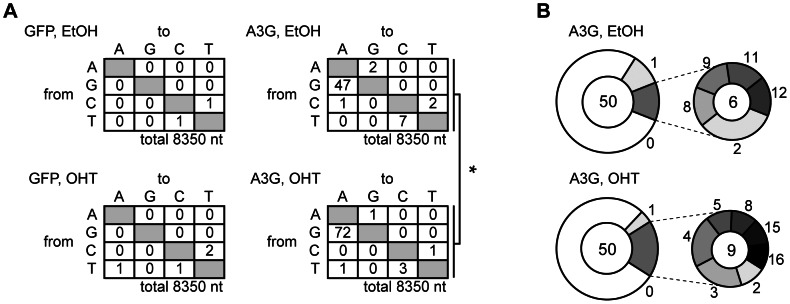
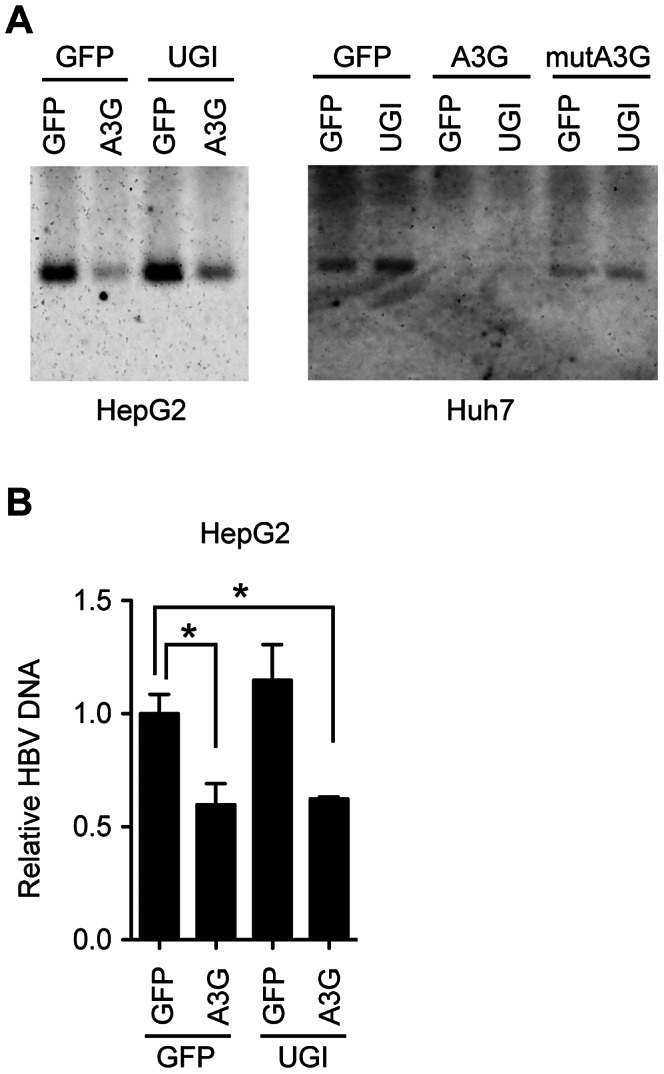
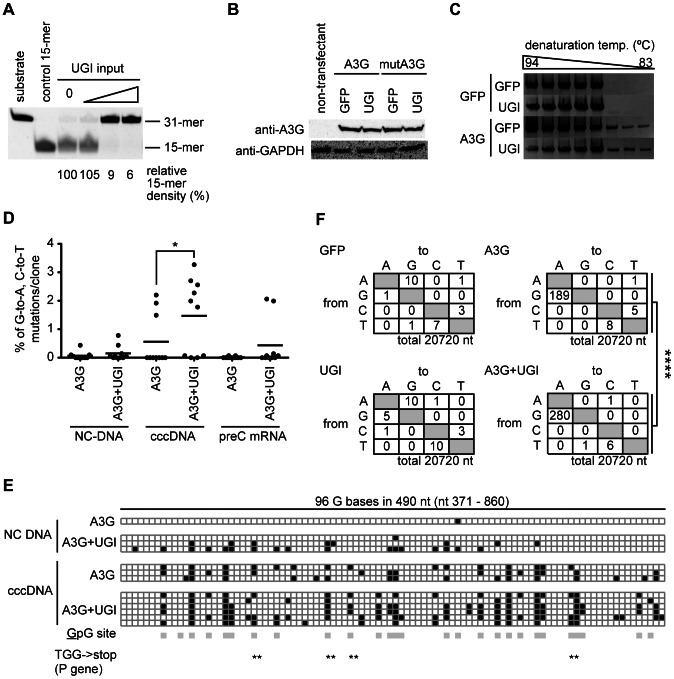
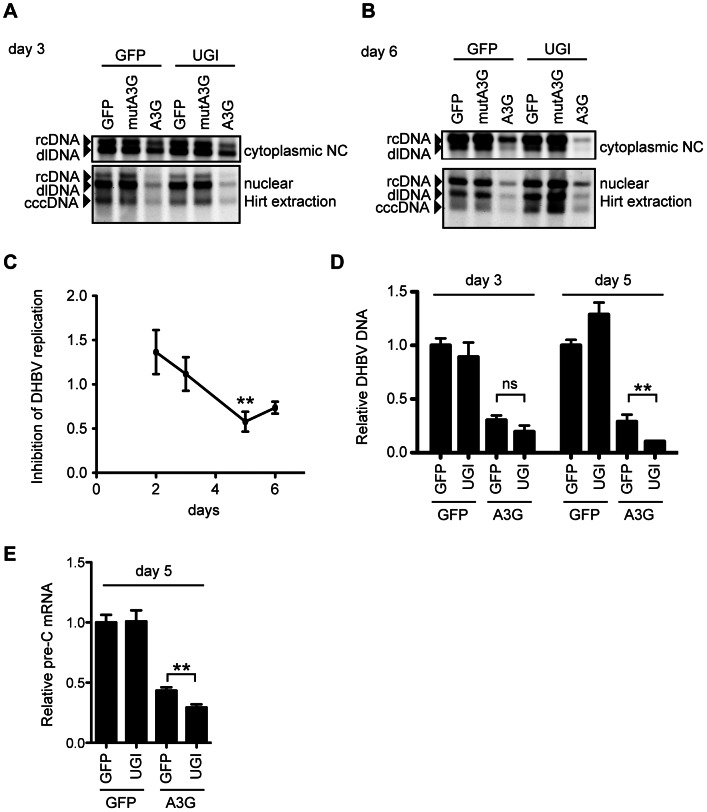
The covalently closed circular DNA (cccDNA) of the hepatitis B virus (HBV) plays an essential role in chronic hepatitis. The cellular repair system is proposed to convert cytoplasmic nucleocapsid (NC) DNA (partially double-stranded DNA) into cccDNA in the nucleus. Recently, antiviral cytidine deaminases, AID/APOBEC proteins, were shown to generate uracil residues in the NC-DNA through deamination, resulting in cytidine-to-uracil (C-to-U) hypermutation of the viral genome. We investigated whether uracil residues in hepadnavirus DNA were excised by uracil-DNA glycosylase (UNG), a host factor for base excision repair (BER). When UNG activity was inhibited by the expression of the UNG inhibitory protein (UGI), hypermutation of NC-DNA induced by either APOBEC3G or interferon treatment was enhanced in a human hepatocyte cell line. To assess the effect of UNG on the cccDNA viral intermediate, we used the duck HBV (DHBV) replication model. Sequence analyses of DHBV DNAs showed that cccDNA accumulated G-to-A or C-to-T mutations in APOBEC3G-expressing cells, and this was extensively enhanced by UNG inhibition. The cccDNA hypermutation generated many premature stop codons in the P gene. UNG inhibition also enhanced the APOBEC3G-mediated suppression of viral replication, including reduction of NC-DNA, pre-C mRNA, and secreted viral particle-associated DNA in prolonged culture. Enhancement of APOBEC3G-mediated suppression by UNG inhibition was not observed when the catalytic site of APOBEC3G was mutated. Transfection experiments of recloned cccDNAs revealed that the combination of UNG inhibition and APOBEC3G expression reduced the replication ability of cccDNA. Taken together, these data indicate that UNG excises uracil residues from the viral genome during or after cccDNA formation in the nucleus and imply that BER pathway activities decrease the antiviral effect of APOBEC3-mediated hypermutation.
乙型肝炎病毒 (HBV) 的共价闭合环状 DNA (cccDNA) 在慢性肝炎中起着至关重要的作用。据推测,细胞修复系统将细胞质核衣壳 (NC) DNA(部分双链 DNA)转化为核内的 cccDNA。最近,抗病毒胞嘧啶脱氨酶、AID/APOBEC 蛋白被证明可以通过脱氨作用在 NC-DNA 中产生尿嘧啶残基,导致病毒基因组的胞嘧啶到尿嘧啶 (C-to-U) 超突变。我们研究了尿嘧啶-DNA 糖基化酶 (UNG) 是否切除了肝病毒 DNA 中的尿嘧啶残基,UNG 是碱基切除修复 (BER) 的宿主因子。当通过表达 UNG 抑制蛋白 (UGI) 抑制 UNG 活性时,APOBEC3G 或干扰素处理诱导的 NC-DNA 超突变在人肝细胞系中增强。为了评估 UNG 对 cccDNA 病毒中间体的影响,我们使用了鸭乙型肝炎病毒 (DHBV) 复制模型。DHBV DNA 的序列分析表明,在 APOBEC3G 表达细胞中,cccDNA 积累了 G-to-A 或 C-to-T 突变,而 UNG 抑制则大大增强了这种突变。cccDNA 超突变在 P 基因中产生了许多过早的终止密码子。UNG 抑制也增强了 APOBEC3G 介导的病毒复制抑制,包括在延长培养过程中减少 NC-DNA、前 C mRNA 和分泌的病毒颗粒相关 DNA。当 APOBEC3G 的催化位点发生突变时,UNG 抑制对 APOBEC3G 介导的抑制的增强作用并未观察到。重新克隆的 cccDNA 的转染实验表明,UNG 抑制和 APOBEC3G 表达的组合降低了 cccDNA 的复制能力。总之,这些数据表明,UNG 在核内形成 cccDNA 期间或之后从病毒基因组中切除尿嘧啶残基,并暗示 BER 途径活性降低了 APOBEC3 介导的超突变的抗病毒作用。