Department of Oncology, Johns Hopkins University School of Medicine, Baltimore, Maryland, USA.
Department of Dermatology, Boston University School of Medicine, Boston, Massachusetts, USA.
J Invest Dermatol. 2013 Oct;133(10):2444-2452. doi: 10.1038/jid.2013.187. Epub 2013 Apr 18.
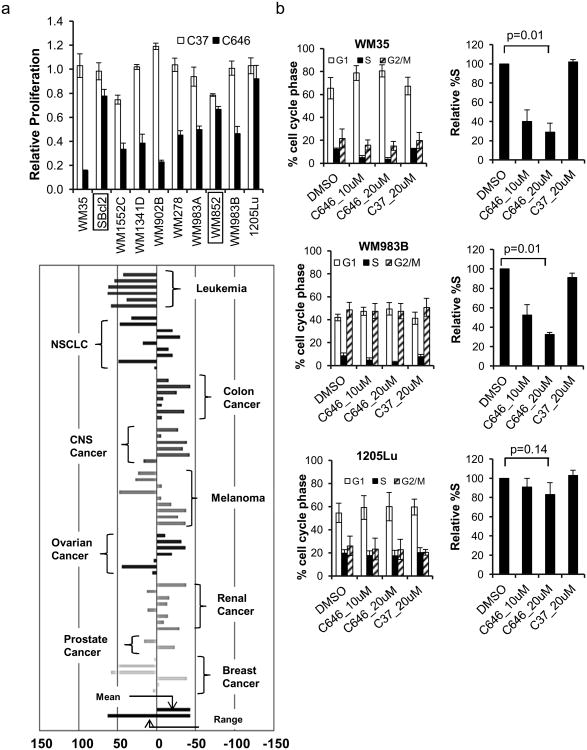
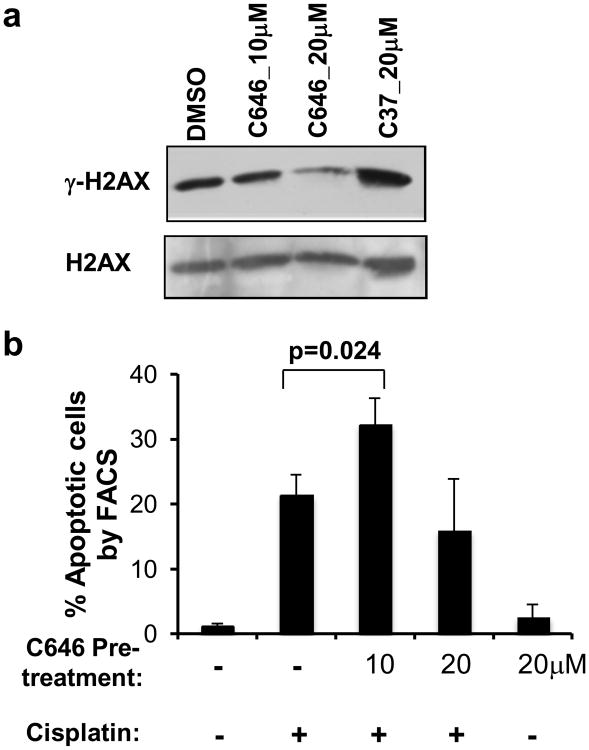
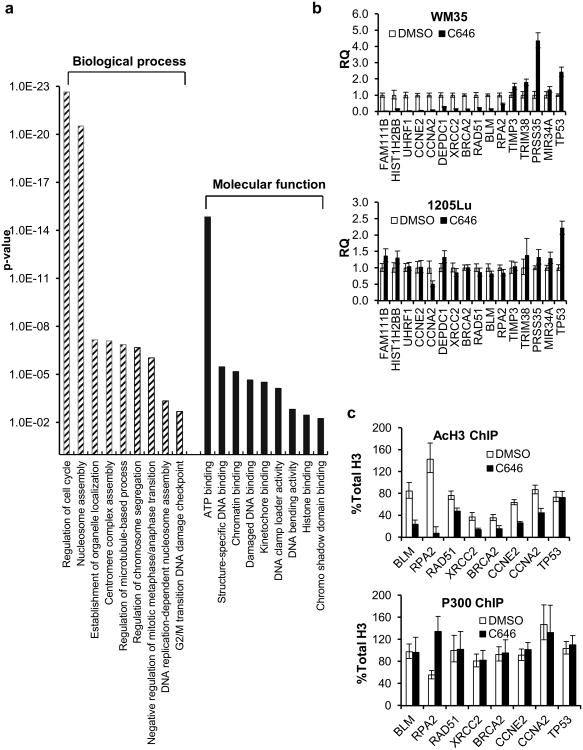
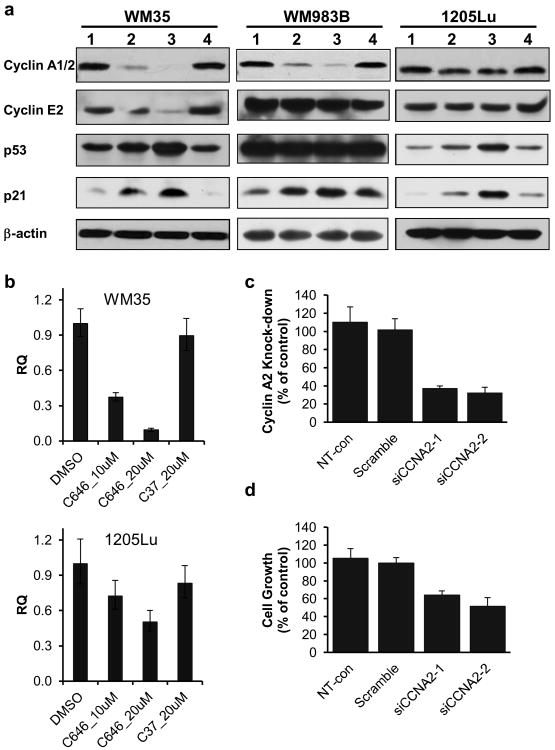
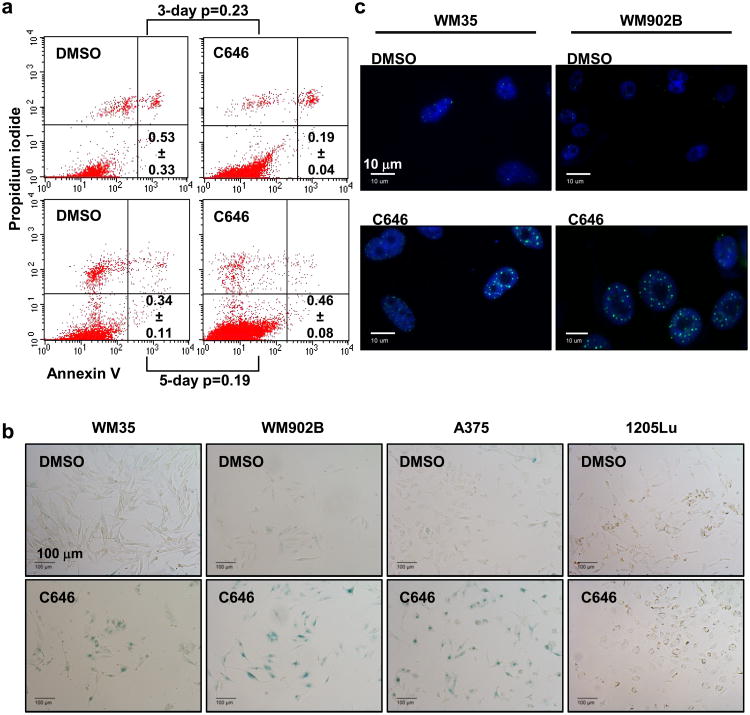
Epigenetic events, including covalent post-translational modifications of histones, have been demonstrated to have critical roles in tumor development and progression. The transcriptional coactivator p300/CBP possesses both histone acetyltransferase (HAT) activity and scaffolding properties that directly influence the transcriptional activation of targeted genes. We have used a potent and specific inhibitor of p300/CBP HAT activity, C646, in order to evaluate the functional contributions of p300/CBP HAT to tumor development and progression. Here we report that C646 inhibits the growth of human melanoma and other tumor cells and promotes cellular senescence. Global assessment of the p300 HAT transcriptome in human melanoma identified functional roles in promoting cell cycle progression, chromatin assembly, and activation of DNA repair pathways through direct transcriptional regulatory mechanisms. In addition, C646 is shown to promote sensitivity to DNA damaging agents, leading to the enhanced apoptosis of melanoma cells after combination treatment with cisplatin. Together, our data suggest that p300 HAT activity mediates critical growth regulatory pathways in tumor cells and may serve as a potential therapeutic target for melanoma and other malignancies by promoting cellular responses to DNA damaging agents that are currently ineffective against specific cancers.
表观遗传事件,包括组蛋白的翻译后共价修饰,已被证明在肿瘤的发生和发展中具有关键作用。转录共激活因子 p300/CBP 具有组蛋白乙酰转移酶(HAT)活性和支架性质,直接影响靶向基因的转录激活。我们使用了一种有效的、特异性的 p300/CBP HAT 活性抑制剂 C646,以评估 p300/CBP HAT 对肿瘤发生和发展的功能贡献。在这里,我们报告 C646 抑制人黑色素瘤和其他肿瘤细胞的生长,并促进细胞衰老。对人黑色素瘤 p300 HAT 转录组的全面评估确定了通过直接转录调节机制促进细胞周期进程、染色质组装和激活 DNA 修复途径的功能作用。此外,C646 被证明可提高对 DNA 损伤剂的敏感性,导致顺铂联合治疗后黑色素瘤细胞的凋亡增加。总之,我们的数据表明,p300 HAT 活性介导了肿瘤细胞中关键的生长调节途径,并且可能通过促进细胞对目前对特定癌症无效的 DNA 损伤剂的反应,成为黑色素瘤和其他恶性肿瘤的潜在治疗靶点。