Department of Infectious and Pediatric Immunology, Medical and Health Science Center, University of Debrecen, Debrecen, Hungary, EU.
J Med Genet. 2013 Sep;50(9):567-78. doi: 10.1136/jmedgenet-2013-101570. Epub 2013 May 24.
Chronic mucocutaneous candidiasis disease (CMCD) may result from various inborn errors of interleukin (IL)-17-mediated immunity. Twelve of the 13 causal mutations described to date affect the coiled-coil domain (CCD) of STAT1. Several mutations, including R274W in particular, are recurrent, but the underlying mechanism is unclear.
To investigate and describe nine patients with CMCD in Eastern and Central Europe, to assess the biochemical impact of STAT1 mutations, to determine cytokines in supernatants of Candida-exposed blood cells, to determine IL-17-producing T cell subsets and to determine STAT1 haplotypes in a family with the c.820C>T (R274W) mutation.
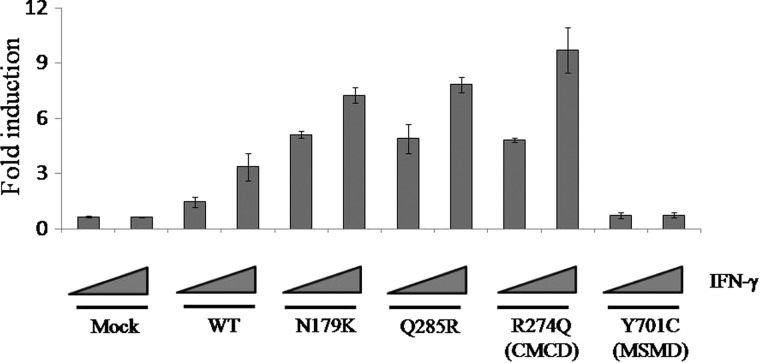
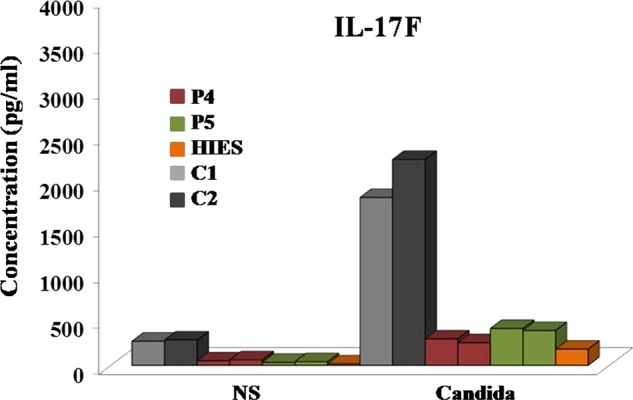
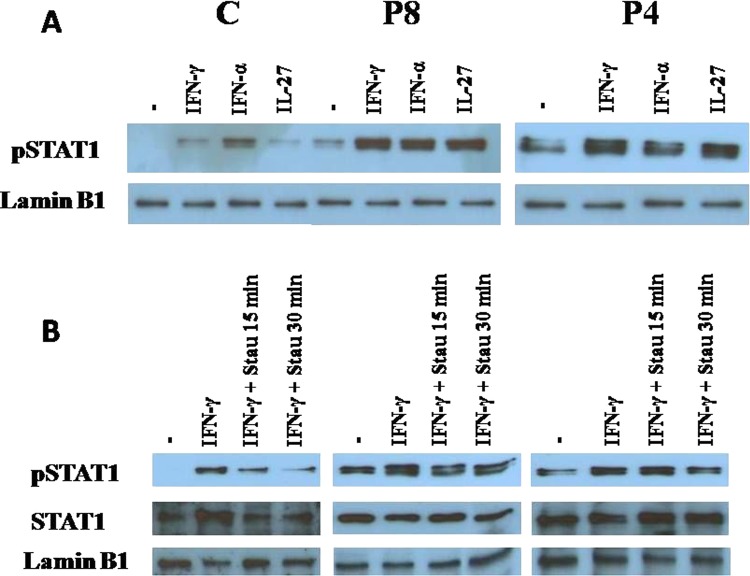
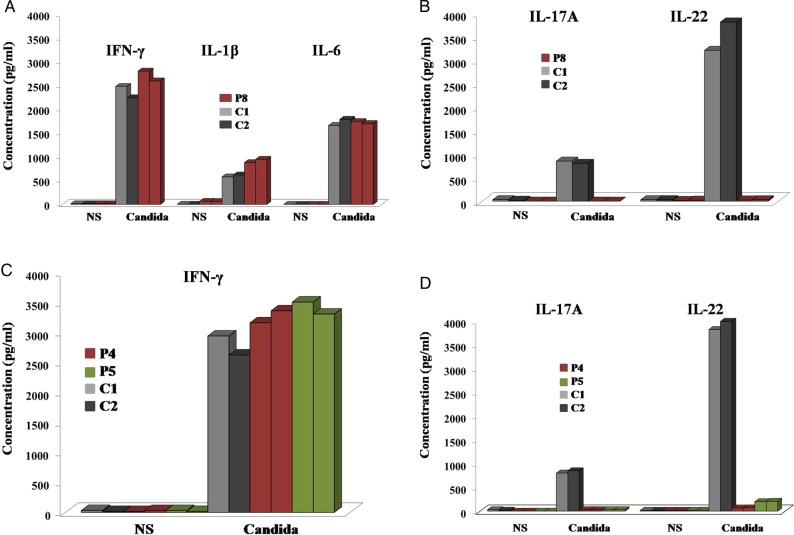
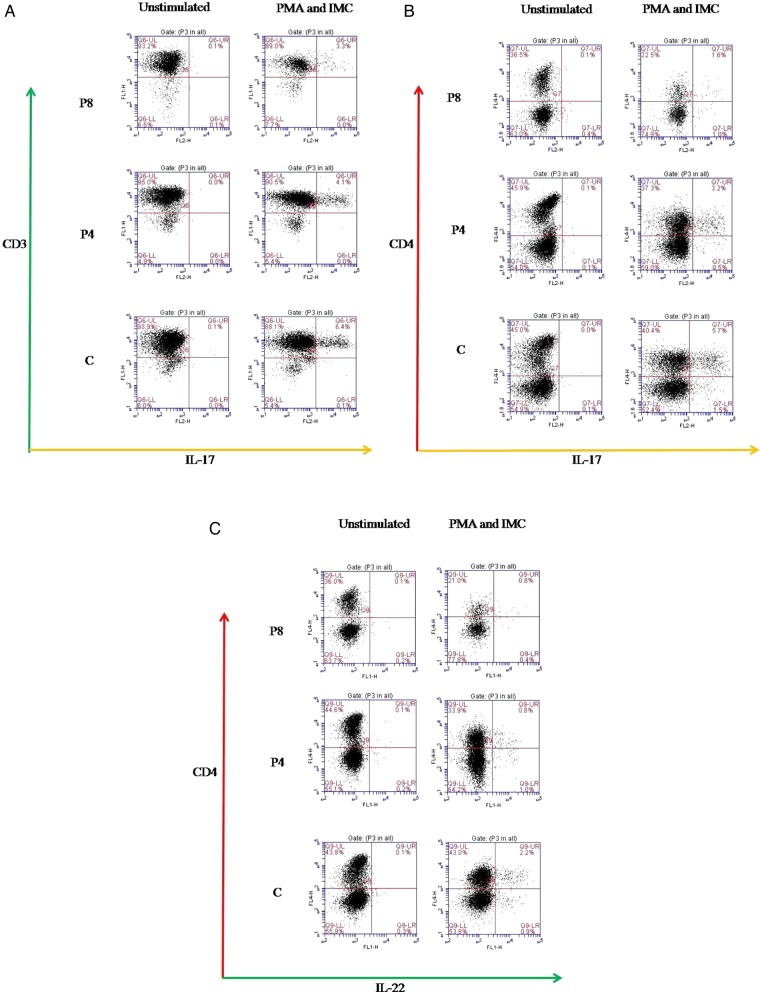
The novel c.537C>A (N179K) STAT1 mutation was gain-of-function (GOF) for γ-activated factor (GAF)-dependent cellular responses. In a Russian patient, the cause of CMCD was the newly identified c.854 A>G (Q285R) STAT1 mutation, which was also GOF for GAF-dependent responses. The c.1154C>T (T385M) mutation affecting the DNA-binding domain (DBD) resulted in a gain of STAT1 phosphorylation in a Ukrainian patient. Impaired Candida-induced IL-17A and IL-22 secretion by leucocytes and lower levels of intracellular IL-17 and IL-22 production by T cells were found in several patients. Haplotype studies indicated that the c.820C>T (R274W) mutation was recurrent due to a hotspot rather than a founder effect. Severe clinical phenotypes, including intracranial aneurysm, are presented.
The c.537C>A and c.854A>G mutations affecting the CCD and the c.1154C>T mutation affecting the DBD of STAT1 are GOF. The c.820C>T mutation of STAT1 in patients with CMCD is recurrent due to a hotspot. Patients carrying GOF mutations of STAT1 may develop multiple intracranial aneurysms by hitherto unknown mechanisms.
慢性黏膜皮肤念珠菌病(CMCD)可能是由白细胞介素(IL)-17 介导的免疫的各种先天错误引起的。迄今为止,描述的 13 个因果突变中有 12 个影响 STAT1 的卷曲螺旋结构域(CCD)。包括 R274W 在内的几个突变是复发性的,但潜在机制尚不清楚。
研究和描述东欧和中欧的 9 名 CMCD 患者,评估 STAT1 突变的生化影响,确定暴露于念珠菌的血细胞上清液中的细胞因子,确定产生 IL-17 的 T 细胞亚群,并确定具有 c.820C>T(R274W)突变的家族中的 STAT1 单倍型。
新型 c.537C>A(N179K)STAT1 突变具有 γ-激活因子(GAF)依赖性细胞反应的功能获得(GOF)。在一名俄罗斯患者中,CMCD 的病因是新发现的 c.854A>G(Q285R)STAT1 突变,该突变也对 GAF 依赖性反应具有 GOF。影响 DNA 结合域(DBD)的 c.1154C>T(T385M)突变导致乌克兰患者的 STAT1 磷酸化获得。在几个患者中,发现白细胞对念珠菌诱导的 IL-17A 和 IL-22 的分泌受损,以及 T 细胞内的 IL-17 和 IL-22 产生水平降低。单体型研究表明,c.820C>T(R274W)突变是由于热点而不是启动子效应而反复出现的。存在严重的临床表型,包括颅内动脉瘤。
影响 CCD 的 c.537C>A 和 c.854A>G 突变以及影响 STAT1 的 DBD 的 c.1154C>T 突变是 GOF。CMCD 患者的 STAT1 c.820C>T 突变是由于热点而反复出现的。携带 STAT1 GOF 突变的患者可能通过迄今为止未知的机制发展出多个颅内动脉瘤。