Chen Ying-Yin, Li Chien-Feng, Yeh Ching-Hua, Chang Ming-Shi, Hsing Chung-Hsi
Department of Medical Research, Chi-Mei Medical Center, Tainan 710, Taiwan.
Clin Dev Immunol. 2013;2013:294320. doi: 10.1155/2013/294320. Epub 2013 Apr 22.
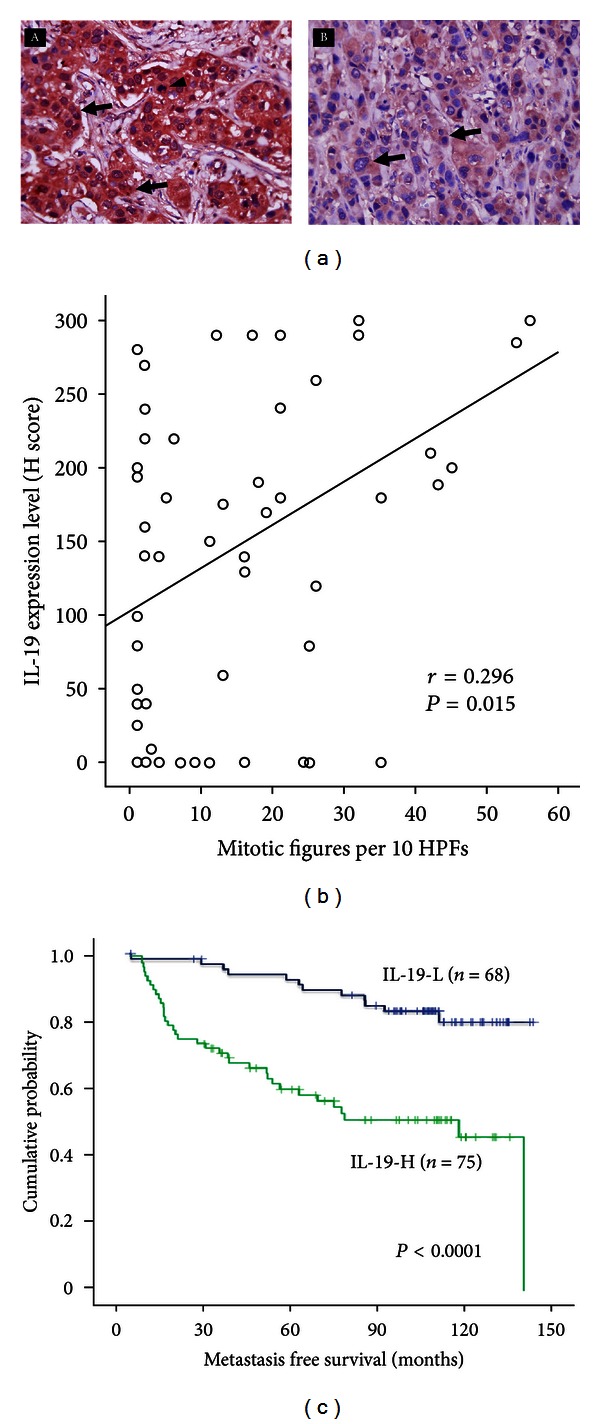
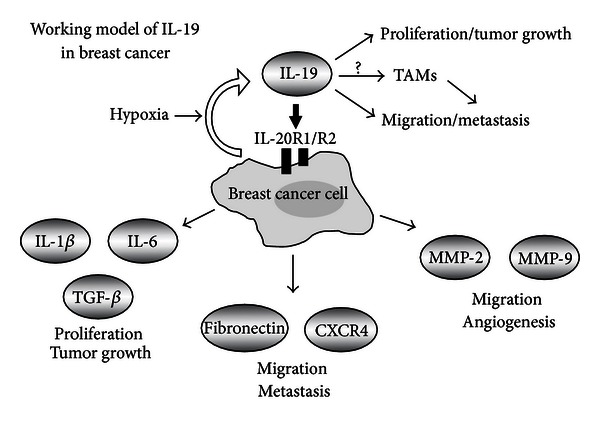
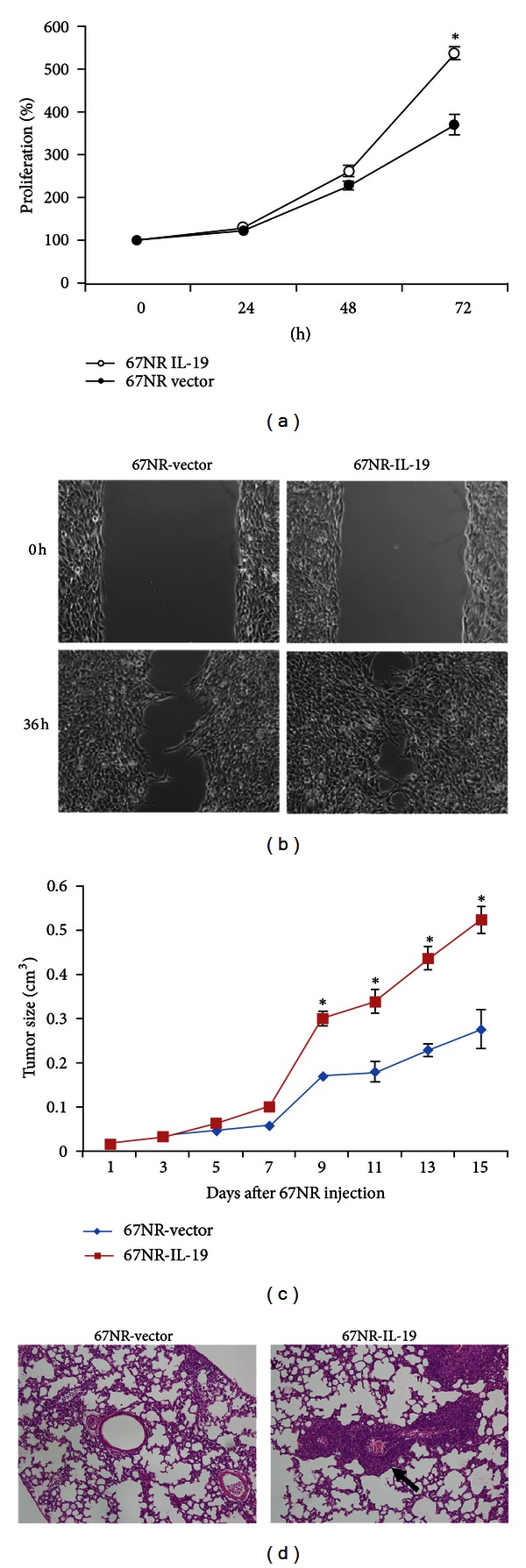
Inflammatory cytokines within the tumor microenvironment are linked to progression in breast cancer. Interleukin- (IL-) 19, part of the IL-10 family, contributes to a range of diseases and disorders, such as asthma, endotoxic shock, uremia, psoriasis, and rheumatoid arthritis. IL-19 is expressed in several types of tumor cells, especially in squamous cell carcinoma of the skin, tongue, esophagus, and lung and invasive duct carcinoma of the breast. In breast cancer, IL-19 expression is correlated with increased mitotic figures, advanced tumor stage, higher metastasis, and poor survival. The mechanisms of IL-19 in breast cancer have recently been explored both in vitro and in vivo. IL-19 has an autocrine effect in breast cancer cells. It directly promotes proliferation and migration and indirectly provides a microenvironment for tumor progression, which suggests that IL-19 is a prognostic marker in breast cancer and that antagonizing IL-19 may have therapeutic potential.
肿瘤微环境中的炎性细胞因子与乳腺癌的进展相关。白细胞介素(IL)-19是IL-10家族的一员,与一系列疾病和病症有关,如哮喘、内毒素休克、尿毒症、银屑病和类风湿性关节炎。IL-19在多种类型的肿瘤细胞中表达,尤其是在皮肤、舌、食管和肺的鳞状细胞癌以及乳腺浸润性导管癌中。在乳腺癌中,IL-19的表达与有丝分裂指数增加、肿瘤分期进展、更高的转移率和较差的生存率相关。最近在体外和体内都对IL-19在乳腺癌中的作用机制进行了探索。IL-19在乳腺癌细胞中具有自分泌作用。它直接促进增殖和迁移,并间接为肿瘤进展提供微环境,这表明IL-19是乳腺癌的一个预后标志物,拮抗IL-19可能具有治疗潜力。