Cheng Victor W T, Tran Quang M, Boroumand Nasim, Rothery Richard A, Maklashina Elena, Cecchini Gary, Weiner Joel H
Department of Biochemistry, University of Alberta, Edmonton, Alberta T6G 2H7, Canada.
Biochim Biophys Acta. 2013 Oct;1827(10):1141-7. doi: 10.1016/j.bbabio.2013.05.004. Epub 2013 May 24.
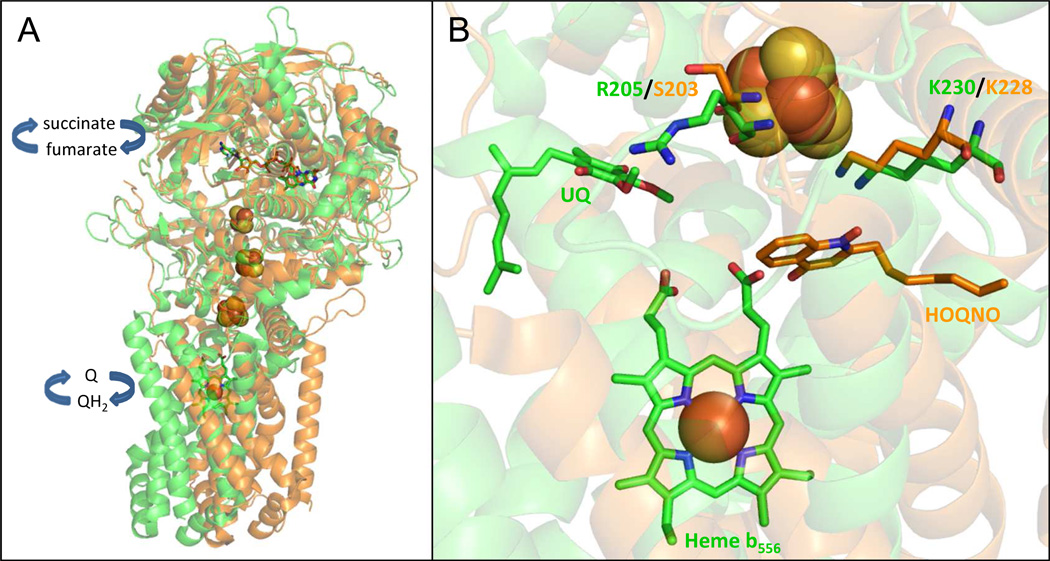
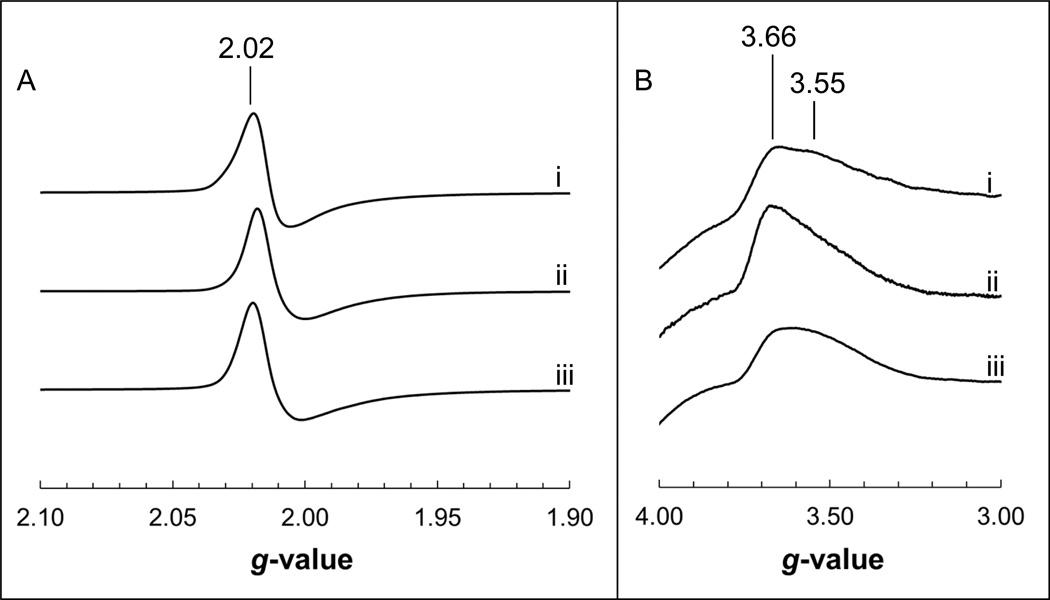
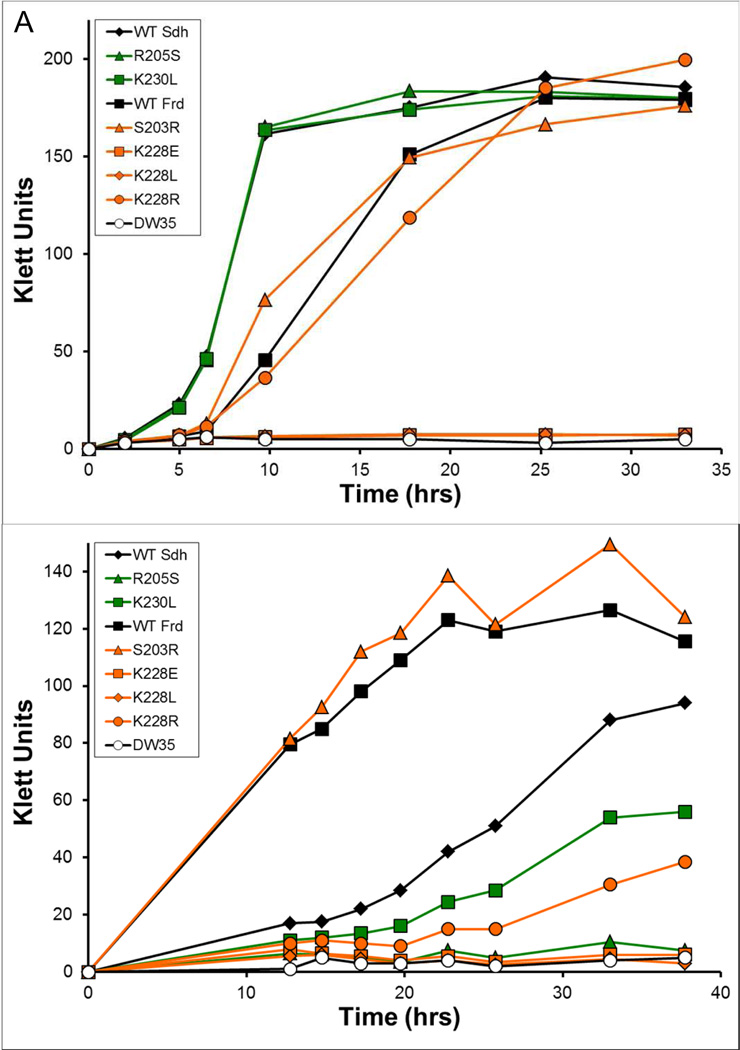
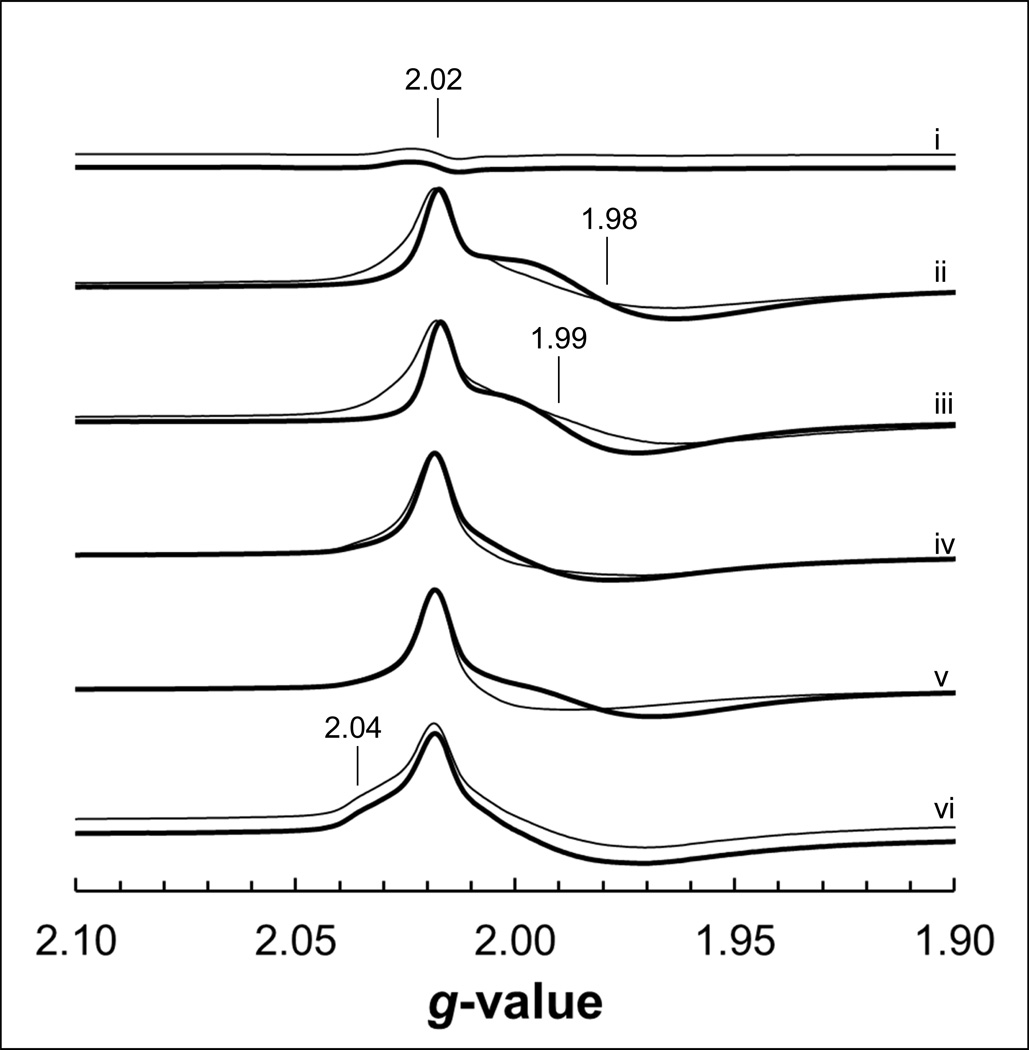
The Escherichia coli respiratory complex II paralogs succinate dehydrogenase (SdhCDAB) and fumarate reductase (FrdABCD) catalyze interconversion of succinate and fumarate coupled to quinone reduction or oxidation, respectively. Based on structural comparison of the two enzymes, equivalent residues at the interface between the highly homologous soluble domains and the divergent membrane anchor domains were targeted for study. This included the residue pair SdhB-R205 and FrdB-S203, as well as the conserved SdhB-K230 and FrdB-K228 pair. The close proximity of these residues to the [3Fe-4S] cluster and the quinone binding pocket provided an excellent opportunity to investigate factors controlling the reduction potential of the [3Fe-4S] cluster, the directionality of electron transfer and catalysis, and the architecture and chemistry of the quinone binding sites. Our results indicate that both SdhB-R205 and SdhB-K230 play important roles in fine tuning the reduction potential of both the [3Fe-4S] cluster and the heme. In FrdABCD, mutation of FrdB-S203 did not alter the reduction potential of the [3Fe-4S] cluster, but removal of the basic residue at FrdB-K228 caused a significant downward shift (>100mV) in potential. The latter residue is also indispensable for quinone binding and enzyme activity. The differences observed for the FrdB-K228 and Sdh-K230 variants can be attributed to the different locations of the quinone binding site in the two paralogs. Although this residue is absolutely conserved, they have diverged to achieve different functions in Frd and Sdh.
大肠杆菌呼吸复合物II的旁系同源物琥珀酸脱氢酶(SdhCDAB)和延胡索酸还原酶(FrdABCD)分别催化琥珀酸和延胡索酸的相互转化,并与醌的还原或氧化相偶联。基于这两种酶的结构比较,对高度同源的可溶性结构域和不同的膜锚定结构域之间界面处的等效残基进行了研究。这包括残基对SdhB-R205和FrdB-S203,以及保守的SdhB-K230和FrdB-K228对。这些残基与[3Fe-4S]簇和醌结合口袋的紧密接近,为研究控制[3Fe-4S]簇还原电位、电子转移和催化的方向性以及醌结合位点的结构和化学性质的因素提供了绝佳机会。我们的结果表明,SdhB-R205和SdhB-K230在微调[3Fe-4S]簇和血红素的还原电位方面都起着重要作用。在FrdABCD中,FrdB-S203的突变没有改变[3Fe-4S]簇的还原电位,但去除FrdB-K228处的碱性残基导致电位显著下降(>100mV)。后一个残基对于醌结合和酶活性也是不可或缺的。FrdB-K228和Sdh-K230变体观察到的差异可归因于两种旁系同源物中醌结合位点的不同位置。尽管这个残基是绝对保守的,但它们已经分化以在Frd和Sdh中实现不同的功能。