Department of Communication Sciences and Disorders, Northwestern University Evanston, IL, USA ; Laboratoire Langage, Cerveau et Cognition (L2C2), Centre National de la Recherche Scientifique (CNRS) Bron, France.
Front Hum Neurosci. 2013 May 13;7:189. doi: 10.3389/fnhum.2013.00189. eCollection 2013.
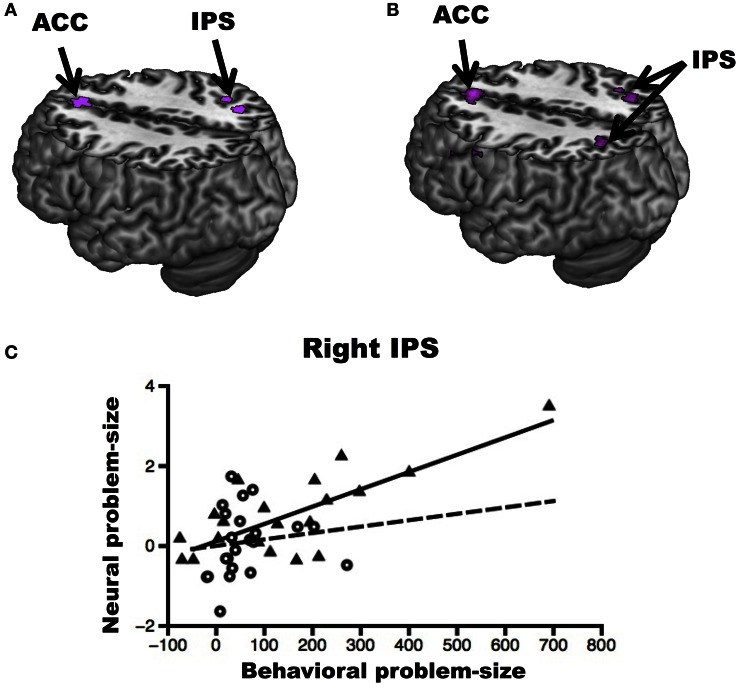
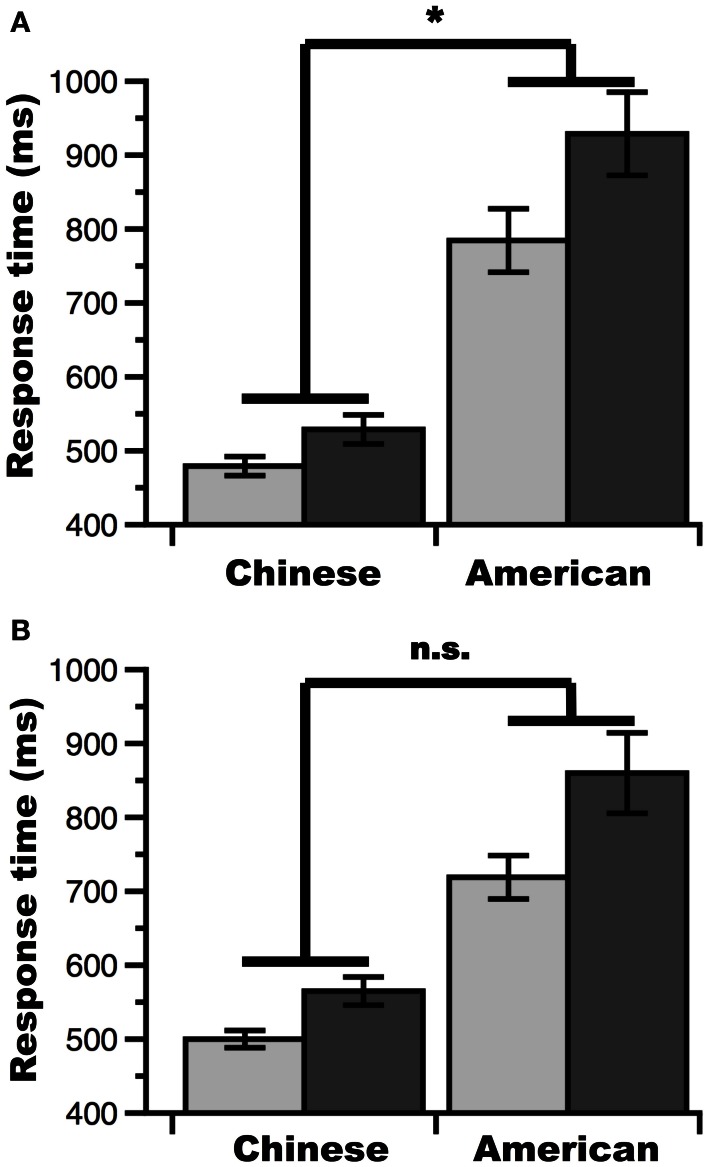
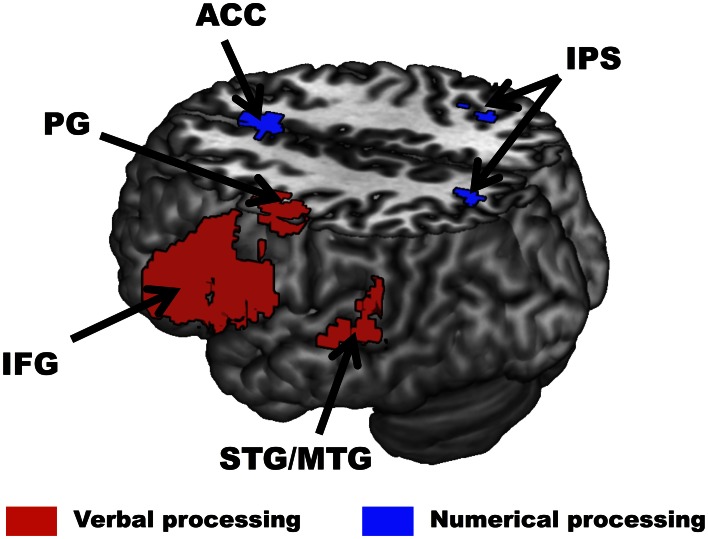
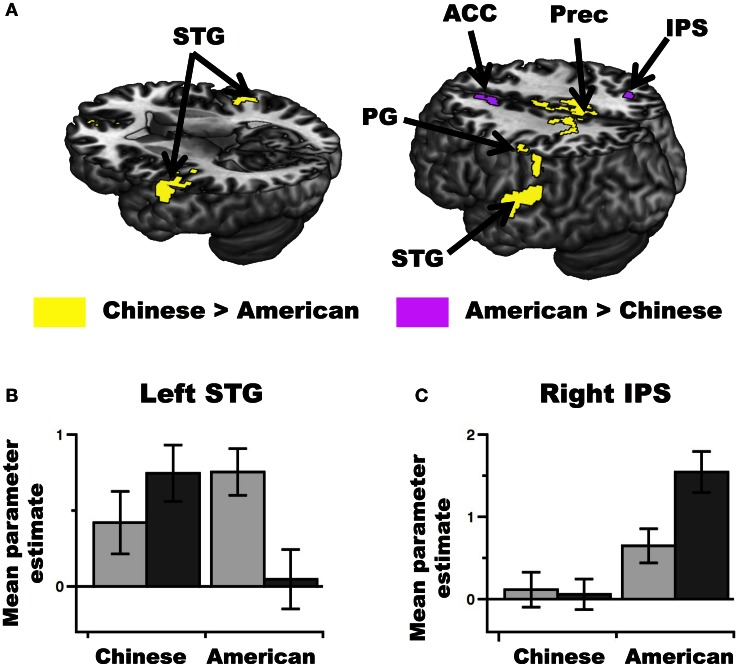
Multiplication problems involving large numbers (e.g., 9 × 8) are more difficult to solve than problems involving small numbers (e.g., 2 × 3). Behavioral research indicates that this problem-size effect might be due to different factors across countries and educational systems. However, there is no neuroimaging evidence supporting this hypothesis. Here, we compared the neural correlates of the multiplication problem-size effect in adults educated in China and the United States. We found a greater neural problem-size effect in Chinese than American participants in bilateral superior temporal regions associated with phonological processing. However, we found a greater neural problem-size effect in American than Chinese participants in right intra-parietal sulcus (IPS) associated with calculation procedures. Therefore, while the multiplication problem-size effect might be a verbal retrieval effect in Chinese as compared to American participants, it may instead stem from the use of calculation procedures in American as compared to Chinese participants. Our results indicate that differences in educational practices might affect the neural bases of symbolic arithmetic.
涉及较大数字(例如 9×8)的乘法问题比涉及较小数字(例如 2×3)的问题更难解决。行为研究表明,这种问题大小效应可能因国家和教育系统的不同而有所不同。然而,目前尚无神经影像学证据支持这一假设。在这里,我们比较了在中国和美国接受教育的成年人在乘法问题大小效应方面的神经相关性。我们发现,在中国参与者的双侧颞上区域中,与语音处理相关的神经问题大小效应大于美国参与者;而与计算过程相关的右顶内沟(IPS)中,美国参与者的神经问题大小效应大于中国参与者。因此,与中国参与者相比,乘法问题大小效应可能是美国参与者的言语检索效应,但它也可能源于美国参与者比中国参与者更多地使用计算过程。我们的研究结果表明,教育实践的差异可能会影响符号算术的神经基础。